


Step forward; do more to help those who suffer
In Europe, after the Holocaust, Jews identified one another by asking, “Amcha?” meaning “your people” in Hebrew. The speaker was effectively asking, “I am one of Your (God’s) people; are you?” What a curious manner to self-identify after the cataclysm of the Shoah.
We have just begun the annual Torah cycle of reading Exodus. In Genesis we meet individuals: Adam and Eve, Noah, Abraham and Sarah, Isaac and Rebecca, etc. But in Exodus we encounter the narrative of “amcha,” God’s people. The exodus is the “root experience” of the Jewish people. We trace our history back to the exodus from Egypt, all of us, one people, walking together out of slavery. Slavery and the exodus forged disparate selves into a single “am,” a people covenanted with God. A Jew recognizes the history and destiny of the Jewish people as his/her own.
I have to imagine that not everyone, however, walked out of Egypt at the same pace. Older people often walk slower than younger; the weaker and lame walk slower than the stronger. Eventually Amalek attacked the stragglers and attempted to cut them off, earning him the label of archetypal enemy of the Jewish people. Haman and Hitler are descendants of Amalek, according to our lore. But instead of breaking into separate camps according to physical prowess, all of the people journeyed together.
The most repeated statement in the Torah, some 33 times, is, “You know the soul of the stranger, for you were strangers in the land of Egypt.”
The Jewish soul knows suffering. We know the feel of slavery. God commands that we remember the experience, that we reach inside ourselves and extricate that experience, like a penitent recalling a determinative childhood lesson. We behave ethically regarding strangers because we occupied their position.
These Jewish lessons are not necessarily shared by other religions. They emerge from specifically Jewish moments in history, lived by Jews and passed on through generations. They comprise a huge motivation in Jewish ethics, to learn from our experiences how to treat others, because we are a community.
The United States often operates with a different motivation: “Take care of yourself and get as much as you can for your family.” The poverty rate has increased 67 percent in Johnson County in two years, and over 38,000 people now live below the poverty level, more than the 33,000 in Wyandotte County to our north. Most critical in this debate, however, is this fact: The “haves” actually have much more than they ever did in comparison with the “have nots.” If we intend to continue the institutions that hold together our community: social welfare agencies that get their money from United Way or through taxes, our schools, our basic services provided by government, and yes, even Beth Torah, our congregation, then those who have more are going to have to contribute a higher percentage of their income.
I hear stories of children suffering from abuse and family problems, stories that would turn your stomach, because the state no longer has the money to fund the workers to make a difference, and this economic downturn among the least skilled has frankly caused some people to take out their anger on their families. We are not protecting the weakest among us.
The greatest responsibility must fall on those who have prospered more than others. The unemployment rate among college graduates is only 5 percent. But those who are hurting after several years of downturn are hurting badly. For only the second time in my rabbinic career, I am using my discretionary fund to save homes.
The very rich are earning sums that could save lives and social institutions. Even on the level on which most of us earn and live, we should consider doing more so that those who are suffering — losing homes, going without food, watching children suffer abuse — can be protected. Even at Beth Torah we are still waiting for dues to return to levels of two years ago. Those who can must step forward to preserve the agencies and institutions that give us our values. There’s no other way.
During the Exodus I don’t imagine that the young and strong ran ahead to flee Egyptian persecution on their own. In their excitement, our people united. “We all travel together, or we all stay behind.” Together they succeeded. It’s much easier with a dynamic leader like Moses, but it’s possible at anytime. I ask that you give it some thought. What is your role in moving us ahead together? And every bit as poignantly, what will happen if you don’t?
This article was originally published in the January 2011 editor Congregation Beth Torah’s newsletter, Tekiah.
 My name is Lilach Nissim, and I’m Kansas City’s new Israeli emissary (shlichah). I arrived in Kansas this November to work on staff at the Jewish Federation of Greater Kansas City. My main job here is to educate Kansas Citians about Israel — wherever there is a need.
 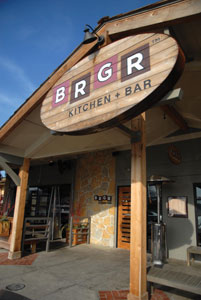 So what happens to those cranky kids who whine until mom agrees to drive through McDonalds for a Happy Meal of a burger and fries? Earlier incarnations of those whiny kids in Kansas City might have pleaded for burgers at Winstead’s original restaurant on the Plaza, or maybe even Wimpy’s on Troost. The kids grow up, eventually. And, though they later find themselves saddled with problems that loom far larger than the ones that plagued their collective youth, they still crave those burgers. Enter BRGR (4038 W. 83rd, Prairie Village), and other such establishments, that have found a way to harness the iconic burger for those of us who have grown up. Gotten older, anyway.
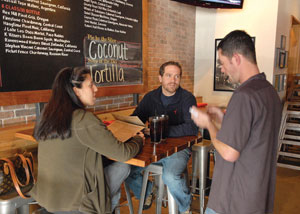 Sandwich options abound outside of the traditional burger realm. One friend sampled the Portobella Mushroom ($8) (from the described “Not-So-Burgers” section). This sandwich of marinated, grilled and flavorful Portobello mushrooms was on tasty, buttered ciabatta slathered with a light herb spread and watercress salad. Another dining companion had never tried Kobe beef, and wanted to see how it compared with the American burger she had eaten her whole life. Kobe beef comes from cattle fed a special diet, pampered and raised in Kobe, Japan. She ordered the Kobe Beef Sliders ($10), three thick sliders served on truffle brioche buns with oven-dried tomatoes, onions, provolone and “special sauce” (tasting prominently of BRGR’s house-made ketchup, a rich condiment that had a slightly smoky flavor — though kids and select adults who eat here may request the more mundane and familiar Heinz version). Our companion wanted to order the sliders “well-done,” which our waitress wisely advised against. Though they compromised on “medium-well,” the sliders arrived in the ballpark of medium rare to medium. Candidly, it seemed wrong to cook the superior Kobe beef anywhere beyond that. This same waitress exhibited solid menu knowledge, paced the meal well, and was sweet and patient with our kids — even when our tired 2-year-old napped all through one dinner with his little head on the rustic table.