


Letters to the Editor
Bagel Bash origins
We are writing this article to set the record straight, not to take away any kudos from the organizers or sponsoring organizations of Bagel Bash, which was featured in an article Dec. 15.
Bagel Bash was begun about 20 years ago, as they said, but it was first organized by Kehilath Israel Synagogue when Joyce Zeldin was president. We were asked to be advisers to a young adult board including Rusty Krakow, Jordan Zeldin, Nathaniel Pool, Debbie Wacjman and Marsha Friedman. Forgive us if we omitted any names. We planned several social events for young adults and the community was invited to attend. We had been in Denver and read that they had a Christmas Eve party for Jewish young adults that was well attended every years, so we suggested to our committee to try the event here for the greater Kansas City area. It was held at the Princess Garden restaurant on College Boulevard in their party room. Rabbi Herbert Mandl was the mashgiach for the event. We had dinner and one drink for $10 a person and a disc jockey. To our great amazement, 85 young adults came.
The program has evolved over the years with several different organizations and groups planning the event. We are so glad to see how big it has grown and how many organizations are funding it.
Joyce and Harold Koch
Leawood, Kan.
Anti-Semitism on Fox
I have enjoyed the television show House on the Fox Network for many years. I protest the portrayal of the character Chris Taub, a Jewish physician. He is a stereotype; smart, but ineffectual. He is often shown standing between two taller people or in profile, reinforcing the stereotype of little Jews with big noses. On the show, there have been many gibes about Taub’s nose. There is an anti-Taub website complaining about his nose and urging his elimination.
In the Nov. 28 episode, “Perils of Paranoia,” Taub said, “If anarchy breaks out, I plan to do what my ancestors have done throughout the ages: run.” The implication is that Jews are cowards.
Yes, sometimes Jews flee, and the flight may require courage. Sometimes Jews stay and fight, as we celebrate at Chanukah, when a small band of Jewish guerillas beat the most powerful army in the world. If you agree that anti-Semitic jokes are unfunny, send an email to Fox Network at .
Elizabeth Appelbaum, Ph.D.
Overland Park, Kan.
Actions louder than words
With reference to Stu Lewis’s response (Dec. 15) to Lee Levin’s article in the prior week’s (Dec. 8) Chronicle, I agree with Mr. Levin. Mr. Lewis seems to ignore the basic premise of Mr. Levin’s article that while President Obama’s speaks generally flowery words about support for Israel, (said in my opinion to retain Jewish votes and money), his actions demonstrate his and his administration’s absolute anti-Israel bias. Obama’s unrealistic demand that Israel return to “67” borders, (the Arabs hopped on this one with glee), the ongoing diatribes by his State Department, his Secretary of Defense Panetta, and now from his ambassador to Belgium are proof enough that Obama and his administration are basically anti-Israel. These refer only to Obama’s actions in the last few weeks. What will the next weeks, months and 2012 bring? Remember, these are first term actions when Jewish support is probably needed if he is to win re-election. What would be in store for Israel if he gained a second term and not require any further Jewish support? The results could truly be a disaster for Israel.
Mr. Lewis’s letter touches on the Torah (which can always be cherry picked for whatever thesis is being advocated), but he does not touch on the key question in Mr. Levin’s letter, in which he asks why anyone would support Obama based on what he has done. The question remains, “What has Obama actually done, and what does he specifically propose to do, that entitles him to four more years in office?”
Paul Wacknov
Leawood, Kansas
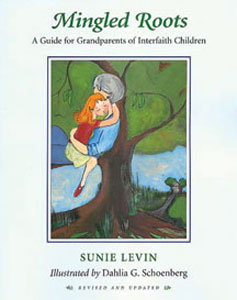 “I go to Grandma and Grandpa Brown’s for Christmas, help trim the tree, sing carols and then get a lot of presents. And then we go to Grandma and Grandpa Friedman’s to light the Chanukah candles, bake Chanukah cookies and get presents for eight nights,” bragged Josh Solomon, age 6, of New York City to one of his first-grade friends. “That’s not fair,” his friend responded, “I only get presents on one day.”
 It is difficult to place into a neat and tidy box custard-meister Jim Sheridan’s relatively novel restaurant concept Unforked (7337 W. 119th St., Overland Park, Kan. 66213). Is it a health food place? There is a salad premised wholly upon kale, after all. A Mexican joint? So much, it seems, is served within the confines of a taco (or quesadilla). For years, Sheridan dazzled us with dessert. We waited in long lines outside, enduring blistering heat and other elements, for delicious custard strewn with fruits, candies and various other mix-ins. With Unforked, however, Sheridan is reeling us in by simply making good food, fresh, with seasonal and/or local ingredients (to the extent possible).
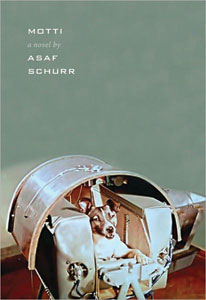 Two new novels by Israeli authors have recently been published in the Dalkey Archive Press Hebrew Literature Series. The first, “Motti” by Asaf Schurr is a low-key tale of a stereotypical loser. Motti, an elementary school teacher, lives alone with his dog, Laika. The only excitement in his life comes from his daydreams about falling in love with his neighbor and his regular Wednesday night outings with his friend Menachem. Menachem, on the other hand, is a boisterous drinker with a wife and two children. When, on the way home from the café, Menachem hits and kills a woman, Motti doesn’t think twice about claiming responsibility for the accident. After all, Menachem has a family to support. Motti has nothing.
 In Gabriela Avigur-Rotem’s “Heatwave and Crazy Birds,” a not-so-young woman is returning to Israel more than 25 years after she ran away. Loya Kaplan has inherited from her father’s colleague and friend the house in which she grew up. And it appears that most of her school friends are still living in the same neighborhood — some married, some divorced, and all curious about where she has been for 25 years. As the novel unfolds, the reader learns of Loya’s complicated relationships with her father, his friend Davidi, and Davidi’s son Nahum.