

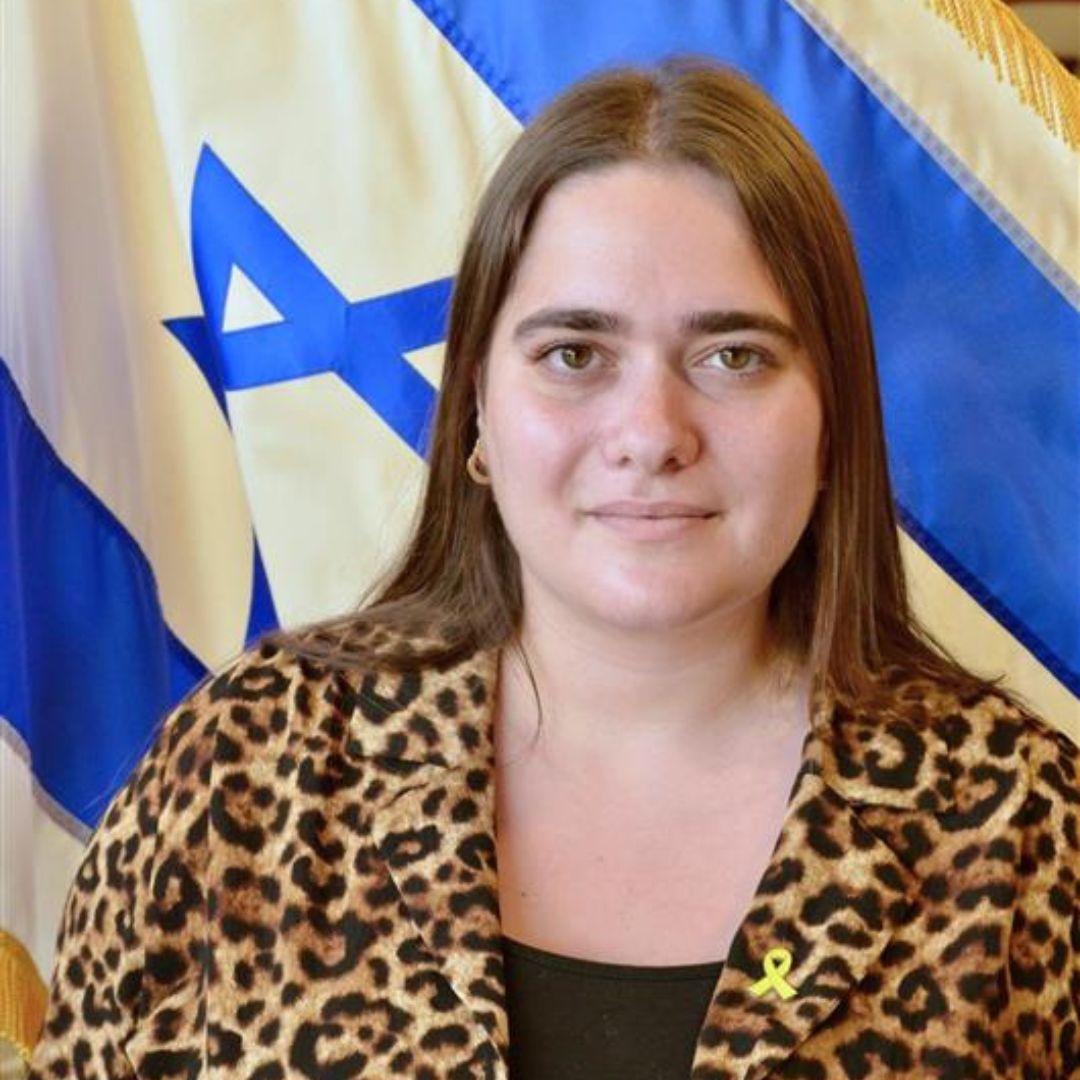
Two years ago, my arrival in Kansas City was a whirlwind of anxiety and plans for how I’d bring Israel to life in this community. I was excited to teach, share stories and culture, build bridges and talk openly about the wonders and complexities of Israeli society.
Having gone through extensive Jewish Agency for Israel training — and being the daughter of a former shlicha, having spent several years of my life in the United States — I thought I knew what I was signing up for.
Less than three weeks into my time as shlicha, the entire purpose of my role shifted. Oct. 7 shattered every assumption I had, not just about my job but also about the kind of emotional and communal labor it would require. Suddenly, I had to do what no one prepares you for: grieve both publicly and privately while helping a community do the same. I became a translator of loss, representative of a country in crisis and space holder for fear, confusion, solidarity and pain.
As difficult as those days and months were, they also revealed the deepest purpose of this work. In the aftermath, the Kansas City Jewish community showed up. You asked hard questions. You leaned in, even when it hurt. Together we lit candles, sang songs and stood together in moments of silence and defiance. I saw what peoplehood looks like — not in theory, but in practice. I felt what it means to be held by a community, and I hope I was able to offer that same sense of connection in return.
Despite my rocky start, these two years have also held a lot of creativity, learning and joy. There was the deep honor of partnering with PJ Library to bring artist Hanoch Piven to Kansas City and watching students and adults alike explore identity and memory through art. There were conversations sparked by Irene Shavit’s visit and our collaboration with Herzl camp — conversations about resilience, survival and overcoming trauma. There was the launch of our teen Israel leadership fellowship, where we tackled the hard questions about advocacy, identity and nuance with some of the most thoughtful young people I’ve ever met. There were the songs sung at CDC Shabbats and the long, intricate conversations with KU Hillel students. There were Israel days at camp, shuk simulations, food, dance and endless, beautiful mess.
Throughout my time here, I’ve had the absolute privilege to work with nearly every corner of the Kansas City Jewish community – from Hyman Brand Hebrew Academy to KU Hillel, JCamp to the CDC, adult learners to preschoolers, and regular visits to all five religious schools in the area. I’ve cooked, danced, debated, mourned and celebrated alongside you. I’ve helped teens ask tough questions about Israel, and I’ve painted anemones with kids too small to reach the table. And through it all, I’ve seen a community that deeply cared about both me and Israel.
Being a shlicha means carrying a lot at once: the pride and the pain of Israel, the joy and the frustration of representing something deeply personal to people who see it differently than you. It’s about building bridges — but also, sometimes, standing in the middle of them during a storm.
Kansas City has shown me what Jewish life looks like when it's intentional and reminded me that Israel-Diaspora connection isn’t a slogan — it’s something real, human and alive. This work, whether through art, conversation, ritual or education, has shown me just how deeply people here want to connect with Israel. And yet, I’ve also felt the tension: the fear that engaging with Israel’s complexity might fracture that connection. But I’ve found the opposite to be true. It’s the willingness to sit with the hard questions, to explore the gray areas, that creates the strongest and most lasting relationships.
That’s exactly why how we teach Israel matters so much. If we want future generations to stay connected, we have to offer them the full picture. We have to stop pretending that love and critique can’t exist in the same sentence. Our kids are capable of understanding nuance — they live in a complex world already. If we teach only a flat or idealized version of Israel, we risk losing them when that image cracks. But if we invite them into the layered, emotional and sometimes painful truth, we give them something worth holding on to. We need to raise our youth to love Israel not because it’s perfect, but because it’s theirs, and they have a role in shaping it. Israel education that embraces complexity doesn’t weaken connection — it deepens it. I’d like to encourage you to lean into that.
As I return home, I carry this community with me. I’ll be telling the story of Kansas City — the Jewish community in the middle of America that showed up not just for Israel’s 76th birthday but also for its darkest days. A community that reminded me why the shlichut program matters more now than ever.
I’d hate to end with the cliché of “L’hitraot” — it feels too formal for a goodbye to a community that’s been home for the past two years. Instead, I’ll leave you with the word I’ve used every single day on my way out of the office or a meeting. It’s casual, warm and a little silly, but it carries connection, familiarity and the assumption that we’ll see each other again. So to all of you, from the bottom of my heart: “bye-ush.”
Thank you for everything. Truly.