

Community conversation: Let’s be proud to be Jewish together
 For those who were wondering, the sky is not falling. In fact, as one panelist so eloquently put it last week, it would be strategically unwise to be pessimistic.
I agree.
And when I left last week’s community conversation, which discussed the recent Pew Research Center study, “A Portrait of Jewish Americans: Is the Sky Falling?” I was more optimistic than I typically am. Do we have to make adjustments in the way we do things to maintain a viable Jewish community? You bet. Do we have a clue how to do that? I don’t really think so. Will we actually do more than talk about needing to make changes during the next 20 years? Only time will tell.
Even with all those uncertainties, I walked away from the community conversation — hosted by the Jewish Federation, the Rabbinical Association and the Jewish Funders Council — last week feeling good about our community. Here in Kansas City, or more accurately southern Johnson County where the majority of our local Jewish population lives, we’ve known for a while that we need to do things differently to continue to have a viable, vibrant Jewish community. So the numbers that came out in the Pew Research Center study shouldn’t have been a surprise. The study pointed out that the proportion of Jews who say they have no religion and are Jewish only on the basis of ancestry, ethnicity or culture is growing rapidly. We can see that in the decline of synagogue members. The study also said two-thirds of these people are not raising their children Jewishly at all. That’s easy to figure out as well, based on the fact that the intermarriage rate is at 58 percent, up from 43 percent in 1990, and 17 percent in 1970. Among non-Orthodox Jews, the intermarriage rate is even higher at 71 percent.
So while there’s been quite a bit of national analysis on the Pew Research Center study, approximately 130 people came out on a stormy Kansas City evening to hear what our local experts had to say. That fact alone — that so many people showed up when it would be easier to not venture out at all — was enough to boost my spirits.
Those experts represented the three major Jewish religious movements — Orthodox Rabbi Daniel Rockoff, Conservative Rabbi David Glickman and Reform Rabbi Doug Alpert; two agencies that have a major impact on young people and families — Hillel Executive Director Jay Lewis and Jewish Community Center President and CEO Jacob Schreiber; and community volunteers Sarah Beren and Victor Wishna. The panel presented its views and answered questions from the audience during the event.
As Lewis pointed out, there are many positives in the study under discussion. In fact, 94 percent of those who identified as Jewish said they were proud to do so. It was also heartening to hear Rabbi Rockoff say that he believes God will never let the Jewish people disappear.
Our problems, our lack of Jewish involvement and engagement, could very well stem from the fact that it’s never been easier to be Jewish. We were told that it’s a blessing and a curse that Jews are now totally accepted by the general community. Young Jews today didn’t live through the Holocaust and may not even know any survivors. To them, Israel hasn’t been the struggling young Jewish state many of us grew up with … and from their perspective, it has even frequently been portrayed as the aggressor.
Congregation Beth Shalom’s Rabbi Glickman may have presented the best idea of the night. He pointed out that we throw money and programs at a wide variety of age groups starting with Jewish preschoolers and teens — including all the various youth groups, Hillel and Birthright Israel — all good things he added. But we do very little once these young adults graduate college. Then we expect them to marry Jewish people, raise their children Jewish and join congregations. With that huge gap in programming for many young Jewish people who get married — on average between the ages of 29-35 — that lack of connection and the resulting disengagement can be hard to overcome.
Rabbi Glickman concluded the evening by reminding us we have to reach out and bring every person we know into our community. Interestingly enough, this same point came up at the beginning of the evening when Rabbi Alpert reminded us the Jewish community has to be welcoming to everyone — saying it’s about relationships, not programs. I think we actually do need programming, especially programs that bring us together. I’ve been to several big events in the last month and there’s nothing better than being in a room filled with Jewish people, especially Jewish people you know well and can joke and laugh with.
One example of the power of programming is the success of KU Hillel. The Jewish student organization recently hosted more than 550 people at the 12th annual Rock Chalk Shabbat. During the rest of the school year, KU Hillel consistently provides programs and meals for hundreds of Jewish students. Through those programs, KU Hillel ultimately builds relationships. Statistics show that many of these students, especially those who take part in a Birthright Israel experience, tend to be more dedicated to the Jewish community after they graduate.
This isn’t nearly enough though. We need to find ways to change and evolve. Borrowing one of Lewis’ lines from the community conversation, young Jews are not disinterested, but their engagement may differ from the traditional way to which many of us are accustomed. Schreiber reminded us that “change is cool,” and we need to listen as our young people try to re-invent the Jewish community. Perhaps we should find out what they want before we plan programs for them.
While we’re doing that, listening to our young people and figuring out where we need to go next, let’s hope funders and donors follow Sarah Beren’s advice.
“Take a leap of faith and invest in our future.”
Well said Sarah.
 Taboo subjects hide in every facet of our society. Shame and stigma create a protective force around the topics, allowing them to thrive and reproduce unhindered by social conventions.
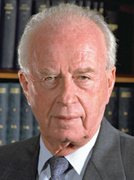
 When Prime Minister Yitzhak Rabin was assassinated, I was there. I remember that moment vividly to this day. It was Nov. 4, 1995. I was with my family and a full bus from our kibbutz. The energy was high, the crowd was huge and it felt like change was in the air. And then, three shots were fired … three shots that changed history for the State of Israel. When Israelis voted the Labor Party into government in June 1992, with Yitzhak Rabin at its helm, they knew well what they were getting. Here was a man who had been in public life for more than 40 years. When he became prime minister for the first time in 1974, he had been the first native-born Israeli (sabra) to attain the post. His astonishingly successful military record, no-nonsense speaking style, gravelly voice and oddly shy little smile were as familiar to Israelis as would be the mannerisms of a favorite uncle. Yet, in a short span, they would meet a new Yitzhak Rabin — a great war commander and implacable foe of the PLO transformed into a soldier for peace, and a Nobel laureate. And so, in November 1995, when this first-ever sabra/prime minister became the first-ever Israeli prime minister to be assassinated in office — and by a young Jew, no less — Israelis came to know with horror and grief what they had lost.Rabin’s assassination took place at a big peace rally, supporting him and the peace process. Everyone I was with was excited about this rally. Things in Israel were changing and a new era was about to begin … my parents were not about to let my siblings and I miss that. I was only 11 years old at the time, and didn’t understand much of what was going on around me. Still, it was educational. Taking part in such a historic event definitely had an impact on a girl like me.
 in a row. My father grabbed my hand and we started running away from the area. I looked back and saw that same crowd running toward us like a herd.
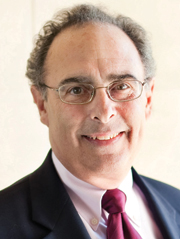 On Erev Shabbat, Shabbat Shuva, Sept. 6, Rabbi Art Nemitoff of B’nai Jehudah addressed our combined congregations from the Beth Torah pulpit. It was an exciting evening.
 When I came to B’nai Jehudah 10 years ago, I instituted a new tradition. On the Shabbat in between Rosh Hashanah and Yom Kippur, Shabbat Shuvah, I would invite a noted clergy person from somewhere in this country or even beyond to speak and inspire us on a message of repentance. Two years ago, we invited Rabbi (Mark) Levin (of Congregation Beth Torah). The atmosphere in our chapel two years ago was truly electric. It was an evening to remember. I want to thank Rabbi Levin for his gracious invitation to speak here tonight.