

Book Review: The Immortalists
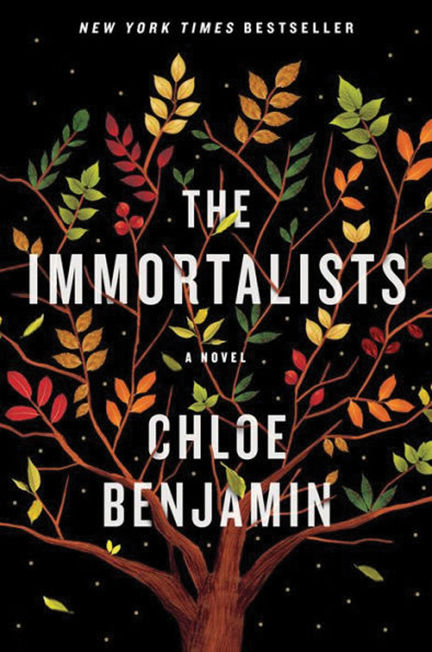 “The Immortalists” by Chloe Benjamin, G.P. Putnam’s Sons, $26 hardcover, January 2018
Chloe Benjamin is a 29-year-old award-winning author who lives in Madison, Wisconsin. She grew up in San Francisco; her mother was the daughter of an Episcopalian minister; her dad was Jewish; her stepmother is Jewish.
Her father’s family history includes grandparents who came through Ellis Island, fleeing Europe and pogroms. She became fascinated by the ties that bind Jews to other Jews.
When I first read about it, there was something intriguing about the theme.
The premise for this family saga is: what if you knew exactly when you were going to die?
The time is 1969, a Lower East Side of New York Jewish family. The four children of the Jewish Gold family pool their resources to visit a gypsy fortune teller whom they are told can say when you will die.
At the time Simon is 7, Klara is 9, Daniel is 11 and Varya is 13.
The four sections of the novel relate the siblings’ lives, each in order of their predicted death. Benjamin says in a publisher’s interview, “When the siblings receive their supposed dates of death, they make decisions based on that knowledge — decisions they might not have made if they’d never visited the fortune teller.”
The Gold siblings each have different orientations toward Judaism, just as they have different orientations toward their prophecies.
Simon is 16 when he leaves home, moves to San Francisco to be part of the LGBTQ movement, and becomes a ballet dancer.
Klara becomes a magician in San Francisco then moves with her husband and child to Las Vegas.
Daniel becomes a chief medical officer at a military entrance processing station.
Varya becomes a biologist researching anti-aging with monkeys.
Benjamin says she hopes the book “offers solace and companionship in navigating life’s uncertainties, as well as the enduring pull of family. To me, the book is not about dying; it’s about living, embracing as fully and fearlessly as possible what time we’re given.”
When the book was published, reviewers called it “a captivating family saga” (The New York Times Book Review), a really compelling plotline (Wall Street Journal), a “dazzling family love story” and “a literary thriller.”
For this reviewer, it was both powerful and captivating, mesmerizing and disturbing.
Sybil Kaplan is a journalist, lecturer, book reviewer, food writer and author.
 A friend and I have been engaged in a dialogue concerning Israel for some time. Recently he stated that “settlements are a disastrous thumb in the eye that is horribly counterproductive and will be disastrously costly in the long run, derived from haredi (ultra-Orthodox) and Irgun mentality.”
  On Aug. 30, 2018, I received an email from the Acting Majority Floor Leader informing the legislature and staff that Missouri Gov. Mike Parson was expected to call an Extraordinary Session of the Legislature beginning on Sept. 10.
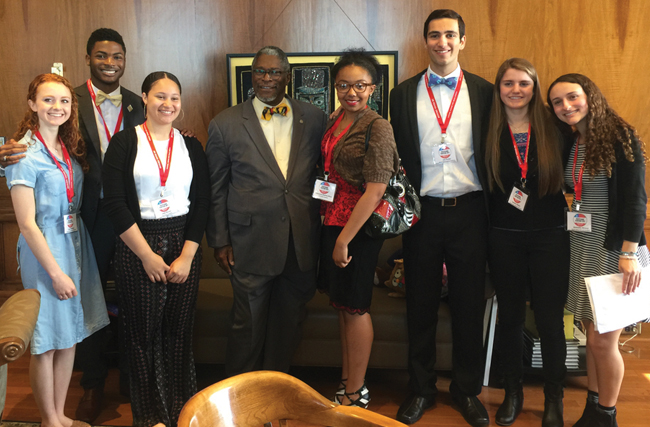
 One of the first memories of religious learning I can recall involves “circle time” at the Jewish Day School from which I recently graduated. Before delving into all the intricacies and complexities of our religious heritage, culture and texts, a teacher summarized it all with the story of the great scholar Hillel, who was confronted by a curious stranger who demanded he explain the entire Torah while standing on one foot. His response was simple yet powerful: “Do not treat your neighbor with unkindness. This is the entire Torah, the rest is interpretation. Now go and learn.” (Babylonian Talmud, Tractate Shabbat, Page 31a). Years later, after countless hours studying everything from theology to Jewish tort laws, I still remember that message: my Jewish identity is founded in a religion of love and compassion, and that my individualism is inherently and powerfully intertwined with my relationship to everyone else around me. This aphorism, echoed in nearly every religion, inspires me to fulfill the promise of building bridges of trust, support and empathy with all of my non-Jewish neighbors.