

Letter to the Editor
Call for collaboration
The nature of the North American Jewish community is rapidly changing. Demographically, in greater Kansas City, the community is aging, congregations are shrinking in size, and resources are becoming more limited. Culturally, we no longer define ourselves in ethnic terms as much as a community of choice. Many members of our community were not born Jewish, and do not have childhood Jewish memories. People choose to opt in or out of the Jewish community. Families are considerably busier than one generation ago, and many more cultural options are available through the internet. Families that formerly would attend a synagogue for Jewish education and life-cycle events are now searching for meaningful activities that create connectedness and community.
Consistent with the rise of ethnic Judaism, congregations developed as discrete and competing ideological institutions. We belonged to movements encouraging different theologies and practices. Congregations competed with programs for members. Whereas competition may increase quality, it also is likely to increase divisiveness. Rather than seeing ourselves on a continuum of valid Jewish practices, we have often viewed congregations as somehow better than competing synagogues or movements.
But the future will not look like the past, and our practices need to change. Where once we competed, cooperation and collaboration will strengthen our mutual future as our demographics shift. What might that look like?
Certainly, worship styles and life-cycle celebrations will remain unique to individual congregations and movements. Yet, many areas of potential synergy exist. Adult education, for instance, can be planned and implemented across congregational and movement lines. Community members will be able to choose the most appealing course and teacher. But, the history of Kansas City has been that members of one congregation often do not attend functions in other congregations. Yet, so many more interesting options in Jewish education will be available to all of us when every congregation opens its doors to the entire community, and individuals think and at least partially define their activities communally rather than congregationally.
Contemporary Jews are searching for meaning and connectedness. They are not as interested in institutional labels, competitions or theologies as were previous generations. The entire Jewish community will flourish and grow as we increase our interlocking activities and cease to duplicate programs in areas in which theological differences are insignificant.
Rabbi Alan Cohen
Rabbi Jacques Cukierkorn
Rabbi Mark Levin
Rabbi Herbert Mandl
Rabbi Arthur Nemitoff
Rabbi Daniel Rockoff
Rabbi Debbie Stiel
Rabbi Scott White
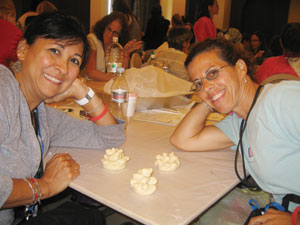 As I stood in the arrival Hall of Ben Gurion Airport, I began to spot them. Women, without the typical “been on a plane for way too long,” glazed look on their faces. Rather, with looks of excited anticipation, lugging colorful backpacks marked with the now all too familiar letters, JWRP.
 The “diner” notion means many things to many people. In Kansas City, Town Topic has been (for me) the “diner” gold standard — particularly since the classic Nichol’s Lunch closed years back and the venerable Corner Restaurant (in Westport) shut down, more recently. A solid diner brings to bear a certain nostalgic vibe that somehow takes patrons back to a different era. Good burgers. Better chili. Eggs. Eating at the counter. Nothing fancy.
 “The Debt” is a spine-tingling espionage thriller that holds the audience spellbound with all its twists and turns. It is directed by Academy Award nominee John Madden (“Shakespeare in Love”) and based on the 2007 Israeli film “Ha-Hov.” The movie opened yesterday (Wednesday, Aug. 31) in wide release.