

If you don’t have anything nice to say …
 The community is buzzing about a newly published book, “Am I a Jew?” written by Theodore Ross, an author from New York. It’s been out a month or so already. I wasn’t terribly interested in it, and it just sat on my desk waiting to be given to one of our book reviewers. However out of the blue, just before Yom Kippur, I got some phone calls about it. Then I was intrigued.
The book focuses on different types of Judaism, one being Classical Reform Judaism. Ross claims (I didn’t confirm the facts myself) that there are only 15 such congregations in the United States. He hand-picked our own Rabbi Jacques Cukierkorn as the expert on that subject.
He came to Kansas City to interview Rabbi Cukierkorn twice about the topic. According to the book, he even stayed at his home. I am deeply disturbed by what he wrote about Classical Reform Judaism and the New Reform Temple in particular.
In my opinion, the chapters on Classical Reform Judaism are not really about Classical Reform Judaism at all. He spends very little time describing the difference between Classical Reform Judaism and what we typically refer to as simply Reform Judaism. Instead, I see it as a not-so-flattering depiction of Rabbi Cukierkorn, the former rabbinical leader of The New Reform Temple who now heads up the year-old Temple Israel. In doing that, these chapters also become a not-so-flattering, and I believe skewed, view of the Jewish community in Kansas City as a whole.
I have not interviewed either the author or any of the parties quoted in this book. I believe it would be a waste of my time as I would probably get typical comments such as “I stand by what I wrote,” and “I was misquoted.” As a journalist I do have to wonder why Ross chose to publish the information he gathered about New Reform from Rabbi Cukierkorn after he met with the rabbi the first time. At that time the relationship between the rabbi and the congregation had become a rocky one. In my opinion that’s when he should have walked away and chosen another congregation and rabbi to profile. By not doing so, he implies that the relationship between this rabbi and this congregation represents a typical rabbi-congregational relationship for such parties in Classical Reform congregations. I certainly believe this is not the case.
By the time Ross came to Kansas City a second time, Rabbi Cukierkorn’s relationship with NRT’s board of directors had deteriorated to the point of not renewing the rabbi’s contract. The two parties negotiated a separation agreement. Did the author really think he was getting an accurate depiction of a Classical Reform congregation when he discovered that all the parties involved were effectively right in the middle of a “divorce?” As a journalist, has he never had to walk away from an interview because he wasn’t getting the information he needed?
At this point you might be saying, but The Chronicle mentioned all of these things in its newspaper as well. Yes, we did. It’s something we have agonized about, but we see it as our duty to report the news in our community. But that news certainly does not represent what is going on in Classic Reform congregations.
Rabbi Cukierkorn isn’t off the hook here either, by any stretch of the imagination. He was speaking to a journalist who was writing a book, so he should have been more careful about what he said and the words he chose to use. Clearly he was unhappy with his situation and many people involved in it. But as my mother, of blessed memory, used to say to me on a regular basis, “If you don’t have anything nice to say, don’t say anything at all.” I hope he has learned this valuable lesson.
As I read on Kol Nidre “words matter, words can hurt, reputations matter, gossip hurts.” I am not and have never been a member of The New Reform Temple. But as a member of the Kansas City Jewish community I am hurt by this book. I don’t want people across the country thinking this is how the Kansas City Jewish community speaks to others or speaks about others. It simply isn’t an accurate depiction of who we are. Period.
Don’t buy the book. If you want to know the author’s personal story, read it online. He’s told it in plenty of interviews. The rest isn’t worth your valuable time.
 For someone like me, who spent most of his career in the business community, working at Jewish Family Services for the last five years has been a real eye-opener. I knew there were people living in poverty in our community, but I never got close enough to those in need to really understand their stories. But at JFS, as I talk with our social workers and clients, I have learned just how basic some of those needs are.
 We are all watching history unfold before us. President Obama and Gov. Romney are engaged in a tight race to see who will be the next president of the United States. The Senate race between Todd Akin and Claire McCaskill has the national spotlight shining on the state of Missouri. As it does for every single election, National Council of Jewish Women and its Greater Kansas City Section, of which I am a life member and past president, has words of wisdom to share regarding the upcoming election.
 The deadline to register to vote in Kansas is Tuesday, Oct. 16. Advance voting by mail begins Wednesday, Oct. 17. Voters must complete an Application for Advance Voting Ballot in order to receive a ballot by mail. In Johnson County registered voters can simply call the election office at 913-782-3441 to request the Application for Advance Voting Ballot or visit www.jocoelection.org and download a form. Per the new state law, a registered voter applying for a mail-in ballot or voting in person must provide a photo ID. Those voting by mail must provide either a valid Kansas’s driver’s license number or non-driver identification card number on the form. There are many valid forms of ID listed on the application; or simply call the election office for more information.
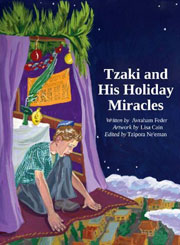 When you receive a review copy written by a former neighbor and friend, you can’t help but take notice, and this was the case when this book arrived in our post office box.
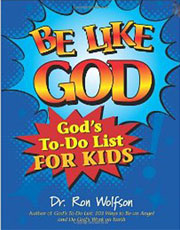 Dr. Ron Wolfson, professor of education at the American Jewish University in Los Angeles, has written about 10 books for children and adults.
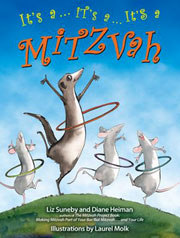 If you know any 3- to 6-year-olds, sit them down and read this to them. As you show them the illustrations of animals they will probably squeal with delight as did the 3-year-old on whom I practiced reading this book.
 Summer, 40 years ago, I was in high school. The Olympics had never been important to me, as I was not a sports fan. However, that year, 1972, was different. A young Jewish swimmer was winning gold medals … one after the other. And every American was glued to the television to see if he could really win seven gold medals. And he did. Mark Spitz became both an America icon and a Jewish hero!