

New book details local brothers’ innovative retail operation
 “Let’s go to Katz.”
For much of the first half of the 20th century, this would be the common rallying cry for families in downtown Kansas City looking to do a little shopping. After all, in 1917 Katz Drug Stores were not the typical pharmacy. At Katz, they advertised “over 25,000 items at deep cut prices.” Over the years their inventory would go on to include cameras, cosmetics, clocks, shirts, pets and a large selection of discounted smokes, beer and whiskey. This diverse selection of products combined with discount prices in a pre-Wal-Mart world made Katz Drug Stores an innovator in retail.
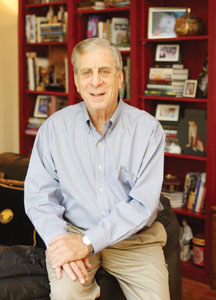
The story of the two brothers who founded Katz is now chronicled in a new book entitled “The Kings of Cut-Rate: The Very American Story of Isaac and Michael Katz.” Written by local reporter and author Brian Burnes with information and stories coming from Isaac’s (Ike) grandson Steve Katz, the book covers how these two sons of immigrants went from selling fruit in Kansas City’s West Bottoms to running a successful chain of drug stores throughout the Midwest.
“I decided I wanted to write the book when I first became a grandfather 11 years ago,” Steve Katz said. “Now I have six grandchildren. I want them to share in the experience.”
Three years ago, Katz was invited on Father’s Day to speak about Katz Drug Stores at Kansas City’s Central Library downtown. When 170 people showed up, he knew there was an interest, and he teamed up with Burnes to finally get the book written.
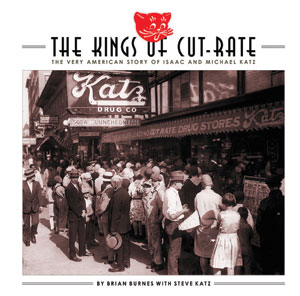 A book signing with Steve Katz and author Brian Burnes will be from 1:30 to 3:30 p.m. Saturday, Oct. 15, at The Kansas City Store, 312 Ward Parkway, on the Country Club Plaza. The pair will also launch the book with a discussion at 2 p.m. Oct. 30, at the Plaza Library. The library encourages those planning to attend to register at http://kclibrary.org under “Events.”
Katz says that he has so many personal memories of Ike that he looks back on with fondness.
“As a youngster, I remember being bounced on his knee, nuzzled with his unshaven face, while he sang ‘Let Me Call You Sweetheart’ or ‘Roll Out The Barrel,’” he recalled. “He’d finish and let me tumble to the floor.”
Katz said he still remembers Ike walking from 12th & Baltimore to the office at 12th and Walnut, passing out gum and candy from his oversize pockets to the local children. A highlight for Katz was the Saturday lunches he shared with his grandfather on the balcony office at 12th and Walnut.
When he was older, Katz began working at the store. As a teenager he worked at the store located at 39th and Main and on Saturdays Ike would send him to run errands.
“Once, the Philharmonic came to Ike for a large sum of money,” Katz said. “He replied he didn’t like music that much but would donate to them each year if Philharmonic would play a free concert for his ‘friends.’ He always called his customers his friends. The Philharmonic performance became an annual event, with name stars in attendance for years.”
Passing the savings along to the customers
Ike and Mike brought a new concept of retailing. While routinely done today, Ike told reporters he discovered competitive prices while still running his fruit stand. For example, if competitors sold apples for 5 cents, Katz would advertise three apples for 10 cents. His competitive pricing quickly gave them an edge, attracting customers who were looking for extra value. The brothers would remember the lesson of charging low prices for high volume when they opened their two drug stores in downtown Kansas City.
Another innovative idea, “Katz pays the tax,” would prove to be even more successful. This slogan would come to represent the brothers’ most successful campaign.
It began during World War I when the U.S. government had instituted a 1-cent wartime tax on cigarettes. Katz Drug Stores were already selling cigarettes for 10 cents a pack, so a 1-cent increase was significant. While taking a walk through downtown Kansas City, Michael Katz noticed that some other stores had taken this opportunity to raise their prices even more for a little extra profit.
The Katz brothers decided to do something different. They didn’t raise their price at all. In their windows they hung a sign that read “Cigarettes at the same old price — Katz pays the tax.”
“That put Katz on the map, the national map,” Steve Katz said. “It was so successful that competitors began buying Katz cigarettes in bulk and then selling them to their customers. When the bothers learned of this, they branded each pack with the Katz logo. So no matter where the cigarettes were bought, people knew they were from Katz.”
Katz said that the brothers understood how important those savings could be for people.
“Ike would tell me he prefers fast nickels to slow dimes,” he said. “What I think may be lost today is the extra value that Katz offered. Not just with the savings, but in the care with which they treated people.”
 It is indeed a Happy New Year for more than 60 people in the Jewish community who have been able to find jobs thanks, in part, to the efforts of Jewish Employment Services.
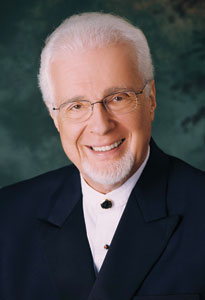 THE FOLLY PRESENTS PETER NERO — Grammy-Award winning pianist Peter Nero makes his Folly Jazz Series concert debut on Saturday, Nov. 5, featuring his unique crossover jazz interpretations of the Great American Songbook, including works by Leonard Bernstein and George Gershwin. With 68 recordings to his credit, Nero has recently been nominated for a Grammy Lifetime Achievement Award.
 Transportation to and fro is one of the biggest frustrations facing older adults who want to continue living in their own homes. So three years ago Jewish Family Services began tackling the problem by creating JET Express.
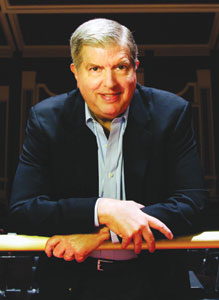 Marvin Hamlisch is a lucky man — and he tells you so.
 SIGNS, SIGNS — Remember the song “Signs” by the Five Man Electrical Band. There’s a verse in it where the guy goes to a church and sees a sign that says “Everybody welcome. Come in, kneel down and pray.” When he doesn’t have any money to put in the collection plate, he writes his own note saying, “Thank you, Lord, for thinking about me, I’m alive and doing fine.” I thought of this, and chuckled, when I saw this photo of the sign posted outside at Congregation Ohev Sholom directing members of Ohev and Temple Israel to their respective locations for worship services on Rosh Hashanah. This sign is functional and a sign of our times, physically showing how the Jewish community is beginning to cooperate and collaborate. Right on!
 ROSH HASHANAH IN THE ROCKIES — For the second time Barbara and Chuck Gorodetzky of Congregation Kol Ami joined their son David on a Rosh Hashanah Retreat led by the Adventure Rabbi Jamie Korngold. David lives in Boulder, Colo., and serves on the Leadership Council of the Adventure Rabbi. The retreat was held at Snow Mountain near Winter Park, Colo. In another Kansas City connection, Rabbi Korngold grew up in New Jersey and was trained for her Bat Mitzvah by Cantor Paul Silbersher, who lived in New Jersey at the time.
  Call 911!
 "Discovering and Sharing Joy," Parts I and II, two exhibits by native Kansas City artist Rita Blitt on display this fall at Longview Community College and Penn Valley Community College, have this name for a reason. The drawings, paintings, sculptures and films reflect Blitt’s joy of life.
 When Michael Grayman worked the footlights in Broadway as an assistant director on such productions as the revival of "Translations," he had a dream. As Andrew Parkhurst worked on his steps as the assistant choreographer for the Broadway production of "Curtains," he shared that dream. The two directed and performed on numerous productions from Broadway national tours to regional theaters, but for years they both came back to the idea of starting their own theater company.