

Rabbis work together for the greater good of the Jewish community
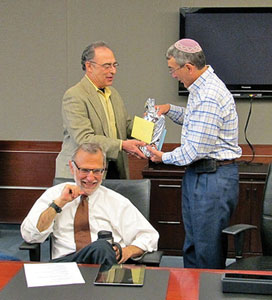
Like many Jewish communities, Kansas City has a board of rabbis, known here as the Rabbinical Association of Greater Kansas City. The unusual thing about what the rabbis call the RA here is that every rabbi from every congregation — Orthodox, Conservative and Reform — is a member.
“We all think it is unique,” said Rabbi Mark Levin, who has been a rabbi in Kansas City since 1976. He has served as the spiritual leader of Congregation Beth Torah since its inception in 1988. He added that Chabad chooses not to participate in the RA, noting that the Lubavitch organization also doesn’t use the word congregation in its description.
Rabbi Levin said the RA hasn’t always been such a cohesive group.
“When I came here in the ‘70s, this was not the case. We have worked hard to make sure that there is an ecumenical understanding and a spirit of cooperation among the different movements and we are a community that can work together,” Rabbi Levin said.
It’s not that rabbis in other communities don’t work together. Rabbi Daniel Rockoff of Congregation BIAV said he has Orthodox colleagues who serve on their respective rabbinical boards.
“Nonetheless, it is apparent that this is a particular value of our Jewish community, to work collaboratively on all levels between synagogues, organizations and rabbis. When I interviewed at BIAV, it was made clear from the leadership that it was expected of their rabbi to serve on the Rabbinical Association. I see this as an opportunity to both serve as the Orthodox voice within the larger community and also work closely with my colleagues on issues of joint interest and concern,” Rabbi Rockoff said.
The RA’s president, Rabbi H. Scott White of Congregation Ohev Sholom, is proud that the local rabbis actually like each other.
“Our meetings have no shortage of good humor and fellowship. We’ve even been known to socialize with each other — across denominations — in leisure time, if you can believe that,” Rabbi White said.
As Rabbi Rockoff explained, at its core the RA is a forum for rabbis from the entire community to meet and discuss issues of common interest and concern.
“In addition, the RA seeks to proactively address certain needs within the Jewish community. In recent years, the RA has taken a more active role in creating educational programming,” he said.
According to Rabbi White, the legacy of cooperation among the rabbis began in the late ’70s. That’s when Kansas City became one of a handful of communities to establish a joint beit din for conversion, comprising rabbis from all three major movements.
“Most community models soon faltered, due to intra-Jewish politics,” he said. “But at least one such beit din is still in operation — albeit rarely — and it’s right here in Kansas City.”
What does the RA do?
The overall purpose of the RA is to maximize the vitality of Jewish religious life in Kansas City. For instance the RA is credited with creating the local Vaad HaKashruth many years ago and now plays an advisory role in it. The RA also plays an advisory role with the community mikvah, located at Kehilath Israel Synagogue.
“We also work with the Jewish Community Relations Bureau|American Jewish Committee to monitor and protect Jewish community interests, such as the growing activity of Hebrew Christians within our Jewish community. Other examples of our myriad of regular business activities include primary supervision of the Jewish Community Chaplaincy and rabbinic liaison by RA members with various local Jewish organizations,” Rabbi White explained.
Throughout the year the RA sponsors an assortment of programs. The programming cycle begins in late summer with the annual education program called Day of Discovery (Aug. 26 at the Jewish Community Campus). A citywide Selichot observance is next (Sept. 8 at Beth Torah), usually followed by community programming for Passover and Shavuot.
The rabbis point to the fact that most of these programs would never get off the ground without the dedicated, professional and tireless efforts of Annette Fish, the RA’s administrator/program director.
“Annette truly breathes life into the organization and brings order and follow-through to the various programs and initiative. Any success of the RA can be attributed in large measure to Annette’s efforts,” Rabbi Rockoff said.
Rabbi Levin believes one of the most important things that has come from this collaboration among the rabbis is the communitywide conversion course, known as the Judaism for Conversion Candidates class presented by the RA. It’s a course where students learn the Orthodox, Conservative, Reform and Reconstructionist perspectives.
“People can get a full range of religious experiences through a communal course. I think that’s an important innovation. It wasn’t always that way in this community. Every synagogue had its own conversion course,” Rabbi Levin said.
“The accommodation that we have made is that each rabbi officiates at the actual conversion individually according to his or her own standards, but we educate communally,” he continued.
Facing hurdles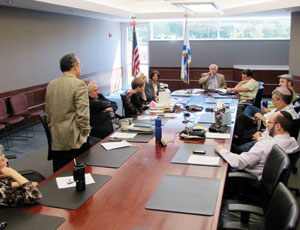 Rabbi Rockoff believes the challenge of the RA in the future will be its ability to continually redefine itself and its mission.
“Creating a venue for rabbis to meet will always be a priority but that is only one goal. If the RA is to be a dynamic and relevant entity within the community, it must continue to look at new and creative ways to fill a niche that only it can,” Rabbi Rockoff said.
Rabbi White said there are three challenges facing the RA and they are all the same: money, money and money.
“We remain most grateful to the funders without whose support we couldn’t exist, to wit, the Jewish Federation, the Jewish Heritage Foundation and the Jewish Community Foundation. Private individuals have stepped forward as well to fund individual programs, for whom we are most grateful. But the truth is that, like many organizations, our financial situation is often quite precarious,” the RA president said.
Rabbi Rockoff agreed.
“What worked before may not be working anymore, or perhaps needs to be modified. As the RA tweaks its goals, new funding sources will have to become available to support those new initiatives,” Rabbi Rockoff said.
Rabbi White noted that funding worries extend much further than simply RA programs and activities.
“Members of our association, to a person, stay abreast of demographic and religious trends among American Jews. Prominent among those trends is an ongoing decline in synagogue affiliation. Many of us see that as writing on the wall for virtually all American Jewish communities of any size. We believe collaboration now will make consolidating congregational resources — historically an anathema in many communities — more do-able, as it becomes necessary later,” Rabbi White said.
The decline in affiliation rates is an issue that greatly concerns Rabbi Levin. He said he’s often hearing people say, “It’s not worth it to me” when it comes to the fees associated with congregation membership. He worries people no longer want to “step up to the plate” so that we can have a community that knows how to observe Judaism.
“I think the greatest challenge is for people to assume their responsibility as a member of the community,” he said.
Rabbi Levin hopes he doesn’t see a day where Kansas City no longer has the kind of congregations that we have had historically.
“We are at a point now where people need to say ‘I want and am willing to participate in an active Jewish community,’ ” he said. “I think that confronts the Rabbinical Association as leaders of congregations who have to find a way to bring this case before people so that they see what’s happening.”
Personally, Rabbi Levin really wants to be a part of a full-service Jewish community.
“I was once offered a job at a nice congregation in a smaller city. I didn’t want to go because there was no Orthodox community there ... I want to have a full-range Jewish community for myself and my family — an active Orthodox congregation, kashrut, a mikvah, a religious perspective that comes from the Orthodox perspective and not simply Conservative or Reform …
“I think the Kansas City Jewish community needs to confront if having a full-range Jewish community is going to continue to be the case,” Rabbi Levin continued. “Not that Orthodox is in danger here, it’s not. But whether we’re going to continue to have all the full range of services that we’ve offered, I think people are going to have to decide whether they are going to actively be involved in that.”
More information about the Rabbinical Association can be found at kcrabbis.org or contact Annette Fish, Rabbinical Association administrator, or 913-327-4622.
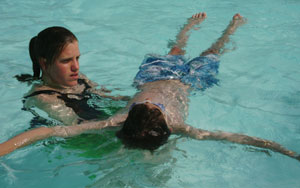
 Usually when an Israeli comes to Kansas City for the summer to work at summer camp, it’s to spend time teaching Jewish children about Israel. This summer the Boy Scouts of America are the beneficiaries of the expertise of Israeli Scout Shir Gilo, who is spending the summer as a camp counselor at Camp Naish, a 1,100-acre camp located in Bonner Springs, Kan.
 Gilo is very proud of the Tzofim, the first Zionist youth movement in Israel founded in 1919. While similar to the Boy Scouts of America, its members are both boys and girls and it was the first egalitarian Scouting movement in the world. The Tzofim have about 90,000 members, both Jewish and Arab, in Israel, with more than 160 tribes (troops) in almost 100 cities, towns, moshavim and kibbutzim.
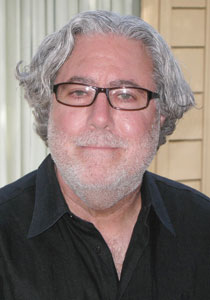 It’s Mark Katzman’s first time at the Kansas City Fringe Festival, but he’s not attending as part of the audience. He’s the author of one of the 168 acts.
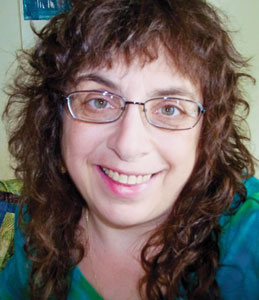 Looking for books to put on your summer reading list? Lawrence, Kan., resident and Kansas Poet Laureate Caryn Mirriam-Goldberg just published “The Divorce Girl,” (Ice Cube Press). In fact she just received copies — boxes and boxes of them in fact — on Monday.
 This may be Mirriam-Goldberg’s first novel, but she’s written a total of 14 books including “The Sky Begins at Your Feet: A Memoir on Cancer, Community, and Coming home to the Body,” which was a Starred Book by Library Journal. Her books also include four collections of poetry and the anthologies: “An Endless Skyway: Poetry from the State Poets Laureate (co-editor) and “Begin again: 150 Kansas Poems” (editor). She is also the founder of Transformative Language Arts — a master’s program in social and personal transformation through the written, spoken and sung word — at Goddard College where she teaches.
 B’nai B’rith International has been supporting Jews around the world since 1843. In 1995, the organization began sending humanitarian aid to the Cuban Jewish community. Several Kansas Citians want to become a part of that group which is helping Cuban Jews, so they plan to take part in the B’nai B’rith Cuban Jewish Relief Project Mission in December.
 OCCUPATION: Administrative assistant, Jewish Community Center’s summer camps and community volunteer
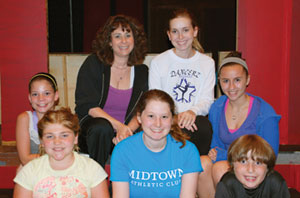 THE KING AND I — Several members of the Jewish community have roles in the Jewish Community Center’s upcoming production of “The King and I.” It opens July 14 and runs through July 29. You can catch Francine Gollub, Leah Cole, Leah Selmmons, Alexandra Fulford, Carolyn Braverman, Maya Schreiber and Noah Waldman in this Rodgers and Hammerstein family favorite that shares the story of the king of Siam and his relationship with Anna Leonowens, who travels from England to tutor the king’s children. It will be performed in the White Theatre. Ticket information is available online at jcckc.org/boxoffice or by calling 913-327-8054.
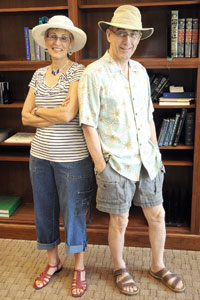 Rabbi Alan Cohen is retiring. What’s new about that? He retired in 2008 from the pulpit of Congregation Beth Shalom after serving the congregation for 19 years, didn’t he? True. But last year the congregation came calling again, asking him to serve one more year in an interim capacity.
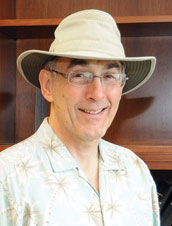 Rabbi Cohen said returning to the pulpit wasn’t that difficult because it was a job that he had always been very comfortable with.
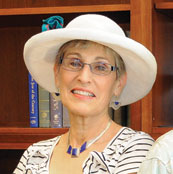 Linda Cohen is retiring not only from many of her duties as a rebbetzin but also as a teacher. Cohen has coordinated the community conversion class since its inception in 2003.
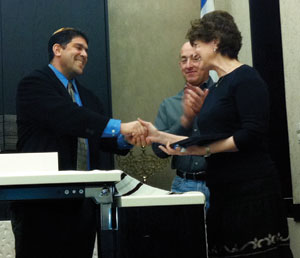 Harold Schlozman is no stranger when it comes to a hospital setting — he spent years working as a pharmacist at the Veterans Hospital in Kansas City. He saw patients on the various wards who were anxious, depressed and in various stages of illness. It was that very setting that inspired him to become a Spiritual Care Volunteer through the Jewish Community Chaplaincy Program housed at Jewish Family Services.