“World on a String,” by Karen Stark, CreateSpace Independent Publishing Platform (2012), available through Amazon.com in paperback or on Kindle

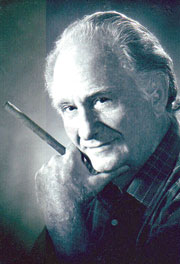
Whether you knew Kansas City designer Charlie Stark or not, you’re in for one helluva ride with “World on a String,” a fictionalized account of his early years growing up on the streets of the squalid lower East Side of New York City in the 1920s, one of 11 people living in a two-room tenement slum.

Charlie Stark’s daughter, Karen Stark, has brought to vivid life the adversities and poverty her father overcame to build his career. While the book is fiction, Karen Stark says about 80 percent of it is absolutely true, much of it based on Charlie Stark’s memoir.

Stark, who grew up in Kansas City, Mo., said people here who knew him remember Charlie Stark for “his humor, wit, bravado, excitement, great imagination and ability to be a tremendous storyteller and schmoozer. They’ll remember some of these really beautiful places he created. But what they don’t know is the life he led before he came to Kansas City.

“They don’t now the tremendous hardship he lived and survived as a little boy, … the things that motivated him, that shaped his life and shaped him into the man he became,” she said.

Although the Starks were not affiliated with any synagogue, they did observe Jewish holidays and Stark said her parents spoke to one another in Yiddish at home.

Kansas City designer

Charlie Stark came to Kansas City in 1932 at the age of 22, on his way to Hollywood to work as a set designer in the film industry. His stop here was just to visit relatives. It was the Depression, times were hard and jobs practically nil. To help his relatives, Charlie went out and found a job almost immediately designing window displays for department stores. His relatives were so impressed that, his daughter says, he thought maybe he could be a big fish in a little pond, so he stayed. Window displays grew into more design jobs, which led to creating restaurant interiors that looked like theater sets.

A club called The Castaways on Main Street was one of his designs.

“He created this whole South Sea Island ambience where an entire wall was a waterfall with beautiful tropical and exotic flowers placed strategically into the rocks of the waterfall,” Karen Stark said in a telephone interview from her home in Durham, N.C.

“Because my dad came from such a poor, impoverished background, everything had to be class.”

Another restaurant he designed was Lusco’s Lodge at about 83rd and Wornall, owned by Tudie Lusco.

“(My dad) said, ‘Tudie, I’m gonna make you this lodge that’s going to look like the Swiss Alps.’ And sure enough, he made a whole wall look like a mountainside with snow; he had a motorized ski lift going up it. … You felt like you were looking out the windows of a ski lodge,” Stark said.

Charlie was still designing restaurants into his 70s. According to Stark, in the early 1980s, one of the sons of Jasper Mirabile (of the famed Jasper’s) hired Charlie to do the interior of a new Italian restaurant called The Trattoria at 75th and Wornall.

“It doesn’t exist anymore,” Stark said. “My dad made the entire interior look like you were sitting in an Italian courtyard between two buildings. … You felt like you were in Venice.

“Up to the age of 87, he was still schmoozing and trying to convince people he was going to make something gorgeous. And I guarantee you there are probably dozens of people still in Kansas City who remember Charlie Stark coming in and saying, ‘Don’t worry. I’m gonna make you a showplace, I’m gonna make you a palace.’ ”

Trips to the Nelson

Although Charlie never had any formal training, he had a tremendous knowledge of art. Stark recalls that as a little girl, her dad would take her to the Nelson Art Gallery every Sunday where they would walk through the galleries and Charlie would scrutinize the paintings.

“He would just ramble on in his thick New York accent” about some Renaissance painting, pointing to it with his ever present cigar, explaining to his daughter how “the artist took with the tip of his brush just a drop of cadmium red and then a little cadmium yellow ochre just on the edge of this cloud to make the sunset pop out at you.”

Much of Charlie’s knowledge came from working with Alexander Chertoff, a well-known set designer in the Yiddish theater and on Broadway, who Stark says was a great inspiration to her father.

But he learned a great deal from books as well. When he was just 15, he was hired to decorate a social club. He got the idea to make it look like a New England hunting club, so he went to the New York Public Library, got photos of the English countryside and found paintings of English noblemen chasing foxes during the hunt.

“He wanted to make it perfect, he wanted to make it classy,” Stark said. “So he was really self-taught and self-motivated.”

Creating a Foundation

Stark said her father had to be his own advocate because no one else took on that role.

“When you read the book, you see that nobody was tender toward Charlie as a kid,” she said. “He had no advocates, no mentors, he was always on his own. He had to have his own inner strength to survive. Because nobody else told him he was a good kid, he had to tell himself that he was a good kid. Nobody else told him he was talented. He had to convince himself he was talented.”

Like so many other poor minorities, her dad did not have the opportunities to reach his full potential. Stark said she’s hoping a publisher will pick up the book, enabling her to sell millions of copies in order to start a foundation in her father’s name that gives scholarships to minority students who want to have careers in the visual arts.

“Had my father been properly mentored, he could have been a museum-quality painter,” she said. “I believe that minority students need more breaks. My dad was a minority slum kid who needed a break and he needed mentoring and guidance and nurturing. And kids that are poor and disadvantaged don’t get that nurturing. That’s why this will go to minority students.”

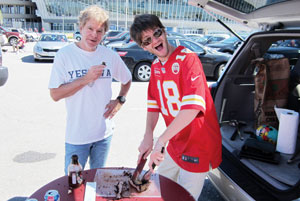
KOSHER TAILGATING — When the gates to Lot M opened bright and early at Arrowhead Stadium for the Chiefs’ home opener against the Atlanta Falcons on Sunday, Sept. 9, Isaac Gortenburg and his friends were there to fire up his kosher smoker for a kosher BBQ pre-game tailgate. Gortenburg, a graduate of the Hyman Brand Hebrew Academy who now lives in Chicago, hand-carried his specially-ordered, hand-cut, glatt kosher beef brisket from the Romanian Kosher Sausage Co. of the Windy City to Kansas City particularly for this special event. He has been experimenting in kosher smoked and BBQ meats for more than two years. His sous chefs for the day included his father, Michael Gortenburg, Isaac Chopp and Ryan Amalah.

NETANYAHU ON ‘MEET THE PRESS’ — I was busy cooking Sunday morning but took a short break to watch Israeli Prime Minister Benjamin Netanyahu on “Meet the Press.” I was personally struck by a couple of different things. Netanyahu kept repeating that Iran is in the “red zone,” meaning the country is very close to getting what it needs to produce a nuclear bomb. The red zone is football technology, cleverly used on a football Sunday in the United States, when a team is getting close to scoring a touchdown. During the interview the Israeli prime minister was clear it wasn’t his place to talk presidential politics. I completely stopped what I was doing when I heard Gregory call Netanyahu “the leader of the Jewish people.” I never knew the elected leader of the state of Israel was thought of by others as the leader of the Jewish people.

LOCAL DOC QUOTED IN WASHINGTON POST — Jay M. Portnoy, M.D., was quoted in an article in the Sept. 15 issue of the Washington Post, “Weather pushes allergy and asthma miseries to new level.” Dr. Portnoy, who is chief of Children’s Mercy Hospital’s allergy, asthma and immunology section, commented on what allergists here in the Midwest are seeing following this very hot summer and resulting drought. He’s quoted several times, including this comment: “My guess is probably it was a worse year than other years . . . because it was a perfect storm of hot, dry, low humidity.” Dr. Portnoy served as president of the American College of Allergy, Asthma & Immunology from 2007 to 2008 and is a member of Kehilath Israel Synagogue. To read the entire article, go to http://www.washingtonpost.com/national/health-science/weather-pushes-allergy-and-asthma-miseries-to-new-level/2012/09/15/ad2d46be-fd03-11e1-a31e-804fccb658f9_story.html?wprss=rss_national.

WALK FOR ALS — Several members of the Jewish community are involved in the effort to raise money to find a cure for amyotrophic lateral sclerosis (ALS) or Lou Gehrig’s Disease, a progressive neurodegenerative disease that affects nerve cells in the brain and the spinal cord. The Kansas City Walk to Defeat ALS will be Sept. 29 at Berkley Riverfront Park. It is a family-friendly event designed to celebrate the lives of those living with ALS and the memory of those who have passed away but are not forgotten. The event begins at 9 a.m. and will include activities for the kids, fellowship and friendship for the adults, and coffee, bagels and other snacks. The walk itself begins at 10:30 a.m. and is a 1-mile stroll through Berkley Park. The Walk to Defeat ALS is the ALS Association’s biggest annual event, which raises funds to sustain patient care and support research for much of the following year. For more information call Nellie Feehan at 913-648-2062.

JDC FACEBOOK APP — The American Jewish Joint Distribution Committee (JDC) has launched its first ever Facebook App — https://www.facebook.com/TheJDC/app_235031903285313 — allowing you to send e-Recipe cards to family and friends. Connecting you to Jewish communities far and wide, you can share JDC global holiday recipes — from leek fritatas from Turkey or cornflour-coconut halava from India — and your own holiday favorites. You can also become a fan of JDC’s Facebook page and show your support for JDC in its historic and ongoing mission of caring for Jews and Jewish communities overseas. Become part of our movement of global Jewish responsibility and say Shanah Tovah to millions of Jews in the more than 70 countries, including Israel, where JDC works. You can also channel your inner Joan Nathan or Claudia Rodin and download JDC recipe cards-spanning the organization’s global reach from Argentina to Tunisia-at: http://www.jdc.org/recipes2012.

For some, the U.S. economy has improved slightly. Yet there are others in our midst who continue to struggle. These people are faced with chronic need — the elderly, those on long-term disability and fixed-incomes, etc. They are our neighbors and family members, fellow congregants or classmates whose circumstances are unlikely to change in the near future. And they need our help.

Thankfully, the Chesed Fund was started five years ago by the Jewish Federation of Greater Kansas City to provide support for those who find themselves in challenging financial circumstances on an on-going basis. The fund helps Jewish residents living in the five counties in Greater Kansas City whose situation is unlikely to change or will not improve with one-time emergency assistance.

“The Federation established The Chesed Fund in 2007 because even then we saw a rising need among people with chronic financial challenges,” said Shari Stimetz, Federation assistant executive director. “Chesed was launched with a $50,000 grant from the Menorah Legacy Foundation and has received generous support from funds at the Jewish Community Foundation of Greater Kansas City, including the Legacy Fund.”

Jewish Family Services works in partnership with the Federation to administer The Chesed Fund.

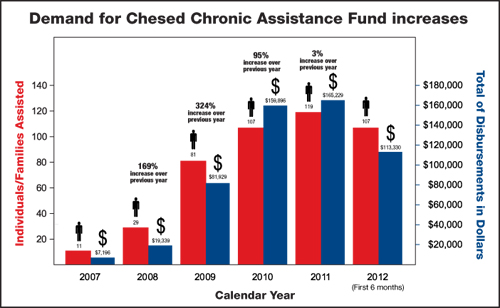
In its first year, The Chesed Fund helped 11 people disbursing a total of $7,196. In contrast, during the first six months of 2012, The Chesed Fund has distributed $113,330 to 107 individuals/families and will surpass 2011 in both the number of people helped and dollars allocated.

“People are not finding jobs as  quickly and the need for financial assistance is needed for a longer period of time,” Stimetz said. “There are unexpected situations that come into one’s life that eat up savings and can devastate a family — like a prolonged illness.”

More financial donations are needed to replenish the Chesed Fund.

“We never know from year to year what the fund will need, but from our experience and the stats, we need to raise more money,” Stimetz said. “We don’t turn away anyone whose need is validated even if we don’t have the money in the fund. The Federation advances it and is paid back as we raise the funds.”

As an incentive, Frances O. Brown recently made a generous challenge grant gift to the Chesed Fund through the Jacob and Frances O. Brown Family Fund of the Jewish Community Foundation. The challenge grant, in the amount of $5,000, was put in place in early August to motivate other potential givers and has already proved fruitful.

Jewish Community Foundation staff is happy to help in situations like these: “Because the Jewish Community Foundation works with all of the Jewish community’s major funders, we are able to match up individual donors with causes that speak to them,” said Lauren Hoopes, JCF executive director. “In this case, we let Frances know about the need and helped her come up with a creative way to leverage her donation.

“Anyone can make a challenge grant to the Chesed program, or any other community funded program. All they need to do is contact us and we can help them make it happen.”

To donate directly to the Chesed Fund, contact Shari Stimetz at 913-327-8102 or , or donate online at www.jewishkansascity.org. If you are interested in creating a new Chesed challenge grant, or making a donation from your JCF donor advised fund, contact Beatrice Fine, director of funder services and education, at 913-327-4618 or .

The Chabad Center for Jewish Life in Lawrence has launched a live Sunday Jewish Radio show, “The Schmooze” on KLWN News Talk 1320 AM. The first show aired Sunday, Aug. 26.

“This is the first time in Lawrence history that a Jewish radio show is on the air,” said Rabbi Zalman Tiechtel, director of Chabad at KU.

Each week the show, which airs Sunday at 8 a.m., covers a question of the week pertaining to Jewish culture and traditions as well as an upcoming holiday or the weekly Torah portion. The 30-minute show also features a Jewish joke of the week, a new Yiddish phrase and special guests and content. Listeners are encouraged to call in and share their insight and join the conversation.

“After all that’s what schmoozing is all about,” Rabbi Tiechtel said.

Rabbi Tiechtel said the show will expose the depth and meaning of the Jewish traditions to many people who may not have direct access to learn more about Judaism. “There are many myths about the Jewish religion and its lifestyle, and the goal of this show is to bring the joys of Judaism and its rich heritage to all,” he said.

The Lawrence rabbi said the idea of a radio show has been brewing for a while now.

“At Chabad we are always seeking ways to bring Judaism to every Jew. Sometimes you cannot wait till someone steps through the door, you need to bring the joys of Judaism into their home or to their kitchen table on a Sunday morning. That was the inspiration behind the idea,” he said.

Rabbi Tiechtel said that since the media is such an enormously powerful force, the new radio show is a great way to reach the heart and soul of many people.

“With the Jewish population at KU and in Lawrence growing in rapid strides, now is a great time to get this show going. There is no better way to start off our week in a reJEWvinating fashion, then a Sunday morning Schmooze.”

Rabbi Tiechtel said he approached the general manager of Great Plains Media Jay Wachs, the parent company of KLWN, “who is a fellow Jew and a wonderful person,” about his idea.

“He loved the idea,” Rabbi Tiechtel said. “He was excited about the idea and was even willing to lend his support by having the station sponsor some of the shows. The remaining shows are being sponsored by local businesses, among them At Home Care Inc. and Dr. Dave Computer Repair. More sponsors are joining in as well for the future.”

KLWN’s Wachs said the station had been thinking about diversifying its Sunday line-up and was open to the idea because it had heavily focused on Christianity. No stranger to Jewish-themed radio, Wachs hosted a Sunday morning radio show based on Jewish religion, history and culture when he was president of the Jewish Federation in Greenville, S.C.

Wachs pointed out that there are three Jewish men currently working at KLWN and its sister station KISS 105.9 FM — Sean Levine hosts Rock Chalk Sports Talk on AM from 3 to 6 p.m. weekdays and Craig Hoffman, known as KJ, hosts the 3 to7 p.m. afternoon show on the FM side.

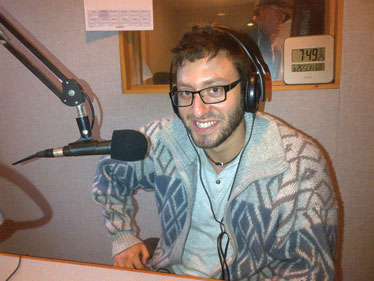
“The Schmooze” is co-hosted by Michael Lebovitz, a junior at KU who hails from the Kansas City area and is majoring in linguistics. Lebovitz actively participates in Chabad programming on campus.

“I have always been impressed with his skills in communicating ideas and also his great sense of humor. When I was thinking of having someone join me each week to spice up the show, I thought Michael would be a great addition,” Rabbi Tiechtel said.

“It is also so important for people to get inspired by the youth as it is these young men and women who will be the future leaders in the Jewish community,” the rabbi added.

This is Lebovitz’s first time on the radio and he’s enjoying it.

“I have a lot of friends in radio at the university radio station KJHK and I’ve been in the studio with them and helped them run their show, ‘Jazz in the Morning,’ and I’ve spoken once. It was really cool and now I get to do it myself and it’s a lot of fun,” Lebovitz said.

Rabbi Tiechtel said the first three shows have been very well received. The very first show focused on the call of the shofar, and the shofar was actually blown on air for all to hear.

After each show, podcasts are posted on the Chabad at KU website, www.JewishKU.com. For more information call Chabad at 785-832-8672 or email .

Brian Gersh is a student at The Interdisciplinary Center in Herzliya, Israel. Since last spring he has been raising funds to help two fellow students, who are Sudanese refugees, complete their studies at IDC as well.

Gersh, 29, first learned about the problem facing African refugees when he arrived in Israel in 2008 and participated in a Masa program in Tel Aviv called Tikkun Olam. He was reintroduced to the issue last spring while on active reserve duty for the Israeli Defense Forces (he completed his army service in July 2011 as a staff sergeant in a combat unit).

“My unit was transferred to the unfenced area of the Egyptian border to give support to the unusually high number of Africans crossing over from Egypt,” said Gersh, who grew up in Overland Park as a member of Congregation Beth Shalom and graduated in 2001 from Blue

Valley Northwest High School.

Since 2005, Gersh explained, more than 60,000 Africans from a variety of different countries including Eritrea, Darfur and Sudan, have illegally crossed the Egyptian border into Israel.

“Many of them had stopped in Egypt where they were enslaved. There was a harsh crackdown by the Egyptian police where many of the asylum seekers were being murdered, so they crossed into Israel to seek refuge,” Gersh said.

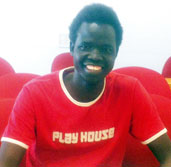
Gersh studies along with Gabriel Thon and William Akon Deng at IDC in the International Government Program. Both entered the country illegally, served time in Israeli internment camps and are now full-time students. The two, and their families, were supposed to be deported this summer along with 2,000 other Africans.

According to a Washington Post article published June 15, 2012, the decision to expel Israel’s South Sudanese migrants first surfaced in early April, when the Interior Ministry issued a deportation order based on the idea that South Sudan’s independence in July 2011 had eased risks for the refugees. The Washington Post noted that human rights groups in Israel petitioned the order, citing the enduring armed conflict between Khartoum and South Sudan as evidence that the refugees would be at risk of death if deported. But the Jerusalem district court ruled that the rights groups were not successful in proving that the refugees would face imminent danger.

In his bio, Deng said he was very hurt when he heard the deportation news. He explained it took him many years to be able to go to school and after he finally started, the deportation order “seemed like a bad dream.”

A group of students, including Gersh, did successfully petition the Interior Ministry to get special exemptions for Thon and Deng, along with another four students attending Tel Aviv University and one in Beersheba. All students are studying either government or business.

However, none of the students were given working visas that would allow them to get jobs to pay for living expenses. That’s why Gersh began the fundraising campaign.

“Because of the huge influx of asylum seekers from Africa, any employers caught employing Africans will go to jail or get fined,” Gersh said.

Thon is grateful for the help he has been getting from Gersh and his friends.

“If it had not been for the generosity of friends, I would have not completed the last semester … I have to thank the school administration and the students for standing against our deportation. Brian being our friend and our classmate encourages us …,” Thon said.

Educating and taking care of these Sudanese refugees is important to Gersh for humanitarian reasons as well as Israel’s future.

“I believe this is a great chance for Israel and the South Sudan, a brand new Christian government, to start building diplomatic and economic relations,” Gersh said. “I believe to have a brand new Christian-based government in your neighborhood, especially in Africa, is a huge opportunity for Israel.”

Gersh points out that according to statistics provided by the World Bank, South Sudan is one of the world’s poorest and most underdeveloped countries. He said three out of four heads of household have no formal education whatsoever, and illiteracy and child mortality rates in the country are among the highest in the world.

Gersh said Thon and Deng definitely want to return to South Sudan once their studies are complete.

“They want to go back to South Sudan, but they need logistical and economic help in order to do that. They need two more years to finish their BA degrees in international government,” said Gersh, who is on track to also earn his undergraduate degree in the spring of 2014. He hopes to continue studying for an advanced degree in the future.

Local rabbis have agreed to help Gersh as have friends and family in Kansas City. Gersh, who returned to Israel late last week, also contacted some churches and priests while he was in the area. The African Refugee Development Center in Tel Aviv is assisting as well.

He emphasized that his fundraising campaign and support of these refugees is not a criticism of the Israeli government.

“What is going on there is a reaction to a problem that has been brewing,” he said. “There is crime in Tel Aviv, but the crime is coming because they are not giving working visas and one has to do what one has to do to survive, unfortunately.

“I criticize because I care. I love Israel. I’m a huge Zionist. I honestly believe that relations between these countries is what Israel needs and the best way to establish relations is by educating students who in time will rule their country.”

Eventually Gersh would like to establish a foundation where South Sudanese can be brought to Israel explicitly for education and then will return to their country to share what they have learned.

“I believe that’s a really good foundation for nation building.”


Help Sudanese students

Brian Gersh, through the New Israel Fund, is raising funds to help two students from South Sudan pay for living expenses while they attend college in Herzliya. To make a donation, send a check to New Israel Fund, 703 Market Street, Suite 1503, San Francisco, CA 94103. Make sure to write Gabriel and William on the memo line. For more information call 415-543-5055 or email . Questions may also be addressed to Gersh at .

The Lawrence Jewish Community Congregation has hired Rabbi Moti Rieber as the community’s part-time rabbi. The appointment became effective Aug.12.

Rabbi Rieber comes to LJCC with a wealth of experience in Jewish communal leadership, interfaith relations and nonprofit management. A graduate of the Reconstructionist Rabbinical College in Wyncote, Penn., Rabbi Rieber also serves as director of Kansas Interfaith Power & Light, a statewide nonprofit dedicated to promoting clean energy and energy efficiency in houses of worship. He previously served as rabbi of Congregation Beth Shalom in Naperville, Ill., and as executive director of the Mid-Kansas Jewish Federation in Wichita. He and his wife Suzy live with their three children in Overland Park.

Established in 1954, the Lawrence Jewish Community Congregation serves as an inclusive center of Jewish spiritual, cultural and social life for the Lawrence area. It provides weekly Friday night Shabbat services as well as holiday services and celebrations. A diverse and egalitarian congregation, it  incorporates elements of the Reform, Conservative and Reconstructionist traditions in its services.

Jonathan Paretsky, president of the LJCC, said Rabbi Rieber will provide a broad range of benefits to the congregation, including leading religious services, offering personal counseling and chaplaincy, assisting with religious education programming and consulting with the congregation on matters of ritual and community relations.

“Although the position is only quarter-time at the present, Rabbi Moti is already playing a visible and dynamic role in the community. His energy and talents are infusing a renewed sense of commitment and purpose to our congregation, ” Paretsky said.

Rabbi Rieber said he thinks “Lawrence’s identity as an intellectual and progressive community will be a good fit for me.”
One of the things that interests Rabbi Rieber most about LJCC is its diversity.

“In a comparatively small city like Lawrence, the congregation contains members who identify as nearly Orthodox to just Jewish and everything in between. Sometimes I think they’ve seen this as a challenge, but I think the community’s diversity is a strength. On the one hand it shows how seriously we take our Jewish lives, but on the other it allows us to offer a willingness to support each individual’s path,” he said.

“I hope what I will bring is a reminder that Judaism is focused on both the inside — on our spiritual practice, and our relationship with God — and on the outside on strengthening our commitments to care for each other through gemilut chasadim and to improving the world through tikkun olam. I hope to help the community nurture both — to teach that both are necessary to be a complete Jew and a complete person.”

Rabbi Rieber said at LJCC he will focus on building strong connections both within the congregation’s membership and with the wider Lawrence community. LJCC will be rolling out a series of programming, educational and service initiatives, over the coming months that will utilize his skills.

“We hope these programs will appeal both to those affiliated with the LJCC and to Jewish and interfaith families who have not yet been part of the congregation,” Rabbi Rieber said.

Rabbi Rieber leads services on the first Friday of each month and attends religious school on Sundays twice a month. Services on other Fridays are led by cantorial soloist Rachel Black, by the contemporary musical ensemble Shiray Shabbat and by lay members of the community. Rabbi Rieber will also be leading High Holy Day services.

NEW TEMPLE SINAI TO OFFER HIGH HOLY DAY SERVICES — We have just learned that Temple Sinai, a group of Reform Jews, has been offering Shabbat services at Colonial Church Chapel located at 71st Street and Mission Road, at 7:30 p.m. every Friday. Services are open to the entire community. Rabbi Paul Silbersher leads the service, which includes music, readings and inspiring offerings from the entire congregation.

The brand new congregation is also planning to hold High Holy Day services. The entire community is welcome and no tickets are required, but reservations are requested. Erev Rosh Hashanah services will be at 7:30 p.m. Sunday, Sept. 16; Rosh Hashanah services will be the following day from 10 a.m. to 1 p.m.; Erev Yom Kippur services will be from 7:30 to 9 p.m. Tuesday, Sept. 25; Yom Kippur services will be the following day from 10 a.m. to 1 p.m. and then concluding services will take place from 5 to 6 p.m.

For more information regarding Temple Sinai or to make High Holy Day service reservations, call Larry Gelb at 816-942-4954 or email . Information is also available on the website, www.TempleSinaiKC.org.

HIGH HOLIDAY SERVICE SCHEDULE — The service schedule for the local congregations is published in The Chronicle’s special Rosh Hashanah magazine. It was mailed separately to subscriber’s homes and should arrive any day now.

SOLDIERS WELCOME — Jewish War Veterans, Mo-Kan Post 605 has contacted chaplains at Fort Leavenworth to invite Jewish soldiers to Kansas City to join in High Holiday services. Rabbi Scott White was first to offer the facilities of Congregation Ohev Sholom to the active duty personnel and other synagogues and temples have been contacted by the Post’s Outreach Committee if additional accommodations are needed. Any family that would like to invite a soldier to a holiday lunch or dinner can contact the Outreach Committee at 913-642-7067.

5773 CALENDAR AVAILABLE — The Torah Learning Center has produced a beautiful Judaic calendar and Rabbi Simcha Morgenstern tells me “we are happy to mail it free of charge to anyone interested.” The calendar includes upcoming holidays, educational messages, Shabbat and holiday candle-lighting times and features photos of synagogues from around world. To request your free calendar call 913-890-3811 or visit www.kcjewishcalendar.com.

EMANUEL AX TO PERFORM — One of the world’s best known classical pianists, Emanuel Ax, will be in Kansas City next week to kick off the 48th season of the Harriman-Jewell Series. The pianist has played for the Harriman-Jewell Series 11 times, most recently in October 2010 for a benefit recital in memory of the Series’ late founder, Richard Harriman. Ax captured public attention in 1974 when he won the first Arthur Rubinstein International Piano Competition in Tel Aviv. In 1975 he won the Michaels Award of Young Concert Artists followed four years later by the coveted Avery Fisher Prize. The Washington Post music critic declared that “Ax is an extremely satisfying pianist; he is at home in a wide variety of music and his pianism is always thoughtful, lyrical, lustrous.” His planned program Includes Beethoven’s Piano Sonatas No. 2 in A Major and No. 8 in C Minor “Pathétique,” and Schubert’s Sonata in B-flat Major.

He will appear Saturday, Sept. 22, at the Folly Theater. Tickets are available by calling 816-415-5025 or visiting jhseries.org.


Jewish Family Services is preparing to open a food pantry. Known simply as the JFS Food Pantry, it will officially launch with a kickoff event on Sunday, Oct. 7, during the intermediate days of Sukkot. Details of the event, which will include an education session about hunger in the community, will be announced later.

The timing of the opening is not coincidental, according to JFS Executive Director Don Goldman.

“Sukkot is a harvest festival, so the holiday is about food,” he explained.

The JFS Food Pantry will be the second Jewish food pantry in the community. Yachad — The Kosher Food Pantry was established in 2004 and is operated by the Chabad House Center. (For more information see below.) Over the years Yachad has coordinated the Simcha Box program, a joint effort between JFS and the Jewish Federation to provide food for Jewish families in need in the area. The Simcha Box partnership will end following the October delivery. JFS will take it over and rename it in November.

Who will the pantry serve?

The JFS Food Pantry will serve anyone who is hungry and works with JFS, Goldman said. These people are often referred to JFS through a partnership with the Jewish Federation of Greater Kansas City after seeking safety net services such as emergency assistance funds. The pantry will serve both Jewish and non-Jewish clients as well as kosher and non-kosher ones.

“Our social workers work with many people both in the Jewish and general community who come to us for a variety of needs,” Goldman said. “The fundamental issue for them is they just can’t pay all their bills to get by, at least for a short period of time.”

In addition to needing help with the bills, many of these same people need food assistance. Some are already on food stamps, but they have learned that food stamps don’t stretch very far. For example, Jewish Council for Public Affairs reports the average food stamp allotment is $31.50 per week, or just $1.50 per meal.

“First of all you have to be very, very poor to qualify for food stamps and even if you do qualify it’s not sufficient food for the month,” Goldman explained.

To receive food pantry benefits, a person must be a JFS client and qualify for the service.

“We have some standards that we generally use for our clients, but the fact is we are not like a big government bureaucracy, so we are very flexible about those guidelines. The fact is everybody’s situation is different. There could be people who are above the poverty line who have extraordinary expenses caused by an illness or a disability who will qualify,” Goldman said.

Anyone who has qualified for special Jewish community safety net services and is receiving services from JFS is already qualified for assistance from the food pantry.

“That’s one of the reasons it makes sense for us to do this,” Goldman said. “To get those funds they are already talking to social workers, they are already coming up with a plan to improve their situation so they will need less help or even no help in the future.”

Goldman said in many cases JFS has helped a client, regardless of religion, by actually purchasing a bag of food for the family.

“That’s not really covering their food needs for the month but it’s helping a little. Then we send them to another place or another food pantry for more assistance,” he said.

Why now?

JFS is currently sending a lot of clients to other pantries for assistance. Goldman said the thought more and more was, “Why shouldn’t they be able get food from us when they are here?”

Goldman said it’s frankly an oddity that JFS couldn’t help clients with food before. In fact, the majority of the 120 Jewish Family Service agencies across the country already operate a food pantry.

“It’s such a basic need. We’re helping to pay their rent but their kids are hungry. That never made sense to us,” Goldman said.
Goldman pointed out that JFS has been tangentially in the food business for quite some time.

“We have done holiday food projects around Passover and Rosh Hashanah for many years. In addition, in the last few years we have gotten money from the federal government as part of its emergency food program to help distribute food for our clients. Finally almost three years ago JFS inherited the Simcha Box program from the Federation, which had created it in partnership with JFS and Yachad about 10 years ago,” Goldman said.

Simcha Box, according to Goldman, originally was a food delivery program for people who couldn’t get out of their homes and needed food assistance. However it has grown to be a program that has served many people who have lost jobs or are having other financial troubles.

Community partnerships

The JFS Food Pantry will be a member of Harvesters Community Food Network. A number of others organizations in the Jewish community, including most of the local congregations, have also expressed a desire to work with the pantry.

“I’ve met with all the rabbis in town and the Rabbinical Association and everybody is very excited about the pantry,” Goldman said. “Most of the congregations in town are planning High Holiday food drives to support the pantry, including a number of congregations that have not done High Holiday food drives before or in recent times.”

Several local grocers plan to assist the pantry including Hen House at 117th and Roe, Price Chopper in Rosanna Square and Whole Foods at 119th and Lamar. The Mitzvah Garden will also provide some produce from its garden.

“Liberty Fruit has very generously provided fruit and vegetables for the holiday programs and Simcha Boxes in the past and has indicated they will continue to support these programs,” Goldman added.

Goldman said a core part of pantry funding is a redirection of funds from Simcha Box, which are provided by Jewish Heritage Foundation and Menorah Legacy Foundation. JFS also received a new grant from United Way from its United for Hope project, which is helping to provide the infrastructure for the pantry as well as funds for food for non-Jews who use the pantry.

How it will work?

The pantry will be run by Adrienne Kizer, who has been with the agency for more than 11 years. Her new title is director of food pantry and community projects.

The pantry will offer both kosher and non-kosher options.

“We surveyed our current Simcha Box clients and somewhere between 10 and 15 percent of those keep kosher. So in the past we had been providing 100 percent kosher food to 85 percent of people who don’t keep kosher. That has huge implications on the cost of the program,” Goldman said.

Now the pantry will be able to purchase a variety of food it couldn’t get in the past from Harvesters.

“It’s impossible to get kosher hechshered (kosher certified) tuna or green beans from Harvesters. So when we provided that before, we had to go and buy those things at retail cost as opposed to what you can get it for from Harvesters, which is a very small handling fee,” Goldman said.

The kosher section of the pantry will be Vaad supervised.

“The Vaad will give us procedures and help train our volunteers so that we can maintain high kosher standards,” Kizer said.

Goldman reiterated that the pantry’s kosher section is very important to JFS.

“Anybody who requests kosher can have kosher food and the kosher food will be at least equal in quality and quantity to the non-kosher food, whether we have to buy some of that at retail or not. The food drives will be really important for us to get and stock those shelves,” Goldman said.

The pantry will be located in the basement of the Jewish Community Campus. A satellite location will be available in the Missouri office for people who use that location for privacy reasons or because it is located on the bus route.

The pantry will be open by appointment and qualified clients will be assisted by a volunteer as they shop. There will be no walk-in hours so visitors to the Jewish Community Campus will never see a line of people waiting to enter the food pantry.

Kizer pointed out that JFS will need volunteers to serve the entire program, doing such tasks as stocking the shelves, assisting the clients and delivering food to those who can’t get it themselves.

JFS Food Pantry
Home Delivery


The establishment of the JFS Food Pantry is necessitating a change in the Simcha Box program. In November the name will change to JFS Food Pantry Home Delivery. It will no longer be an exclusively kosher program, but kosher food will be available for those who request it. Delivery will be provided to all clients who request it, but in general Goldman believes the program will deliver fewer boxes than in the past.

“We expect that those that can get to the pantry will choose to shop here so they can personally select their own food.

However it will be their choice if they want to continue receiving a delivery,” Goldman said.

For more information regarding the JFS Food Pantry and JFS Food Pantry Home Delivery or to become a volunteer, contact JFS at 913-327-8250 or .


Yachad — The Kosher Food Pantry to continue operating
Now that Jewish Family Services is opening a food pantry for the Jewish community, questions have arisen as to the future of Yachad — The Kosher Food Pantry run through the auspices of the Chabad House Center. According to an email sent to its supporters in early August, Yachad plans to continue operating.

“Concerns have been voiced that Yachad is shutting its doors. We hasten to assure you that this is not happening,” stated the email, signed by Rabbi Mendy Wineberg and Sherrill Parkhurst, the volunteer manager of the pantry.

Yachad was started by Rabbi Wineberg and his brother Zev in 1998. Rabbi Wineberg said in the email that he “is as devoted to this project today as he was then.” The email pointed out the biggest difference between the two food pantries in the Jewish community.

“Chabad House will always ensure that the Jewish community will have a kosher place to feed their bodies as well as their souls. We are a kosher pantry — the only one serving the entire Midwest.”

In a conversation with The Chronicle, Rabbi Wineberg also reiterated that Yachad will continue to assist anyone who needs it, regardless of their religion and without meeting any type of qualifying standards.

“We are truly a walk-in pantry. We don’t ask for any financial information,” he said. “We don’t care what the situation is. We want to make sure anyone who is hungry is taken care of in a truly private manner.”

Rabbi Wineberg believes a kosher food pantry is important to the body and the soul.

“Times have been rough economically for our city. For those who experience distress, the spiritual aspect of eating kosher food is unique in its ability to foster resilience and inner strength.”

After October, Yachad will no longer be involved with the Simcha Box Program, a joint project between Yachad, Jewish Federation and JFS, which has been operating since 2004. The program will now be run by JFS. It will no longer be a kosher program, but a kosher option will be offered to those who request it.

“While this was a Federation funded program, it was Yachad’s dedicated volunteers who ran the entire program, from purchasing food, to packing the boxes, through the final distribution to the clients,” Rabbi Wineberg and Parkhurst wrote.
As Yachad makes these changes, it thanked its volunteers.

“Wonderful relationships have been formed with our volunteers and also between volunteers and clients. We are very grateful for this, and, particularly for the fact that together we have helped ease the hunger of those less fortunate; moreover, in a truly dignified manner. We did all this with true love, compassion and empathy, while adhering to the highest kashrut standards without compromise.”

“We want to give a special thanks to Joan Fogel and Nancy Eisner. Without their vision and hard work there would never have been a Simcha Box Program.”

In the fall, Yachad will be offering new services. In cooperation with Harvesters, it will be hosting nutrition and cooking classes.

“In addition, because we are committed to feeding the soul as well as the body, we are going to be offering coaching to anyone who would like to understand more of the mystical and/or practical applications of kashrut. Group classes are forming, as well as one-on-one tutoring. In preparation for the upcoming High Holidays, Yachad encourages all who are connected with us in any way to take on one new kosher commitment and to encourage their friends and family members to do the same.”

For more information about Yachad, call 913-649-4852.

Next week Patricia Werthan Uhlmann will be recognized, along with 78 other Jewish women, as a Kipnis-Wilson/Friedland Award recipient. Established in 2004, The Kipnis-Wilson/Friedland Award recognizes extraordinary women who have set a high standard for philanthropy and volunteerism. These women have been chosen by their communities as “women of valor” with lifetimes of commitment to the Jewish world. The award ceremony will be held at the International Lion of Judah conference in New York in which 18 people from Kansas City will be in attendance.
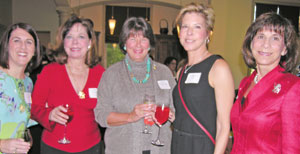
Uhlmann joins an elite group of Kansas City women — Elaine Polsky, Shirley White and the late Maria Devinki — who have been so honored. Yet honors were the farthest thing from her mind when she chose a path of volunteerism.

“Both sides of my family were always involved in the community. Their biggest foot was in the Jewish world and their smaller foot was in the general community because they felt it was very important to do good works and be visible and have the privilege to give back in both the Jewish and general communities,” Uhlmann explained.

She credits her father, Howard Werthan and his family from Nashville, Tenn., and her mother, Heloise Pfeifer who hailed from Little Rock, Ark., for setting the stage, the tone and the example for everything she does.

“I had really amazing role models. That’s why I think it’s important to be a role model for others. You have to actually do things, not simply preach,” Uhlmann explained.

Uhlmann came to Kansas City as a young married woman and really didn’t know anyone except her husband’s family — she married John Uhlmann (who passed away unexpectedly in 2009) in 1972. Her first opportunity to volunteer came from the local Jewish Federation.

“People were wonderful to me and very inclusive and tried to teach me about the community,” Uhlmann recalled. “I credit Debbie Granoff with getting me involved here. Debbie was the president of the Women’s Division and she called me and asked me if I would chair the Young Married’s division. I said yes and that was the beginning of the Federation experience for me.”

From there Uhlmann moved on to serve as Women’s Division campaign chair and then president. She later became the Jewish Federation’s general campaign co-chair. Today she continues to serve on the board of directors and is planning and allocations chair. Her volunteer work also includes serving on the board of the Jewish Heritage Foundation. Previously she served on Planned Parenthood, the Center for Practical Bioethics and The Temple, Congregation B’nai Jehudah boards.

Uhlmann said participating in communal activities for the past 40 years has given and continues to give her life great satisfaction.

“I think we’re all looking for things that give our lives purpose and meaning. Kansas City should be incredibly proud of the relationships that they have made around the world through the work that we do. We’re a stellar Federation. Other communities look to us for best practices. We’ve won a lot of awards for our programming. Our leadership is always of the top caliber. It’s a privilege and it’s a responsibility and it’s fun to work with the Federation,” she said.

Jewish Federation Executive Vice President and CEO Todd Stettner said Uhlmann’s efforts personify the agency’s mission to sustain and enhance Jewish life at home and around the world.

“Trish Uhlmann captures not just the heart of our work but also the soul. She is deeply passionate about community and understands the true meaning of kol Yisrael aravim ze leh ze — all Jews are responsible for all others.”

Through Jewish Federation, she met and worked with those she now considers her best friends.

“I really can’t imagine living in a community that’s as blessed as our community is and not feel the desire, the sense of privilege and responsibility to give back to this community to ensure its future,” Uhlmann said.

She points out that while she is being honored personally, she doesn’t work alone on any project.

“It’s all done with the support of an incredible community,” she said.

Uhlmann has extended her family’s volunteer tradition to encompass other areas of the world, taking to heart her family’s mantra, “Don’t just take up space, make a difference in your community and your world.” She has done so through the American Jewish Joint Distribution Committee. Since 1995 she has been active on the JDC board of directors serving as chair of the Europe Committee and currently as chair for the International Development program, the non-sectarian arm of JDC. In February, she co-chaired a fact-finding mission to Ethiopia and Rwanda.

Through Jewish Federation and JDC, Uhlmann worked behind the scenes to establish a connection between the two Jewish organizations and Kansas City-based Heart to Heart International. A medical social worker by training, she has traveled with Heart to Heart to disaster-ravaged areas such as Haiti, and just last week was keeping tabs on the status of the hurricane damage there through Heart to Heart representatives.

“We’re constantly close to the pulse of what humanitarian needs are in the world,” Uhlmann explained.

A course she took this summer at the Pardes Institute of Jewish Studies in Jerusalem reinforced what she already knew, that the volunteer work we do in the Jewish and general communities is not just about us.

“We really are a role model and a bellwether for the world. The way we treat each other and the way we treat other people in our community and people outside our community is critical for our wellbeing and for the world’s wellbeing. I think we’re so often judged on what we do, how we do it and what we say,” Uhlmann said.

Uhlmann, who grew up in a classically Reform Jewish household and is a member of The Temple, Congregation B’nai Jehudah, said she never forgets that she lives in the best country in the world where “we are blessed to live freely as Jews.” She is proudly passing on her Jewish values to her children and grandchildren and is also a role model to younger members of the Kansas City Jewish community.

“It’s so important to me that the next generation understands and respects the Jewish community’s sacrifices and successes of the past and are willing to embrace the mantle of leadership in the future. Our community will not thrive without this commitment,” she adds.

When Uhlmann uses the term “our community,” she means the local, national and international Jewish community.

“I urge people to get involved in projects here in Kansas City,” she said. “And when they are traveling to other parts of the world … Berlin or Prague or Budapest … call us and we’ll help arrange a meeting with other Jews in that area. We are trying to keep the windows and doors open to the world and we are doing a great job.”

Uhlmann is determined to make sure the Jewish community here remains vital and viable and sustainable for her daughter, son-in-law and three grandchildren who live here. (Another daughter lives with her husband and three children in Massachusetts.)

“There’s a very clear purpose for the reasons that I do what I do. I’m very proud of this community. I’m very proud of the work that is done by this community and on behalf of the Jewish community in the general community.”

When Becca Winner moved back to Kansas City last year, she was looking to socialize with a group of young Jewish professionals in their 20s and 30s, like the groups she’d been part of in Washington, D.C. At the same time, local community workers were trying to re-engage that same set.

KC Young Jewish Professionals started when The Temple, Congregation B’nai Jehudah’s Shared Vision/Individualized Jewish Path

Coordinator Amy Ravis Furey and Congregation Beth Torah’s Special Programs Coordinator Farrah Udell decided to combine their efforts to develop new programs for that age group.

The congregations each have their own programs as well, Friends Next Dor at Beth Torah and Kehillah KC at B’nai Jehudah, but this new group is more informal and does not meet on the grounds of either congregation.

“A little more than a year ago, a couple of B’nai Jehudah parents approached me, concerned that they felt like there weren’t opportunities for their young adult children to explore their Jewish identities in Kansas City. They were worried that either (their kids) would leave Kansas City or it wouldn’t be attractive enough for them to come back post-college,” Furey said.

That’s when she started organizing Kehillah KC. About the same time, Udell was hearing similar concerns, as she was working on Friends Next Dor.

The focus of this new group is not religious but more to provide a chance to hang out with other Jewish people in their 20s and 30s. Winner also had a hand in organizing these gatherings.

“I think it’s (about) finding a place to network. It’s great for people who just moved to town,” she said. “It’s hard in general when you come back, just trying to figure out your social scene here. People want to have Jewish friends, but it’s not easy just to go out and find them.”

When Winner moved back, she contacted Udell in hopes that she could help implement some of the programs that were on the scene for young Jewish adults in Washington, D.C.

“I’m part of this demographic as well,” Udell said. “When we started talking to people, there was a need that wasn’t being met. There were a lot of young Jews in the community who wanted to find Jewish friends.”

Since this new program aims to connect with all young Jewish professionals, regardless of religious observation or affiliation, having a happy hour in a local bar or restaurant provides “a very neutral location,” Udell said.

Although they are planning to offer events with more Jewish content in the future, such as Shabbat dinners and holiday celebrations, Udell and Furey are focusing first on creating a community among these young professionals. Other more neutral events include kickball games and a book club.

Winner agrees with this approach.

“We have to take baby steps in introducing things. I think people are hesitant to jump on the bandwagon if they think it’s too Jewish, because some people aren’t as religious as others,” Winner said.

Trying to create groups for people in their post-college years is not a challenge limited to the Kansas City area, according to Furey.

“Nationally, people have spent lots of time, energy and money trying to think about how to engage people after college.

Hopefully they’ve been immersed in Hillel,” Furey said. “There’s a gap between when people exit college and the time they start to have children and come back to a synagogue for preschool and religious school.”

Right now, the group meets once a month for happy hours. These gatherings take place on different days of the week and different parts of the city each time, as the young adult population is scattered throughout the area, from downtown Kansas City, Mo., to Gardner, Kan.

Furey and Udell have worked with participants to plan the events, and they announce all event details on their eponymous Facebook group, which currently has 200 members.

The average attendance at any happy hour is about 30 people, Furey estimated.

“People in Kansas City are making an investment in young Jewish adults who will become future leaders of our community,” Furey said.

Happy hour scheduled

The next Simchat Sha’ah (happy hour) will be at 6:30 p.m. Thursday, Sept. 13, at the Flying Saucer Draught Emporium, 101 E. 13th Street in the Power & Light District. The October event will be held on Oct. 16 at Remedy Food & Drink at 500 W. 75th Street in Waldo. No reservations are required for either event. For more information contact Farrah Udell at .