

Trailblazing Israeli Reform rabbi to visit next
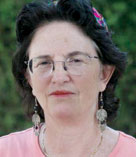 This summer we learned that a seven-year struggle with the government of Israel and the Orthodox community ended in a limited victory for Israeli Reform Rabbi Miri Gold. Rabbi Gold will be here at The Temple, Congregation B’nai Jehudah, to discuss this and other issues important to Reform Jews at erev Shabbat services Friday, Oct. 26. Worship begins at 6 p.m. She will be in Kansas City through Oct. 29.
In a case that went to the Israeli Supreme Court, Rabbi Gold has become the first woman and Reform rabbi to receive the right to a government-paid salary. In Israel the rabbis of each community are paid for their work, but until now that privilege had been reserved only for Orthodox rabbis. Israel’s attorney general ruled on May 29 that Rabbi Gold would indeed be granted a salary as the rabbi of Kahilat Birkat Shalom, a reform congregation based at Kibbutz Gezer that serves the region.
While Rabbi Gold has been granted the right to receive a salary now, she hasn’t seen a penny of it yet. So realistically her life hasn’t changed much, just symbolically.
“There is no difference yet because the salary is not being released,” said Rabbi Gold. “There is resistance by the Minister of Culture and Sport, which is supposed to provide the funds.”
That’s one way Rabbi Gold is being treated differently than Orthodox rabbis. They are paid by the Religious Affairs Ministry while Rabbi Gold’s salary is to be paid for by the Minister of Culture and Sport. However, she’s comfortable with payment not coming from the Religious Affairs Ministry.
“I think it avoids problems,” she said. “The Religious Affairs Ministry is run by ultra-Orthodox, and they would resist fiercely. Judaism is cultural in many ways, so it is appropriate.”
Rabbi Gold’s court victory does not just help her; it is also seen as a win for all non-Orthodox rabbis in the Jewish state. According to Rabbi Gold, “There are supposed to be 15 Reform and Conservative rabbis of rural communities eligible to receive salaries. Hopefully, this paves the way for neighborhood rabbis to get money also.”
But even with the government-approved salaries, these rabbis will still not be able to officiate at lifecycle events. For instance if a non-Orthodox rabbi officiates at a wedding, the ceremony or the marriage is still not considered legal by the Israeli government. Yet Rabbi Gold is optimistic about the role of non-Orthodox rabbis in the future.
“It will take time, but we will continue to work for change,” she said.
Many in Israel are unhappy with this decision, and are continuing to call the non-Orthodox rabbis community leaders instead of rabbi. Rabbi Gold said this is incorrect and they should indeed be called rabbis. The attorney general’s decision specifically uses the term rabbi, stating that “rabbis of non-Orthodox communities will receive salaries.”
Rabbi Gold, who made aliyah in 1977 and became a rabbi in 1999, explained the path to gaining this recognition was not easy. She was assisted by many groups including the Israel Religious Action Center (IRAC) and ARZA, the Reform Israel Fund, which raises money for IRAC. One of the reasons Rabbi Gold is coming to the United States is to highlight the contribution of IRAC, which has been her legal representative. She also wants to “get people to support ARZA, the Reform Israel Fund.” She is coming to the United States under the auspices of ARZA.
Even though she’s still having difficulty actually getting a paycheck from the government, all those involved still see this ruling as a victory. In a news release posted May 29 in an ARZA blog, the president of the Union for Reform Judaism, Rabbi Rick Jacobs, said, “This is a watershed moment for the Reform Movement and for religious pluralism in Israel.”
All this legal wrangling has definitely impacted Rabbi Gold’s life.
“It meant seven years of not earning the salary I deserve,” she said. “Seven years that the Israeli Reform Movement was burdened with helping to pay salaries, using monies that could have been spent elsewhere to strengthen the movement.”
Rabbi Gold’s focus now is to build a new synagogue building for Birkat Shalom in Gezer. The Region Council of Gezer, which works with the Ministry of Religious Affairs, is helping Birkat Shalom purchase a pre-fab structure for synagogue use. She is hoping to raise money for the new synagogue building while in the United States, where she will be visiting cities in Pennsylvania, New Jersey, Georgia, Minnesota, Illinois, Kansas and Washington, D.C.
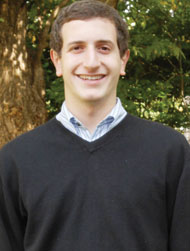 Variety is the seasoning of choice for Hyman Brand Hebrew Academy senior Sam Abrams. The 17-year-old participates in many different activities both through school and the Jewish community at large, but they all have a connecting thread: education.
 WOMAN WHO MEANS BUSINESS — Jamie Clayman Loud, owner and CEO of Clayman Promotional Group, was recently honored by the Kansas City Business Journal as one of 25 Women Who Mean Business. “They are without question some of the most energetic, enterprising women out there,” the journal noted. Loud runs the business, begun by her father and Congregation Ohev Sholom member Alvin Clayman in 1968, overseeing company operations, including merchandising, sourcing, sales, problem-solving and innovation, and market development.
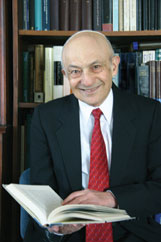 Rabbi Joseph P. Schultz, Ph.D., is well known in Kansas City for a variety of reasons. He taught at the University of Missouri-Kansas City from 1973 to 1999, eventually serving as the director of the Center of Religious Studies and the Danciger Judaic Studies Program. He also edited “Mid America’s Promise: A Profile of Kansas City Jewry,” in 1982, a book widely recognized as a concise history of Kansas City and used by this writer as a reference book on many occasions.
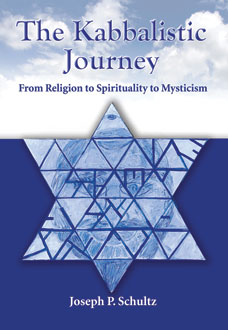 Dr. Schultz retired from UMKC in 1999 and moved to Golden, Colo. He continued teaching in Colorado part-time at three universities — the University of Denver, Naropa University (a Buddhist-sponsored university) and the University of Colorado, both in Boulder. In 2007 the Schultzes moved back to Brookline, Mass., where he began his career.
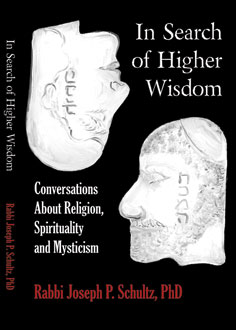 “I had a feeling that since she was so much a part of the discussions that went into this book that she would have a far more intuitive sense of the kind of art that should go into something like this and she did,” the author and proud father said.
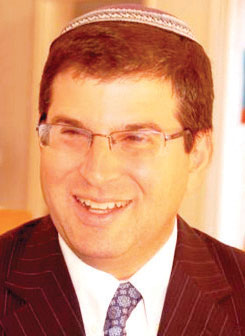 We are hearing more and more about the divide in Israel between Orthodox Jews, non-Orthodox and even secular Jews. Next weekend Congregation BIAV will host a scholar in residence who is well known across the world for his work in helping Jews bridge that divide.
 How would you feel if you were excluded time and again by your classmates for behaving in a way you couldn’t control? As a parent, you would become saddened for your child.
 YOUNG NETANYAHU — A couple of Kansas City camp counselors and siblings, Daniel Siegel and Andrew Siegel, spent the summer with Avner Netanyahu, son of Israeli Prime Minister Benjamin Netanyahu, at Camp Young Judaea Midwest in central Wisconsin. Avner, who is a Tsofim, (Israeli Scout,) was assigned to the camp. Andrew Siegel said he didn’t know the young Netanyahu, or his guards, would be there for the summer until he got there, but said it was a blast spending the summer with him. “He was great. He’s actually quite wise for a 17-year-old,” said Andrew, who is a 20-year-old junior at KU and the son of Lisa and Steve Siegel. Camp Director Noah Gallagher, in a email sent to supporters after the camp session, said when he first heard the young Netanyahu would spend the summer at CYJ Midwest, he worried accommodating such a high-profile staff member would inhibit the camp’s ability to create the sense of family that makes CYJ so special, but that was not the case. In fact, Gallagher believes that sense of family is exactly the reason Avner was assigned to CYJ. We’re told at least four other campers and counselors at CYJ Midwest this summer had Kansas City ties as well.
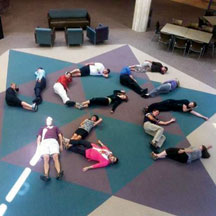 FUN WITH HUMANS — Members of the Jewish Community Center staff, including President & CEO Jacob Schreiber, form a human ‘JCC KC’ that was used for an internal video for the JCC’s first-ever All Employee Meeting, held in late September. It was the first time in the organization’s 98-year history that all full- and part-time staff members were invited to participate. Two hundred individuals attended the informational and motivational gathering.
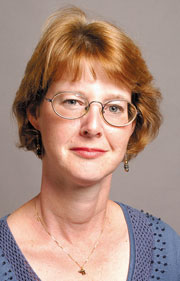 The Reform movement and the Central Conference of American Rabbis is piloting a new High Holiday machzor (prayer book) and Temple Beth Sholom in Topeka is one of about 70 congregations that used the new Kol Nidre service last week. No other congregation in the Kansas City area participated in the pilot.
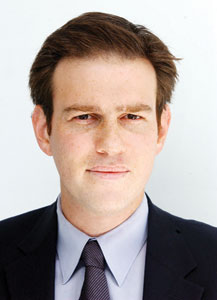 “Arab Spring has now become Islamic Winter,” said Bret Stephens, the foreign affairs columnist of the Wall Street Journal, who will present the closing plenary at the AIPAC Kansas City Israel Action Forum on Oct. 21 at the Temple, Congregation B’nai Jehudah.
 Great films with a Jewish twist will be featured at the 14th annual Kansas City Jewish Film Festival, which kicks off Saturday night, Oct. 13, and continues through Sunday, Oct. 21. All films will be screened at the White Theatre unless otherwise noted. Seven narrative and documentary films were chosen. Guest speakers include KU Hillel’s Rabbi Neal Schuster and Bob Kendrick, president of the Negro Leagues Baseball Museum.