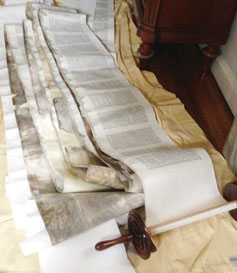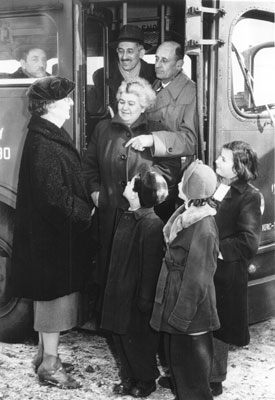
When Hurricane Sandy’s floodwaters immersed the Five Towns of Nassau County, they rose four feet high in the sanctuary of Congregation Ahavas Yisroel and soaked the four Torahs in the synagogue’s Aron Ha-Kodesh (ark) making them posul — not kosher. A synagogue without usable Torahs is like a school without teachers. Something had to be done.

Meanwhile, hundreds of miles away here in Overland Park, Kehilath Israel Synagogue’s Rabbi Shmuly Yanklowitz meditated on the fact that for over a century his synagogue has built up a storehouse of 15 Torahs. Realizing that his shul had many more Torahs than it needed while other synagogues were now bereft, he turned to the Orthodox Union to help him find a synagogue that needed a spiritual uplift by receiving a Torah — permanently, and not as a loan.

As he explained while delivering the Torah in New York, Rabbi Yanklowitz said, “When you hear a cry from k’lal Yisroel and you ignore it, it leaves a void.”

“If a Torah sits in the aron and others need it, you must act. When we saw how many Sefer Torahs our shul had, I asked myself, ‘Who owns these Torahs?’At the end of the day, HaKodesh Baruch Hu owns everything. Nothing in a certain sense is truly our own. We can’t own a Torah in the deepest sense. We all own something that someone else needs.”

“Tonight,” he summed up, “we are celebrating the power of Torah.”

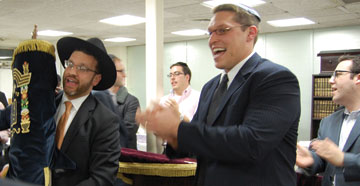
Rabbi Yanklowitz and his wife, Shoshana, personally delivered the Torah to its new congregation, flying it in from Kansas City to Newark, with a stop in St. Louis. That journey reflected Jewish life in America; and, much to their delight, Southwest Airlines provided a special compartment for the Torah so that it could journey comfortably to its new home.

“Walking in the airport in Kansas carrying the Torah wrapped in a tallit (prayer shawl), people looked at us like we were aliens,” Rabbi Yanklowitz related. “In St. Louis, maybe one or two people knew what it was. In Newark, everyone was kissing the Torah and dancing.”

An interesting side note to this is that neither of the two synagogues are Orthodox Union member congregations. To the OU it didn’t matter.

“They are doing good works,” OU President Dr. Simcha Katz declared. “That’s all that mattered.”

The celebration at the shul took on the atmosphere of a Simchat Torah service with vigorous dancing with the new Torah and the two loaners the shul had previously received.

“We’re getting this Torah because we lost ours,” said Rabbi Yissachar Blinder, the young spiritual leader of the synagogue. “Some of our families are not home yet. So that’s bitter. It hurts. But it is so sweet that a shul in Kansas City reaches out and shares something it has and that someone else needs and gives it to those who need it.”

When the curtain was raised on the Kansas City Ballet’s 40th annual production of “The Nutcracker” Dec. 1, audiences were treated to performances by several Jewish performers. At least five Jewish dancers are in the production, which has two casts for the young dancers. The Prince, one of the production’s major roles for students, is being played by Shawn Kramarovsky. Other Jewish performers include Stella Shapiro, siblings Greta and Oscar Miller and Natalie Goldman.

“The Nutcracker” runs through Dec. 23 at the Kauffman Center for the Performing Arts. For ticket information call 816-931-2233, or go to kcballet.org.

For those who are unfamiliar with the production, choreographed by the Kansas City Ballet’s Artistic Director Emeritus Todd Bolender, it features a memorable score by Tchaikovsky, takes place on Christmas Eve and tells the unforgettable story of Clara and her Nutcracker Prince as they journey to the Kingdom of the Sweets.

All of the young cast members are students at the Kansas City Ballet School and were chosen through an audition process.

The 225 students featured are an integral part of the ballet, and rehearse and perform alongside the professional company members.

At age 7, Natalie Goldman is perhaps the youngest member of this year’s cast and has been dancing since she was in preschool at the Jewish Community Center. Now in second grade, she excitedly announces that she is in 11 performances of the ballet. The daughter of Stuart and Lauren Goldman, members of The Temple, Congregation B’nai Jehudah, she attends Stanley Elementary School. Ballet is her favorite activity.

This is the first year Natalie was eligible to audition, and she nabbed a role as one of Mother Ginger’s children. She emerges onstage from under the huge skirt of Mother Ginger.

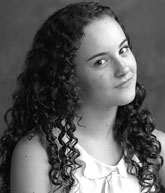
Another “Nutcracker” novice is Stella Shapiro. The daughter of Kelly and Tony Shapiro, she recently began focusing on ballet after concentrating on gymnastics for many years. The 13-year-old eighth-grader  at the Hyman Brand Hebrew Academy plays a mouse and appears in two scenes. She is enjoying ballet.

“I love how it makes you feel beautiful and I like performing for people and making other people happy during it. It’s just really fun,” said Stella, who recently became a Bat Mitzvah at Congregation Beth Shalom.

Juggling school, rehearsals and performances, Stella said, is not as hard as people may think.

“When I did gymnastics I worked out about 30 hours every week and I still had to balance homework, so I’m used to it,” she said.

Participating in this production has been fun, Stella said.

“Even though it’s not the best part, like Clara or any other part, I think it’s the part that most people remember. It’s the funny part and I think a lot of people enjoy it,” she said.

Another HBHA student, Shawn Kramorovsky, hasn’t been dancing long either. The 12-year-old son of Tanya Kramarovsky was born in Israel, came to the United States nine years ago and began taking lessons two years ago. As one of the two boys who alternate playing the Prince, he has one of the biggest roles for a student in the production and appears in many scenes.

Shawn explains that throughout the production he dances “with Clara (the student lead) and escorts her to places and watches other dances.”

The sixth-grade student who belongs to Beth Shalom credits his early dancing success to good teachers at the KCBS, including Emily Simpson, the new director of the Kansas City Ballet, as well as Marcus Oatis. He’s also thrilled he gets to dance alongside the professionals.

“The company dancers help you and guide you along and mentor you during ‘The Nutcracker.’ Sometimes during a performance they will quietly whisper in your ear saying things like try this, do that. It helps a lot,” said Shawn, who has also enjoyed working with directors James Jordan and William Whitner.

He’s had a lot of fun the last few months.

“When we first got into rehearsals I was so nervous. It was the second year for the other prince and it was pretty challenging for me at first learning every bit of choreography and getting all the expressions and all the gestures right. But it has gotten easier,” Shawn said.

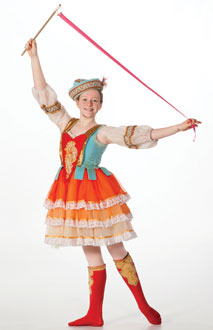
Siblings Oscar and Greta Miller have the most experience performing in “The Nutcracker.” Greta, an eighth-grade student at Indian Hills Middle School, has danced in six “Nutcrackers.” This year the 13-year-old plays a Trepak in the Russian ribbon candy dance. She continues to enjoy the experience.

“It’s really fun and it’s a cool thing to do, and it’s something special to perform with the professional company,” Greta said.

Greta believes “The Nutcracker” inspires young girls to become ballerinas.

“All the little girls go and see ‘The Nutcracker’ when they are about 4 or 5 and then they want to take ballet,” Greta said.

Greta, who has been dancing for 11 years, always looks forward to “The Nutcracker.”

“It’s one of the things I look forward to the most during the year because everyone is happy and it’s fun. You get to perform with your friends and the company members,” she said.

Greta and Oscar are the children of Robert and Kerry Miller and are members of Congregation Beth Torah. Oscar is 9 years old, attends fourth grade at Highlawn Montessori School and plays Clara’s brother Fritz in the production.

“I am one of the main parts in the first act,” he said.

This is the second year Oscar has played Fritz and the fourth year he’s been in the production. He said he’s been dancing so long, seven years, that “it’s just a part of life” for him now.

He likes dancing with the company and enjoys the production.

“I like it a lot because I’ve been doing it for a really long time. I get to break the nutcracker,” he said.

“It’s not all ballet, it’s acting too, and I like that,” Oscar concluded. In addition to “The Nutcracker,” Oscar performed in the Kansas City Ballet’s “Tom Sawyer” in 2011.

Sam Fine perfectly exemplifies the saying, “If at first you don’t succeed, try, try again.” Sam is the winner of the 16th annual Chanukah Art Contest sponsored by Chabad House Center and The Chronicle. Now a fifth-grade student at Prairie Star Elementary School, he’s entered the contest at least four times before winning this year’s grand prize — an iPad mini, complements of Chabad.

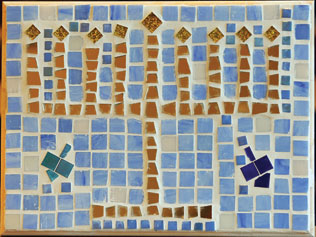
Mandy Unterhalter, a fourth-grade student at Congregation Beth Shalom, won the lower division (grades K-four) with a mosaic menorah titled, “Reflecting the Lights of Chanukah.” She is the 10-year-old daughter of Janet and Bryan Unterhalter and attends Leawood Elementary School.

Thirteen-year-old Ariel Brudoley, an eight-grader at the Hyman Brand Hebrew Academy, won the upper division (grades five through eight) with his “The Victory Menorah.” He is the son of Sherri Jacobs and Dr. Jonathan Jacobs and is a member of Congregation BIAV. Mandy and Ariel will each receive an iTouch as their prize.

Rabbi Mendy Wineberg, Chabad House Center’s program director, said while there weren’t quite as many entries this year as there has been the past few years, he continues to be amazed by the amount of effort put into the creations.

“As usual we had a difficult time choosing the winners,” the rabbi said.

“Some entries reflected the beauty of the Chanukah lights, while others incorporated the Maccabee’s victory over the Greek army. One entry even incorporated today’s technology and connected it to the holiday. We wish we could give a grand prize to everyone who entered.”

Sam, the 11-year-old son of Congregation Beth Torah members Jill and Mike Fine, is really excited he won the contest.

“At first I didn’t think it was even real when the rabbi called,” Sam said. “Then I soon realized it was.”

Sam titled his creation “In the Window Shining So Bright.” On his entry form, he said his inspiration for the project was Rabbi Joseph R. Black’s song, which he thought about while making the project. The chorus that inspired him is: “In the window, shining so bright, I can see the Chanukah lights, And it gives me such a warm, friendly glow, When I think of Judah Maccabee, so long ago.”

Sam chose to create a menorah because “it’s the most recognizable symbol of Chanukah.” He originally wanted to create a project made of stained glass, but his mother thought since he hadn’t worked with that medium before it could be a little too complicated for this contest entry. So he decided to do a window art project, which also hangs in a window allowing sun to shine through the colors and looks a lot like the more sophisticated stained glass.

Sam began his project by purchasing an art kit and searching the internet for a picture of a menorah he liked. Then on a piece of glass, using thick black paint, he outlined the menorah on the glass. After the outline dried he used bright colors, including Chanukah blue and a yellow-gold for the flames, to complete the project. It took several days to make the menorah because the paint had to dry between each step for several hours.

Both Sam’s siblings had also entered the Chanukah Art Contest in the past. The family read about it in The Jewish Chronicle.

“I’m really glad I won,” said Sam, who will now own the family’s first iPad.

OUR JEWISH SECRET SANTA — For the last several years Elinor Friedman has been a generous donor for a Christmas party given every year at St. Mary’s Hot Lunch Kitchen, the very same place the volunteers at Congregation Beth Shalom have supported through its Lechem Project. In the past the party was organized by a Kansas City, Kan., police officer who also worked at St. Mary’s. The police officer passed away this year, but his widow is continuing the project in conjunction with the kitchen personnel. A little elf told The Chronicle that this year Elinor has taken on an expanded role, by not only making another generous donation herself but by also enlisting some of her family and friends to contribute new toys, games and clothing. She arranged for so many donations, it filled the entire trunk of one volunteer’s car. Now, thanks in large part to Elinor and the other donors, these children will have a truly wonderful holiday.

RADIO HANUKKAH — It’s been a week for loyal readers to send me tips. This tip tell us that SirriusXM radio has Radio Hanukkah on channel 69 or online channel 761. The station plays Chanukah songs and Jewish music. This reader’s favorite song from last year was “(I’m Spending) Hanukkah in Santa Monica,” by Tom Lehrer. The opening lyrics, according to Jewocity.com are:

“I’m spending Hanukkah, in Santa Monica,

Wearing sandals lighting candles by the sea.

I spent Shavuos, in East St. Louis,

A charming spot but clearly not the spot for me.”

The special radio station will be on the air through Dec. 17, at which time it will revert back to regular programming.

CHANUKAH WITH BIBI — The Chronicle’s Jerusalem reporter Sybil Kaplan joined other foreign journalists in Israel for a Chanukah celebration with Prime Minister Benjamin Netanyahu on the third night of the Festival of Lights. The prime minster told the journalists, “Chanukah is where a few had to face the many. Today one has to face the many.” He told the group that since he’s been in office, Israel has “raised awareness in the international community about the dangers posed by a nuclear Iran.” He also said the recent U.N. resolution upgrading the status of Palestine last month ignored Israel’s security needs, and pointed out that when the leader of Hamas called for the destruction of Israel this past week, “there was silence, a deafening silence,” amongst members of the U.N. community. But the prime minister said Israel will not remain silent. “Israel will speak in defense of our rights and what is right.”

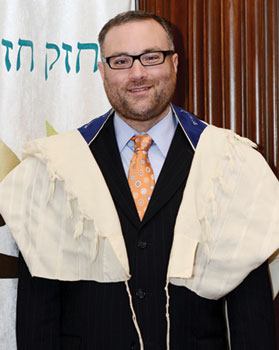
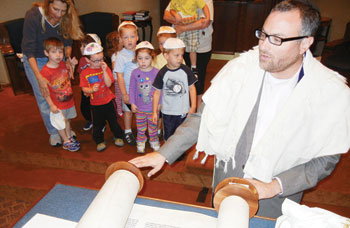
Rabbi David Glickman arrived here in July, during what was and continues to be a severe drought. Yet the situation is the exact opposite at Congregation Beth Shalom, where everything is blossoming and thriving under the young rabbi’s leadership.

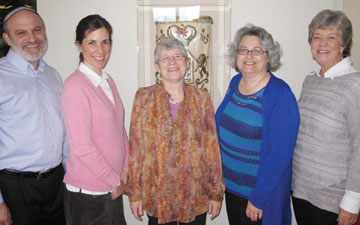
Rabbi Glickman will be officially installed at a celebratory weekend that begins on Friday night, Dec. 14, with a Shabbat dinner. Rabbi Glickman’s colleague, Rabbi William Gershon, senior rabbi of Congregation Shearith Israel, Dallas, will install Rabbi Glickman as senior rabbi during the 9:30 a.m. Shabbat service on Dec. 15. For more information regarding the event, contact Stef Williams, 913-647-7269 or .

“Rabbi Gershon has been a tremendous friend and mentor ever since I met him in 2001. He’s one of the most dynamic speakers speaking on any pulpit today, so it will be a treat for the Beth Shalom community to be able to learn from such an engaging teacher,” said Rabbi Glickman during a recent interview at his office.

“This installation weekend is not simply about installing me. It’s really about the rededication of the whole synagogue community to a renaissance at Beth Shalom, of which my arrival is one part,” he continued.

The rabbi may not want the weekend to be solely about him, but it’s clear that both leadership and members have been singing his praises.

“Rabbi Glickman has impressed all of us with his level of caring, compassion, knowledge and enthusiasm. We are so blessed to have Rabbi Glickman, his wife Annie and their children Gavi, Ellie and Dani as a part of our congregational family. With our shared vision for the future, we are on a huge upswing of monumental positive change,” expressed Beth Shalom President Michael Abrams.

Alan Edelman, who co-chaired the search committee with Norman Kahn, Jr., noted that it is not an easy task to select a rabbi who can meet the needs of such a demographically diverse congregation, but he has many ideas about how to engage people in their Judaism based on where they are in their spiritual journey.

“Rabbi Glickman relates well to our youngest preschool children as well as the sages of Beth Shalom. He understands how important it is to widen the door so that everyone can enter,” Edelman said.

Kahn echoed Edelman’s sentiments.

“He’s energized all age groups and really unified us and brought us together in this time of transition,” Kahn said. “He is dedicated to our strategic plan and has already met many of the goals we set for this transition.”

Rabbi Glickman, who was ordained by the Jewish Theological Seminary in 2001, said he came to the decision to pursue the rabbinate while he was an undergraduate at the University of Michigan, where he earned a Bachelor of Arts degree in Jewish studies in 1995.

“I was very involved in Hillel and a number of different activities and specifically I was very involved in pro-Israel politics on campus. As passionate as I am about supporting Israel, I had a realization that without a Jewish people there would be no supporters of the state of Israel and I wanted to dedicate my life to helping build a thriving and flourishing Jewish people.

“I look at the position of a rabbi as being instrumental in pushing forward the future of the Jewish people,” Rabbi Glickman said.

Beth Shalom is Rabbi Glickman’s second pulpit, serving as associate rabbi of Shearith Israel for 11 years. While this is the first time he’s carried the title senior rabbi, his duties there were similar to what they are now.

“Honestly, Shearith Israel was a wonderful training ground and I was given a lot of responsibilities and a lot of freedom, so it hasn’t been so radical a transition. Also Shearith Israel had a satellite service every Shabbat and I was responsible for their satellite community, so I had more executive function than the typical associate rabbi,” he said.

Rabbi Glickman is excited to be working at Beth Shalom; a congregation he said has “a rich history and a tradition of contribution to the Kansas City Jewish community.”

“It’s an honor and a privilege to be here with Beth Shalom for this next chapter,” he said.

In the few short months Rabbi Glickman has been at Beth Shalom, he has come to enjoy the warmth of the people there as well as the congregation’s diversity, which Edelman referenced as well.

“There’s the whole spectrum of religious observance, of Jewish knowledge, and I appreciate the diversity of the synagogue. I find that its diversity makes it a very rich and exciting place to both serve and also to be a member,” the rabbi said.

“Additionally I would say there is a really can-do attitude to Beth Shalom and it’s exciting to work with staff and volunteers who are so positive about wanting to make their synagogue an exciting and meaningful spiritual home.”

Mirra Klausner is one of those volunteers who has gotten to know Rabbi Glickman and his family. Before he even arrived, she said they had heard through the grapevine that families in Dallas were very sad to see him leave. Now, she said, “we know first-hand just what they were talking about!”

“Rabbi Glickman is a captivating speaker, a thoughtful educator, and tries to be accessible to his congregants and lay leaders despite his very busy schedule.” Klausner said. “He really is a mechayah (joy)! He hit the ground running when he got to KC and I believe he is already helping Beth Shalom move forward in a positive direction, which is just what we needed. And our bonus is that Annie is an incredible person and educator herself. They will both, undoubtedly, be major contributors to the richness of Jewish life in Kansas City.”

With 750-member units, Rabbi Glickman said it is a challenge to serve as the only full-time clergy on staff. The congregation is embarking on a search this year for a second clergy position that will focus on the congregation’s educational needs.

“As I mentioned before, the congregation is so engaged and they’ve been so helpful and they want this match to succeed. So we have cadres of volunteers who read Torah every week, who lead our daily minyan every day at Village shalom, as well as members who are running our Bar and Bat Mitzvah program and there have been so many individuals who have stepped up that while it’s very busy, it’s manageable because of the support the congregation has given,” Rabbi Glickman said.

So far Rabbi Glickman has focused his efforts on programming for young families and the Rose Family Early Childhood Education Center, as well as the Polsky Family Religious School and “our incredible KCUSY chapter.” As times goes on he hopes to spend some time creating programs for emerging adults (adults 21 to 35) in those critical years before they start creating families.”

“Also I look forward to building on the rich heritage of adult education that is already in place and expanding our opportunities for members to be engaged in tikkun olam (repairing the world.),” he continued.

“I spoke on Rosh Hashanah about all of the talents and skills that people bring of themselves to create a tabernacle. My overarching goal is to create a place where everyone feels that what they bring to the community is important and matters.”

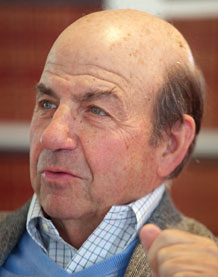
A hometown favorite is returning to Kansas City this weekend. Journalist and author Calvin Trillin will be at the Jewish Community Center on Sunday to promote his new book of “deadline poetry” about this year’s presidential election.

Trillin has been writing political poetry for The Nation for years, and “Dogfight: The 2012 Presidential Campaign in Verse” is his third book of poetry that follows a presidential election.

The colorful nature of the candidates populating the Republican primary, along with some luck with their names, gave him a good start.

“They had nice names — Mitt, Newt — those kind of names. I would have been in bad shape if the Romneys had decided to call their son by his first name, Willard, instead of his second name, Mitt, because Willard doesn’t rhyme with anything, and the meter’s not good,” Trillin said.

Despite that, no one matched the rhyming potential he had when writing about former Sen. John Sununu several years ago, when he penned the poem “If You Knew What Sununu,” he said.

A number of events during the campaign also made for good material, including Romney’s famous 47 percent gaffe.

“There’s pretty much always something going on, because of the fact that nowadays, partly because of the Internet and smartphones in the room when you think they aren’t. There’s constantly a mini-scandal,” he said. “People like me in the small joke trade, we look on things that might not be good for the country, but are entertaining, the way dentists look at tooth decay — it’s a pity, but where would business be without it?”

Because of its subject, Trillin wanted to get the book out to readers as quickly as possible after the election. He turned in his final draft that Thursday. Because of his regular poetry gig at The Nation, he’s used to writing verse on a deadline.

“Remarkably, it actually existed as a hardcover book the next Tuesday. I told my editor I take back almost everything I’ve ever said about the inefficiency of the publishing industry. Not everything — I reserve a few things,” he said.

After his current book tour, he plans to take some time off to visit one of his daughters in Mexico and take a trip to Rome.

“One of the pleasures of being a grandfather that I hadn’t realized is how much fun it is to see your children as parents,” he said.

He gets back to Kansas City about once a year and enjoys visiting his sister, nephew and many cousins who still live in the area.

After his vacation, Trillin’s next project will probably be a piece for The New Yorker about “a nice murder. Nice for me, not for the guy who got killed,” he said.

Although he has lots of fans, many of them read just one of the many genres he covers — his essays, the deadline poetry, his books on food or others. He does get a lot of comments on the tribute he wrote about his late wife, “About Alice.”

“I sort of enjoy the variety. It’s very satisfying to write a long reporting piece, but it’s fun to write a piece of humor. The subject for me sort of controls the form of what I’m writing,” he said.

Sunday at the JCC

Calvin Trillin will speak at 1:30 p.m. Sunday, Dec. 9, at the Jewish Community Center in the White Theatre. Admission is $16 (plus tax) and includes a copy of the book. For tickets, contact Rainy Day Books at www.rainydaybooks.com/CalvinTrillin or 913-384-3126.

Earlier this month Village Shalom resident Millie Reichelt reached an important milestone in her life when she marked her 100th birthday on Nov. 15. She considers herself blessed, having enjoyed a good and healthy life. When asked how old she is, Millie displayed her wonderful sense of humor by replying, “Sweet Sixteen!”

She has borne her years gracefully, continuing to pursue an active lifestyle. Millie is ready to participate in any activity including Shabbat services, excursions to places like the Overland Park Arboretum, happy hour, movies, cooking and exercise sessions. She especially enjoys Bingo and Pokeno and is an accomplished artist.

Millie was born and raised in the Flatbush area of Brooklyn. She has an older sister who lives in California and had two brothers. Her parents owned and operated a laundry business, which specialized in linens and draperies all done meticulously by hand. At a young age, Millie showed her natural talent for numbers when she served as her parents’ bookkeeper. She also enjoyed helping her father deliver their customers’ laundry.

After graduating from high school, where she was an honor student, Millie attended business school where she learned typing and shorthand.

She loved to dance and went every Saturday and Sunday to Danceland. Her favorite dances were the waltz, foxtrot and Charleston. She also enjoyed going to famous theaters, such as the Roxy and Paramount, where she saw performances by some of the biggest names of the day: Jackie Gleason, Frank Sinatra and Milton Berle.

Millie worked as a cashier in a restaurant where she met and dated her future husband, Ben Zedek. They lived next to Prospect Park where she was a full-time mother to their son Michael, whom she said was a very good boy and easy to raise. Millie was a good cook and loved to read. She learned to drive when she was in her late 40s or early 50s. In 1964, while Michael was in college, Millie’s husband Ben passed away. Afterwards, she was hired as a cashier at National Commercial Bank. She was very conscientious, always making sure that all the numbers were correct. Some years later, Millie married Herman Reichelt, and they lived in Albany, N.Y.

In Albany, Millie was very involved in the sisterhood at her synagogue. She was an active volunteer and an especially proficient fundraiser. She ran Bingo games and was active in the production of the annual sisterhood musical production. She also volunteered at a nursing home in Troy, N.Y., where her mother-in-law lived. One of the residents there was the mother of Kirk Douglas. The well-known movie actor used to visit her there, and he sponsored the addition of a wing onto the nursing home.

Millie’s son, Michael, became a rabbi, and in 1974 was named senior rabbi at The Temple, Congregation B’nai Jehudah in Kansas City. After Herman Reichelt died, Millie moved to Overland Park where she lived for a while at the Atriums. In 2001, she moved to Village Shalom. Millie is especially proud of her family: her son, Michael, and his wife, Karen; her two granddaughters, Betsy (and her husband Jeremy,) and Susan (and husband Joe and their two children, Sam and Julia).


GIVING THE GIFT OF LIFE — The Maccabeats performed to a sold out crowd Sunday at the White Theatre. The a cappella men’s group, which got its start as Yeshiva University’s student vocal group, has partnered with the Gift of Life Bone Marrow Foundation since December 2011. The Hyman Brand Hebrew Academy coordinated a Bone Marrow Registry Drive during the concert, registering 36 concert-goers as prospective donors. If you didn’t get a chance to register, or would like to help in another way, it was announced that it takes $60 to process each swab, and there’s a huge backlog of swabs to be processed due to lack of funds. To donate, or for more information, visit www.giftoflife.org.

CHANUKAH ART CONTEST WINNERS — This is supposed to be the week that the winners of the annual Chanukah Art Contest were announced. However, we needed an extra week to do the judging, so the winning names will be announced in the Dec. 13 edition.

A SPECIAL CHANUKAH — While many of us will be filling our homes with light and joy on the sixth night of Chanukah, Rabbi Shmuly Yanklowitz of Kehilath Israel Synagogue will be in Washington, D.C. He has been invited to attend a special Chanukah celebration at the White House with President Barack Obama on Thursday, Dec. 13. This is the third time he’s been invited and the second time he will actually celebrate the holiday in the White House. We’re looking forward to seeing a photo and learning more about it in a few weeks.

JCC PARTNERS WITH THEATRE IN THE PARK — Glancing over the announcement of the 2013 Theatre in the Park season I noticed that the outdoor theater and the Jewish Community Center will jointly produce “Hairspray.” The play will be produced at the JCC July 13-28 and then move to Shawnee Mission Park the next two weekends beginning Aug. 2. Krista Blackwood, director of cultural arts at the JCC said, “This partnership kicks off what we hope will be a long-standing collaborative relationship with TTIP. We’re thrilled to be working with the great team out at the Park.” This is the second major announcement the JCC has made regarding its productions in recent weeks. Read more about the JCC obtaining the rights to be the first to locally produce “Les Miserables” on page 23.

STUDENT OF RELATIONSHIPS — BIAV’S Rabbi Dani Rockoff is participating in a comprehensive “Rabbinic Marriage Counseling” course that aims to develop communal rabbis’ skills and techniques in assisting couples through every stage of a relationship — from dating and marriage to crisis, death and divorce. The brand-new program is sponsored by Yeshiva University’s Center for the Jewish Future and the Rabbi Isaac Elchanan Rabbinical Theological Seminary.

A lot has changed yet much has stayed the same in the 110 years since Jewish Family Services was established in 1901. JFS has been quietly celebrating this milestone anniversary throughout 2012 by making sure it’s strengthening its core mission of helping families.

“We’re like a department store, we have lots of different services,” explained JFS Executive Director Don Goldman. “So we have a very broad mission of helping individuals and families cope with crises and life’s everyday challenges by providing essential programs and services for them.”

Originally known as United Jewish Charities and founded by William J. Berkowitz, it began when several smaller agencies merged to pool their efforts and their funds to help the wave of immigrants arriving here from Eastern Europe.

“One hundred and ten years ago we were the main Jewish agency in the city. Most of the other agencies have spawned from us. It was really a very different world then,” Goldman said.

“The Jewish community at the time was really all about resettlement and helping those who had recently come to the United States get the services they needed. Today almost everybody is settled and assimilated, so our issues now are much more social-services related and geared for a really different point in time for the Jewish community,” he continued.

Through the years and name changes — first to Jewish Family and Children Services and eventually to Jewish Family Services — the agency has always worked to strengthen and preserve family life.

“What’s interesting to me is how our work today has components that are both very similar and very different from what they were over the last 110 years. I read some case notes from 70 years ago that looked like they could have been written by a social worker this year dealing with a family in crisis over the loss of a job,” Goldman said.

JFS’ top executive is quick to point out that a few years ago the agency was not doing the best job it could to meet the needs of the time. So its staff and board set out to transform the agency, adding programs to specifically meet the needs of today’s Jewish community.

“We decided to increase our focus on older adults. Our community is aging, yet we didn’t have the range of services we needed to handle older adults’ needs,” Goldman said.

JFS launched new, innovative programs such as JET Express, which helps older adults with transportation when they can no longer drive for themselves. In addition Help@Home was established to allow older adults to stay comfortably in their home when they can no longer take care of it themselves.

As it went about this transformation, JFS looked to the other 120 or so Jewish social service agencies around the country to get a sense of what other agencies do.

“They create a model for us of all the things we might be doing. We are doing many things, but we are not doing everything that other people are doing. One of our challenges for the future is to continue to keep doing more and more for our community,” Goldman said.

JFS also handles situations that can’t be completely anticipated, such as the economic crisis that began in 2008.

“When I first arrived at JFS five years ago, we got 30 or 40 calls per month for help with various needs. By 2009, that number had grown to over 200 per month, and stayed at that level for three years. Many of those calls involved a loss of a job,” he said.

Not everyone needs help with a crisis, but Goldman wants JFS to be prepared for those who do.

“Those things have been the case for the whole 110 years. People get into financial crisis because they lost their job, or have a medical emergency or a variety of other reasons. The way we deal with it today is different than 110 years ago, but we are and want to be the place for people to come to deal with those things,” he said.

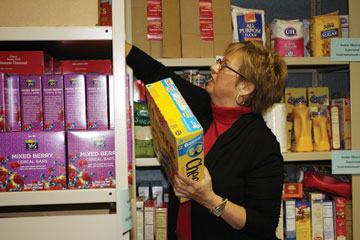
So in 2010, JFS partnered with Jewish Vocational Service to launch Jewish Employment Services to help people find jobs, particularly in this very tough environment. Since its inception, more than 165 people have found jobs through JES and hundreds more have received help with their resumes, networking tips and interviewing skills. In continued response to the economic crisis, JFS launched its Food Pantry this past year — an idea borrowed from other Jewish social service agencies — serving its first clients last month.

“We did that because we are filling a really important need in the community,” Goldman said.

Focus is families
Stewart Koesten, JFS’ president, points out that whatever the agency does, it will always assist families.

“Family is our middle name,” he said. “Whether it is classes or events or workshops, we work with families.”

He noted that the agency works with parents, married couples and young people just coming into marriage as well as children and seniors.

“Last year we served over 1,200 kids and their parents with a variety of programs and we partner with synagogues in the community with these programs. Family Life Education is a very large part of what we do,” Koesten said.

For many years JFS has also prided itself on the work it does regarding mental health issues. In fact Emilie Levin, the agency’s  executive director from 1939-79, was the first professionally trained social worker to lead a social service agency not only in the Jewish community but the entire Kansas City metro area.

“We do quite a bit in the mental health area with our Mental Health Coalition, through Jewish Family Services partnering with with Catholic Charities and the Rabbinical Association to provide anti-stigma and mental health awareness programs. That’s a huge issue these days that we are involved with,” Koesten said.

Then and now

When the agency was founded Goldman noted that the Jewish community was very separate from the general community and couldn’t access many of its services, such as hospitals.

“That’s not an issue today. What’s also changed is JFS now serves beyond the Jewish community. In the life crisis area half of our clients are not Jewish,” he said.

As a founding member of United Way, JFS has actually served the general community for many years. Most other social service agencies in town — such as Catholic Charities and Lutheran Ministries — serve the whole community as well.

“It’s part of being in social service that while you want to serve your own community, you want to serve the whole community. … Our priority is to serve the Jewish community, but the spirit of tikkun olam enables us to serve everyone,” Goldman said.

Future challenges

As with any social service agency today, funding is one of JFS’ biggest challenges. Since JFS serves both the Jewish and general communities, it continues to look to both communities to find ways to fund its current programs as well as find funding so it can expand its programming. Goldman said the success of many JFS programs, especially in the area of older adults, has helped it raise funds in the general community.

“Because these are some of the most interesting, innovative services out there, we’re finding a lot of general community foundations are interested in funding them,” Goldman said.

As older, generous funders age, Koesten is hoping to find ways to interest younger generations in funding the agency.

“We face a future challenge of how are we going to raise money from a potentially diminishing source, or how do we train that community to recognize the need. I think both of those angles have to be attacked,” Koesten said.

In the future, Goldman sees even more expansion of its services to older adults.

“We’re all aging,” Goldman pointed out. “If you don’t need our programs now, your parents need them or eventually you will need them yourself.”

He also noted that many agencies across the country have more programs for the disabled than JFS currently has. That’s an area of service he would also like to see expanded.

Goldman believes JFS will continue to grow, adapt and change in the future in order to remain successful.

“The good news is that I think while we’re getting closer to the mark in terms of serving more and more of the needs,” he said. “I see us looking to provide more comprehensive services for older adults and I see more comprehensive services for people in crisis and generally for families throughout the life cycle.”


Kehilath Israel Synagogue has come to the aid of Jewish Hurricane Sandy victims in Long Island by donating a Torah scroll to a synagogue that lost four.

Rabbi Shmuly Yanklowitz said K.I., which has more than 15 Torah scrolls, will donate a Torah scroll to Congregation Ahavas Yisroel, a small Orthodox synagogue in Cedarhurst that had its four Torah scrolls badly damaged by the hurricane. The rabbi and his wife Shoshanna will travel to New York and deliver the Torah next week.

The Long Island synagogue was decimated after 4 feet of water washed away tables, chairs, prayer books and four Torah scrolls, one that was more than 90 years old, the congregation’s rabbi, Yissachar Blinder, told JTA, The Chronicle’s national news agency.

“Our Torahs were soaked with enough damage that it will be months before we are able to use them,” Rabbi Blinder said. “We are really grateful for everyone in Kansas City for making this gesture to help us.”

Rabbi Yanklowitz spearheaded the effort to donate a Torah to a synagogue in need, noting that damage to synagogues could hurt the community as a whole.

“I reached out to the OU (Orthodox Union) to see how I could help congregations that were destroyed. I suggested the possibility of us donating a Torah to a synagogue that lost theirs. The OU made the connection to this synagogue,” Rabbi Yanklowitz said.

K.I. has 15 kosher Torahs and a bunch of others that need repair, the rabbi said.

“Torahs aren’t like necklaces that should just be worn occasionally and then stored away, they should be used and shared with the community,” Rabbi Yanklowitz said. “We obviously weren’t affected by the hurricane here in Kansas City and we were looking for different ways to contribute to those hurt.”

So Rabbi Yanklowitz approached K.I. President Steve Osman about the possibility of donating a Torah.

“He was very supportive of the idea and the board approved it,” the rabbi said.

Rabbi Yanklowitz doesn’t know the exact worth of the Torah K.I. is donating to the New York congregation.

“A Torah scroll generally costs around $20,000 to $60,000. This is a very nice, large, heavy one probably easily worth over $25,000,” he said.

Congregation Ahavas Yisroel did not own any of the Torah scrolls that were destroyed. The four scrolls damaged in the storm were on loan from synagogue members. Rabbi Blinder said a Torah scroll is just what the community needed.

“This is a silver lining for all that we’ve been through with this hurricane,” he said.

Some information for this story was provided by JTA.