

New Israeli emissary to K.C. very familiar with U.S.
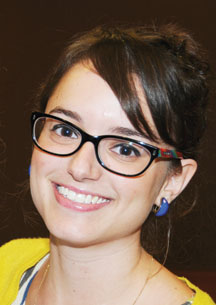 Spend a few minutes talking to new Israeli Emissary to the Jewish Federation Ophir Hacohen and you will discover right off the bat she is not a typical shlichah (female emissary). The first thing you will notice is that she does not have a heavy Israeli accent. That’s because she spent some of her formative years living in Tulsa, Okla., while her mother represented Israel in that Jewish community.
“This experience has influenced me deeply, as I feel it has not only given me a second language, but also broadened my horizons and opened my mind to different people, cultures and experiences,” wrote Hacohen in her shlichah application.
The Federation began its emissary program in 2003 and Hacohen is the fifth person to serve in that position. She has signed a one-year contract with an option to serve another year and arrived just before the High Holidays.
The Federation is excited to have Hacohen on board.
“The moment the committee met her via Skype, we knew she would be right for Kansas City. Even before arriving she reached out to rabbis, educators and leadership introducing herself and setting up appointments. She has a tremendous amount of creativity and energy. We look forward to great things,” noted Jessica Rudnick Kaseff, chairperson of the emissary committee.
Her first name, Ophir, is pronounced o-fear. It means the biblical land where all the gold and other valuables have been imported.
This is actually the fourth time Hacohen has spent more than a few days in the States. While living in Tulsa she attended the Jewish day school, which she described as much smaller than the local Hyman Brand Hebrew Academy. In 2005 the Tel Aviv native was part of a small group of teens that went to Memphis, Tenn., representing the congregation of Beit Daniel (The Center for progressive Judaism).
“While staying in Memphis, we took part in different activities with local Jewish teens and other groups in the community,” she noted.
Hacohen has also served as a summer camp counselor at the Indianapolis Jewish Community Center and visited the United States on a family vacation.
The emissary program is conducted through the Jewish Agency for Israel and Hacohen applied for both a short-term and long-term emissary position. When she was accepted to both programs, she chose to first become a summer counselor.
“I decided I would go live in the suburbs of America for a few months to see how I liked it since it’s not Tulsa and I’m not 7 years old anymore,” she said.
Now 22, she said she thinks working at summer camp gave her a very good perspective of Jewish life in America.
“It felt like a part of me that I just needed to do. Having lived in the States I’ve always felt like I’ve had a connection with Jews in America, that I understood sometimes the mentality more than other Israelis. And I had some experiences in the army dealing with groups from the States so I just felt it was the right thing to do and where I would have the most impact,” she continued.
She lives on her own here, but stayed with a host family that summer in Indianapolis.
“This, combined with camp, gave me a perspective on Jewish life in the U.S. and how a shaliach could be meaningful and influential,” she said.
She said things are the same, yet different, since the time her mother was a shlichah in Tulsa in the late ’90s.
“You can say that Jewish communities have changed and they haven’t changed. It’s still coming to the States, coming to a Jewish community, so I wouldn’t say that’s different. It’s not like traveling to Africa and living with the tribes. It’s familiar and I feel comfortable with it.
“But I think the challenges are very different. First of all my mother was older and came with a family and I’m here by myself. I think I’m reaching out to different groups. I think the challenges are different. There is so much more globalization today. The Internet is so available to everyone and I don’t think it was the same way in 1998, so it’s different challenges,” she explained.
Hacohen said she always thought she might like to be a shlichah, it was just a matter of when. She thinks now is as good a time as any and being here will help her figure out what she wants to do with her life following this adventure.
She also wanted to be a shlichah to promote and support her country.
“There are so many Jews outside of Israel that don’t know about the history and are starting to become ambivalent about it. They may hear something about Israel in the news … maybe catch the topic on the Internet or on Facebook and just see that as the truth and it’s not. If I can be here and talk to people and become friends with people … that’s how you try to change things,” she explained.
One of her main priorities will be working with college kids and young adults.
“It’s a group that either doesn’t know about Israel or learned when they were kids in a certain way and are not entirely sure what to do with that information or how they feel about it now. It’s really important because they are the leaders … Israel needs them and the community needs them,” she said.
Hacohen is very excited to be in the States again.
“I would really like to bring some different perspective on Israel,” she said. “I want to try to get people excited and interested in Israel and I think it’s a challenge.”
She is currently working on a presentation about where she comes from, what she likes about Israel and her own roots.
“I am in a point in my life where I am trying to figure out how I feel toward Israel and how to make a change when I go back. So being here and talking to people is also helping me examine my perspective on Israel. I love it but when you love something you also need to ask some hard questions. I think it’s a good way of taking a step back and looking at the bigger picture. So every conversation I have here is giving me something.”
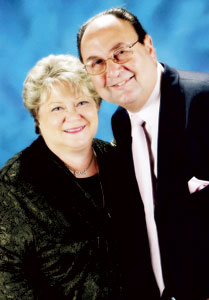 “Kansas City should not only be the center on the United States map, but also a major center on the American Jewish map,” said Rabbi Shmuly Yanklowitz, when describing his idea to start a Jewish Scholar in Residence Series at Kehilath Israel Synagogue. “Bringing the biggest rabbinic names to town will help to showcase how special our community is to those leaders … while giving us the chance to learn from the greatest leaders of our time.”
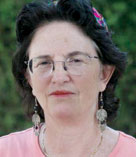 This summer we learned that a seven-year struggle with the government of Israel and the Orthodox community ended in a limited victory for Israeli Reform Rabbi Miri Gold. Rabbi Gold will be here at The Temple, Congregation B’nai Jehudah, to discuss this and other issues important to Reform Jews at erev Shabbat services Friday, Oct. 26. Worship begins at 6 p.m. She will be in Kansas City through Oct. 29.
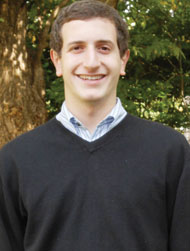 Variety is the seasoning of choice for Hyman Brand Hebrew Academy senior Sam Abrams. The 17-year-old participates in many different activities both through school and the Jewish community at large, but they all have a connecting thread: education.
 WOMAN WHO MEANS BUSINESS — Jamie Clayman Loud, owner and CEO of Clayman Promotional Group, was recently honored by the Kansas City Business Journal as one of 25 Women Who Mean Business. “They are without question some of the most energetic, enterprising women out there,” the journal noted. Loud runs the business, begun by her father and Congregation Ohev Sholom member Alvin Clayman in 1968, overseeing company operations, including merchandising, sourcing, sales, problem-solving and innovation, and market development.
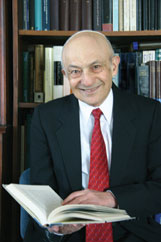 Rabbi Joseph P. Schultz, Ph.D., is well known in Kansas City for a variety of reasons. He taught at the University of Missouri-Kansas City from 1973 to 1999, eventually serving as the director of the Center of Religious Studies and the Danciger Judaic Studies Program. He also edited “Mid America’s Promise: A Profile of Kansas City Jewry,” in 1982, a book widely recognized as a concise history of Kansas City and used by this writer as a reference book on many occasions.
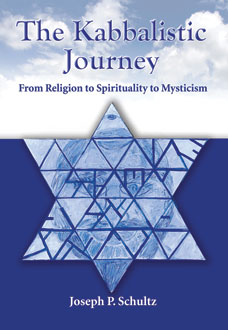 Dr. Schultz retired from UMKC in 1999 and moved to Golden, Colo. He continued teaching in Colorado part-time at three universities — the University of Denver, Naropa University (a Buddhist-sponsored university) and the University of Colorado, both in Boulder. In 2007 the Schultzes moved back to Brookline, Mass., where he began his career.
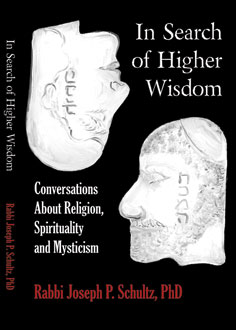 “I had a feeling that since she was so much a part of the discussions that went into this book that she would have a far more intuitive sense of the kind of art that should go into something like this and she did,” the author and proud father said.
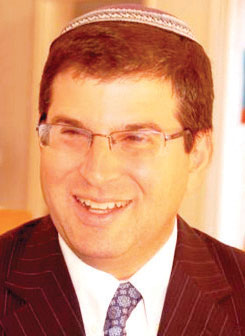 We are hearing more and more about the divide in Israel between Orthodox Jews, non-Orthodox and even secular Jews. Next weekend Congregation BIAV will host a scholar in residence who is well known across the world for his work in helping Jews bridge that divide.
 How would you feel if you were excluded time and again by your classmates for behaving in a way you couldn’t control? As a parent, you would become saddened for your child.
 YOUNG NETANYAHU — A couple of Kansas City camp counselors and siblings, Daniel Siegel and Andrew Siegel, spent the summer with Avner Netanyahu, son of Israeli Prime Minister Benjamin Netanyahu, at Camp Young Judaea Midwest in central Wisconsin. Avner, who is a Tsofim, (Israeli Scout,) was assigned to the camp. Andrew Siegel said he didn’t know the young Netanyahu, or his guards, would be there for the summer until he got there, but said it was a blast spending the summer with him. “He was great. He’s actually quite wise for a 17-year-old,” said Andrew, who is a 20-year-old junior at KU and the son of Lisa and Steve Siegel. Camp Director Noah Gallagher, in a email sent to supporters after the camp session, said when he first heard the young Netanyahu would spend the summer at CYJ Midwest, he worried accommodating such a high-profile staff member would inhibit the camp’s ability to create the sense of family that makes CYJ so special, but that was not the case. In fact, Gallagher believes that sense of family is exactly the reason Avner was assigned to CYJ. We’re told at least four other campers and counselors at CYJ Midwest this summer had Kansas City ties as well.
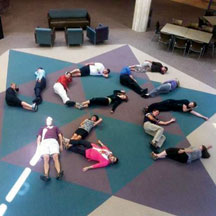 FUN WITH HUMANS — Members of the Jewish Community Center staff, including President & CEO Jacob Schreiber, form a human ‘JCC KC’ that was used for an internal video for the JCC’s first-ever All Employee Meeting, held in late September. It was the first time in the organization’s 98-year history that all full- and part-time staff members were invited to participate. Two hundred individuals attended the informational and motivational gathering.
 The Reform movement and the Central Conference of American Rabbis is piloting a new High Holiday machzor (prayer book) and Temple Beth Sholom in Topeka is one of about 70 congregations that used the new Kol Nidre service last week. No other congregation in the Kansas City area participated in the pilot.