

Memoir recalls Jewish Federation’s challenges and successes
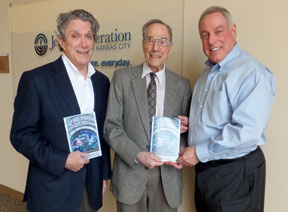 Sol Koenigsberg is a wealth of knowledge who can quote Yiddish, Talmud and Shakespeare.
“Shakespeare said, ‘What’s past is prologue.’ I’ve always felt that if you don’t know where you’ve been, you can’t know where you’re going.”
That’s one of the reasons he wrote “Challenges & Growth: The Jewish Federation of Greater Kansas City, 1968-1989. A Memoir.” The book was self-published by CreateSpace, a division of Amazon, in October and may be purchased on the website by searching the author’s full name, Sol Koenigsberg.
Koenigsberg is executive director emeritus of the Jewish Federation of Greater Kansas City. He moved here in 1968 and served for 21 years, through 1989. He was the fifth person to serve in that position, during which time he stewarded the agency through several special fundraising campaigns as well as the establishment of the Jewish Community Campus.
Koenigsberg originally envisioned the book to be a history of the entire community, taking over where “Mid America’s Promise,” the history of the Kansas City Jewish community edited by Dr. Joseph P. Schultz and published in 1982, ended. He wanted to include such things as the changing demography as well as the changing of professional and business characteristics within the Jewish community.
“ ‘Mid America’s Promise’ dealt with the time up to 1980. From 1980 to 2005, there was a big gap in time,” he said in a recent interview.
He decided to seek funding for his original idea in 2008. He notes that his timing was bad, as that was the year the economy crashed. When he couldn’t get the funding for a comprehensive sequel to “Mid America’s Promise,” he was “urged to put down my own experiences, which resulted in this book.”
He spent two years on his book, first determining what the content would be, then researching it.
“I felt that memory can’t be depended on, particularly after this lapse in time. After all I did retire in 1989. I had to make use of archives,” said Koenigsberg. “Plus I interviewed a number of people who were very much involved in that era and now.”
To get a better flavor of what happened in the past, and a little glimpse into the present, Koenigsberg interviewed the three people who served as president of the Jewish Federation as well as the Jewish Community Foundation. As part of his chapters on the Jewish Community Campus, he made use of recordings that were made at the time of its creation. Those are located at the State Historical Society of Missouri Research Center-Kansas City housed at the University of Missouri-Kansas City (formerly known as the Western Historical Manuscript Collection-Kansas City).
David Boutros, assistant director of the historical society, actually copied the videos to disk for Koenigsberg so he could watch them from the comfort of his own home. The executive director emeritus will soon be 88 years old.
“If it weren’t for David Boutros I would have had a much more difficult time. He was exceptionally generous with his time and talent,” he said.
Koenigsberg’s memory did play a few tricks on him. Since writing the book he’s discovered that he was a little off on at least one fact concerning the Jewish Community Campus. He writes that that it opened in 1987 when in fact it opened in October of 1988. There are a few other cases in the book of names being misspelled, most notably that of The Temple, Congregation B’nai Jehudah.
Bob Gast, who served as Jewish Federation’s executive director immediately after Koenigsberg, said the book is a brilliant portrayal of a servant of the Jewish community’s experience.
“His wisdom in relating to the history and challenges of the Jewish community will serve generations to come. Sol’s dedication as a leader in the Jewish community is to be lauded and emulated,” Gast said.
Since the book was just published last month, Koenigsberg doesn’t think many people in the community know it’s available yet.
“I think that once it does become known that the book is out, the past and current leadership of the Federation, the Foundation and all the local agencies could find this of interest,” he said.
Koenigsberg said he learned a lot from writing the book.
“After such a hiatus between the time I retired and the time I wrote it, it made me appreciate more how this community has grown and achieved so much,” he said.
The book is specifically about Koenigsberg’s professional experiences and includes very few personal experiences not related to his job. That was by design.
“The idea of the book was just to let people know what happened during that period of time,” he said.
The author said this book “defines a perspective and a guide for how people can meet common needs acting as persons as part of a community.”
He devotes a big chapter in the book to what he calls “one of the most successful enterprises in the Jewish community,” the creation of the Jewish Community Campus.
“It did a wonderful job of unifying entities which never even thought of that type of cooperation before,” he said. “The Campus is almost 25 years old and one of the ways of commemorating its importance was a chapter about it in this book.”
He believes the major Jewish philanthropic institutions are thriving today and he finds that “most encouraging” for the future of the community.
“The Jewish Community Foundation — along with the Federation, the Jewish Heritage Foundation and the Menorah Legacy Foundation — has established a model of cooperation which bodes well as instruments of community responsibility,” he said.
 Jewish Federation of Greater Kansas City is opening a new Israel Terror Relief Fund, to stand shoulder-to-shoulder with the people of Israel at this critical time. This new fund will help support the more than 1 million residents of Israel’s south and provide aid to those who are victims and the most vulnerable Israelis during this time of conflict. One hundred percent of all donations will be used for humanitarian aid for efforts including:
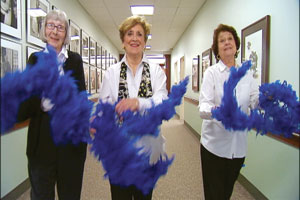 THE PLACE I CALL HOME — If you weren’t one of the 650 or so who attended Village Shalom’s Ages of Excellence celebration, honoring volunteer Evelyn Gibian, you missed a wonderful video starring Village Shalom residents, family, friends, staff and volunteers. The lyrics of “It’s Village Shalom, the Place I Call Home,” were written by the senior living campus’ Communications Manager Linda Salvay to the tune of “Bei Mir Bist Du Schoen.” Check it out at
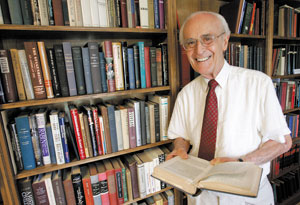 Rabbi Morris B. Margolies, who served the community as Congregation Beth Shalom’s senior rabbi for 25 years, passed away Friday evening, Nov. 9. About 600 people filled the Kehilath Israel Synagogue sanctuary on Monday to honor his life. He would have been 91 on Dec. 25.
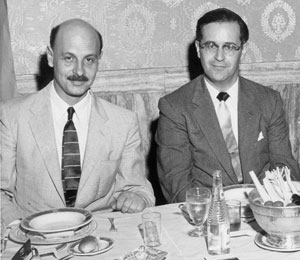 Rabbi Margolies was in good health when he retired from the pulpit in 1988, assuming the title rabbi emeritus, after 25 years, at the age of 64.
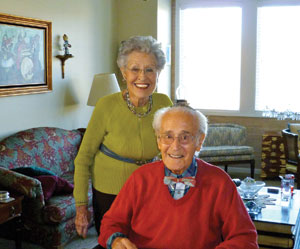 In what was to be his final interview with The Chronicle in 2008, Rabbi Morris B. Margolies told then-Chronicle Editor Rick Hellman he would like to be remembered as a scholar and a teacher. Since the Jewish community learned of his death over the past several days, he has been remembered as that, and more.
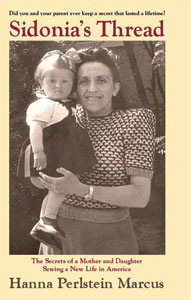 Sidonia Perlstein was the sole survivor of the Holocaust within her immediate family. In 1949 she was able to immigrate to the United States with her 2-year-old daughter Hanna. Sent to Springfield, Mass., Sidonia made a life for the two of them. Because of her talent as a gifted seamstress, within a few years Sidonia found work in a dress manufacturing factory. Hanna began school, and the process of Americanization began.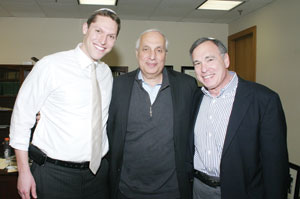
 If American Jewish history’s your thing, The Temple, Congregation B’nai Jehudah has it covered with their November scholar in residence weekend featuring Jonathan Sarna, Ph.D.
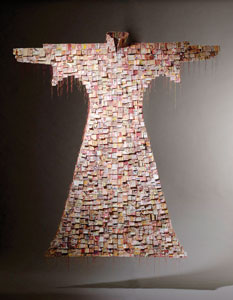 The religious rights of women in Israel may have just recently come to the surface of public opinion here in the United States. But women’s rights have long been one of the focuses of acclaimed artist Andi Arnovitz’s work. Arnovitz, who was born in Kansas City and moved to Israel in 1999, spent some time in the area late this summer visiting her parents, Sylvia and Marshall LaVine, and discussing her art.
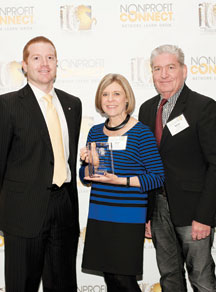 Midwest Center for Holocaust Education was honored Oct. 22 by Nonprofit Connect for its book, “Collective Voices.” Nonprofit Connect links the nonprofit community to education, resources and networking so organizations can more effectively achieve their missions.