

BVN senior discovers many facets of Judaism while in Hungary
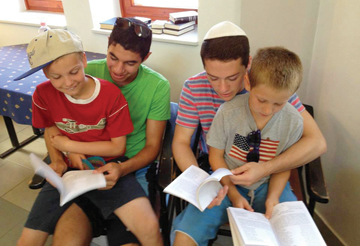 Ethan Scharf, 18, a Blue Valley North senior this fall, was one of approximately 75 Szarvas Fellows selected to represent North America at Szarvas Camp in Hungary this summer.
As American ambassadors, the Fellows are given the opportunity to meet, celebrate, explore and share experiences with their Jewish student peers from around the world.
Ethan learned about the camp from his aunt, Miriam Scharf, current board chair of the Jewish Federation of Greater Kansas City, and thought it sounded interesting.
“Because it’s a camp in Hungary for kids after the communist regime, they really don’t know much about Judaism because religion was so repressed at that time; they made this [camp] so they could learn about Judaism in a comfortable environment,” Ethan said. “Americans come in and get to connect with people from all around the world.”
Ethan was recommended as a Fellow to Szarvas Camp by Dr. Daniel and Miriam Scharf and Patricia Werthan Uhlmann. He also was required to write several essays of a few paragraphs each.
“They give you guidelines — things about yourself and your Jewish identity,” he said. “They wanted us to learn about our Jewish heritage so they had a family tree for your parents going back two or three generations.”
Szarvas Camp is sponsored by the Ronald S. Lauder Foundation and the American Jewish Joint Distribution Committee. It is located on the banks of the Körös River in the resort town of Szarvas, pronounced “Sar-vash,” which is Hungarian for deer.
The camp was founded in 1990 to serve campers from Eastern and Central European countries. Today, around 1,500 Jewish campers from more than 20 countries attend Szarvas Camp, and since 1990, more than 25,000 young people have attended the camp. They range in age from 7 to 18.
Rabbi Seth Braunstein, director of Szarvas Fellowships, said there’s a reason the camp is in Hungary, as opposed to some other European country.
“Hungary is where the largest Jewish community in Eastern and Central Europe is (80,000 to 100,000 people),” he said.
As campers themselves, the Fellows were overseen by American counselors who were college graduates with master’s degrees. The Fellows underwent an intensive two-week period of in-depth study into their Jewish identity.
“We had programs where we met with groups from other countries and discussed what it’s like to be Jewish in that country,” Ethan said. “We had a lot of programs plugging into questioning what it means to be Jewish, like is it the set rules from the Torah, the Halachot, or is it good deeds like the Golden Rule — treat others like you want to be treated.”
Ethan said there were students at Szarvas from Hungary, Moldova, many Russian-speaking countries and Germany.
“There also were Jews from India to learn about Jewish camps so they could take that [knowledge] back to their country,” he said. “It was really interesting meeting kids from all over the world. And then just the bonding experience with kids from the American group, just being together for two weeks, every second.”
Ethan formed what he hopes will be some long-lasting friendships.
“Most of them lived in New York or New Jersey; there was one from Houston, one from South Carolina, one from Portland.” He said he would stay in touch with them and try to visit them some time.
While the two weeks went by quickly, Ethan said some of the programs were long, with lots of questioning, which made certain days go by slowly. But it wasn’t all study; the Fellows went on some day trips as well. They toured Budapest the first weekend they arrived; and visited a mall in Szeged, about an hour and a half from Szarvas, and the Dohany Street synagogue, the largest synagogue in Europe and the second largest in the world.
“It was almost like a church, the way it was built, but it was very pretty,” Ethan said. “Then when we went to Szeged, we saw another synagogue that was by the same architect, but it was very different. It had a lot more meaning; there were Jewish symbols everywhere. You could look around for hours finding things.”
Not only did Ethan learn about Jews from other countries, he learned a lot about himself and his own Jewishness.
“I think Judaism is a great religion and it’s more than just the religion itself, it’s how we are with others,” he said. “We’re very accepting. In Judaism we don’t actively go out and try to convert people. In fact, we turn them away three times before we will even accept them for conversion.
“And the way we’ve survived for so long. We were there during Tisha b’Av so we had a fast. But because there were lots of kids who didn’t really know anything about Judaism, they didn’t make you fast, it was your choice. That was another great thing about the camp; there was a lot of freedom to choose what you wanted to do.”
Rabbi Braunstein said he believes the impact of this program is long lasting.
“The program is very unique in that it is really one of the only international Jewish programs that allows a pluralistic group of North American high school students to seriously be engaged in the global Jewish conversation,” the rabbi noted. “Each Fellow gains a deeper understanding of the global Jewish community and the successes and challenges of those communities. Throughout the program itself, we continuously engage in deep conversations about Jewish identity, Jewish peoplehood and pluralism.”
Most of the Fellows were from a Modern Orthodox environment, which is a form of Orthodoxy where they dress in modern clothing and have more of a connection to the secular world, Ethan said. “They’re not quite as strict, but they still have the separation of gender, the mechitzah.” There were also Conservative and Reform Jews.
“We really learned a lot about the different denominations and a little bit about the denominations in Hungary. Like they have the ultra-Orthodox there, but they also have this sect called Neolog, which is almost like Orthodox and Conservative,” Ethan explained. “They still have a mechitzah, but it’s in such a way where women can leave at certain times to participate more and certain ideas are different. … They still have the same customs as Orthodoxy, but it’s more like Conservative ideas.
“It was just interesting learning about that and what it was like to be Jewish in other countries because there is some growing anti-Semitism in Hungary. It’s hard to be Jewish there.”
One image that struck Ethan was seeing all the sunflowers in Hungary’s countryside. “It was like Kansas with a communist-type backdrop.”
Ethan said he had such a great experience, he would gladly return if he could, but American campers are only allowed to go one time.
“It was amazing. I wish it was longer.”
Ethan is the son of Janice Scharf and Garry Scharf and lives in Overland Park. He is a member of Kehilath Israel Synagogue.
For more information on the Szarvas Fellowships, visit the website at www.szarvas.org or contact Rabbi Braunstein at .
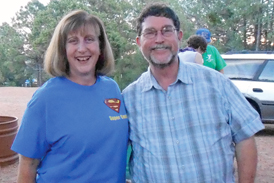
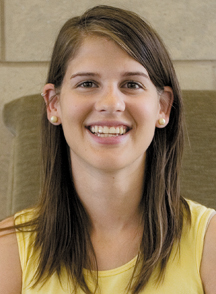 Another Kansas City native daughter has chosen to serve the Jewish people by becoming a rabbi. Last month Leah Greenwald Jordan, the daughter of Congregation Beth Torah members Beth and Jerry Jordan, was ordained by the Leo Baeck College in London. Leo Baeck College reaches out to support the growth of today’s Jewish communities across Europe and beyond. It trains rabbis and educators to develop progressive Jewish congregations throughout the U.K. for the 21st century.
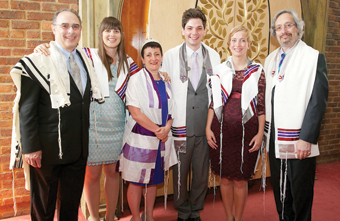 During her studies Rabbi Jordan interned for a summer at Congregation Beth Torah, working closely with Rabbi Mark Levin. Rabbi Levin’s personal relationship with the Jordan family goes back a long way. He officiated at the wedding of Beth and Jerry Jordan, as well as preparing Jerry for conversion before their marriage and baby naming of Leah. So Rabbi Levin traveled to London to participate in the ordination ceremony and said it was a pure delight.
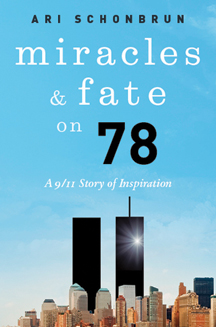
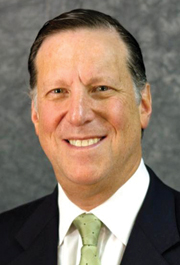 Ari Schonbrun was one of only four people out of the 662 employees of his workplace to survive 9/11. Cantor Fitzgerald, a Wall Street firm, occupied the top five floors of Tower One. Schonbrun was on the 78th floor when the first plane hit.
 “That is absolutely the message I want people to understand. We live in some dangerous times. The world is not a safe place, and what are we doing about it? The conflicts that are going on in the world today have been going on for thousands of years and I don’t see an end to it. It’s going to continue unless we do something different.
 In 1939, a German ship set out on a promising voyage that was supposed to end with Jewish refugees entering America and escaping intolerance. The voyage did not end that way.
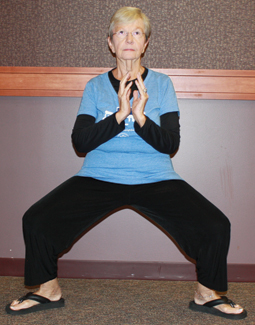 More and more senior adults are living longer and independently in their own homes. Both Jewish Family Services and Catholic Charities want to make sure that life remains good for these people, so they have come together to sponsor the Active Adult Expo: Healthy Mind, Body & Spirit on Thursday, Aug. 15, at the Jewish Community Campus. The Expo will take place from 8:30 a.m. to noon at the Jewish Community Campus. It is free and open to the entire community.
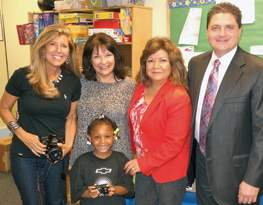 Linda Solomon is an award-winning photojournalist who has met some of the most famous people in the world. But some of the people that have made the biggest impression on her have been the homeless children she has met who live in shelters.
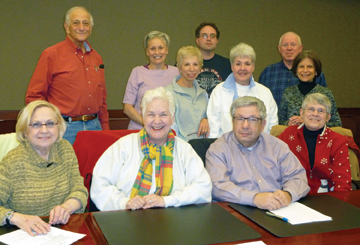 Twenty-eight classes will be offered throughout the day at this year’s community-wide “Day of Discovery — Explore the Joy of Jewish Learning in Kansas City.” The program will be held on Sunday, Aug. 25, from 8:45 a.m. to 3 p.m. at the Jewish Community Campus.
 An estimated 50,000-plus people from the metro and across the Midwest are expected to converge on Kansas City this weekend for the 4th Annual U.S. Bank Great Midwest Balloon Festival. Held Friday and Saturday, Aug. 9 and 10, on the grounds of the Great Mall of Great Plains in Olathe, the festival will feature 50 balloons, including fabulous special shape and corporate balloons from across the country.
 ATHLETES EXCEL AT MACCABIAH — The 19th Maccabiah Games ended last week and two of our young regional athletes did well at the competition. Congregation Ohev Sholom member Zack Tanenbaum placed third and brought home bronze medals in both the freestyle and Greco-Roman competitions.