


Visit the SADD website (Students Against Destructive Decisions) and you’ll find a staggering number of statistics regarding teenage drinking. One statistic states that more than half (58 percent) of high school seniors report they’ve been drunk at least once in their life. About 20 percent of eighth-graders report having been drunk at least once in their life.

Recently some Jewish parents got the call to come pick up their teenage children, all either 15 or 16 years old, from a local youth group event. Susie Hurst, who wears many hats for Jewish Family Services including being the adolescent specialist for C.H.A.I. (Channeling Healthy Adolescent Interaction), said underage drinking isn’t a new problem in the Jewish community.

“I would be absolutely shocked if a parent of a high-schooler didn’t know drinking was going on,” Hurst said.

As the statistics show, many people aren’t aware just how young the drinking is starting. Hurst estimates it begins in middle school.
“Some of the statistics I’ve seen is that the average age when kids first try alcohol is about 12,” she said, noting it often begins at parties.

Begin discussions early

Hurst believes parents should begin talking about the dangers of drinking as soon as middle school begins, or even sooner.

“That’s when they need to know that even just a few drinks begins to affect judgment, including getting involved sexually, damage to property and physical injuries,” she said.

But once parents learn their teen may be drinking, Hurst advises them to avoid lecturing.
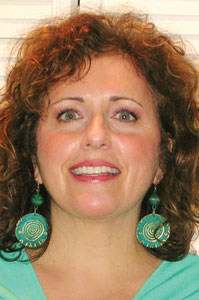
“That might make you feel better, but they won’t listen to it,” Hurst said.

Asking open-ended question is a good way to start a conversation, according to Hurst.

“Instead of interrogating, ask your teen if the people at the party are the people he or she wants to hang out with even though there was drinking,” she said.

Hurst said the most important influence a parent has with a teen is the fact that there is an open-door policy where anything, even if it’s uncomfortable, can be discussed.

“They need to know that they can come and talk to you and know that they won’t be screamed and lectured out. When screaming and lecturing happens, they just shut down. The poor behavior will happen, you just won’t know about it,” she said.

“Even though you prefer those behaviors aren’t happening, at least if you know about it, it gives you the opportunity to have the discussions and find out what’s going on. Our major goal as parents is to keep them safe,” she continued.

It’s important, Hurst said, for teens to know that they can be honest with their parents about anything.

“Make sure they feel that they can talk to you without being punished,” she continued. “Let’s say your teen told you Janey Doe was drinking at the party. If you then say you’re going to call Janey’s mother, your teen will never confide in you again. You need to understand the importance of them being honest with you and not punishing them for it.”

Hurst said parents need to be aware that drinking is happening at parties, and they should discuss that with their teens in an open, honest way.

“You don’t want to push them in a way that the teen would have to be deceitful,” Hurst said. “I would ask them, when you go to these parties are they cool about kids that don’t want to drink or is it uncomfortable for you?”

Hurst said it’s important for teens to trust their intuition, and if they feel the least bit uncomfortable or feel unsafe, then they should call you to come pick them up.

“Some families create a code word that means “come get me now” so that the teen on the other end of the line doesn’t have to go into details,” she said.

 Keep an open mind

If parents get the call to pick up a teens from an event because of alcohol use, Hurst said the first thing to do is to make sure the teen has not been unjustly accused.

“A parent should always say explain to me what happened” and then say “I need you to be honest with me,” Hurst said.

“Really give your teen a chance to explain what happened and listen to their side of the story,” Hurst said. “They need to realize that you aren’t going to attack them. And you don’t want to sacrifice the relationship you have with your teen by being unfair or overreacting.”

If a teen admits to drinking, Hurst said it’s best to continue the conversation in the morning. Then Hurst suggests that the parents and teen discuss exactly what happened and why such behavior is a problem for the parents. She said to make it clear that the teen has gone against the family’s rules and expectations about drinking.

She said hopefully before this happened, parents have already had the conversation with the teen explaining “we know drinking goes on, but we prefer that you choose not to drink.” Hurst said statistics are showing that those types of conversations between parents and teens “really has an impact and at least delays drinking until an older age.”

After that, Hurst said to explain to the teen that he or she will have to earn the parents’ trust again. One of the ways that will happen is by the parents taking steps such as calling the adults in charge of the next party as well as making sure the teen checks in with the parents from the host’s land line, not their personal cell phone.

Hurst said it’s important to let the teen know that he or she can earn back privileges and trust.

She notes that not all infractions are the same and that a different, stricter tone may need to be taken if this is a teen’s second or third offense. On the other hand, there must be a zero tolerance regarding drinking and driving. Not only are there serious legal ramifications but the end result can be deadly.

Hurst also wants it known that parents shouldn’t assume there will not be alcohol or other illegal substances because the party is in a “nice neighborhood” or being hosted by a Jewish family.

“That doesn’t have anything to do with anything,” Hurst said.
 

All local Jewish youth groups are affiliated with national movements and have strict policies against drinking and illegal substances.
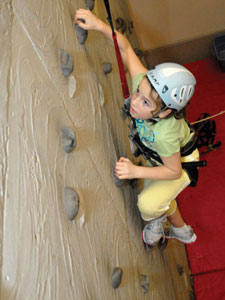
NFTY, which has chapters at congregations Beth Torah and B’nai Jehudah, requires its members and their parents to sign a B’rit K’hilah — Code of Conduct contract. These rules cover a variety of issues including the pledge not to “possess, consume or distribute alcoholic beverages … even if I am of legal drinking age.” The same goes for illegal drugs, tobacco products, firearms and any other activity that can be considered an illegal act. United Synagogue Youth, which is affiliated with Congregation Beth Shalom, and BBYO, also have similar policies.

Three local youth directors — Debi Tozer of BBYO, Marcia Rittmaster of Beth Torah’s NFTY and Stephanie Williams of USY — say they rarely have issues with teens and drinking. But they all take the issue very seriously and make sure that their members know the rules before an event and the consequences they will face should they break them.

BBYO has about 175 members here and is the largest of the local youth groups. Director Tozer said she rarely has to deal with teens drinking. Recently, however, she did punish teens for breaking the rules.

“I don’t think I’ve had to do it more than once a year,” she said.

Tozer said BBYO teens caught drinking are automatically dismissed from the program and their parents are called to pick them up. They also face suspension from activities and removal from board positions.

Tozer said a second offense results in permanent removal from BBYO. The consequences are no surprise to the teens and, Tozer said, if discipline is required parents are notified via the original phone call which is followed up by a letter.

Williams said USY luckily hasn’t faced many problems with teens abusing alcohol. In 12 years she’s only had to send a teen home from an event twice. That happens at parents’ expense.

Williams said most USYers respect the no drinking policy.

“I was in youth group growing up so I know it definitely happens behind closed doors and some people just get away with it,” she said. “But at USY conventions we are very diligent about trying to make sure that it doesn’t happen.”

The last time Beth Torah’s Rittmaster had to deal with a teen drinking at an event was more than 10 years ago. She attributes that to the code of conduct and the fact that members are reminded of that contract over and over again.

Rittmaster also believes NFTY programs are alcohol free because many of their programs are synagogue based.

“It brings a certain amount of respect for a program when rabbis are there,” Rittmaster said. “We also have very strong adult participation and nothing happens without an adult present.”

The timing of USY programs, according to Williams, is another reason why she sees few problems.

“We do our programs in the middle of the week,” Williams said. “With a dance you tend to associate more problems with drinking than you do a Wednesday night when you sit around making social action packets.”

Programs are often presented to teens to dissuade them from inappropriate activities. Williams said that USY has presented programs at conventions that concentrate on “Jewishly-acceptable” behaviors. BBYO has done so as well.

This year BBYO hopes a representative from Beit Teshuvah, an organization that runs a 12-step program based on Jewish values, will present programs at the spring regional convention.

“They are really awesome to talk to the teens because they talk on their level,” Tozer said.


Teens seek peers to sign pledge

Jewish teenagers from the major International Jewish Youth Movements are taking on bullying and standing up for their lesbian, gay, bisexual, transgender, and queer peers. In addition to publicly committing to end bullying and creating an inclusive environment in their own movements, the Coalition of Jewish Teen Leaders — the presidents of the International Jewish Youth Movements — has set a goal of getting 18,000 Jews to sign Keshet’s Jewish Community Pledge to Save Lives.” This goal has been echoed by the executive leadership of the movements and their staff.

“It is really exciting to see Jewish teen leadership take a strong stand against homophobia and to promote a vision of the Jewish community that fully embraces all forms of diversity. When Keshet began the Jewish Community Pledge campaign, we hoped that it would lead to exactly this type of action. As important as it is for Jewish adults to take a stand against bullying and harassment, the most important voice for Jewish youth to hear is that of other youth. I know that there are GLBTQ teens in each of these youth groups as well as unaffiliated youth who will see

To sign the pledge visit http://salsa.wiredforchange.com/o/1285/p/dia/action3/common/public/?action_KEY=2580

The Jewish Community Center is holding its annual Open House this Sunday, Jan. 9, from noon to 3 p.m.  The Fitness & Sports center, including the indoor pool, will be open free of charge and visitors will be able to learn about the variety of JCC programs. Chiefs fans will also be able to watch the playoff game on a big-screen TV.

JCC Executive Director Jacob Schreiber said the annual event is a great way to recruit new members.

“Try us out, work out, use the pool … everything is available that day for free!” Schreiber said.

He said the event is a great opportunity for the JCC to “showcase what we have to offer as a fitness center as well as our full community center experience.”

In addition to the fitness center, visitors will be able to learn about the JCC’s summer camp, which Schreiber said is being enhanced for the coming summer. Representatives will be available to give tours of the award-winning Child Development Center and its early childhood programs as well as show off the Lewis and Shirley White Theatre.

“This is a good time to showcase the Center, as others do around the country, because this is the time when people make resolutions to get back in to shape,” Schreiber noted.

The gym will be open for youth basketball, the Youth Fitness Zone will be open for children ages 6 to 14 and a racquetball tournament will be played. Individuals can also try out group exercise classes — including Zumba, BodyJAM, cycling, Boot Camp, BodyAttack, BodyVIBE, yoga, BodyFlow and BodyPump — will also be demonstrated.

There will be free refreshments, plus incentives will be offered to both members and non-members. Current members who bring a non-member to visit during the Open House will receive a free JCC coupon box, which includes tickets to a White Theatre performance, two free “Saturday Night Out,” program enrollments, two free yoga or Kinesis classes, and three free visits to the Youth Fitness Zone. They will also be entered to win a free LCD TV and other prizes.

Non-members who join the JCC. Jan. 9 only, will receive two months free, a JCC coupon book and hundreds of dollars in free services.

Women in the Jewish community will once again celebrate the new year of the trees with a Tu b’Shevat seder on Sunday, Jan. 23. (The holiday itself is Jan. 20) The event will be held at the Jewish Community Campus and it is being jointly sponsored by Jewish Federation Women’s Division Yad B’yad and Rosh Hodesh: It’s a Girl Thing! A Learning for Life Program.
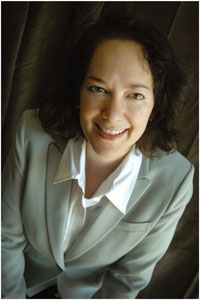
This is the second time the two organizations have collaborated on this event. Beverly Jacobson, Women’s division director, said the reason the committee decided to do Tu b’Shevat again is because it was “so well attended and enjoyed by so many women and young girls the last time.”
In fact almost 200 girls and women attended the first seder in 2009.

“This year we are hoping to achieve the same level of satisfaction,” Jacobson said. “The different speakers achieve a different focus.”
The span of women through the ages is “one of the coolest things” about this seder, according to Samantha Feinberg, the Learning for Life associate who is helping plan the event.

“Last time we saw girls as young as 12 and, I believe, there were women in their 80s there as well,” Feinberg said.

Karen Gerson, CAJE’s director of Informal Education, said another great thing about the event was that “it was intergenerational by more than just two generations.”

Like last time, activities are being created to help the generations interact.

“Some of the activities are created for the younger age group to collaborate with the older age group. Some of the activities give the older age group the opportunity to share their experiences and traditions with the younger generation,” Gerson said.

Again, like last time, Feinberg said the committee will take care in seating people so that there will be a nice mix of women at the tables.

“People were comfortably seated with people they already knew and there was an opportunity to meet new people as well,” Feinberg said.

Feinberg, who works with girls in the Rosh Hodesh program, is looking forward to the event, noting that it’s a nice way to get girls and their mothers together.

But the event also lets the girls gain insight to the larger community of Jewish women.

“In Rosh Hodesh there’s ritual and camaraderie and it’s nice to see that the learning doesn’t stop when you’re out of school. It’s good for them to see that women of all ages can come together and celebrate being women and celebrate Judaism for the rest of their lives,” Feinberg said.

The seder itself

Feinberg explained that a Tu b’Shevat seder is like a Passover seder in many ways, including the fact that there’s order to the ceremony.
“But there’s also sharing and the chance for individual expression of the rituals,” she said.

Just like at Passover, there are four glasses of wine drunk during the seder. At the Tu b’Shevat seder, however, the color of the wine in each glass is varied. The cups of wine symbolize the various seasons.

It is also popular to commemorate Tu b’Shevat by eating foods that can be found in Israel — such as olives, figs, grapes, honey, carob fruit and pomegranates. Some of these foods are mentioned in Deuteronomy 8:8, which describes Israel as “a land with wheat and barley, vines and fig trees, pomegranates, olive oil and honey.” In addition to the holiday fare, participants at this seder will also be treated to an assortment of sweets.
The theme of this seder is “Nourish the World Nourish Ourselves.”

“In keeping with the ‘new year of the trees theme,’ ” Feinberg said, “the seder will focus on the many ways we nourish the environment, the community and ourselves.”

Jacobson points out that once again they are aiming toward a “green seder, with eating utensils that decompose and the emphasis on growing plants.”

Along those lines organizers are also asking participants to help others by bringing apples, oranges, pears or dried fruit to the seder. The produce will be donated to Yachad: The Kosher Food Pantry. There will also be an opportunity to purchase trees to be planted in Israel at the event.

A hagaddah has been written for the service, and all the speakers and activities are new this year. Community educator Edna Levy will facilitate the seder. Others participating in the seder activities include Lilach Nissim, the Federation’s Israeli shaliach, who will present a d’var Torah; Gayla Brockman, executive director of the Menorah Legacy Foundation; Jane Sosland; Anne Jacobs and Judy Jacks Berman.

The event will last about two hours. Reservations will be accepted through Jan. 18. For more information about costs or to make a reservation, contact Nicole at (913) 327-8111 or visit www.jewishkansascity.com. A discount reservation is available for girls age 12 through college age and for women 70-plus.

Neither Karen Loggia nor her husband, David Spizman, are from Kansas City. Loggia grew up in a rural suburb of Washington, D.C. Spizman is from Omaha. So it wasn’t family that enticed them to move back to this area. It was friends, schools and, perhaps more than anything, the Jewish community. But that’s getting ahead of the story.
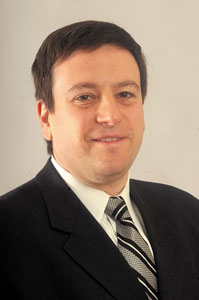
Loggia’s circuitous route to Kansas City began in Darnestown, Maryland, where she was raised Jewish with a tree at Christmas and a ham on Easter in deference to her father, who grew up Catholic. “I never questioned it till I was much older,” says Loggia, whose formal religious training ended at her Bat Mitzvah.

In high school, she belonged to a BBG youth group and attended Hillel a few times at Brown University. “But Judaism,” she says, “was not a central part of my life then.” Nor was it when she was employed in New York City as a benefits consultant in the late 1990s, nor in graduate school at Dartmouth College in New Hampshire, nor afterwards in Raleigh-Durham, where she worked in the marketing department at John Deere.

What Loggia remembers most fondly about those places is proximity to skiing and the beach. Still, despite the Midwest’s general lack of these amenities, Loggia approached her transfer to the Kansas City area in 2004 as another great adventure, and was pleasantly struck by the welcoming Jewish community she found here.

Kansas City No-Brainer

“Within days of telling people I was moving to Kansas City,” she said, “they told me about people they knew here. I reached out to them and they reached out to me.”

Loggia’s introduction to the Jewish Federation of Greater Kansas City came from friends of Ginzy Schaefer, the aunt of a graduate school friend, who suggested that Loggia participate in Women’s Division’s B’not Kehilla young leadership program. “I met a lot of fantastic women,” says Loggia, “and got to know Women’s Division Director Bev Jacobson, who asked me to help plan some programs.” 

Loggia also met her future husband through those connections on a blind date in 2005. “Some friends were going to Bagels and Basketball at KU, where I met a new couple, who introduced me to David.”

The next year, Loggia found her dream job as brand manager at Whirlpool in Benton Harbor, Michigan. Spizman moved to Benton Harbor and telecommuted to Kansas City after the couple married in September 2007. “It was fun living a half mile from Lake Michigan and getting to know Chicago,” said Loggia, “but it wasn’t sustainable. We did a quick evaluation and returning to Kansas City before the birth of our child was really a no-brainer.”

Every Stage of Life

After their son, Shaefer, was born here in February 2009, Loggia reconnected with the Federation, and served that year as co-chair of the Women’s Division’s annual Note-a-Thon. This year, she joined the Federation’s Marketing Advisory Council and accepted a two-year appointment as Super Sunday co-chair. “I’m really excited to be part of Super Sunday,” she says. “It will be get-down-to-business day, making calls and sending out thank yous, but also a lot of fun.” 

Federations across the country are moving to one unified logo, so Loggia and her co-chair, Steve Greenberg, orchestrated a community-wide T-shirt contest, featuring Jewish Federation’s new look. The winning design will be worn by hundreds of Super Sunday volunteers on January 30. In addition to the new T-shirt contest, they’re launching The Tzedakah Project on Super Sunday – a family-friendly scavenger hunt for 5 to 8-year olds and their families.

“What I love about the Federation,” she says, “is that while it has broad-reaching goals, whatever your stage of life you can find something it offers that resonates with your passion.”  

Loggia had a major volunteer role as social media manager for the Balloon Festival, held in September for the first time in Kansas City. But staying involved in the Jewish community, for her, is a given.  “Hopefully, we’ll live out our lives here,” she says. “I want to make sure my son grows up in a household rich with Jewish traditions. Volunteering in the Jewish community gives me more information and more confidence that this goal will happen.”


• Born in Washington, D.C., 1972

• Quince Orchard High School, Gaithersburg, Md.

• B.A., mathematical economics, Brown University, Providence, RI; MBA, Dartmouth  College, Hanover, NH
 
• Lives in Leawood, Kan.

• Married to David Spizman

• Synagogue Affiliation — Congregation Beth Torah

• Now Reading “Good Night Moon,” by Clement Hurd, and “The Awakening,” by Kate Chopin

• Favorite Jewish Food — Matzo ball soup

• Trips to Israel — None

• Children — Shaefer, 2


The board of directors of The New Reform Temple has decided not to renew Rabbi Jacques Cukierkorn’s contract, which expires at the end of May 2012.
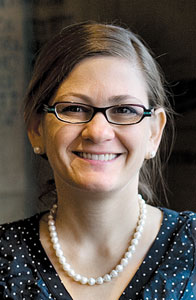
“This decision was the culmination of a long and thorough process which resulted in a vote that was supported by an overwhelming majority of the board,” said Thomas C. Barnett, board president. The congregation has 285-member units.

“The rabbi has served our congregation for over 10 years, and we are all grateful for the progress the congregation has enjoyed during his leadership,” he continued. “Please be assured that this decision was a difficult one for all concerned.”

Rabbi Cukierkorn informed some members of the congregation about the board’s decision last week. In an e-mail, he stated that he was “sorry and saddened” to inform them of the board’s decision not to renew his contract.

“My family and I love the congregation and the Kansas City Jewish community. We have lived here for 10 years and I expected to be the rabbi of the New Reform Temple until my retirement, many years from now. I am committed to continue fulfilling my rabbinical duties for the remainder of my term,” he said.

“It has been an honor and a joy to have been part of your lives and have you be part of ours for the past 10 years,” said the 43-year-old rabbi who was ordained by the Reform movement in 1994. He joined the congregation in 2000.

Rabbi Cukierkorn reports that during his tenure the congregation’s membership doubled in size “and has become far more active and involved in the Kansas City Jewish community.”

Since he’s been here, Rabbi Cukierkorn has authored two books, “Accessible Judaism: A Concise Guide,” which is available in English, Spanish and Portuguese, and “They Were Just People: Stories of Rescue in Poland During the Holocaust,” that he co-authored with Bill Tammeus. He has also written numerous articles for major Jewish magazines and newspapers all over the country and been featured in a documentary about the conversions he oversees in Latin America.

Rabbi Cukierkorn currently serves as vice president of the Society for Classical Reform Judaism and has served as president of the Rabbinical Association of Greater Kansas City.

The congregation has not yet completed plans to begin the search for a new rabbi.

Congregation Beth Torah has begun searching for a new rabbi educator. The person hired will replace Rabbi Vered Harris, the congregation’s education rabbi, when her contract expires at the end of June 2012. She informed the congregation this summer that she planned to seek a new position.

Rabbi Harris joined the Reform congregation, which now has 650-plus member units, in 2000 following her ordination from the Hebrew Union College-Jewish Institute of Religion in Cincinnati that same year. She also earned a Master of Arts degree in Jewish education in 1998 from the Rhea Hirsch School of Education, and was awarded the title of Reform Jewish Educator in 2002. Rabbi Harris and her husband, Benjamin, are the parents of three children.

John Spector, the congregation’s president, said this is a natural transition in a rabbi’s career path and that Rabbi Harris told the board that this is a good time for her family to make such a change. While he’s happy for Rabbi Harris, he said Beth Torah is going to miss her.

“We were very lucky to have her for 10 years. Our religious school and our adult education programming are top quality in large part because of her effective leadership,” Spector said. “We clearly understand why she is leaving and we wish her the best of luck.”

The job description, which has been posted on the Central Conference of American Rabbi’s website as well as Beth Torah’s (www.beth-torah.org) is detailed. In part, the congregation is seeking an innovative rabbi educator “who will facilitate lifelong learning among congregants, oversee various congregational programs, participate in outreach efforts and serve as rabbi to the congregation.”

Spector said before the congregation compiled the job description, it first met with Rabbi Harris and several focus groups.

“We worked with Rabbi Harris to determine what her role is now and how it has grown since she came here,” Spector said. “A variety of congregants from various demographic groups also provided their feedback, which was factored into the job description.”

The search committee will be led by Michelle Cole and it will include congregants from a variety of different age groups and family responsibilities such as parents with young children, seniors and young adults.

Other than the fact that Rick Recht had never been to Jewish camp, never worked with kids, and never played or written any Jewish music, he was the perfect choice to be a Jewish summer camp song leader.
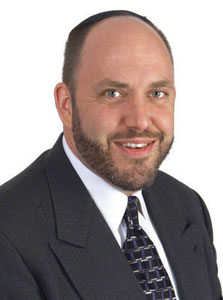
Recht was recruited to the job by his student and now wife, Elisa Heiligman, who grew up in Kansas City and attended the Hyman Brand Hebrew Academy before settling in St. Louis after graduate school at Washington University.

“She was taking guitar lessons from me,” said Recht, “because she couldn’t find any song leaders in St. Louis and she wasn’t going to run camp without music. During the lessons, she jokingly bugged me about being the song leader. I typically took a few weeks off at the beginning of the summer and thought I’d try it out.”

Power of music

“It became clear to me almost immediately that music was a means, not an end. That it could be a vehicle that transcends intellectual barriers to spirituality. The idea that music could have this great a power in people’s lives was really exciting to me as a Jew, as a teacher and as a musician.”

When camp ended, Recht continued nationwide touring with the rock band he had been part of since college at the University of Southern California, but quit after a few months to build a studio in his basement. In 1999, he produced his first Jewish album, “Tov,” comprising songs he wrote that first summer at camp. The next summer, after playing 50 Jewish summer camps and reaching more than 30,000 kids, Recht knew his career was headed in a whole new direction.

Eight top-selling Jewish albums later, Recht is excited about his upcoming PJ Library gig in Kansas City for children 6 months through 8 years old and their families from 4 to 5:30 p.m. Sunday, Jan. 9, at the Jewish Community Campus. For the first time he’ll perform in concert songs from his latest album, “Look at Me.” Admission is free. For those not familiar with his music, songs from his albums can be heard at www.rickrecht.com.

Many in the audience at The PJ Library concert will recognize these songs. “The timing is perfect,” says Recht, “because ‘Look at Me’ was just distributed to 15,000 kids around the country for Chanukah through The PJ Library.”

The PJ Library

The PJ Library program was created by the Harold Grinspoon Foundation to support families in their Jewish journey. It does so by sending free, high-quality Jewish-themed books and music every month to children ages 6 months to 8 years. The Jewish Federation of Greater Kansas City launched The PJ Library here in March 2008. Today, more than 875 local families participate in the program, which features group activities throughout the year in addition to providing books and music and presenting an annual free concert.
Recht, whose “Free to Be the Jew in Me” album has been delivered to thousands of PJ Library families and who will be the artist-in-resident at The PJ Library’s national conference in April, is also part of a PJ Library family.

“We have two sons, Kobi, 9, and Tal, 6,” said Recht. “The PJ Library has really enriched our lives. These books kept coming each month and the next thing we knew we had a Jewish library in our home!”

Relevant Judaism

Recht’s commitment to Jewish music and education entered a new phase last fall with the launch of Jewish Rock Radio (www.jewishrockradio.com) by Judaism Alive, the nonprofit Recht founded to strengthen Jewish identity and connection for youth through their love of music, musical instruments and online interaction. Jewish Rock Radio features a variety of music from Jewish rock artists, as well as interviews with youth sharing fresh, exciting ways they are engaging in Jewish life.

Recht sees love of music, online interaction and high-quality media as integral to the future of a relevant Judaism. “At Jewish Rock Radio, we’re using the media that Jewish youth are using in their daily lives,” he says. “This has been a vivid reality in the Christian world for decades, and now the Jewish world can experience this powerful vehicle for strengthening Jewish identity and connection.

“Youth are our greatest litmus test for what’s working and not working. They vote with their feet and they’re brutally honest. Youth are experiencing high quality and excellence in every area of their lives. When it comes to Judaism, they should expect no less.”

Meet Rick Recht

Middle and high schoolers will have the opportunity to meet Rick Recht in person from 6 to 6:30 p.m. Jan. 9. The meet and greet will take place after the children’s concert, and will be in the Social Hall of the Jewish Community Campus. Since the earlier concert is open only to children ages 8 or younger, the meet and greet is a great opportunity for teenagers to meet with Recht while he visits Kansas City.


Congregation Beth Shalom is losing both its rabbis. Senior Rabbi Robert Tobin has decided not to renew his contract. In a separate move, the Conservative congregation’s board of directors has voted to eliminate the assistant rabbi position effective July 2011. That position has been filled by Rabbi Adam Stein since the summer of 2009. The congregation was informed of these decisions in two separate e-mails sent earlier this month from Kurt Kavanaugh, D.D.S., M.S., the congregation’s president.
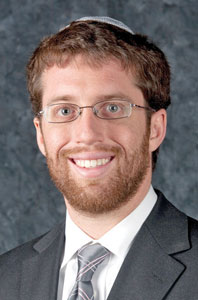
Rabbi Tobin informed Dr. Kavanaugh Dec. 10 that he planned to seek a pulpit elsewhere. In Dr. Kavanaugh’s letter to the congregation, dated that same day, he explained that Rabbi Tobin feels “his strengths and goals are not the ideal match for our future.”

As reported in the Dec. 10 issue of The Chronicle, Beth Shalom is facing financial difficulties and plans to close its facility at 95th and Wornall, which is currently used almost exclusively for worship, by July 15. At the time that decision was made, Dr. Kavanaugh told members that this recommendation was just one step in the congregation’s efforts to eliminate its budget deficit and operate the congregation on a sound fiscal basis.

The decision to eliminate the associate rabbi position appears to be another step toward reducing the congregation’s deficit.
In a second letter to members dated Dec. 17, Dr. Kavanaugh noted that Beth Shalom has been blessed to have had many wonderful assistant rabbis over the years including Rabbi Stein.

“However, given our trend in membership and the resulting reduction in dues revenue, our Operations Task Force determined the most prudent economic decision would be to reduce the number of our clergy,” Dr. Kavanaugh reported.

Beth Shalom is currently making plans to engage an interim rabbi after Rabbi Tobin’s contract expires on June 30. Discussions are currently taking place between the congregation and Rabbi Alan Cohen, who retired as the congregation’s senior rabbi three years ago. Since then he has served as director of interreligious affairs for the Jewish Community Relations Bureau|American Jewish Committee. That position is funded by three-year grants that are due to expire this summer.

“Given his love of Beth Shalom, both as an institution and as his extended family, he has graciously agreed in principle to remain in Kansas City for just one year to tend to the day-to-day needs of our membership,” Dr. Kavanaugh said.

He continued that Beth Shalom’s board is working hard to see that through this transition, the congregation will “emerge prouder and stronger than ever.”

“We have before us an opportunity to work together to shape our future and reinforce the foundations of a sustainable, connected community,” Dr. Kavanaugh said.

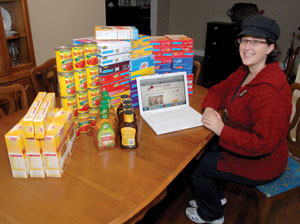
When Mara Strom lived in Israel, she found it easy to keep kosher. Now that she’s back in Kansas City, this time with a husband and three children in tow, she’s running a kosher home — on a budget.

Saving money and keeping kosher? Impossible. Not so, says this writer, blogger and coupon clipper.

“The most important thing you can do while shopping is to pay attention,” says Strom, whose blog — kosheronabudget.com — offers tips from what stores have the best specials to money-saving kosher recipes. She also shares her insights on Facebook at: facebook.com/kosheronabudget, and on Twitter@kosheronabudget. Strom will teach a Kosher on a Budget class at the Jewish Community Center in January. (See below for details)

“I’ve always loved to score a good deal,” Strom says, “but it wasn’t until we became savvy with our finances that I finally understand the most fundamental lesson of budgeting: If you can’t afford it, it’s not a bargain!”

Applying strategies

Strom began this adventure by writing down expenditures in a small notebook. “After the month was over, I tallied it all up. I was shocked. I had figured we were spending a couple hundred dollars at most at the grocery store. Boy was I wrong  it was almost $1,000. No wonder I couldn’t make our budget work!”

One reason her shopping was getting out of hand is because there are more and more kosher products available. Today more than 70,000 products are labeled kosher, totaling about $40 million in annual sales. And every year, hundreds of new products are added. According to Menachem Lubinsky, president of Lubicom Marketing who has covered the kosher food market for years, “The number of booths (at last summer’s Fancy Food Show in New York) that touted their kosher symbol was unprecedented.” Today’s shoppers can find everything from kosher gluten-free products to fancy chocolates, not to mention a growing number of award-winning wines.

But excitement about all these new kosher products can overwhelm a family’s budget, Strom says. “We were spending more on food and household expenses than just about any other category in our budget. I knew we needed to get this under control, so I spent a lot of time learning about couponing, menu planning, stockpiling, cash-based budgeting and more. Once I started implementing these strategies, I was able to cut our spending by more than half without compromising quality or kashrut.”

For instance she learned that shopping on an empty stomach leads to overspending. Then she found that attempting to capture every deal out there can cause overbuying. Clipping coupons — or in today’s version, printing online coupons — really does work, as does writing a shopping list in advance and sticking to it.

“No more buying another jar of mayonnaise only to discover you have four half-used jars hidden in your fridge,” she laughs. “I learned about couponing, stockpiling, menu planning and more. But then I had to figure out how to apply all these strategies to keeping kosher.”

That’s probably the trickiest part of “Kosher on a Budget,” but it just means being watchful and alert for “deals” Strom says. Checking out sites that offer coupons for specific kosher products (like Empire chickens, for example) and combining store coupons (like a chain store’s $5 off when you purchase $50 worth of merchandise) with product coupons can result in extra savings.

Of course, it’s not just paying attention while grocery shopping that can save families money. Strom points out there are freebies out there, just for the taking — everything from samples of products you already use (like toothpaste and detergent) to toys for your kids. “One of the best sources for free samples is a marketing website,” Strom explains. In fact, she says it has the best high-value coupons and she often gets coupons for free products — the best deal yet!

Not only are kosher products available locally at nearly every grocery and discount store, this community boasts a kosher co-op where it’s easy to order in bulk. And readers of Strom’s blog also will find that her website contains links to other useful sites — from all-kosher grocery stores to companies that specialize in a single kosher product, as well as ads for products (kosher and generic).

While Strom isn’t a dietician or a trained chef, she is a wife and mother and that requires balancing the household budget and serving tasty yet nutritious meals. “My background in freelance writing no doubt helps me with the blog, but ultimately, I believe that experience is the best education of all,” Strom says. “My most valuable qualification is that I have been doing this for two-and-a-half years,” she added, noting that she has “saved more than $5,000 a year.”

Strom started a freelancing writing business in 2003 in Israel, where she had met her husband, Frankie Sachs. The family moved to Kansas City from Modi’in, Israel, in 2008 in order to be closer to their children’s grandparents. Two of their children, Avinoam, now 7, and Matan, age 5, were born in Israel. Their daughter, Nili, was born here 18 months ago.

Kosher on a budget

So many people are struggling financially right now; but getting control of your food and household spending can go a long way in correcting a lopsided budget.

As an introduction to a three-part series “Kosher on a Budget,” Mara Strom, author of the blog kosheronabudget.com will cover the basic principles of strategic shopping, including a general discussion of budgeting and tracking spending; creating a price book; and using coupons and stockpiling. This information could help participants begin saving as much as 20 to 25 percent on their current grocery bill.

Those choosing to enroll in the actual class will take part in a more in-depth workshop that will speak to specific organizational and shopping habits that can trim 40 to 60 percent from the normal grocery bill.

When: Monday evenings, 7:30-8:30pm, Jan. 10, Jan. 17, Jan. 24 and Jan. 31

Where: The Jewish Community Center

Instructor: Mara Strom

Tuition: $25 (no charge to attend introductory session on Jan. 10)

For more information contact Jeff Goldenberg, Director of Adult Jewish Learning, at 913-327-4647 or .