

Kollel co-sponsoring special women’s trip to Israel
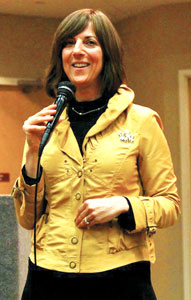 A few weeks ago Lori Palatanik, director of the Jewish Women’s Renaissance Project, was in Kansas City as a guest of the Community Kollel of Kansas City. At one event attended by more than 100 young adults, she discussed the Transform and Grow Israel Tour JWRP sponsors every summer. The women who were there were intrigued.
“Almost every woman who was in attendance came up to me or Gevura (Davis) and asked if she could go,” said Esther Sokoloff, wife of Rosh Kollel Rabbi Yehuda Sokoloff.
In just a few short weeks Sokoloff and Davis made arrangements for 10 local women — nine plus Sokoloff — to participate in the JWRP’s 10-day TAG Israel Experience. The women will leave July 18 and return July 28. The trip is sponsored by JWRP and the Kollel. The participants, who will be chosen through an application and interview process, pay solely for their airfare. The rest of the trip’s expenses are paid by the sponsors.
“I spoke to someone in Dallas and she said everything we do is the best of the best,” Sokoloff said. “Because this is a once-in-a-lifetime experience the educators are the best also.”
The trip is designed for women who have at least one child at home, who are interested in learning more about Judaism and who hope to become more involved in the local Jewish community.
“This is a unique program for Jewish mothers who, until now, have chosen everyone else above themselves,” Sokoloff explained.
“When these women go to Israel they will connect on many levels with each other and their Judaism. We hope they come back and give back their time to the community,” she continued.
Sokoloff said the trip itself will concentrate on fulfilling a woman’s spiritual, physical and emotional needs. Participants will travel across the Jewish state from Safed to Jerusalem. Among the items on the itinerary are floating in the Dead Sea, kayaking on the Jordan River, riding camels in the Judean desert, and visiting the Western Wall.
As well as touring the country, Sokoloff said there is a strong educational component as well. The women will attend Torah lectures, learn to make challah and serve the poor in soup kitchens. They will also have the opportunity to be inspired by the women of Israel who are soldiers, business leaders and politicians. About 1,000 women from around the world will take part in JWRP missions this summer.
The Kollel is currently seeking grants and donations to pay their share of the trip expenses. Sokoloff said as a trip sponsor, the Kollel is asking each woman who is chosen for the trip to volunteer 30 hours of their time upon their return to various activities in the Jewish community “in whatever way that they think is suitable for them.”
Application are currently available by contacting Sokoloff at . The will also soon be available at https://www.jwrp.org/SF/SSI/ApplicationForm.php. Applications are due by April 12.
Between the application and the interview, applicants will be asked to discuss a variety of subjects, including their Jewish background, whether or not they have been to Israel before, what types of Jewish experiences they have had in the past and what they hope to gain from participating in a TAG Israel Tour.
Sokoloff stressed that the idea of the trip is to inspire the participants, not necessarily to change them.
“The hope is that if a woman is inspired, she will inspire her family and ultimately inspire her community,” Solokoff said.
As a wife and the mother of three little boys, she understands it could be very hard to leave the family for this 10-day trip.
“But I think in the long run I’m doing the best thing for my family,” she said. “It’s a very small price to pay for the long-term results.”
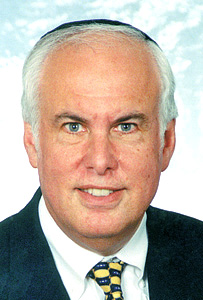 Lunch is always a challenge for those who work during Passover. For the past 25 years Kehilath Israel Synagogue has tried to make that easier by sponsoring strictly kosher-for-Passover luncheons downtown. This year they will be held at noon on the two intermediate days of Passover, Thursday and Friday April 21 and 22.
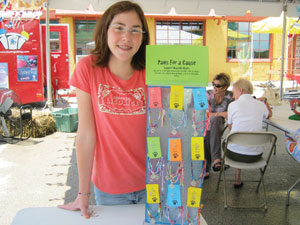 The lack of and desire to have a pet, led to Elizabeth Gerson’s Bat Mitzvah project, “Paws for a Cause.” Like many today, having a Bat Mitzvah means learning to give back to society. And Elizabeth did that in a big way! She earned more than $2,000 that was split between Wayside Waifs and Animal Haven, two animal shelters in the Kansas City area.
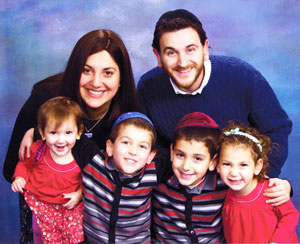 Once upon a time Gevura Davis was called Lauren and wanted to be editor of The New York Times. Today, when she thinks about her goals, she’s reminded of what one of her favorite rabbis said: “To be a Jew and live Judaism is to try to take care of as many people with your one precious life that you can, starting with yourself, your family and your community.”
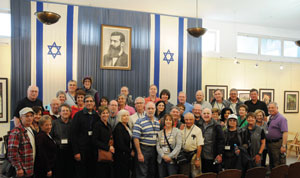 Forty-four members of the Jewish community returned from Israel early last week after taking part in the Jewish Federation of Greater Kansas City’s latest mission to Israel. No matter how many times the participant had visited Israel, it was a memorable trip.
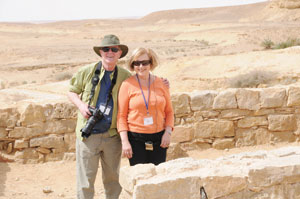 A booming economy caught the attention of the Kansas Citians.
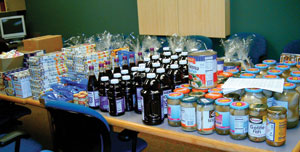 Once again Jewish Family Services is preparing for its annual Passover Holiday Project. This year approximately 140 families, or a total of about 300 people, will get a food basket to help them celebrate the Feast of Unleavened Bread.
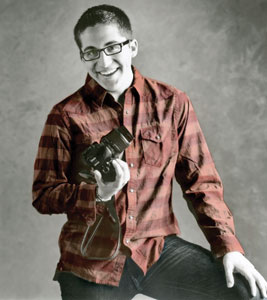 We caught up with Jonathan Edelman, Hyman Brand Hebrew Academy senior, as he was getting ready for the school’s spring formal last Sunday. Edelman said he was honored to be selected as the recipient of the first Head of School Shining Light Award.
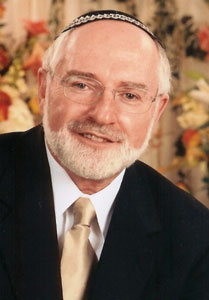 Kansas City native Rabbi Bernhard Rosenberg has published the “Rosenberg Holocaust Siddur.” It is currently only available online and can be downloaded for free at http://www.jewishfreeware.org/downloads/YOM%20HASHOAH/.The 143-page book can be downloaded from any computer and copies can be printed anywhere. Prayers are included in Hebrew, Hebrew transliteration and English translation.