

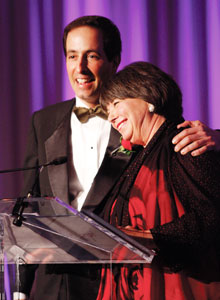
DELIGHTFUL EVENING — It looked like everyone, including co-chairs David Porter and Patricia Werthan Uhlmann, were having a wonderful time Sunday night as the Hyman Brand Hebrew Academy celebrated its 45th anniversary. Two members of the original graduating class were in attendance — Debbie Sosland-Edelman and Harriet Puritz Almaleh. We were all treated to a video featuring some of the founders where we heard the hit line of the evening, delivered by Blanche Sosland. She reported that when they met with Hyman Brand for the very first time seeking his support, he called the group a bunch of “young punks.” Brand was so impressed with those “young punks” that in two weeks he raised enough money for the school to operate its first year.

ISRAEL ADVOCACY — The Jewish Federation of Greater Kansas City has launched a new Facebook page that focuses solely on Israeli advocacy. Israeli emissary Lilach Nissim said friends of the page will be able to learn more about events that are happening, ask questions and get answers, and write their opinions freely. The page will also have facts about Israel and list a variety of sources for additional information. The page is called Advocacy KC Israel.

KOSHER FOR PASSOVER — I got a call earlier this week from a reader informing me that a recipe for Chocolate Chiffon Cake in the April 8 edition provided by JTA News & Features is not kosher for Passover because its ingredients include baking powder. So I did a quick online search and found out that while it would seem that baking powder would not be kosher for Passover, there are actually four brands certified with the OU-P available this year. Another article notes that there are many written debates as to whether or not Passover baking powder and baking soda should be permitted. If you search online you’ll find a variety of answers. So my best (uneducated) advice regarding the use of kosher for Passover baking powder is to ask your rabbi!

SPECIAL THANKS — Marcus Cain, the curator of the Kansas City Jewish Museum of Contemporary Art Epsten Gallery|Museum Without Walls went out of his way to help us find an image for this week, our annual Passover edition. We thank Marcus for all the extra effort he put forth on our behalf!

KOLLEL CAKES — I wish I would have known that the Community Kollel of Kansas City was selling kosher for Passover flourless chocolate cakes before I found out that pre-orders completely sold out in two days! They are being baked by Marsha Pener Johnston. Stay tuned as they will be selling custom made kosher cakes for Shavuot as another fundraiser. In the meantime if you want more information about this fundraiser or you wish to reserve a Shavuot cake, you can contact Rabbi Binyomin Davis at .

HOLOCAUST COMMEMORATION PLANNED — The annual State of Kansas Holocaust Commemoration Service will be at 1 p.m. Monday, May 2, at the Kansas State Historical Museum in Topeka. This year’s theme is “The Holocaust: Justice and Accountability,” and the keynote speaker will be Hildegard Trout, a Holocaust survivor. Musical performances will be provided by the Washburn University Choir and cellist Steven Elish. They will perform excerpts from the “Holocaust Cantata.” The event is free and open to the public and is sponsored by the Kansas City Holocaust Commission. Seating is limited to the first 200 and the service lasts approximately 75 minutes. For more information, call (785) 272-6040.

JAPAN AID — Japan continues to be shaken by earthquakes and aftershocks and Jewish organizations continue to help the Japanese people. IsraAID/FIRST has now sent three medical teams to work there, the most recent one delivering urgently needed medicines to the Fuji Toranomon Hospital. IsraAID is a coordinating body of Israeli and Jewish organizations and other interested parties based in Israel who are active in development and relief work and are concerned about global issues.

JDC officials estimates they will raise $2 million which will provide emergency relief in the disaster stricken region. JDC has provided food, water, hygiene products, blankets, tents, emergency school supplies, medical equipment and pharmaceuticals. It is also working in conjunction with IRC, UNICEF, Afya, Chabad and the IDF, supporting the field hospital in Minamisanriku through the purchase of medical equipment and life-saving drugs.
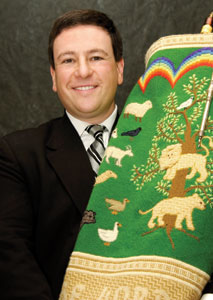
Plans are currently underway to launch a new reform congregation in Kansas City. Its new spiritual leader will be Rabbi Jacques Cukierkorn, who just severed his relationship with the New Reform Temple. (For more information, see below.) Known by the name Temple Israel for now, it held services for the first time Friday, April 1, at St. Thomas the Apostle Episcopal Church in Overland Park. Rabbi Cukierkorn said services would be held there again tonight, Friday, April 8, at 6 p.m. at 12251 Antioch Road in Overland Park, and for the foreseeable future. For more information, contact Rabbi Cukierkorn at (913) 940-1011.
The 43-year-old native of Brazil came to Kansas City 10 years ago to serve as the rabbi for The New Reform Temple. Following several months of negotiations, that relationship ended last week.

“We reached a mutually agreeable deal. Sadly, it wasn’t the outcome that we wanted, but we are very pleased that we will be able to stay in town,” Rabbi Cukierkorn said this week.
Another key component of the agreement, which remains confidential, allows the Reform rabbi to serve another synagogue here in the city.

“This has been our home for 10 years. Our kids have grown up here, and one of our daughters was born here. I’m glad a group has asked us to stick around,” he said. He and his wife, Denisse, and their two daughters live in Overland Park.

Forming new ties

Congregants have helped shaped new synagogues here in Kansas City several times in recent history. Congregation Beth Torah was established in April 1988 following a leadership struggle at The Temple, Congregation B’nai Jehudah. Another rabbinic shuffle in the community helped create Or Hadash, a Reconstructionist congregation formed in June 2003 (which folded in the spring of 2010), and Kol Ami, which was established in June 2003.

Rabbi Cukierkorn, who serves as vice-president of the Society for Classical Reform Judaism and is a former president of the Rabbinical Association of Greater Kansas City, said about 50 people attended services last week with just one day’s notice. Approximately 50 families to date have expressed interest in helping form the new congregation.

“We want to form a congregation that is truly inclusive and welcoming and diverse. We will welcome people who have different levels of commitment to Judaism,” he said.

He stressed that absolutely nothing about a new congregation has been finalized yet, including the congregation’s name. In the first draft of the congregation’s proposal, it states, “As a congregation-oriented organization, the vision, mission, governance, services and even the name of our temple or synagogue will be determined through discussion and consensus.”

Rabbi Cukierkorn expects that the congregation will look for a more permanent site to meet in the future. Many of the families who attended the first service have been affiliated with The New Reform Temple, which is located at 7100 Main in Kansas City, Mo., but Rabbi Cukierkorn stated that he is not “aiming to take anyone from The New Reform Temple.”

“Some may leave and follow me, some may leave and go elsewhere and some may stay. My aim is not to hurt the congregation,” Rabbi Cukierkorn said.

The rabbi was able to organize the first service last week on such a short notice with a little help from his friends. A colleague, The Rev. Gar Demo at St. Thomas the Apostle Episcopal, offered the meeting space. Rabbi Cukierkorn already owned a Torah, and he learned that Debby Simon still had an ark from her days as an Or Hadash board member.

“I asked her if she would lend it to me, rent it to me or sell it to me,” Rabbi Cukierkorn said. “She said she ran into many obstacles when she was trying to organize Or Hadash and that only one rabbi offered support: me! So, she said she would be honored to give it to us as a gift.”

Rabbi Cukierkorn has many ideas he hopes to incorporate, with input from other organizers, in a new congregation. For instance, instead of running a traditional, standardized religious school, he proposes congregants be given the opportunity to develop their own IJPs, or Individual Jewish Plans to promote life-long Jewish learning.

“In schools children get IEPs (Individual Education Plans). We will work together to set education goals and focus on experiential learning and community building,” he said. “As a rabbi I am certainly capable of running a religious school, but I have come to believe that religious school alone can be detrimental to a Jewish education. With an IJP, we will work together to set educational goals, where congregants can learn on their own, with the rabbi or as part of study groups, according to their schedules. Our shul will focus on experiential learning and community building,” he said.

His vision calls for Sundays to be mostly family days. Instead of gathering together every Sunday morning at religious school, he hopes families will celebrate Shabbat at home and together at services every Friday evening. Then, several times a year, he proposes a day-long activity for congregants, allowing both learning and social components.

The rabbi, who has published several books, is also known for his work with interfaith families and his travels to help people learn about Judaism in Latin America and Europe. He hopes to be able to continue working in those areas at a new congregation and make this international outreach an integral part of the new congregation identity.

“We have lots of ideas. But most importantly we want to engage the whole family and make Judaism meaningful for them.”

A Facebook page for Temple Israel has already been created. It can be viewed by searching Temple Israel in Kansas City.

NRT searching for new rabbi

The New Reform Temple and Rabbi Jacques Cukierkorn officially severed their ties to each other at the end of March. In December the Reform congregation’s board of directors told the rabbi that his contract would not be renewed when it expired at the end of May 2012.

In the last few months the congregation and the rabbi began negotiations to cut their ties sooner. NRT congregants were notified via e-mail last week once the confidential agreement was reached.

In the e-mail, NRT President Tom Barnett said the congregation was working toward quickly identifying an interim rabbi “who can step in to provide continuity of key services to our membership and begin to bring our temple community closer together.” NRT has already been in contact with the Union for Reform Judaism to begin the search for an interim rabbi according to Dan Fromm, a member of NRT’s board of directors.

Fromm reports that regular congregational life continues to take place at the temple.

“Of course we are continuing to hold regular Shabbat services and religious school services,” Fromm said.

Several local rabbis have reached out to NRT to offer their help in the interim if needed, especially for lifecycle events for members.

“We really appreciate our temple community and the broader Kansas City Jewish community pulling together to offer their help,” Fromm said.

After plans for an interim rabbi are made, Barnett said the congregation will turn its attentions “to outlining what we want in our next permanent spiritual leader.”

“This is an exciting time and we are looking forward to what’s next for the temple,” Fromm added.


Want to learn how to experience your Judaism in a new light. Check out what Rabbi Sharon Brous, The Temple, Congregation B’nai Jehduah’s guest scholar has to say tonight and tomorrow (April 8 and 9).

Rabbi Brous is the founder and rabbi of IKAR, a vibrant new Jewish spiritual community in Los Angeles. For the past four years she has also served on the faculty of REBOT, a network of Jewish trendsetters, thinkers and activists, and is involved in several justice-oriented initiatives with the Progressive Jewish Alliance. She will speak at erev Shabbat services tonight at 6 p.m., and Shabbat morning services tomorrow morning at 10:30 a.m. She will also present sessions at Shabbat dinner Friday night, Kiddush lunch on Saturday and a Havdallah reception. Reservations are required for the meal events. For more information visit www.bnaijehudah.org or call (913) 663-4050.

“We are so excited to have Rabbi Brous teach at our temple this weekend as she is one of the country’s leading voices for social justice and this is a core belief at our congregation. We hope to get a greater understanding of what we need to do to effect real change in our community,” said Adam Herman, event chair.

In a phone interview, Rabbi Brous said the weekend will focus on the themes of appreciation, agitation and transformation.

“These are spiritual steps that can be taken for communal and social change,” Rabbi Brous said.

For instance, one subtopic will be “Bringing Heaven Down to Earth: Your Material Needs are My Spiritual Needs.”

“We will discuss how social justice and communal obligation and global obligation are not liberal, 21st century innovations but are actually very deeply rooted in the Jewish theological foundation and also are very much a part of Jewish spiritual practice,” Rabbi Brous said.
Rabbi Alexandria Shuval-Weiner noted that B’nai Jehudah is really trying to make social justice a part of its spiritual practice.

“The brokenness in our world is staggering. The members of our congregational family are asking for ways to make meaning out of chaos; to find relevance between Jewish tradition and the ‘real world’ issues facing us every day. The social justice work taking place at B’nai Jehudah comes from a place of commitment to confront this brokenness and to bring tikkun, healing, to our world,” Rabbi Shuval-Weiner said.

“From the Mitzvah Garden to Mitzvah Day, from The Hunger Banquet and on-going partnerships with Olathe Food Ministry and Independence Boulevard’s Micah Ministry to the day-to-day work of chesed we are striving to respond to the Divine call for tzedek, righteousness in our community. And yet, many of us are still asking ourselves the same questions: Are we doing enough? What more can we do to effect tikkun olam, to heal the world around us?” she continued.

Rabbi Shuval-Weiner said that Rabbi Brous is a rabbi who is responding to these questions in a way that deepens our connection to Judaism.

“She also brings a message that helps us to find the relevance that we all crave. By bringing Rabbi Brous to our community, it is our hope to learn from richness of her experience and to forge the next steps in our on-going sacred engagement today and into the future,” Rabbi Shuval-Weiner said.

An estimated 1 billion people in the world go to bed hungry every night. That’s one in every seven people.
Most people can’t comprehend such a large number by just reading about it. So the Social Justice Committee of The Temple, Congregation B’nai Jehudah, is hoping people will understand the issue better, and make a commitment to do their part to help solve it, on Saturday night April 16, when it presents the Hunger Banquet. Co-sponsored by B’nai Jehduah’s religious school, it’s a part of the congregation’s annual Saturday Nite Live program. It’s underwritten in memory of Shirley and Alfred Kohlman and is open to all members of the Reform congregation.

Karen “Gustie” Herman, who is chairing the event, pointed out that the Hunger Banquet is for members of the congregation and invited interfaith guests. Those interested in learning more may contact her at (913) 217-7865.

She explained that the Hunger Banquet will be an interactive dramatization of food inequalities around the world. Guest will be assigned roles that represent different income levels. What each person receives for dinner will depend on their role, so some will have a lot to eat and others won’t have enough. (For this reason young families and seniors may want to eat before attending.)

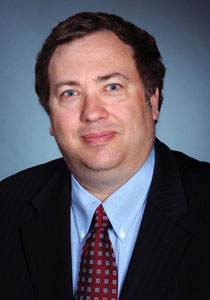
The committee has teamed with Harvesters, The Hunger Project and United Community Services of Johnson County to plan this event. The keynote speaker will be Karen Herman (who coincidentally has the same name as Hunger Banquet chairperson Karen “Gustie” Herman) who represents The Hunger Project, an international non-governmental organization that has been working since 1974 to address hunger issues across the globe. Valorie Carson, the community planning director for United Community Services of Johnson County will also speak about the many effects of hunger on homeless individuals and families here in Johnson County.

Karen “Gustie” Herman explained that the Hunger Banquet was designed by Oxfam, an international organization that works to find lasting solutions to poverty and injustice. This particular program teaches about the inequalities of food in the world.

Herman noted that only 15 percent of the people in the world are classified as high income, making more than $9,386 per year. Another 30 percent of people in the world have per capita incomes between $766 and 9,285 per year. Those who make less than 765 per year — living on less than $2 per day — make up 55 percent of the world’s population.

“The Hunger Banquet emphasizes that inequity because here in Johnson County, we don’t understand that reality,” Herman said.

“A lot of people think everybody is rich in Johnson County,” added Joann Kinney, a member of the Hunger Banquet committee.

In fact, according to United Community Services of Johnson County, poverty in Johnson County has more than doubled from 2000 to 2009.

“Suburban poverty has increased at a higher rate than urban poverty,” Kinney said.

An interactive experience

Kinney said that people who attend the Hunger Banquet will be given a card when they arrive which describes their role for the evening.

“The people who are playing the role of upper income people will go to a table set with a table cloth, china, crystal and flowers and they’ll be served a three-course meal,” Kinney said. “Those in the middle income will sit at a plain table and they will get a bowl of rice and beans and water. Lower income people will sit on the floor and eat rice.”

The room will be divided according to the hunger statistics. That means 15 percent will be high income, 30 percent will be middle income and 55 percent will be low income. Arrangements have been made for people with disabilities and those who have difficulties sitting on the floor to still be able to participate in the program.

Those who are middle and lower income will at times be uncomfortable, the organizers pointed out.

“It will be a wonderful visual of the inequalities of food and teach everyone, there will be a lot of children there as well as adults, what it’s really like to be hungry and not to have enough to eat,” Herman said.

Following dinner, participants will attend three 18-minute break-out sessions to learn more about hunger — hunger in the world and Israel, hunger in the United States and Johnson County as well as a craft project. Religious school teachers are designing all the craft sessions.

B’nai Jehudah’s social justice committee has several ongoing programs to help the hungry throughout the city. Before the evening concludes, Herman and Kinney said participants will have an opportunity to make a personal commitment to help stamp out hunger.

The United States Holocaust Memorial Museum sends traveling exhibits all over the country, but none has ever visited Wyandotte County, Kan., until now.
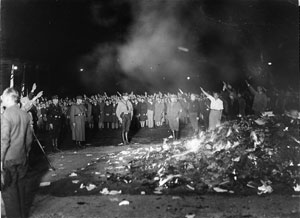
On April 20, the Wyandotte County Historical Museum, 631 N. 126th, Bonner Springs, Kan., will host the USHMM exhibition “Fighting the Fires of Hate: America and the Nazi Book Burnings.”

The exhibit, which continues through June 17, provides a vivid look at the first steps the Nazis took to suppress freedom of expression, and the strong response that occurred in the United States both immediately and in the years thereafter. The exhibition focuses on how the book burnings became a potent symbol during World War II in America’s battle against Nazism, and concludes by examining their continued impact on our public discourse. There is no charge for the exhibit or the speaker series. (See below for more information.)

In conjunction with “Fighting the Fires of Hate,” the Wyandotte County Historical Museum will display “Our Jewish Past,” highlighting contributions made by the Jewish community to the county’s history. This museum exhibition will feature panels highlighting businesses, synagogues and individuals of Wyandotte County. At one time, three synagogues were located in Wyandotte County, including Ohev Sholom, the oldest synagogue still in existence in the state of Kansas.

‘Fighting the Fires of Hate’

Jessica Rockhold, the Midwest Center for Holocaust Education’s director of school programs and teacher education, said the interesting thing about “Fighting the Fires of Hate’ is that it’s not a Holocaust exhibit per se. It’s about the Nazi book burnings that happened in May of 1933.

“So it predates anything about passing laws against the Jews or killing Jews in any way. This is more about the kind of culture and the kind of society that the Germans wanted to build that eventually enabled them to do those other things,” Rockhold said. MCHE provided grants for the exhibit along with the Kansas Humanities Council, Kansas City Kansas Public Library and the Barton P. and Mary D. Cohen Charitable Trust.

Rockhold said this exhibit’s message is very universal and especially resonates for Americans because freedom of expression is one of the things “we hold so dear.”

“So it’s an exhibit about the book burnings specifically, but also the American reaction to the book burnings, and it gives an opportunity to talk about those kinds of issues and why they are important to Americans,” Rockhold continued.

“I think this exhibit offers a really different and interesting way to approach this kind of history,” she said. “Everybody should go see it.”

Trish Schurkamp, the museum’s executive director, said they are excited the museum was selected to display this very timely exhibit.

“From the planned burning of the Quran in Gainsville, Fla., to the changing of words considered derogatory in Mark Twain’s ‘The Adventures of Tom Sawyer,’ this exhibition gives message that we should not forget,” Schurkamp said.

Schurkamp said the museum began negotiating with the USHMM about a year ago to house a traveling exhibit. The application process is strict and the USHMM has to approve the space as well as the security.

“There are very stringent codes we had to go through to get this exhibit,” she said.
One reason Wyandotte County approached the USHM for a traveling exhibit, Schurkamp said, is because she is Jewish.

“I also knew that Wyandotte County had a Jewish past and felt it was something we needed to highlight. We are a county museum so we do highlight different ethnic groups in Wyandotte County and it’s one of the groups we had failed to highlight. So we wanted to get an exhibit that would work with our exhibit,” Schurkamp said.

The two exhibits are separate but will be held in the same room. Schurkamp said visitors will first walk through “Fighting the Fires of Hate,” and then end with “Our Jewish Past.” She estimates 30 to 40 people can comfortably view the exhibits at one time. Because many large school groups have made reservations to see the exhibit, films about Kristallnacht and local survivors, provided by MCHE, will be available for groups, and individuals, to view in addition to the two exhibits.

Schurkamp is excited about the interest these exhibits has created.

“We’ve got 450 students booked to attend the exhibit, all the way from Salina (Kansas) to the greater Kansas City area. We’re just amazed at where they are coming from. And that comes from our partnership with the Midwest Center for Holocaust Education. They’ve been a phenomenal partner with getting this information out,” Schurkamp said.

‘Our Jewish Past’

Schurkamp, who has been associated with the Wyandotte County museum for nine years, said she has been collecting material about the Jewish community in the county for quite some time. One of the museum’s trustees was the late Bart Cohen, who collected a lot of Jewish history, and he helped spark her interest.

It is an 11-panel exhibition that highlights different aspects within the Wyandotte County Jewish history. It starts with the first synagogue that was formed by Jewish immigrants in the 1870s.

“They settled in the packing districts of Armourdale, known as the bottoms, and they met in homes at that point,” said Jennifer Laughlin, the museum’s curator.

“The first congregation was called Gomel Chesed,” Laughlin said.

Besides the local synagogues, the exhibit will focus on successful Wyandotte County Jewish businesses found on Minnesota Avenue and Central Avenue. Lastly, prominent Jewish people — including Barnett, Morris and Joseph Cohen, the Helzberg family, the Greenberg family and Milton Feld, Asner family and the Katz family — will be featured.

Laughlin said Rabbi Marshall Miller is highlighted as well as the Asner Torah.

“The Asner family was very instrumental in the Jewish community here in Wyandotte country,” Laughlin said. “Rabbi Miller was the main Jewish religious leader in Wyandotte County, who was here from 1937 until he died in 1965.”

‘Fighting the Fires of Hate’ speaker series

Several special events will be held in conjunction with the “Fighting the Fires of Hate” exhibit. They include:

• May 1
Plant Tree in Remembrance of Yom HaShoah on the Wyandotte County Museum Grounds
1 to 1:30 p.m.
Holocaust Survivor Mike Jacobs discusses ‘Triumph over Tragedy’
2 p.m.
George Meyn Community Center located at Wyandotte County Park

• May 10
Third Reich/2010: Censorship Then and Now Presented by Ronda Hassig, NBCT, a librarian Harmony Middle School and a member of the MCHE Teaching Cadre
5:30 to 6:30 p.m.
Exhibition viewing and reception
6:30 p.m. program
George Meyn Community Center located at Wyandotte County Park

• May 12
Witnesses to the Holocaust: Kristallnacht Presented by Dr. Francis Glazer Sternberg, director of university programs & adult education at the Midwest Center for Holocaust Education
5:30-6:15 p.m.
Exhibition viewing and reception
Wyandotte County Museum
6:30 p.m. program
George Meyn Community Center located at Wyandotte County Park

• May 26
The Nazi Book Burnings: The Third Reich’s Prelude to the Destruction of European Jewry Presented by Kevin Baker and Kelsey Rosborough, graduate students at University of Missouri-Kansas City
5:30-6:30 p.m.
Exhibition viewing and reception
6:30 p.m. program
Wyandotte County Museum

• June 9
Holocaust & War Victims Tracing Service
Presented by Jennifer Tarwater, director of Disaster Services, The American Red Cross
5:30-6:30 p.m.
Exhibition viewing & reception
6:30 p.m. program
George Meyn Community Center at Wyandotte County Park

• June 12
Steve Cole, member of the Second Generation Speakers Bureau, Midwest Center for Holocaust Education
2 p.m.
George Meyn Community Center located at Wyandotte County Park

For more information on the exhibition and guest speakers highlighting the exhibits at the Wyandotte County Historical Museum visit www.wycomuseum.wordpress.com.

Anytime you hear or read a news report of any kind — newspaper, radio or television, or Internet — it’s likely at least one Middle Eastern country will be mentioned. So David Makovsky knows that when he comes to Kansas City next week on Wednesday, April 13, people will want to know what the turmoil in the Middle East means for Israel. He’ll discuss that and the future of the Israeli-Egyptian peace treaty in a presentation titled, “After Egypt: Looking at Prospects of Mideast Peace,” at 7:30 p.m. at the White Theatre at the Jewish Community Campus. The event is free and sponsored by Jewish Community Center, Jewish Community Relations Bureau|American Jewish Committee and Jewish Federation of Greater Kansas City.

Makovsky said that with all the current turmoil in the Mideast, “people are hopeful and watchful.”

“Israel wants more democracies in the Mideast but is that going to be a turbulent process? They don’t know what it will mean in the short term or the long term,” he said.

Makovsky is currently the Ziegler distinguished fellow and director of The Washington Institute for Near East Policy’s Project on the Middle East Peace Process. The Washington Institute is an independent, nonpartisan research institution generating analysis and recommendations that advance a balanced and realistic understanding of U.S. interests in the Middle East.

Makovsky is also an adjunct lecturer in Middle Eastern studies at Johns Hopkins University’s Paul H. Nitze School of Advanced International Studies. He has been involved with several book projects and is the co-author with Dennis Ross of the 2009 “Myths, Illusions, and Peace: Finding a New Direction for America in the Middle East (Viking/Penguin)”. He has authored numerous Washington Institute monographs on issues related to the Middle East Peace Process and the Arab-Israeli conflict.

Makovsky is a member of the Council on Foreign Relations and the London-based International Institute for Strategic Studies. His commentary on the peace process and the Arab-Israeli conflict has appeared in numerous major publications in the United States. He holds a bachelor’s degree from Columbia University and a master’s degree in Middle East studies from Harvard University.

Before joining The Washington Institute, Makovsky was an award-winning journalist covering the peace process from 1989 to 2000. His journalistic credentials include serving as former executive editor of the Jerusalem Post and as a diplomatic correspondent for Israel’s leading daily newspaper, Ha’aretz. He became the first journalist writing for an Israeli publication to visit Damascus. He has made five trips to Syria and was given permission to file reports from Jeddah, Saudi Arabia, for an Israeli publication. Makovsky is a former contributing editor to U.S. News and World Report; for 11 years he was the magazine’s special Jerusalem correspondent.

Two Jewish newspapers in the Midwest — were among the first to publish his articles. A native of St. Louis, Makovsky wrote about the Camp David peace treaty for the St. Louis Jewish Light and the KC Jewish Chronicle in 1978. At that time his father was the local director of the Jewish Education Bureau (what we now know as CAJE).

JCC Executive Director Jacob Schreiber was instrumental in getting Makovsky committed to appear in KC. The two worked together for the Jerusalem Times.

“I’m from the Midwest, I cover the Mideast and I still have very fond feelings for the Midwest. I hope it will be an interesting evening,” Makovsky said.

When he’s in KC, Makovsky is expected to discuss a new Washington Institute report he co-authored called “Imagining the Border: Options for Resolving the Israeli-Palestinian Territorial Issue.” The report analyzes the intersection of demography and geography in the West Bank in order to demystify the territorial dimension of the conflict and facilitate peacemaking. Through detailed maps and in-depth population data, he shows how the parties can use land swaps to meet some of their most important goals, such as minimizing dislocation, ensuring security, and establishing a contiguous Palestinian state in the West Bank. The report also states that territory is not the only issue on the peace agenda — security, refugees, Jerusalem and recognition of Israel’s legitimacy are key — but breakthrough on this issue may open the door to progress on the others.

For more information or to RSVP for the program, contact Jeff Goldenberg, JCC director of Adult Jewish Learning, at (913) 327-4647.

Chabad Centers across the states of Kansas and Missouri are making plans  to assure that there is a seat for every Jew at the seder table this Passover.
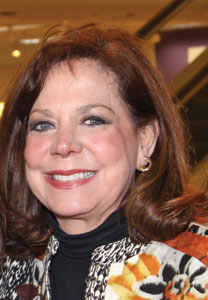
“No Jew will go without” is the motto of this campaign announced by the regional headquarters for Chabad-Lubavitch of Kansas and Missouri. The goal of this new campaign is to assure that each and every Jewish person who wishes to join a Passover seder has a reserved seat at the seder table at absolutely no charge.

In order to achieve this goal, numerous public seders are being offered for all, with no affiliation or membership required. Each of the public seders will feature gourmet cuisine, Shmurah Matzah — the Rolls Royce of matzah — and the four traditional cups of wine for each participant. The seders will be held at the following locations:

• Chabad House Center of Kansas City at 6201 Indian Creek Drive in Overland Park

• Chabad on the Plaza at 4901 Wornall, No. 105, Kansas City, Mo.

• Chabad at the University of Kansas at 1201 West 19th St. in Lawrence, Kan.
Chabad is also sponsoring a Russian-born rabbi who, together with Rabbi Choni Wineberg, will lead a seder specifically for the elderly Russian community in Russian. As it is  difficult for these people to get out at night, the seder will be hosted at Santa Fe Towers 8 p.m. Monday, April 18.

Each seder will be led by a team of Chabad rabbis who will conduct an engaging, thought-provoking and fun seder. The seders are English-friendly and child-friendly and Hebrew-English Haggadas will be provided so that all can participate equally. The traditional texts will be interspersed with stories, Chassidic wit and wisdom.

The first seder will be held Monday, April 18, and the second Seder on Tuesday, April 19. Both will begin at 8:30 p.m.

A central website has been established for easy sign-up and seat reservation. While these seders are offered absolutely free of charge, donations are welcome. Visit www.GOTSEDER.com to reserve a seat.

Chabad Centers will also be distributing special Passover kits including hand-made Shmurah Matzah to enhance people’s individual seders.

In addition to the seders, in order to accommodate the many Jewish students at the University of Kansas, Chabad at KU will be offering a kosher-for-Passover meal plan for the entire week of Passover. Students can reserve their meals at www.HawkSeder.com.

The joy of the festival will be shared with area seniors as well. ‘Goldie’s Gift,” a project of the Yachad Kosher Food Pantry, will distribute more than 300 Passover gift bags with holiday treats to many seniors and their families.

“The Lubavitcher Rebbe, Rabbi Menachem M. Schneerson, taught that no solitary Jewish person ought to feel left out. Every Jew, regardless of their background, affiliation or even location, should have the opportunity to celebrate Passover,” said Chabad Rabbi Mendy Wineberg, program director of Chabad of Kansas & Missouri. “In keeping with our tradition of the past 40 years, our local centers will be once again working feverishly to ensure that every Jew can celebrate Passover and have all their holiday needs met. We are proud to share that with our efforts combined, the local Chabad’s will be hosting over 500 of our fellow Jews at the seder table this Passover.”

For more information on any or all of the above programs, visit www.GotSeder.com or call (913) 649-4852.

Some 50 years ago, before Facebook and Twitter, there was Women’s Division.
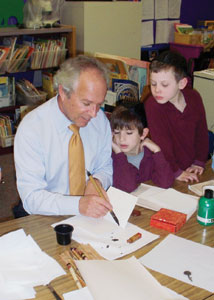
“My mom encouraged me to get involved,” recalls Bari Freiden, who will accept the Women’s Division president’s gavel and present the keynote, “Women’s Strength: The Power to Inspire,” at a dessert reception for the Women’s Division Annual Meeting at 7 p.m. Thursday, April 28, at Oakwood Country Club.

The Social Network

“I grew up in Kansas City but had been away for a long time,” Freiden said. “Women’s Division was a social thing — a way to network, meet new people and get involved in something worthwhile. It still is today.”

Then, as many women do today, Freiden started out by participating in a young leadership group where she learned what the Jewish Federation does locally, nationally and internationally.
“I was working all the time, so I had to pick and choose what I did,” said Freiden. “But I always worked on the annual campaign and Super Sunday.”

Freiden also served twice as the chair of the Federation’s Lion of Judah Division, comprising women who pledge an annual gift to the Federation of $5,000 or more. In 2000, she and her husband, Dr. Floyd Freiden, traveled on a Joint Distribution Committee mission to the Federation’s sister communities in Romania and Bulgaria.

“To see and touch the people we help touched me more than I can express,” she said.

Since then, she’s been on JDC trips to Tunisia and Cuba and this September is going to Paris to meet with the Jewish community there. Her interest abroad also led her to serve on the Israel and Overseas Committee, which helps decide how gifts to the Jewish Federation are distributed to Romania, Bulgaria and Israel.

“Not everybody can go abroad,” said Freiden, “but there’s plenty of opportunity to do things here.”

And that’s the message Freiden hopes to transmit by sharing the story of how her mother, Frances Wang Gershon, inspired her and other family members to continue the legacy of Jewish philanthropy.

Sweets & Stories

Freiden plans to make intergenerational philanthropy the focus of her presidency. She’s excited about a program planned in conjunction with the Jewish Community Foundation for Oct. 30, the G3 Summit: Girls (of all ages) Guide to Giving. The G3 Summit was created to empower women — at all ages and stages of life — to make a difference in the community.

The intergenerational theme will be underscored by the Annual Meeting’s mother and daughter co-chairs, Michele Kaplan, who is Freiden’s first cousin, and Kaplan’s daughter, Beth Kaplan Liss.

“As women we have the power to be leaders in the community and really make a difference,” said Liss. “Our goal for this event is for people to leave thinking about what inspires them and how they want to be involved.”

And, of course, to enjoy the social network.

“Women like time to visit, catch up with friends and meet new people,” said Liss. “So instead of a meal and a huge slice of cake, we’re planning a bunch of really fun, delicious desserts that everyone can easily nibble on while talking to each other.”

Incoming officers are Bari Freiden, president; Lisa Bernard and Trudy Jacobson, campaign vice presidents; Debbie Trenton, communications vice president; Melanie Allmayer and Cindy Bodker, community relations vice presidents; Jessica Rudnick-Kaseff and Tamara Lawson Schuster, education vice presidents; Sara Gonsher and Kristin Schultz, leadership vice presidents; and Sarah Beren, immediate past president.

New board members include Robin Abramowitz, Diane Davidner, Milisa Flekier, Janet Gershon, Deborah Gill, Rabbi Vered Harris, Pam Kanter, Stephanie Kavanaugh, Robin Levine, Erin Margolin, Mindy Parmet, Roberta Pollack, Ellen Portnoy, Anne Scharf, Amy Shapiro, Debbie Sosland-Edelman and Lynda Youngblade.

The cost of the event is $15 and includes a Vaad-supervised dessert reception.
RSVPs may be made by April 15 at www.jewishkansascity.org; or contact Nicole Feldman at (913) 327-8111 or .

In 1966 six families dreamed of providing a Jewish day school education for their children. While many were skeptical it could survive, the Hyman Brand Hebrew Academy not only survived, but grew and continues to thrive. It will celebrate its 45th anniversary at the annual Civic Service Awards Dinner on April 10 at Hyatt Regency Crown Center. Maria Devinki and the late Fred Devinki will receive the 2011 Civic Service Award for their philanthropic efforts in the community. (For more information, contact Kerry Cosner at (913) 327-8156.)
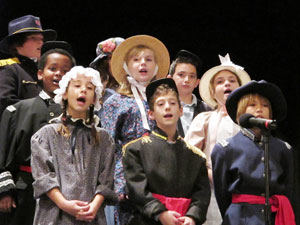
“I’m thrilled to be one of the founders and to see what the school has accomplished over the last 45 years and to know that all of our graduates are accepted into the finest colleges throughout the United States,” Carl Puritz said. “Most importantly we have achieved the mission that we set out for all of our students that we will teach them how to be knowledgeable and committed Jews and productive citizens. Our day school is now considered one of the top day schools in the United States and it’s really thrilling to know that’s been accomplished.”

Another founder, Blanche Sosland, added, “The quality of the education that our kids got was fantastic from the very beginning.” Not only did Blanche and Neil Sosland’s children attend the Academy, Blanche Sosland said it’s been a thrill for them to watch their grandchildren go through the school. So far two have graduated and a third will do so later this spring.

The school, which started with 33 students in grades kindergarten through third grades, now has 232 students. A total of 325 students have graduated from HBHA, even though a high school wasn’t a part of the original plan.

Howard Haas, who is completing his fourth year as HBHA’s head of school, believes things are going well for the school.

“I used to call this place the jewel of the Midwest. Now I refer to it simply as the jewel. There’s nothing like it in America,” said Haas, who often serves as an expert presenter at education conferences around the country.

“The beautiful message of the school truly is that we try to create a nourishing environment that really challenges children. We want them to come to an understanding of who they truly are. We often say we try to define the child’s eccentricities and allow them to grow,” Haas said.

Many people, such as Eric Kaseff, president of HBHA’s board, believe the school offers a top-notch education. He has two children who attend HBHA — 10th-grader Rachel and seventh-grader Lainie.

“From an academic standpoint, I relied heavily on my wife, the professional educator in the family, to determine whether or not the academics were of the caliber that we wanted for our children. After evaluating the school and observing in the classrooms, she concluded that this school truly provides an outstanding academic environment and that has proven to be true.

Both the secular and the Judaic education are second to none,” Kaseff said.

As you would expect to be the case of most HBHA parents, Kaseff said another reason his family chose the day school is its strong Judaic program.

“The school reinforces what takes place in the Jewish home we have created for our kids and leaves them very comfortable with and proud of their Jewish tradition,” he said. “I feel blessed to be able to pass along this rich heritage of Jewish teaching and ethics to our girls. What we didn’t expect, and what pleases us as much as anything, is the warm and caring atmosphere that was evident the first time we walked in the door and remains a hallmark of the school.”

The “caring community” is what keeps many families at HBHA, including the Shapiro family. Molly Shapiro and her siblings — Peter, Julia and Tony — all attended the school. Between the four siblings they have nine children, eight of whom attend HBHA (the other is still in preschool).

There’s a Shapiro in kindergarten as well as grades four, five and eight. The sixth and eighth grades each have two Shapiro students. When it was time for Molly Shapiro to choose a school for her two children, she said there was no question she would send them to HBHA.

It’s a family,” she said. “When I hand my kids over I feel like I am handing them over to family members. I feel the utmost confidence and security and love and that’s just such a great feeling.”

A little history

Sosland said people tried for 15 years to start a Jewish day school here. A group comprised of Carol and Sidney Deutch, Bea and Milton Firestone, Joan and Walter March, Joan Puritz, Carl Puritz, Beryl Silberg and Blanche and Neil Sosland finally succeeded in 1966. The Deutches now live in Pittsburgh. The Firestones and Walter March are now deceased.

When the doors opened the school was called The Hebrew Academy of Kansas City. Its first classes were held at Congregation Ohev Sholom.

“Every Friday the teachers had to pack up their wares and store them and bring them back out again every Monday so Ohev Sholom could have Sunday school. Nevertheless the quality of the education that our kids got was fantastic,” Sosland said.

She believes two people deserve special recognition for their help in getting the school up and running. One is Rabbi Morris Margolies.

“Although he was not among the school’s founders, he was one of the schools biggest supporters and played a significant role in the founding of the school,” she said. “He was a coach and a mentor.”

In an article about the schools 25th anniversary published in 1991, Rabbi Margolies said the school’s founders, and the others that followed shortly thereafter, were the true heroes of Kansas City Jewish education “because they put their children and themselves and their hearts where their mouths were.”

Sosland said Milton Firestone, who was editor of The Chronicle, was also very instrumental in getting the school up and running because he was able to use the newspaper to publicize news about the school.

Sosland said the founders wanted their children to have a better Judaic education than was available to them.

“We wanted our children to get the kind of Judaic education that they would have to have in order to make an educated decision about what kind of Jewish life they would lead. The educational concept of the dual curriculum (Judaic and secular) is fantastic,” she said.

Each year after the Academy opened, a grade was added to the curriculum. In 1972 the Academy had reached the junior high school level. As the Academy gradually outgrew its space at Ohev Sholom, it began renting classrooms from the Asbury Methodist Church, which is located across the street from Ohev at 75th Street and Nall Avenue. In January of 1976, the first graduating class of nine students left the Academy and went on to further their studies in a variety of areas.

The school was renamed the Hyman Brand Hebrew Academy in 1997 following the death of Hyman Brand. HBHA’s first president, Brand was instrumental in raising the monies to get the school up and running and continued to find ways.

The school moved to its very own building at 5901 College in 1979. It moved into its current home at the Jewish Community Campus when the building opened in 1988.

The school’s future

Head of School Haas has found that the programs HBHA offers today are extremely innovative and unique. Because of those programs, and the school’s talented and passionate staff, he is happy to report that the future looks bright.

“We’re one of the few schools in America that is retaining students, certainly a higher percentage than we’ve ever had here and definitely more than across America. Our kindergarten two years ago was the biggest kindergarten we had in 10 years. That’s our first grade now and we have about 36 kids in that class, and our kindergarten this year has about 32. So we’re growing,” Haas said.

He said that while the school lost 18 students last year, 16 of those children moved out of the city.

“We’re not losing students because of dissatisfaction,” he said. “The percentage of kids who left is the lowest it’s ever been. We have more students than we had last year even though 16 moved.”

To help that growth, he said “we’re doing our best to bring in a program for our Orthodox community and we’re also doing a major concentration with our Reform community.”
Haas would also like to find a way to educate children with special needs. “That’s something that’s very close to my heart,” he said.

As it celebrates its 45th anniversary, Haas is proud of what the day school has accomplished and hopes to continue to accomplish.

“One hundred percent of our kids go to college,” he said. “The ideal is that these kids stay in the Kansas City area and become leaders of the community.”

Jewish federations have so far raised nearly $1 million to support the victims of the 9.0 magnitude earthquake that struck near the coast of Japan on March 11. Those funds are being used in part to help pay for the American Jewish Joint Distribution Committee’s continuous, on-the-ground response in Japan. The deadly earthquake, ensuing tsunami and continuing nuclear crisis have left a reported 10,800 dead, while more than 16,000 remain missing and over 190,000 are living in shelters.

The JDC is now partnering with the Israel Defense Forces Field Hospital that will be operating in Minamisanriko, one of the many cities decimated by the earthquake and subsequent tsunami. JDC — which previously supported IDF Field Hospitals in Haiti and Turkey — will be providing equipment such as an infant ventilator and portable ultrasound as well as life-saving antibiotics and other medications.

Kansas Citian Patricia Uhlman believes it’s important for Jews here to know how the world Jewish community is helping these victims.

“The Joint is considered a transparent, responsive, reliable conduit for humanitarian aid dollars. The Jewish communities of North America can be very certain that their funds are going to be utilized effectively and in a very timely way to provide need to those in Japan who need it at this time,” said Uhlmann, who is chairperson of the JDC’s international development program that oversees all the international non-sectarian aid and trauma relief needed for all manmade and natural disasters.

She added that since the situation on the ground is “so fluid and traumatic,” the JDC is constantly re-evaluating it in order to respond in the appropriate way.

Uhlmann also wants to point out that the world-wide Jewish community, through the Federation system and allocations to the Joint, is one of the top contributors in the world of financial aid.

“We raised $30 million to help the victims of Hurricane Katrina and almost $10 million for the tsunami in in Southeast Asia in 2004. So the Jewish community should be incredibly proud of the work that is being done on behalf of the victims in Japan,” Uhlmann said.

“It’s part of our value system to be concerned not just about our own family but the family of man,” she continued.

JDC CEO Steven Schwager said it’s been the organization’s experience in other earthquakes and tsunamis that the kind of unparalleled medical treatment the JDC will help bring through the IDF Field Hospital is vital to the recovery of the Japanese people.

“Even as we quickly provide these services during the emergency phase of our response, JDC is monitoring needs and assessing projects to help improve local lives in the longer-term,” said Schwager, who visited Kansas City last year.

In the two weeks since Japan was struck, JDC has provided:

• food, fuel, blankets, tents, and other emergency supplies to evacuation centers through the International Rescue Committee;

• emergency supplies to the hardest-hit Miyagi and Fukushima prefectures through JEN, a Japanese NGO and the Jewish Community of Japan;

• learning materials, teaching aids, emergency school supplies, among other services at child-friendly spaces for Japanese children through the U.S. Fund for UNICEF/Japan Committee for UNICEF;

• a critically needed water shipment and other emergency relief supplies through JDC’s partner Afya Foundation and the Japanese International Cooperation Agency (JICA), Japan’s aid and development arm;

• food and water bottle distribution from Chabad’s bakery in Sendai.

The Jewish Federation of Greater Kansas City is continuing to accept donations for the emergency relief fund to provide aid and support victims in Japan. Donations may be made online at the Federation’s website, www.jewishkansascity.org. Credit card donations may also be made over the phone by contacting Gail Weinberg at (913) 327-8123. Donations may be mailed to: The Jewish Federation of Greater Kansas City, Att: Pacific Relief Fund, 5801 W. 115 St., Suite 201, Overland Park, KS 66211.