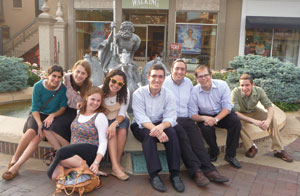

For the second year in a row, Congregation Beth Israel Abraham & Voliner has played host to a group of interns from Yeshiva University. Known as the Kansas City Summer Fellowship, it is touted to other students at Yeshiva U as a program where the men and women “will become a part of the Kansas City BIAV Jewish community for a month, spending their days working at a variety of exciting internships, and dedicating their nights to energizing and learning Torah with the Jewish community.”

“Having the Yeshiva University Summer Fellows be part of our community for the month has been a special experience. I am especially proud of the positive example they have set throughout the entire Jewish community as spirited observant young Jews who are eager to engage the world around them,” BIAV Rabbi Daniel Rockoff said.

The group is led by Tuvia Brander, 23, a second year rabbinic student who also has served as Rabbi Rockoff’s intern these past few weeks. He hails from Boca Raton, Fla., but now calls Teaneck, N.J., home as do Baruch Cohen, Asher Lindenbaum and Yaakov Taubes. Three other New Yorkers are part of the group: Sarit Cohen from Jamaica Estate, Malkie Krieger from Monroe, and Mindy Sojcher from West Hempstead. The eighth member is Gabrielle Moskowitz from Tarzana, Calif.

Joining them this weekend, their last here, as BIAV’s scholar in residence is Rabbi Dani Rapp, Yeshiva U’s assistant dean of Judaic Studies.

Rabbi Rockoff said Brander’s skill and creativity has been especially helpful in making the program thrive.

“His successful efforts in bringing together Jews from across Kansas City for a relief effort in Joplin are testimony to his growing leadership capabilities,” Rabbi Rockoff said.

Brander said one of the intriguing things about this program is that it not only gives the fellows a chance to get professional experience, but it gives them “a communal element” as well.

“We interact with the broader Jewish community and it gives the members of the program a chance to view a different model of the Jewish community outside of New York and outside the East coast,” Brander said.

He said Kansas City is a fantastic Jewish community.

“It’s incredibly warm and welcoming. It’s really a model of a community with all sorts of people who play a variety of roles in the shul. That’s something we hope to teach the students at the university, that whatever profession that they go into they could be lay leaders in the Jewish community,” Brander said.

This year the interns spent time shadowing doctors and psychologists as well as people in the marketing and pharmaceutical professions. One student who is interested in Holocaust research spent time at the Midwest Center for Holocaust Education.

As Rabbi Rockoff’s intern, Brander said he had a great opportunity to meet and learn from different people in the community. Rabbi Rockoff said BIAV enjoyed having Brander serve as its rabbinic intern this month.

“Altogether, our Summer Fellows are a very special group of young men and women. It is my hope that this program provides inspiration for our community and an educational life experience for the students,” he said.

For the second year in a row, Congregation Beth Israel Abraham & Voliner has played host to a group of interns from Yeshiva University. Known as the Kansas City Summer Fellowship, it is touted to other students at Yeshiva U as a program where the men and women “will become a part of the Kansas City BIAV Jewish community for a month, spending their days working at a variety of exciting internships, and dedicating their nights to energizing and learning Torah with the Jewish community.”

“Having the Yeshiva University Summer Fellows be part of our community for the month has been a special experience. I am especially proud of the positive example they have set throughout the entire Jewish community as spirited observant young Jews who are eager to engage the world around them,” BIAV Rabbi Daniel Rockoff said.

The group is led by Tuvia Brander, 23, a second year rabbinic student who also has served as Rabbi Rockoff’s intern these past few weeks. He hails from Boca Raton, Fla., but now calls Teaneck, N.J., home as do Baruch Cohen, Asher Lindenbaum and Yaakov Taubes. Three other New Yorkers are part of the group: Sarit Cohen from Jamaica Estate, Malkie Krieger from Monroe, and Mindy Sojcher from West Hempstead. The eighth member is Gabrielle Moskowitz from Tarzana, Calif.

Joining them this weekend, their last here, as BIAV’s scholar in residence is Rabbi Dani Rapp, Yeshiva U’s assistant dean of Judaic Studies.

Rabbi Rockoff said Brander’s skill and creativity has been especially helpful in making the program thrive.

“His successful efforts in bringing together Jews from across Kansas City for a relief effort in Joplin are testimony to his growing leadership capabilities,” Rabbi Rockoff said.

Brander said one of the intriguing things about this program is that it not only gives the fellows a chance to get professional experience, but it gives them “a communal element” as well.

“We interact with the broader Jewish community and it gives the members of the program a chance to view a different model of the Jewish community outside of New York and outside the East coast,” Brander said.

He said Kansas City is a fantastic Jewish community.

“It’s incredibly warm and welcoming. It’s really a model of a community with all sorts of people who play a variety of roles in the shul. That’s something we hope to teach the students at the university, that whatever profession that they go into they could be lay leaders in the Jewish community,” Brander said.

This year the interns spent time shadowing doctors and psychologists as well as people in the marketing and pharmaceutical professions. One student who is interested in Holocaust research spent time at the Midwest Center for Holocaust Education.

As Rabbi Rockoff’s intern, Brander said he had a great opportunity to meet and learn from different people in the community. Rabbi Rockoff said BIAV enjoyed having Brander serve as its rabbinic intern this month.

“Altogether, our Summer Fellows are a very special group of young men and women. It is my hope that this program provides inspiration for our community and an educational life experience for the students,” he said.

In the world of Jewish music, Matisyahu is a real rock star. The Grammy-nominated reggae artist will be in Kansas City again Thursday, July 7, when he and his band the Dub Trio, perform at Crossroads KC @ Grinders along with The Wailers.

Matisyahu isn’t sure how many times he’s been to Kansas City, but he thinks it’s somewhere between five and 10. The Chronicle caught the recording artist while he was walking around New York City earlier this month before his summer touring began. He spent last weekend in Poland, where JTA reports that thousands of fans packed a stadium just a few miles from the Auschwitz death camp for a concert. He was the headliner of the

Life Festival June 18 in Oswiecim, the town in southern Poland outside where the Auschwitz camp is located.

The festival was founded last year by a popular Polish disc jockey to use music and youth culture to fight anti-Semitism, racism and xenophobia, and send “a message of peace and tolerance” from the place that is a symbol of the Holocaust.

He’s also been in Israel performing this week. He will zig zag his way across North America for 54 tour dates, beginning tomorrow, June 25, in Boston, and ending Sept. 7 in Toronto.

This summer tour will support his latest release, “Live at Stubb’s Vol. II.” This is Matisyahu’s first offering since his 2009 critically acclaimed studio album “Light,” which debuted inside the Billboard Top 20 and whose single “One Day” was chosen as the official theme song for NBC’s 2010 Winter Olympics broadcast.

Five years after the release of his groundbreaking original live album, “Live at Stubb’s,” Matisyahu returned to the Austin, Texas, venue last August with his band where he performed what has been described as an unforgettable live music experience. The concert was captured in the form of “Live at Stubb’s Vol. II.” The collection was released as a DVD/CD and a DVD.

When he’s in Kansas City, he said besides hearing songs from “Live at Stubb’s Vol. II,” concertgoers can expect to hear many old songs, “some new material as well as some improvisation.”

He has been described by many, including the JTA, as a Chasidic rapper or reggae star. But when he was asked how the Chabad-Lubavitch philosophy helped him see his potential as such, he immediately answered that he doesn’t “really ascribe to one philosophy.”

But he said Judaism has definitely influenced his life as a musician.

“Judaism is one of the core pieces of who I am in terms of my life and what I do in my life. Everything is influenced by it,” he said.

His music, or what he calls his art, “is an expression of his inner world, which is heavily influenced by my Judaism.”

Judaism started playing an important role in the 31-year-old performer’s life when he was about 16. Because he was an observant Jew before he became a “rock star,” he said keeping Shabbat, even when he’s touring, is “really not an issue.”

“A lot of rock stars have a lot more issues than not performing one night of the week,” he said.

He makes it work, sometimes by arriving in a city a couple of days early or staying close to the venue so that he’s ready to perform when the sun goes down on a Saturday night.

“Sometimes I’ll walk four or five miles to the venue so when Shabbos ends I’m ready to perform. It’s little things like that. My career didn’t start until after I was religious so I never knew anything else,” he said.

His popularity is one reason it’s not an issue.

“I have a draw of a certain number of people that come to my shows. It’s all money and promoters know that. They don’t care if I start at 8 o’clock or 10 o’clock as long as those people walk in the door and pay the ticket price,” Matisyahu said.

He said there is a combination of things that inspire him when he writes his songs, including the music itself.

“I’ll go into the studio with no ideas, with nothing done, and I’ll start working with my band or the producer to create the music. Then I turn off a switch in my head and I don’t think too much. I free associate and I let the music inspire my words. I don’t think about what they are so much,” he said.

He also has had success working the exact opposite way.

“I’ll take an idea or concept and there’s a person I work closely with and we’ll spend anywhere from two to three years to two to three weeks developing the idea and concept and writing the lyrics pre music,” he said.

He mentioned “Light,” his last original CD, as an example.

“That was the story by Reb Nachman called ‘The Seven Beggars.’ We spent about two years studying it and then writing,” he explained.

“On my next record, whenever it comes out, we took the teaching of the Baal Shem Tov, and some of his basic concepts. We went to his grave site in the Ukraine and spent about a week there meditating and delving into his concepts about God. And on the next record we are talking about getting into the Zohar and the Kabbalah,” he said.

There are a variety of options to order kosher meat online. One of the newest, The Kosher Express, has a local connection. The company ships its glatt kosher meat from a warehouse in Independence, Mo.
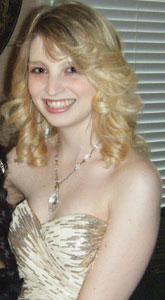
Robert T. Bernton is owner and president of The Kosher Express. He launched it less than a year ago, in August 2010, with the idea of providing the highest quality kosher beef and poultry online.

“We have rapidly expanded and now we sell kosher bison, lamb and duck. Everything is glatt kosher and business is picking up and it’s wonderful,” said Bernton from the company’s main headquarters in Aurora, Colo.

As a new business, Bernton said the customer base is still small.

“We’ve reached our 800th sale, which is great and a lot of those customers are repeat customers,” he said. In fact he believes more than 35 percent of his customers are repeat customers.

He believes a fine product and good customer service will continue to keep customers returning to The Kosher Express as well as impress new customers.

“Our website (www.TheKosherExpress.com) is very easy to use. We walk customers through the actual order to the confirmation letter we send explaining when the order will ship to the final invoice where we tell the exact price of the product,” Bernton said.

Prices on the Web are estimates, Bernton explained, until the final cost of the order is calculated based on the actual weight.

“Ultimately when they receive the product they are happy and enjoy the product. We stress our quality and hope they will come back to us,” he said.

The Kosher Express ships from an Independence warehouse because orders can be received on either coast within three days.

“A lot of our online competitors require second-day shipping or higher to make sure the product gets there safe. We can provide ground shipping in three days or less,” he said.

Meat is supplied from all over the country including Minnesota, Pennsylvania and California.

One thing that sets The Kosher Express apart from its competitors, Bernton said, is it has access to kosher bison, lamb and duck.

“A lot of people really like our kosher bison and lamb products. It’s very hard in the kosher world to find bison. I am only aware of one supplier that offers it, and that’s something really unique about this company,” Bernton said.

Bernton believes one of the reasons bison is so popular today is that a lot of people think bison is healthier than beef.

Because of its popularity, it’s been hard to keep kosher bison in stock, he said.

“With the rise in demand, there has also been a national shortage that is especially pronounced in the kosher industry. Much of this is due to the fact that bison calves take about three years to reach maturity, and so the supply lags greatly behind the demand,” he explained.

The company has begun advertising, including placing an ad in The Chronicle this week. But Bernton believes most of his customers have found the company simply by searching the Web. Those customers, he said, have spread the word to their friends.

Another way The Kosher Express hopes to expand its business is through a partnership it has established with congregations and Jewish organizations called Tzedek Express. The Kosher Express gives its partners a portion of the sale anytime a special promotional code assigned to that particular organization is used.

“It’s really our way to give back to organizations and the Jewish community in general,” Bernton said. “That’s also helped us spread the word around.”

Bernton didn’t grow up in a kosher home and didn’t start keeping kosher until he visited Israel on a USY trip.

“When I came back to the States I told my parents keeping kosher was something that I wanted to start doing and I’ve kept kosher since then,” said the Denver native.

He attended Emory University in Atlanta, where he was surprised to find there was no kosher meal plan.

“I thought that was strange because 30 percent of the student population was Jewish,” he said.

Because keeping kosher was important to Bernton, he worked with the university’s Hillel and the campus food service to provide a kosher meal plan. He said it was a very difficult task, but as a freshman he succeeded in getting a kosher meal offered once a week.

Bernton stayed connected with Emory’s Hillel for the remainder of his college years, ultimately serving as president. When he graduated in 2009, armed with a degree in marketing and business communications, he wanted to combine his passion for Jewish life and kosher food with his business background.

Because he had a hard time purchasing kosher food as a college student — he didn’t have his own car until his junior year — he conceived The Kosher Express. He liked the idea of having fine kosher meat delivered right to his doorstep.

“As I worked with mentors and other people, we came up with this idea to launch a national company to offer the highest quality kosher everywhere,” he said.

But this didn’t happen overnight. He needed to find a supplier, and the funding, so he took a job at a marketing firm in Westchester, N.Y.

“I wanted to make sure that any supply we had was constant so people could know exactly what to expect from the company,” he said.

He also wanted to make sure the meat was high quality, antibiotic and hormone free and vegetarian fed.

“Some people who are going to buy kosher meat online don’t have ready access to kosher meat. But others are looking for a higher quality of kosher product and there is really not a lot of kosher meat that’s really high quality on the market today,” he said.

About a year after graduation, he made a friend who also happened to be in the kosher supply business.

“I was able to tell him about my idea and what sort of products we wanted to see,” he said.

That was in February 2010 and over the next six months they worked hard to create the operation and get the investors to pay for building the website, purchase the initial inventory and launch the company. He continued to work at the marketing firm until October when he began focusing his full-time efforts on The Kosher Express.

Now officially a senior in high school, Mollie Chesis could probably teach classes on organizational skills.  In order to do everything this Blue Valley High School student does, she must stay organized and on schedule.

“I am a very organizationally-minded person,” Mollie said. “So I get a lot of enjoyment out of planning and putting together programs.”

Mollie had a lot of practice doing just that last year when she served as president of Beth Torah Temple Youth Group (BTTY). Planning events and watching them come to fulfillment gives Mollie pleasure.

“When everything comes together perfectly, the left-brain side of me screams with joy,” she said. “Then, when actually at the event, and I see everyone enjoying themselves, talking and really becoming a part of a community, the right-brain side of me is bursting with happiness. It’s a win-win situation with me.”

Her activities at Beth Torah do not stop with her commitment to the Temple Youth Group. She also has been a madricha for the Weiner Religious School for three years and on Sunday mornings volunteers to help lead religious services for the students. For the coming school year, she has agreed to chair NFTY’s Missouri Valley Regional Spring Chavurah, the largest regional event of the year.

“Mollie is one of the most responsible teens I’ve ever had the pleasure to work with,” said Marcia Rittmaster, religious school and youth groups director for Beth Torah. “She understands her position as a role model with younger teens in always being inclusive and interested in others. She also has many talents such as drama, art and music and is willing to share those talents.”

She has truly enjoyed her time as BTTY president.

“I have found a real and true happiness in BTTY,” Mollie said. “I had been worried when I first got involved that it was not going to be something I found truly enjoyable; I was completely wrong. The sense of pride and accomplishment — the true passion I have for BTTY and what we do — that comes from the happiness I see when I meet people at events and they want to keep coming back.”

The daughter of Paul and Julie Chesis, Mollie excels in school as well as at synagogue. A member of the French Honor Society, Art Honor Society and National Honor Society, Mollie will be attending two programs at Brown University this summer. She will split her time between two topics she loves, one week of writing and two weeks learning about infectious diseases. Eventually Mollie plans to be a physician focusing her talents on either infectious disease or endocrinology.

Her commitment to helping others is already apparent. Mollie donates blood almost every two months.

“As a person, my motto in life is ‘do anything I can to help others,’ ” Mollie said. “I feel the happiest seeing smiles form on others’ faces. That is why I work so hard to give back to my community.”

Among her community service efforts she is working on her Girl Scout Gold Award. Mollie is creating a documentary video about teens with mental illness and fighting the stigma of these diseases. She hopes it will help teens in the community.

“A lot of people have depression and ADHD,” Mollie said. “It would be better if people could be more accepting of others. Mental illness affects teens and young adults. We need to help these people.”

Besides her schoolwork, her volunteer activities and her community service, Mollie finds time for activities she loves like being a part of the Fifth Wall Improv Comedy Troupe. The group puts on shows about once a month either at Blue Valley High School or around the community. They even performed at a BTTY event.

She recently participated in the National Forensics Competition in Dallas as an entry in the Dramatic Interpretation competition. To go to the national competition, a student has to place first or second in district competitions. Although Mollie did not place in the national competition, she was proud to make it to the semi-finals.

But the truth to the focus and core of Mollie is her commitment to enjoy life and to help others.

“I love knowing that I can make things better for others,” Mollie said. “Also, I really work to enjoy life. I do everything I can to be involved and learn more so that I can take advantage of all the opportunities that are presented to me, I feel so blessed to have all of these. It is remarkable that I am truly able to do so many wonderful things in my life, so I work to repay that by giving opportunities to others.”

UP, UP AND AWAY — Jeanne Mallin recently celebrated her 86th birthday. She’s been an active and beloved member of Congregation Ohev Sholom for more than 35 years according to Rabbi Scott White, and she has many friends among the members. One of those, Bob Magoon, wanted to do something special to help her celebrate this birthday. He said Mallin had told him she always wanted to take a hot air balloon ride so she could feel the wind in her face. So he arranged to take her on her dream ride on June 15. As they sailed the big blue sky they dropped manna, or in this case matzah, from heaven. It was a once-in-a-lifetime experience for both of them!



SINGING FOR CHARITY — The Country Chicks, made up of five Glaser sisters and a neighbor friend, have entered the Town Center Plaza SING 2011 Contest. The winning group will take off with a Grand Prize Package of $20,000 for their favorite charity, $5,000 in Developers Diversified Realty MasterCard Gift Cards and the once-in-a-lifetime opportunity to record a song with Emmy-award-winning singer/songwriter Kevin Briody. Mom Lori Glaser said the girls immediately wanted to enter the contest in the hopes of winning the Abby’s Run for the Heart — an event initiated in 2003 to raise money for pediatric heart diseases. The Glaser’s oldest daughter, Abby, died in 2001 from a disease called viral myocarditis, a virus that quickly infected her body and attacked her heart causing her sudden death. To date, fundraising efforts have raised more than $600,000. While the group may sing a little out of tune, they are garnering lots of votes. Voting continues through July 15 and you can vote for them at www.towncenterplaza.2011sing.com. You’ll have to register and look for The Country Chicks and hit play. 



Kelly Manning, owner of the new suburban hot spot Tavern in the Village, is a local in nearly every meaningful sense of the word. (Located at 3901 Prairie Lane, Prairie Village, KS 66208, (913) 529-2229) He grew up within a couple miles of the Prairie Village restaurant he opened several months ago, attended Pembroke Hill High School, and garnered a feel for the restaurant business under the wings of the Kansas City-rooted PB & J folks. Having worked his way up the ladder of the Morton’s Steakhouse chain for 14 years, he came home to demonstrate the fruits of his years of restaurant labor to his old neighborhood. There is something gratifying to Midwesterners — Kansas Citians, particularly — when one of their own returns home to make a favorable mark on his community of origin. And Manning has done just that.

Prairie Villagers, and Kansas Citians in a broader sense, have pined for a place like Tavern in the Village for some time: a comfortable, locally owned spot where folks can eat well-prepared food made with solid ingredients at reasonable prices. Since he built it (or, at least, opened it — in the space that was once an Applebee’s), they have come. Our group of four had a 6 p.m. reservation, but heard the hostess tell another group of four that wandered in sans reservation that the wait was an hour.

The décor, menu and overall “feel” of the place are somewhat reminiscent of the Fairway Grill, a beloved spot just off Shawnee Mission Parkway that closed a number of years back. The bar area (with large screen TV’s) takes up about half of the place, and the dining room the other half. Attractive art adorns the soft, green-shaded walls. Servers are generally enthusiastic and helpful, and adequately pace meals to optimize the restaurant’s cozy, neighborhood dynamic. There is an energetic buzz about the place, though the dimmed lighting keeps the mood refined. At one table, an ostensible group of Johnson County soccer moms celebrating ladies’ night out sipped cosmopolitan drinks, conversed loudly and made grandiose hand gestures for emphasis. At another table, a Mit Romney clone wore a serious expression and appeared to talk business with and/or solicit campaign donations from another “suit.”

There is nothing extraordinarily inventive about the menu, nor are there a broad array of choices. At some point, the kitchen might do well to spread its wings just a bit. But for now, the focus is on quality ingredients and careful preparation and execution. We sampled two appetizers that epitomized this particular approach. The Fajita Steak Sliders ($9) featured excellent ancho-seared tenderloin, cooked perfectly with roasted red pepper and just a touch of creamy cheese sauce. Simple, but effective. We particularly enjoyed the Spicy Ahi “Tacos” ($11), slices of rare Ahi tuna with a wonderful grill flavor and a spicy jolt, served atop bibb lettuce cups, with a sweet and sour slaw to offset the spiciness of the tuna. Avocado and fresh jalapenos rested atop the tacos, for good measure.

We tried two of the three salads that could be ordered as accompaniments to meals ($3, $7 for full salad). The Tavern Salad was an interesting offering with an excellent house-made rosemary basil vinaigrette dressing. It included a blend of spring greens, feta cheese, sun-dried cranberries and the crunch of roasted pumpkin seeds. The Traditional Caesar Salad was a quality rendition, with a well-made, mustardy Caesar dressing and shaved parmesan. The rolls served alongside the salads were not commensurate with the quality of the salads and the other offerings — rather dry and bland, and not warmed.

Some food folks operate with a mental line-up of certain, bellwether dishes that can be sampled — for comparative purposes — from restaurant-to restaurant. One such dish, for me, is a basic, roasted chicken (on the bone) — the quality of which is wholly rooted in effective seasoning and cooking technique. Tavern’s ½ Rotisserie Chicken ($13) came with the skin crispy on the outside, and the chicken moist and flavorful on the inside. The half bird was served atop decent mashed potatoes and al dente lemon pepper green beans.
Another bellwether is a restaurant’s burger. The Tavern Burger ($9), which a friend ordered without the bacon that comes standard, was evidently ground from superior beef — denoted “our own recipe” on the menu.

Though ordered (and served) well done, the meat in the thick burger remained flavorful and juicy. The well-seasoned fries served alongside were crispy, and an excellent accompaniment to the burger. Another friend went in another sandwich direction — opting for the Portobello Melt ($9), also served with the superior fries. The sandwich included slices of the tender and meaty mushrooms, which blended beautifully with the roasted red pepper and melted brie served on top.

The Penne Pasta ($12) my wife ordered did not sound especially exciting, but was well-executed, with a nice blend of ingredients — including fresh tomatoes, garlic, basil, Kalamata olives, asparagus, feta cheese and fresh lemon wheels, with a subtle, oil-based sauce. The lemon wheels looked to me like yellow summer squash, leaving me with one surprisingly sour bite of the otherwise solid dish.

After such a hearty meal, I might have been inclined to skip dessert; but we were with a friend who shuddered at the idea. As such, we tried the Tavern Brownie Tower ($7), a decadent dessert with a mélange of sweet, rich flavors: chocolate, peanut butter and caramel, with vanilla ice cream. We also loved the simple but terrific Cinnamon Sugarcoated Donuts ($5), warm, crescent-shaped pastries on a narrow, chocolate zig-zagged plate served with a creamy custard dipping sauce.

Welcome home, indeed.

Out of Four Stars
Food: ***½
Atmosphere: ***½
Service: ***½

Young people looking for a chance to meet other young Jews in a non-pressure situation should look no further than the Community Kollel of Kansas City’s Shabbat Live program. About five times each year the Kollel brings young Jewish professionals in their 20s and 30s together to do one simple thing — enjoy a Shabbat meal.
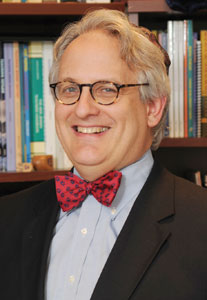
Rabbi Binyomin Davis, who coordinates the program, said Shabbat Live is one of the Kollel’s most popular programs, bringing together anywhere from 40 to 70 people at each event.

“They all come together and enjoy a large Shabbat dinner together in a relaxed and friendly environment,” Rabbi Davis explained.

The Friday night dinners are always held in a private home.

“We clear out a space, move some furniture and set up tables and chairs so we can have a traditional Shabbat dinner,” Rabbi Davis said.

“It’s a nice way for people in that age group to come and enjoy a Jewish event together,” he said.

Young adults are invited primarily through Facebook and e-mail. Those who enjoy the program also help spread the word.

“We encourage people to bring a friend, and that’s been very effective,” said Rabbi Davis, who said a date for the next Shabbat Live hasn’t been chosen yet. He expects it to be sometime in August after a venue has been determined.

An invitation from a friend is how Micah Charyn discovered the program. He and his wife were invited to the June Shabbat Live by Joy Friedman. Friedman attended her first Shabbat Live in January at the invitation of Rabbi Davis. She is now a regular, and loves those evenings.

“I like the communal feeling and camaraderie. I also like doing the traditional Kabbalat Shabbat and eating with other people my age doing it under the auspices of Judaism,” Friedman said.

Charyn was so inspired by the event he called The Chronicle to sing its praises. He particularly enjoys the fact that Jews of all denominations attend.

“It encompasses a very wide net and the entire net is made up of Jewish fabric,” said Charyn, who hails from Chattanooga, Tenn., and moved here a little more than a year ago. “It doesn’t matter if you are super Reform, unaffiliated, confused or religious … all of these identities that young Jewish professional go through until they realize who they are as a Jew. You find all these people together in this big net at a Shabbos dinner and it is so nice and rewarding.”

Charyn said it’s great to know that you don’t have to worry about bringing any food with you and what they serve is “magnificent and all kosher.”

“It’s good and it appeals to people who like to eat out in restaurants, like many of us, including my wife and me, do often,” Charyn said.

Rabbi Davis and the Kollel staff, primarily he and his wife, Gevura, do most of the cooking.

“It’s a lot of work but it saves money on a caterer. We try to be very responsible with our community dollars. We don’t mind pushing our sleeves up and going to bed very late for this project,” he said.

The challahs, which Charyn said are delicious, were provided by Jay Robinow, M.D.

“He makes about 20 to 30 challahs every week and hands them out around the Jewish community,” Rabbi Davis said.

One of the reasons the Kollel sponsors this event, Rabbi Davis, said, is because it’s one of the few young professional events in town that actually has a religious component to it.

“I think it’s important to have a Jewish experience outside of the social area,” he said. “It is unique in that way and the community is backing it because of that.”

Charyn said he enjoys this event precisely because it’s different than a lot of young professional events.

“There are two types of energies at those events,” he said. “The first is networking and if you’re single it’s a good place to meet a nice Jewish counterpart. What attracted me to Shabbat Live is it’s neither of the two. It’s just about having a nice meaningful evening with good food and be around people who just want to be Jewish, who don’t want to be alone and want to make Shabbos with us.”

“At Shabbat Live you get to eat, sing and hang out with some really fun people,” he continued.

Friedman said she keeps attending Shabbat Live events because she’s developed a lot of relationships from it.”

“I think it’s been a way for me to celebrate Shabbat with people I already care about, but it’s also a chance for me to meet new people, some of whom have become my good friends.”


Members of The New Reform Temple voted this week to hire Rabbi Alan Londy to serve as the Reform congregation’s interim rabbi beginning July 1. He takes over for Rabbi Jacques Cukierkorn, whose contract was not renewed by the congregation in December and left its employ in late March.
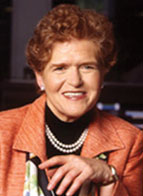
In a letter to congregants sent in advance of Tuesday night’s vote, NRT President Michael Grossman said he is excited about the prospect of having a new spiritual leader. The interim rabbi was chosen from a field that initially included 10 candidates of which two eventually came to Kansas City for onsite interviews. He will perform typical rabbinical duties such as such as leading services, conducting life-cycle events, teaching and providing counseling while the congregation searches for a permanent spiritual leader.

Rabbi Londy, 55, attended a classical Reform congregation, becoming both a Bar Mitzvah and confirmand at Congregation Berith Sholom, while he was growing up in Troy, N.Y. After graduating from Cornell with a Bachelor of Arts degree in Near-Eastern studies, he attended the Jewish Theological Seminary of America and was ordained in 1983. He also holds a Doctor of Ministry in pastoral counseling from Hebrew Union College in New York City and he has taken extensive courses at the Interim Ministry Network, the only national certification institute for international interim clergy that is endorsed and recognized by the Central Conference of American Rabbis.

The first part of Rabbi Londy’s rabbinical career was spent serving Conservative congregations. He was the assistant rabbi of Beth El Congregation in Baltimore from 1983-1988; the head rabbi at Temple Israel in Orlando, Fla., from 1988-2000; and the head rabbi at Temple Beth Sholom in Smithtown, N.Y., from 2000-2006.

By 2006 Rabbi Londy had decided he was more comfortable with the Reform movement and thus returned to his religious roots. That’s when he became rabbi/rabbi educator at Temple Israel of the City of New York, where he served until recently. In addition to running the religious school, he has also led many religious services.

Rabbi Londy has now decided he wants to take on the new challenge of serving congregations in interim situations. He told members of the NRT search committee that his goal is to work with congregations to make them the best they can be, without disrupting or trying to change their own unique identities. He and his wife have decided they are ready to live the more nomadic life of an interim rabbi for the rest of his career before eventually retiring and moving to Israel.

Pick up any Jewish magazine or newspaper, and many mainstream publications, and you’ll see rave reviews of Deborah Lipstadt’s new book, “The Eichmann Trial.” Published in March, the book is already in its fifth printing.

Lipstadt, Dorot professor of modern Jewish and Holocaust studies at Emory University in Atlanta, Ga., will be talking about her newest book at 6:30 p.m. Wednesday, June 29, at the Kansas City Public Library’s Plaza Branch, 4801 Main St. There will be a reception at 6 p.m. The program is free and open to the public. RSVP online to http://www.kclibrary.org/event/deborah-e-lipstadt-eichmann-trial or call (816) 701-3407. The author will sign books after the program. Books will be available for sale at the event.

In a telephone interview with The Chronicle, Lipstadt said she will tell the story of the capture of Adolf Eichmann by Israeli agents in Argentina in May 1960, then talk specifically about the impact of the trial on survivors.

“The point I’m going to stress and the point I stress in the book is the impact it has had on the voice of the survivor, the voice of the person who can speak in the first person singular about what happened to them. That wasn’t something people had heard at Nuremberg,” she said.

Seminal event of 20th century

The Eichmann trial changed the notion of war crimes trials, Lipstadt said. At the Nuremberg trials, held from November 1945 to October 1946, defendants were tried mainly on documents, with very few victims actually testifying. But the case against Eichmann was built mainly on testimony from survivors, which seared into memory actual faces and names of victims of the Holocaust.
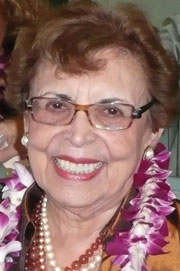
For 15 years, survivors had been speaking about their experiences, “but never in this intensity and never in this public and high profile a setting,” Lipstadt explained. “There was no such a thing as survivors’ rights or victims’ rights then. And that has an impact to today.”

Although Lipstadt has written three other books, all with Holocaust themes, her interest in the Holocaust is not personal — she is not a child of survivors and had no immediate family members perish.

“I just think it’s a crucial event in Jewish history, a crucial event in world history, the seminal event certainly of the 20th century, and possibly lots of other centuries,” she said. “It was just unprecedented and something I really wanted to understand, and I felt it important that my students understand it as well.”

Lipstadt said her intent is not to continue the message, “Never again.” She sees herself simply as an educator whose role it is to educate people about what happened.

“I have no agenda in terms of what (people) should think or how they should think or what they should do, or what actions my teachings might lead them to,” she said. “My sense is, you have to know the history, you have to know what happened and understand it.”

She said she had just received a “very moving” letter from a non-Jewish man in Hong Kong, in his early 60s, who had just read the book. He said he had heard much about the Holocaust, but never really learned all the nuances of it.

“What’s important about this book is not just to learn about the trial, but to give you a sense of different aspects of the Holocaust you really didn’t know. A lot of people know the word, but they don’t know the details,” she noted. “They know, oh, yeah, that was when 6 million Jews were killed. But they’re not really quite sure about how it happened, how it proceeded, how it evolved, and I think that’s really important. Or they’re not quite sure about the response of the Jews, etc.”


Gloria P. Gershun Memorial Lecture


Deborah Lipstadt’s speaking event at the Kansas City Plaza Library is the first of, hopefully, many book and author events of the Gloria P. Gershun Memorial Lecture, made possible in part by funding from Lawrence and Donna Gould Cohen and Martha Gershun and Don Goldman, and co-sponsored by the Jewish Community Center and the Midwest Center for Holocaust Education.

Gloria Gershun died in May 2010. Her daughter, Martha Gershun, said her mother was a professional librarian and a passionate booklover, with deep ties to the Jewish community. She co-founded the Kansas City Jewish Book Fair in 1994 and was active in its growth and support for many years.

The JCC wanted to do something with books to honor Gloria’s memory. So, with the help of Donna Cohen and Martha, the Gloria P. Gershun Memorial Lecture was born.

“We are planning several author events in Mom’s honor,” Martha said. “We expect more events at the library and also future events at the Jewish Community Center in the coming years.”