JOKE OF THE DAY — A colleague sent me this joke:
Ben & Jerry’s Ice Cream is now available in Israel in the following flavors:
Wailing Walnut
Moishemallow
Mazel Toffee
Chazalnut
Oy Ge-malt
Mi Ka-mocha
Bernard Malamint
Berry Pr’i Hagafen
Choc-Eilat Chip
Simchas T’Oreo
It should be noted that all of these flavors come in either a cup or a Cohen.

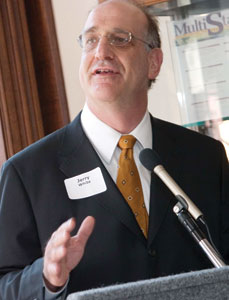
WHITE SCHOLARSHIP — The UMKC Bloch School of Management’s Lewis White Real Estate Center and the family of Lewis White announced the formation of the Walter S. Clements Endowed Scholarship to support graduate real estate education at the White Center, specifically the new Master of Entrepreneurial Real Estate. The Lewis White Center is the only provider of graduate real estate education in the region. The family of Lewis White has made a gift of $50,000 for a scholarship named after Walter S. Clements, director of the Lewis White Real Estate Center. Jerry White, son of the late Lewis White, noted one reason the scholarship is named after Clements is because “He brings outstanding experience to the Bloch School and was able to quickly develop a successful real estate program from the ground up, which has been extremely well-received by the real estate community.”


BIPARTISAN PLEDGE — The Anti-Defamation League and the American Jewish Committee have joined together to encourage other national organizations, elected officials, religious leaders, community groups and individuals to join them in signing the “National Pledge for Unity on Israel.” This initiative aims to rally bipartisan support for Israel while preventing the Jewish state from becoming a wedge issue in the upcoming campaign season.
“If there is one thing candidates for high office, and people of all political stripes can agree on, it is the importance of the long tradition of bipartisan support for our friend and ally, Israel,” said AJC Executive Director David Harris.
“We want the discourse on U.S. support for Israel to avoid the sometimes polarizing debates and political attacks that have emerged in recent weeks, as candidates have challenged their opponents’ pro-Israel bone fides or questioned the current administration’s foreign policy approach vis-à-vis Israel,” said Abraham H. Foxman, ADL National Director. “The last thing America and Israel need right now is the distractions of having Israel bandied about as a tool for waging political attacks.”
Visit www.adl.org/unitypledge to sign “The National Pledge for Unity on Israel.”

JEWS PROTESTING — I regularly read the Hyman Brand Hebrew Academy student newspaper, The Academy Voice, and the paper’s writers have contributed stories to The Chronicle. In a story published in the most recent issue (Sept. 24-Oct. 12) Senior Editor Sam Abrams reports that a former HBHA student is among those who have been arrested while taking part in the Occupy Wall Street movement protests in New York City. Isaac Wilder, now 21, was arrested on Sept. 21 while leading a group of approximately 85 protesters to the New York Stock Exchange for the opening bell, and then to the Chase Manhattan Plaza. Sam reported that Wilder has been quoted in the New York Times following his arrest, saying that he told police officers “I stood my ground, and said that we were within our rights.” Wilder was also allegedly asked questions about the Israeli stamps on his passports while he was debriefed by police. He was released from custody after a short time with a summons to appear later in court.

SOUND THE SHOFAR — If you are planning a trip to Jerusalem between now and February, our Israeli correspondent Sybil Kaplan recommends a visit to the Bible Lands Museum. Last month it opened “Sound the Shofar — A Witness to History. She said the exhibit is fascinating and shows aspects of Jewish history through the prism of a shofar over the last 3,000 years. A short film about making shofarim can also be viewed, but Kaplan reports that not everything is revealed as some of the techniques of making the shofar are secret.

Correction

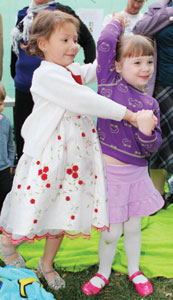
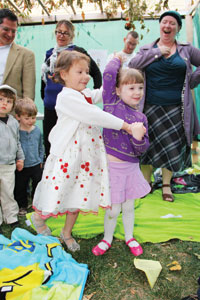
The identification of the girls featured in a photo illustrating the Tot Shabbat story published in the Oct. 20 issue was reversed. They girls are Delilah Rose Garcia (left) and Alice Lenz.

“To life! To life! L’chai-im!”

On its chai anniversary, it seems appropriate that the Midwest Center for Holocaust Education will celebrate the life of an organization that was born because of the horrors of the Holocaust.

MCHE was founded 18 years ago in 1993 by Holocaust survivors Isak Federman and Jack Mandelbaum. It teaches the history of the Holocaust, applying its lessons to counter indifference, intolerance and genocide. Its programs reach thousands of youths and adults each year through school and community outreach programs, often offered in cooperation with other not-for-profits.

Many are proud of its accomplishments, including Bill Kort, a former president of the board. Besides being a board member, he has a unique perspective as the husband of Regina Kort, the daughter of Holocaust survivors Sonia and the late John Warshawski. John Warshawski and Isak Federman were friends and brothers-in-law as well.

One of the things Kort is most proud of is what MCHE stands for in a time when the country, and the world, is tremendously polarized. By teaching the lessons of the Holocaust, Kort said MCHE can compare the past to the present, addressing what happens when a group becomes polarized, intolerant and unaccepting of other people and their views, their religions or their races.

“Things like the Holocaust do happen and it’s not just the Holocaust as we know it, which was the most terrifying, horrible event of the 20th century. Smaller versions of the same have occurred and continue to occur in places like Rwanda and Darfur. It’s up to us to speak out and let people know what happens when we as a people or other nations as people become intolerant and fearful of their neighbors or those who are different,” Kort said.

MCHE’s success stories
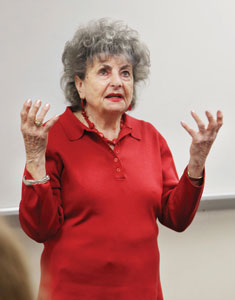
Jean Zeldin has served as MCHE’s one and only executive director for the beginning. An educator herself, when the doors opened in August 1993, she said they “hit the ground running,” knowing how urgent it was to begin their first project — the oral recordings of witnesses.

That project, Witnesses to the Holocaust, produced video testimonies of nearly 50 eyewitnesses (all of which have now been digitized). The Fortunoff Video Archive for Holocaust Testimonies at Yale University helped train volunteer interviewers. The project took 16 months to complete and years later, as more and more survivors pass away, they are still used today.

“From those testimonies, two documentaries have also been created — one for classroom use and one for community use,” Zeldin said.
Those testimonies have also served as a basis for other thematic programs.

“I really think that one of our greatest successes is the recording of those testimonies and the educational use that we have made of those,” Zeldin said. “We did have that sense of urgency. Many of the survivors that participated had not spoken before, but I think they felt that sense of urgency as well and that this could be their contribution to posterity.”

Zeldin also points to the Portrait 2000 exhibit, displayed at the Jewish Community Campus and Union Station, and the book “From the Heart,” that came from that, published by Kansas City Star books in 2001, as other successful projects.

“We have collected what I have called a treasure trove of memories and we keep going back to that as a core of our educational programming,” Zeldin said.
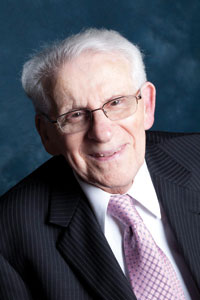
It is no mistake that education is part of MCHE’s name. Blanche Sosland, a former MCHE president who also served on the original board of directors, pointed out that it was very important to the founders that the organization would not be a museum.

“It should be a living organization providing education, which it does very well,” Sosland said.

Teacher education is indeed something MCHE takes pride in. One important program is the Isak Federman Holocaust Teaching Cadre, which is currently comprised of 18 teachers. They meet monthly to continue their own education as well as provide education for other teachers, post articles to the educator’s blog and create lesson plans posted on the MCHE website.

In addition, Zeldin said MCHE has been recognized by the Jewish Foundation for the Righteous in New York as a center of excellence. As such, MCHE has been invited to become a training hub — one of 10 centers nationwide — for curriculum called Echoes in Reflections and designed in a collaborative effort by the Anti-Defamation League, the USC Shoah Foundation Institute and Yad Vashem.

Collaboration and cooperation

MCHE has always tried to partner with other not-for-profits in the community. In the beginning, MCHE always had to search for partners; now other organizations are inviting MCHE to join them. Over the years relationships have been established a large assortment of partners including the Kansas City Public Library, Kemper Museum, Truman Library, Eisenhower Library, Rockhurst University, Science City, University of Missouri-Kansas City, Negro Leagues Baseball Museum and the American Jazz Museum.

“We know we are a visible presence in the community and we’re recognized for the work that we do. The fact that we have been able to take our message not only to the Jewish community but to the general community through these partnerships is something that we’re very proud of,” Zeldin said.
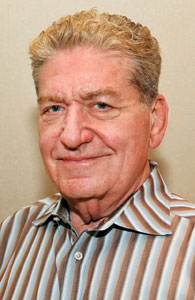
The relationship MCHE has had with the non-Jewish community dates back to its first project. For example in addition to seed money provided by the founders, funding for Witnesses to the Holocaust was provided by grants from the William T. Kemper Foundation, the David Woods Kemper Memorial Foundation and the Oppenstein Brothers Foundation.

Blanche Sosland, a former MCHE president who served on the original board of directors, noted that it was key from the very beginning that MCHE not solely be a Jewish organization.

“James Kemper of Commerce Bank told us the mission of this organization has to be a mission for every member of our community. He said that 18 years ago and it still rings in my ears and that was accomplished,” Sosland said.

In fact MCHE’s board pulls from a very diverse cross section of the community and, Zeldin said, at least a quarter of its members are not Jewish.

“Virtually every religion, race and creed is represented on the board. Of all the boards that I’ve been on, this is a board where a quorum is never a problem,” Sosland said.

Zeldin said that in addition to the passion of its board, MCHE has been able to successfully carry out its mission due to its “small, but mighty staff” which can adapt to a variety of duties and help each other when the need exists.

Zeldin said she and the staff — Frances G. Sternberg, Ph.D., director of university programs and adult education; Jessica Rockhold, director of school programs and teacher education; Laurel Maslowski, evening resource assistant; and Dana Smith, executive assistant — are all honored to be entrusted with the vision of the founders and the board.

“Working at MCHE is more than a job. It is also a personal mission and commitment. It is a privilege and an honor to have that trust and we all take that very seriously,” Zeldin said.

An extended community

Sosland said that MCHE really serves the entire Midwest.

“It is a center in the true sense of the word and, of course, the Holocaust is a very difficult but a very inclusive subject,” she said.

Besides being in the Midwest, another geographic distinction is that it is located between the Independence, Mo., and Abilene, Kan., homes of the Truman and Eisenhower museums respectively. Both of those presidents are historically linked to the Holocaust.
That’s a fact that intrigues Kort.

“Someday another president may come from this neck of the woods. Maybe that person happened to sit in on a class presented by an MCHE-trained teacher on the subject of the Holocaust, indifference or man’s potential to do inhuman things to other men over differences of opinion,” Kort said.

Following the anniversary celebration, Zeldin said MCHE will embark on a new strategic plan. As it continues celebrating, Art Federman, a former president and son of founder Isak Federman, said now is also a good time “to refocus all of our energy on the work that still remains to be done.”

“MCHE has made a lot of progress in using the lessons of the Holocaust to teach others of the need to confront hatred and bigotry, but we still have a long way to go,” Federman said.


Hamlisch tickets still available

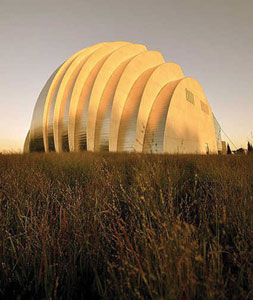
The legendary Marvin Hamlisch will be in Kansas City Nov. 3 as the featured performer at MCHE’s 18th Anniversary Celebration. The event, which will also honor the Kansas City Jewish community’s Holocaust survivors, begins at 7:30 p.m. in Helzberg Hall at the Kauffman Center for the Performing Arts. For information on patron opportunities and donor tickets, visit www.mchekc.org, call 913-327-8192 or email .


It’s music to a mother’s ear, especially if she’s a rabbi, too, when she hears her young child sing “Shema Yisrael …”
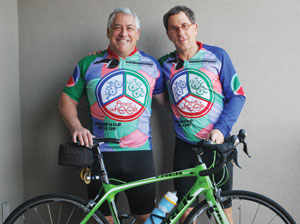
That’s why Rabbi Vered Harris is happy about the resurgence of Tot Shabbat in the community. Congregation Beth Torah’s education rabbi, along with Judy Jacks Berman of Congregation Beth Shalom and Rabbi Alexandria Shuval-Weiner of The Temple, Congregation B’nai Jehudah, have arranged for Tot Shabbats to be held at each of these congregations once each month beginning in November. Any member of the Jewish community, affiliated or not, is welcome to attend any and all of these services for young children.

B’nai Jehudah will host its Tot Shabbat, led by Rabbi Shuval-Weiner, on the first Friday of every month. Rabbi Harris will lead services at Congregation Beth Torah on the second Friday of the month. Congregation Beth Shalom will take charge on the third Saturday of the month. Berman, who is the director of Beth Shalom’s Rose Family Early Childhood Education Center, explained that Beth Shalom’s services are being coordinated by a group of volunteers.

Over the past year or so many of the congregations have discussed, and in some cases even started, collaborating on programs. So it wasn’t surprising last year when Rabbi Adam Stein, who at that time was Beth Shalom’s assistant rabbi, approached Rabbi Harris to learn more about the Tot Shabbat program she was organizing. As the idea was being discussed following a Rabbinical Association meeting, Rabbi Shuval-Weiner joined the conversation as well.

Less than a year later the three congregational representatives, with Berman taking over when Rabbi Stein left the city, designed the rotating schedule which, Berman said, is a win-win for everyone.

“We want to have as many opportunities as possible for young Jewish families in our community to celebrate Shabbat. Rather than competing with each other by scheduling activities at the same time, we wanted to give families different opportunities in the month.

That’s how we came up with each taking a week in the month,” Berman said.

Rabbi Shuval-Weiner said the idea of partnering with other congregations for Tot Shabbat was wonderful.

“In addition to what we provide for our families, now we are able to say that there are more opportunities for your little ones as well,” Rabbi Shuval-Weiner said.

She noted that Jewish preschools, such as the ones at B’nai Jehudah and Beth Shalom, always tell children that Shabbat comes every week.

“But when it comes to Tot Shabbat that’s not what they are experiencing. So for families to have the opportunity to have something that is age-appropriate for their little ones, where they can be part of community, where they can be making Jewish friends not just in their own congregational home but within the community at large, it is a wonderful opportunity for young families to bond and strengthen their connection to Judaism, to their community and to Shabbos,” Rabbi Shuval-Weiner continued.

In addition to the service itself, Berman is excited that Beth Shalom’s Tot Shabbat has been created by three women — Shira Goldenberg Zigler, Rebekah Merrill Calloway and Samara Minkin — who all moved here from other communities. They’ve taken successful models from their former communities and created a model they feel will work well at Beth Shalom. Zigler and Calloway are each originally from Kansas City and moved back “home” recently to be closer to family.

Rabbi Harris said they all hope that these Tot Shabbat opportunities will help raise a generation that is enthusiastic about celebrating Shabbat.

“We want these children to know that when they go to synagogue they are going to see their friends there, even if it’s not their synagogue. Jewish people come together on Shabbat and celebrate. When you think about Friday night or Saturday, you think about being together with your friends in synagogue. The more opportunities we can give our families to do that, the better. “The reality is that our children, whether they go to the B’nai Jehudah preschool, or Beth Shalom or the CDC at the Jewish Community Center, are in preschool with friends from all over the community. We want to expand the feeling that when you come to Shabbat you are coming to celebrate with your friends,” Rabbi Harris said.

As the mother of a tot, Rabbi Harris said taking her child to these services is fun.

“At a Tot Shabbat there is no expectation that the children are going to sit there quietly. So as a mom I can relax … it’s OK if there is a little bit of chaos at this service,” Rabbi Harris said.

The rabbis and Jewish educator agree that the decision to have three services at three different congregations and open them to everyone is simply about being Jewish in a Jewish community.

“We can all play together,” Rabbi Harris said.

At the same time, these families can add a little Judaism to their lives.

“I think if we don’t do Judaism in our lives, there’s really very little hope that the next generation is going to just randomly pick it up. So the Tot Shabbat opportunities are a way to bring Judaism into our lives on an age-appropriate level that hopefully will build into more mature observances,” Rabbi Harris said.

Jimmy Rosenbloom has been to Israel at least a dozen times. The last two times he participated in The Arava Institute and Hazon Israel Ride. Eddie Meltzer enjoyed hearing about those bicycle rides so much that this year he asked Rosenbloom, his life-long friend, to join him on the ride that takes place from Nov. 8 to 15. It includes an orientation session in Jerusalem, five riding days and Shabbat in Mitzpe Ramon. A colleague of Meltzer’s, Larry Seltzer from New York, will also ride with them.
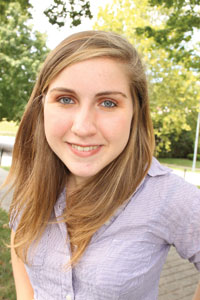
Meltzer is excited to be on this ride for the first time.

“It will be such an adventure and I’ve never been on a bike ride of this length,” he said. “If you’re a bike enthusiast, who wouldn’t want to bike from Jerusalem to Eilat?”

Together Meltzer and Rosenbloom are committed to raising a minimum of $7,200 for the ride. As of early this week they still needed $3,000 to reach their goal. They will ride on the Jewish National Fund team and raise money to support the Arava Institute for Environmental Studies and Hazon.

Hazon means vision and is America’s largest Jewish environmental group. The Arava Institute for Environmental Studies, affiliated with Ben-Gurion University, is the premier environmental education and research program in the Middle East, preparing future Arab and Jewish leaders to cooperatively solve the region’s environmental challenges.

Meltzer and Rosenbloom will ride their bikes, which they are taking with them to Israel, from Jerusalem to Eilat. Rosenbloom explained that other than the descent out of Jerusalem to Ashkelon on the Mediterranean, the ride is entirely in the Negev desert. So temperatures are expected to be in the 90s during the days and cool desert temperatures in the evening.

The two friends went to Israel for the first time in 1973 as members of the Kansas City Israel Pilgrimage. Later, Rosenbloom attended Hebrew University of Jerusalem and has also been to Israel three times with his family.

In addition to the Pilgrimage, Meltzer took a gap year while in college in 1976-77 and lived on Kibbutz Dse Yoav. He went again in 1986 for his brother’s wedding.

When he’s not training for the ride, Meltzer works in the electronic security industry for a company called Niscayah, Inc. Before the company was sold a few years ago, he managed Wornall Electronics, a company that had been in his family 50 years. Meltzer has been preparing for this ride since March, riding his bike 75 to 100 miles per week. He’s also worked out with a personal trainer, tries to eat healthy and attends Pilates classes. He calls this preparation, “a labor of love and anticipation.”

Rosenbloom has been trying to ride at least 15 to 25 miles three or four times per week in preparation for the ride.

For the ride itself in Israel, riders can choose from one of three route options. All routes enjoy full support, stocked rest stops and expert tour guides and educators. Rosenbloom said he and Meltzer plan to do the Tzofim ride, which averages 55 miles a day.

“Interestingly, the strongest group of riders, Halutzim, typically takes an extra loop to the Nizzana junction (a 95-mile day), on the Egyptian border in the Sinai desert. But because of all of the trouble at the Egyptian border, the riders have been informed that this option will not be available this year,” Rosenbloom said.

Rosenbloom, a member of Congregation Beth Shalom and a tax attorney who is a partner in the firm McQuain, DeHardt & Rosenbloom, P.C., said he is blessed to have completed the ride with another best friend, Danny Dunn, in 2007, and with his son, Jared, in 2010. In 2010 he and Jared raised almost $9,000 for the two charities.

In 2007, Rosenbloom said his focus was simply to have the opportunity to ride a bicycle in Israel, which combines two of his favorite things in the world.

“After two rides, and growing familiarity with Arava and Hazon, I have come to learn the incredible things that these two important organizations are doing to promote environmental protection in Israel and the U.S.,” he said.

He said ride organizers are serious about saving the environment. For instance the meals provided on the ride are maintained with as little environmental “footprint” as possible.

“We use no throwaway silverware, plates or cups. All such utensils are washed and re-used,” Rosenbloom said.

Friends of the two bicyclists will be able to keep up with their progress by visiting Meltzer’s facebook page, https://www.facebook.com/eimeltzer. Those wishing to donate can visit www.israelride.org and click on either participant’s name.


Hanna Katz isn’t an average student at St. Teresa’s Academy. However, being the school’s only Jewish student is something she takes in stride.
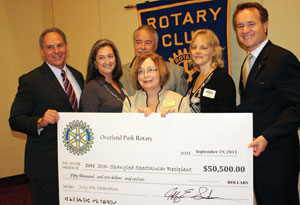
“It hasn’t always been my favorite thing, but everyone is very accepting and curious about my faith and my tradition. It’s cool to have people to explain things to and who are curious,” the high school senior said.

The 17-year-old member of The Temple, Congregation B’nai Jehudah, says studying at the Catholic school has actually strengthened her faith.

“It means I get to learn so much about another culture, about another religion… It makes me more confident in my Judaism,” she said.
B’nai Jehudah youth group adviser Amy Ravis Furey is pleased with Katz’s attitude.

“As a child of an interfaith family, how seriously she takes her Jewish identity impresses me,” Furey said.
Katz has taken many leadership roles in the community, most notably through the North American Federation of Temple Youth.

Currently, she is the religious and cultural vice president for NFTY’s Missouri Valley region and has been part of the local board through B’nai Jehudah for three years.

Last year, when she was the religious and cultural vice president for PB&J at B’nai Jehudah, she “decided it was time for youth group to enter the age of technology,” she said. This came in the form of a blog about what makes a Jew Jewish.

The daughter of Jill and Mark Katz said her most meaningful Jewish experience in Kansas City was last year’s Western Fall Chavurah, which she co-chaired with her friend Lauren Katz. More than 100 people participated.

“People were excited to be involved in these Jewish programs we had planned, and so much time and effort went into it. It was so cool to see people take things so seriously,” Hanna Katz said.

She has attended leadership training in New York and traveled in Europe and Israel, visiting sites related to Jewish history and culture, including Auschwitz.

Katz also wrote several pieces for the Kansas City Star’s Faith Walk column.

“I wrote about seeing the divinity in people we don’t agree with… obviously people at school have different religious and political views than I do, but those people are my friends,” Katz said.

Another Faith Walk column she wrote focused on Harry Potter.

“I’m a complete Harry Potter nerd, (but) it always evaded me that it completely alluded to the Holocaust,” she said.

A group of people at NFTY decided to go see the seventh Harry Potter film as part of a social event, and “when I was watching the movie, I realized the connection between the Holocaust and Harry Potter, so I wrote about my realization and then how it threw me back to when I went to Auschwitz that summer,” Katz said.

“My final article was about the first Shabbat at camp this summer. It was staff and avodah (staff member in training), and that was it. We did everything we normally do, but it was about 30 times more intense. Everyone was ready to start camp. Havdalah was beautiful,” she said. “We sat and sang songs, we were outside. It was absolutely incredible, and my closest friends were with me.”

NFTY isn’t Katz’s only Jewish outlet. She has attended the Goldman Union Camp Institute, better known as GUCI, as a camper for seven years. This past summer, she was there as an avodah. Katz wants to apply for a counselor position next year.

“I attend a Catholic school, so it’s really nice over the summer to go to GUCI and be in a completely Jewish environment, and I know it’s important to my parents that I have a Jewish environment I really love,” Katz said.

Katz is looking at colleges for next year and has her eye on Emerson College in Boston, Loyola Marymount in Los Angeles or the University of Wisconsin-Milwaukee. She hopes to become a director and is impressed with the film programs at those schools. Katz plans to be involved with Hillel programs wherever she goes.

The leadership skills she has learned through her involvement with Jewish youth groups, such as commanding the attention of a group, will be helpful if she becomes a director, Katz says.

“She really is an exemplary leader. She has a vision of where she sees the community going … she makes that happen because she cares so much,” Furey said. “As an adult looking at teens like Hanna, it gives me great hope for the future of our community. She has such passion for our community and Reform Judaism. She’s going to be a leader for years to come.”

SOME ENCHANTED EVENING — This year marks the 25th anniversary of Some Enchanted Evening, the Johnson County Community College Foundation’s glittering black-tie gala. Each year proceeds from the event help students in need to continue their education. The event has also recognized a Johnson Countian of the Year — a man, woman or couple who worked to benefit the county through civic leadership or philanthropic support. The roster is a who’s-who of county leadership and includes several members of the Jewish community —. Sue Ellen Fried, George and Floriene Lieberman, Shirley and the late Stan Rose, Steve Rose, Walt Hiersteiner and Elaine and the late Norman Polsky. These people will be recognized, along with the other honorees, at the Nov. 12 event for their service to the community and the college.

STAR SPANGLED FUNDRAISER — Lynn Intrator and Melynn Sight, members of the Star Spangled Spectacular committee, the fundraiser put on by the Overland Park Rotary Club on the 4th of July every year, sent us this photo of the check presentation. Last month the OP Rotary Club presented $55,500 to four local charities, representing the proceeds from the 20th annual event at Corporate Woods. The four charities included Down Syndrome Guild of Greater Kansas City, Head Start of Shawnee Mission, SAFEHOME and the club itself for its Tomorrow’s Leaders Today program.


DESIGNER JEWELRY — Artist and jewelry designer Mariana Ravid will introduce her new jewelry collection, including pieces designed exclusively for Shop Beautiful, on Saturday, Nov. 5, at the shop’s Hawthorne Plaza location. This is Ravid ’s first public appearance in a U.S. retail establishment. Mariana Spirit of Design is known for popularly priced jewelry that interfuses hand cut gem stones, material beads and Swarovski crystals — some of them antique pieces over 100 years old — with gold and silver-plated metals.


Corrections

An article mentioning Temple Israel of Greater Kansas City in last week’s issue (Oct. 13) incorrectly stated its membership. More than 80 families are now members of the Reform congregation.

An item submitted about Rosh Hashanah in the Rockies published Oct. 6 incorrectly stated that Adventure Rabbi Jamie Korngold received her Bat Mitzvah training in New Jersey from Cantor Paul Silbersher. Cantor Silbersher reports they actually studied together at Woodlands Community Temple in Hartsdale, N.Y.

The Oct. 20 article about The G3 Summit: Women’s Guide to Good Giving omitted information regarding the funders. It is funded by the Jacob and Frances O. Brown Family Fund of the Jewish Community Foundation.

Residents at Village Shalom like to say that something special happens there every day. Earlier this year, something truly remarkable took place that underscores not only the special nature of Village Shalom, but of the Kansas City Jewish community that supports it.
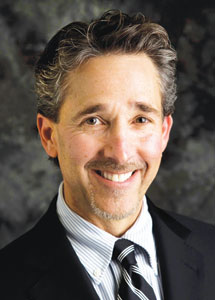
The continuing-care retirement community recently culminated a quiet, two-and-a-half-year effort to reduce the $40 million in capital debt on its 26-acre campus. Through the efforts of members of the Kansas City community, local funding agencies and the organization’s major creditor, the behind-the-scenes, albeit aggressive campaign has reduced the organization’s debt to a more manageable $16 million. Matthew E. Lewis, president and CEO of the 501(c) (3) not-for-profit organization, said, “It is the community’s most ambitious and successful fund-raising effort in recent memory.”

The issue of Village Shalom’s debt has not been a secret; in fact, three years ago, The Chronicle published an interview with Lewis and then-newly elected Chairman of the Board James Klein about the financial challenges facing the organization. They openly discussed the situation and how Village Shalom’s debt arose from a broad and longstanding array of factors, including higher labor costs, a higher percentage of residents on Medicaid and lower Medicare reimbursement rates, and lower proceeds from the sale of Shalom Geriatric and Shalom Plaza at 78th and Holmes. The collapse of the financial markets in the fall of 2008 seemed to cast a final pall on any immediate prospects of initiating a broad-based debt-reduction campaign.

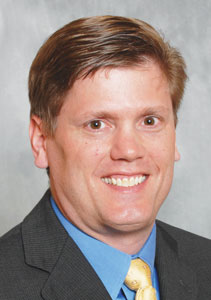
Amid this environment, however, the newly constituted board appointed a debt-restructuring subcommittee, led by Klein, to develop a strategy to establish Village Shalom’s financial stability once and for all.

“In a strange way, the financial crisis gave us the clarity of what needed to happen in order to achieve our goal,” said Klein. “In the same way a conventional fund-raising campaign was a non-starter, the idea of combining the collective efforts of several different constituency groups began to take shape.”

A Shared Commitment

Village Shalom opened in June 2000 as an innovative retirement community offering a continuum of living options that enables residents to “age in place.” Its Overland Park campus consists of 64 independent-living villas; 54 assisted-living apartments; two 26-unit skilled-nursing floors providing both short-term rehabilitation and long-term care; and assisted living, skilled nursing and adult day programs for senior adults with memory loss and dementia-related illnesses. The facility also meets the needs of non-residential senior adults through its wellness center and outpatient therapy services. In addition, the facility provides more than $1.6 million annually in financial assistance to nearly one-third of its main-campus (assisted living and skilled nursing) residents who rely on Medicaid or other subsidy for their care.
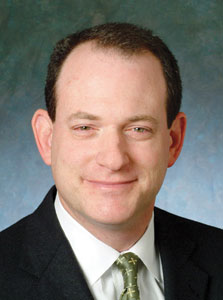
While Village Shalom’s early years were marked by lower-than-expected occupancy rates and high staff turnover, changes in management prompted a reversal of those trends starting around 2005. Village Shalom has averaged 95 percent occupancy over the last four years and has a waiting list for its popular assisted-living apartments. Staff turnover has declined substantially, and efficiency measures now rank high, based on national figures.

The $40 million in debt being carried by Village Shalom as it marked its first decade of operation was, however, more than twice the amount it could financially support. After running multiple financial models and getting input from community funders, the board of directors determined that reducing the debt to a figure nearer $16 million would give Village Shalom the necessary financial flexibility to operate in the highly competitive senior-care industry in which it had otherwise made great strides. Thus, Village Shalom would need to reduce its debt by $24 million.

The magnitude of this figure led the debt-restructuring subcommittee to conclude that help must come from every possible avenue. It would require debt relief from the creditors of Village Shalom as well as contributions from the community in a variety of creatively conceived formats. Negotiations began with the largest creditor, a global bank, to write down a significant portion of their debt.
The community effort was proposed as a matching-gift challenge in which funds raised from major gifts would be matched by grants from the Jewish Heritage Foundation and the Menorah Legacy Foundation. Lastly, additional debt relief would result from Village Shalom’s repurchase, at a discount, of bonds originally issued in the retail market on its behalf. The lynchpin of the plan was that each group’s commitment was contingent upon the success of all the others.

After nearly two years of discussions, the bank agreed to a write-down on the debt; both the Jewish Heritage and Menorah Legacy foundations pledged their side of the community-matching grant; and with deadlines looming, the major-gifts campaign exceeded its $8 million target in a matter of weeks, in an extraordinary display of generosity and community leadership.

Reason for Being

“We were fortunate to have some truly dedicated and visionary community leaders who literally made house calls to ensure we could garner the support we needed,” said Lewis of the community-based campaign. “Much of the success is due to the fact that we remained focused on Village Shalom’s reason for being, and that message was reiterated to everyone we approached for support.”

The senior-living community traces its roots to the Moshav Zkeinim (home for the aged), chartered in 1912 to care for elderly Jews in Kansas City who lacked personal financial resources. The organization provided housing and care for residents in the Michael Appleman Home for Jewish Aged and later the Jewish Geriatric and Convalescent Center and Shalom Geriatric Center. Village Shalom maintains the organization’s longstanding commitment to Jewish traditions and values, and continues to be largely supported by the Kansas City Jewish community. Approximately 75 percent of Village Shalom’s residents are Jewish.

The success of this year’s debt-reduction campaign comes at a particularly momentous time in Village Shalom’s history: The organization will mark its centennial year in 2012.

“While we certainly serve a much broader senior population than we did 100 years ago, and offer a full range of options for elder living and care, we have never lost sight of the organization’s original commitment,” said Michael J. Abrams, chairman of the current Village Shalom Board of Directors. “We are dedicated to ‘honoring our parents’ by providing them with the best possible quality of life. This can happen only with the support of a cohesive, caring community.

“We owe a tremendous debt of gratitude to all parties involved in this monumental campaign,” Abrams added. “That we were able to pull together and succeed on so many fronts underscores the dynamic nature of the Kansas City community. Our visionary board and subcommittee, our funding organizations, our community leaders, our generous donors — they all worked hand in hand to ensure that Village Shalom will continue to thrive and grow.”

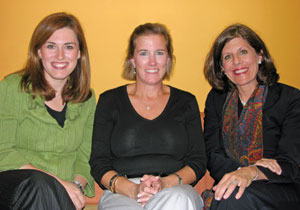
Lewis commented that the campaign’s success enables Village Shalom to look toward upcoming generations of senior adults: “We’re extremely proud of our past, and now the organization is in a position to think more strategically about our future as well. Many more people are living longer, and demographic trends ensure that the number of people needing long-term care will increase significantly. As the baby-boom generation ages, it will present the industry with formidable challenges, but also opportunities. We can now begin to envision the next phases of Village Shalom’s presence in meeting the changing needs of our community’s seniors.”
As the situation stands, the bank debt has been paid in full; $1 million dollars in bonds have been repurchased in the open market at a substantial discount; and residual funds reside with the Jewish Community Foundation to retire additional bond holdings. The total reduction of debt from this effort currently exceeds $25 million.

But the job is not yet complete, Abrams noted. “The first stage of this campaign exceeded all targets, but Village Shalom wants to keep up the momentum and expand this campaign to the broader community. The recent 11 percent cut in Medicare payments to skilled-nursing facilities is a timely reminder of the challenges we face in the health-care business and the importance of doing everything we can to further solidify our financial base.

“Kansas City’s Jewish community has a long history of banding together to overcome challenges and obstacles,” he added. “I’m proud to say that we have accomplished that on behalf of Village Shalom’s residents and their extended families. In fact, we’ve done what other Jewish communities across the country have not been able to do. Cities like Pittsburgh and St. Louis have faced similar situations in recent years, yet were unable to maintain their Jewish community-supported long-term care facilities as independent not-for-profits — forcing them to sell to for-profit groups. The campaign we’ve undertaken here in Kansas City points to the particular strength of this community. As a result, we are strongly positioned to uphold the Jewish tradition of caring for our elders in generations yet to come.”

When it comes to finances, many women can say “We’ve come a long way, baby!” Today, regardless of whether a woman contributes to the family’s income, it’s common for both the husband and wife to make financial decisions together. Along those lines, many women now also have a larger say in how the family’s charitable dollars are spent as well.
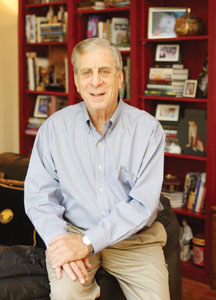
In an effort to inspire and empower Jewish women of Kansas City to play a substantial role in the family’s financial giving, the Jewish Community Foundation and the Women’s Division of the Jewish Federation has planned the G-3 Summit: A Woman’s Guide to Good Giving. It will take place on Oct. 30 and is being co-chaired by three women who are tremendously involved in philanthropic endeavors in Kansas City: Debbie Sosland Edelman, Polly Kramer and Alana Muller.

Sosland-Edelman said the program’s goal is to give women the tools they need to understand their charitable giving. She believes the program will help women learn to:

• Make giving more important and more central parts of their lives

• Give women an understanding that their giving can have a significant impact in changing the world (tikkun olam)

• Help give women the tools to best align their values with their giving of both time and money

• Give women the tools so they give with confidence

• Encourage women to set an example for their families

All these issues, Sosland-Edelman said, will be addressed in either breakout sessions or the speech given by the event’s keynote speaker, Andrea Pactor. Pactor is the associate director of the Women’s Philanthropy Institute at Indiana University and her speech will cover how women can best align their giving — of both time and money — to their own values, and to develop confidence when it comes to giving.
Sosland-Edelman explained that the Women’s Philanthropy Institute is the preeminent center for the study of women and philanthropy.

“The moment you meet Andrea, you realize this woman knows what she’s talking about. She is smart, intuitive, knowledgeable and passionate,” Sosland-Edelman said.

As Sosland-Edelman and the committee researched the impact of women’s philanthropy in preparation for this event, they learned many things. One thing they learned is that reliable evidence shows women who participate in donor education programs are more likely to give larger gifts, to give unrestricted gifts, to develop a long-term giving plan, and to hold leadership roles on nonprofit boards.

Kramer said the committee hopes at least 100 women will attend the G3 program. From advanced reservations, she believes there is a very good chance they will exceed that number.

Among the many goals of this program is to show women how philanthropy can change throughout their lives, thus making the program multi-generational. They hope young women just out of college will attend, as well as women who are enjoying their golden years.

“It’s going to speak to different generations about how to give in your lifetime because what you do in your 20s is not the same as what you will do in your 50s or your 70s. But there’s always a way to be philanthropic and support things you are passionate about. It doesn’t take a lot of money to make an impact,” Kramer said.

She believes the event will be a great way for women to learn how to make a difference with their own gift.

“I think it’s nice to realize that you can give it in your own right and make your own choice about it,” Kramer said.

To Kramer, another important piece of the program is to help women learn how to choose who they want to give time or money to.

“A lot of times you give because you have a friend who is working on this project or that project. I think it’s important to give not because your friend likes it, but to really figure out what that group is doing, to learn how they spend their money and figure out if it is something that you really want to support,” she said.

Kramer also pointed out it’s not always the dollar amount that makes a gift meaningful.

“A gift can be meaningful if it’s what you can do, and it makes you feel good about what you’re doing and what you’re supporting,” she continued.

The upcoming event excites Sosland-Edelman.

“I am excited to bring a group of Jewish women together who are motivated to learn and grow in their understanding of how they can make a difference individually and collectively. When I think about that morning, I imagine a room full of energy, a kind of energy that only women working together can generate,” she said.


The G-3 Summit

The G-3 Summit: A Woman’s Guide to Good Giving will take place from 9 a.m. to 12:30 p.m. Sunday, Oct. 30, at the Jewish Community Campus. It is co-sponsored by Jewish Community Foundation of Greater Kansas City and the Women’s Division of the Jewish Federation of Greater Kansas City.

The G-3 Summit will feature breakout sessions, networking with other women and a kosher brunch. Registration is required. For more information about cost or to register, contact Beverly Jacobson, Women’s Division director at 913-327-8108, or visit www.jewishkansascity.org/g3summit2011.aspx.

“Let’s go to Katz.”

For much of the first half of the 20th century, this would be the common rallying cry for families in downtown Kansas City looking to do a little shopping. After all, in 1917 Katz Drug Stores were not the typical pharmacy. At Katz, they advertised “over 25,000 items at deep cut prices.” Over the years their inventory would go on to include cameras, cosmetics, clocks, shirts, pets and a large selection of discounted smokes, beer and whiskey. This diverse selection of products combined with discount prices in a pre-Wal-Mart world made Katz Drug Stores an innovator in retail.

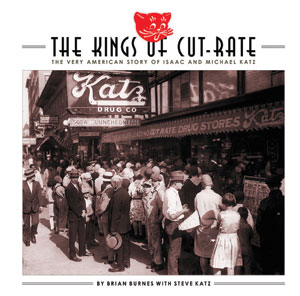
The story of the two brothers who founded Katz is now chronicled in a new book entitled “The Kings of Cut-Rate: The Very American Story of Isaac and Michael Katz.” Written by local reporter and author Brian Burnes with information and stories coming from Isaac’s (Ike) grandson Steve Katz, the book covers how these two sons of immigrants went from selling fruit in Kansas City’s West Bottoms to running a successful chain of drug stores throughout the Midwest.

“I decided I wanted to write the book when I first became a grandfather 11 years ago,” Steve Katz said. “Now I have six grandchildren. I want them to share in the experience.”

Three years ago, Katz was invited on Father’s Day to speak about Katz Drug Stores at Kansas City’s Central Library downtown. When 170 people showed up, he knew there was an interest, and he teamed up with Burnes to finally get the book written.

A book signing with Steve Katz and author Brian Burnes will be from 1:30 to 3:30 p.m. Saturday, Oct. 15, at The Kansas City Store, 312 Ward Parkway, on the Country Club Plaza. The pair will also  launch the book with a discussion at 2 p.m. Oct. 30, at the Plaza Library. The library encourages those planning to attend to register at http://kclibrary.org under “Events.”
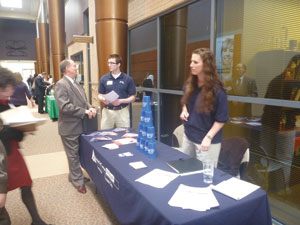
Katz says that he has so many personal memories of Ike that he looks back on with fondness.

“As a youngster, I remember being bounced on his knee, nuzzled with his unshaven face, while he sang ‘Let Me Call You Sweetheart’ or ‘Roll Out The Barrel,’” he recalled. “He’d finish and let me tumble to the floor.”

Katz said he still remembers Ike walking from 12th & Baltimore to the office at 12th and Walnut, passing out gum and candy from his oversize pockets to the local children. A highlight for Katz was the Saturday lunches he shared with his grandfather on the balcony office at 12th and Walnut.

When he was older, Katz began working at the store. As a teenager he worked at the store located at 39th and Main and on Saturdays Ike would send him to run errands.

“Once, the Philharmonic came to Ike for a large sum of money,” Katz said. “He replied he didn’t like music that much but would donate to them each year if Philharmonic would play a free concert for his ‘friends.’ He always called his customers his friends. The Philharmonic performance became an annual event, with name stars in attendance for years.”

Passing the savings along to the customers

Ike and Mike brought a new concept of retailing. While routinely done today, Ike told reporters he discovered competitive prices while still running his fruit stand. For example, if competitors sold apples for 5 cents, Katz would advertise three apples for 10 cents. His competitive pricing quickly gave them an edge, attracting customers who were looking for extra value. The brothers would remember the lesson of charging low prices for high volume when they opened their two drug stores in downtown Kansas City.

Another innovative idea, “Katz pays the tax,” would prove to be even more successful. This slogan would come to represent the brothers’ most successful campaign.

It began during World War I when the U.S. government had instituted a 1-cent wartime tax on cigarettes. Katz Drug Stores were already selling cigarettes for 10 cents a pack, so a 1-cent increase was significant. While taking a walk through downtown Kansas City, Michael Katz noticed that some other stores had taken this opportunity to raise their prices even more for a little extra profit.

The Katz brothers decided to do something different. They didn’t raise their price at all. In their windows they hung a sign that read “Cigarettes at the same old price — Katz pays the tax.”

“That put Katz on the map, the national map,” Steve Katz said. “It was so successful that competitors began buying Katz cigarettes in bulk and then selling them to their customers. When the bothers learned of this, they branded each pack with the Katz logo. So no matter where the cigarettes were bought, people knew they were from Katz.”

Katz said that the brothers understood how important those savings could be for people.

“Ike would tell me he prefers fast nickels to slow dimes,” he said. “What I think may be lost today is the extra value that Katz offered. Not just with the savings, but in the care with which they treated people.”

It is indeed a Happy New Year for more than 60 people in the Jewish community who have been able to find jobs thanks, in part, to the efforts of Jewish Employment Services.

Celebrating its first anniversary, JES is a joint program of Jewish Family Services and Jewish Vocational Service. It was the brainchild of a handful of local Jewish business leaders that now comprise the JES Advisory Council. Its members include Larry Arlan, Pete Cabell, Bernie Fried, Michael Halpern, Alan Jacobson, Lou Kram and David Kroll. This group, along with Bill Lowenstein, saw a need to expand the services that were being provided to members of the Jewish community who had lost their jobs. The program has been funded by The Jewish Federation of Greater Kansas City, the Jewish Heritage Foundation of Greater Kansas City and the Lowenstein Brothers Foundation.

In its first year, JES has worked with as many as 229 job seekers and currently has about 150 in the program. 
Job seekers work closely with Gayl Reinsch, JES director, who assists them directly or refers them to the appropriate JES resource staff for help. Counselors Cheryl Intrater and Joyce Hill help with career assessment and coaching, resume assistance and interview skills.

“JES was created to respond to a real need in our community — helping connect Jewish job seekers with actual employment,” said Don Goldman, JFS executive director. “This program is accomplishing that and more.”

“Developing JES has enabled Jewish Family Services and Jewish Vocational Service to leverage the strengths of both organizations in helping members of our community find jobs,” said Joy Foster, JVS executive director. While the career coaching service JVS had provided since 2001 helped many find employment, the new economic environment required stronger measures.

“In one way or another, JES helped more than 60 people find employment over the last year,” said Reinsch. “In addition to wonderful career coaches, JES offers a bi-monthly job club, intensive job search skills workshops and a job development service that connects job seekers directly to open positions.”

Among those JES and its staff has assisted in their job search is Debbie Snitz.

“I enjoyed the discussions which Joyce conducted at Job Club,” Snitz said. “Being part of a club also gave me support, assurance and the tips needed to keep me on my toes in my career search.”

The JES Job Club meets from 4 to 5 p.m. on the second and fourth Mondays of the month in the Multi Activity Center at the Jewish Community Campus. The Job Club explores topics of interest in the employment arena with presentations by employers and experts. It also provides a great networking opportunity.

JES also uses volunteers to mentor and network with participants. If you are interested in helping in this area please contact Reinsch.
Employers have also been pleased with the work of JES. Jim McNeile, a partner in the law firm of Cohen McNeile & Pappas, P.C., met with Reinsch to fill a key position at the firm.

“We had been looking for more mature workers to help round out our team of paralegals,” McNeile said. “It just so happened that she had a candidate in mind that turned out to be a great fit for us.”

The firm hired Alexis Rothenberg.

“The job is working out very well.... I really enjoy the people and the work,” Rothenberg said. She has since been promoted to a law clerk’s position.

Funders of JES have been pleased with the program’s efforts.

“The Jewish Federation has been behind the development and implementation of the Jewish Employment Services from the beginning, which is why we, along with the Lowenstein Brothers Foundation, have funded it since its inception,” said Todd Stettner, Federation executive vice president and CEO. “Thanks to the terrific teamwork of JFS and JVS, Jewish Employment Services got off the ground quickly to meet a groundswell of demand for the services it provides,”.

“We are delighted to be a part of this project,” said Ellen Kort, Jewish Heritage Foundation’s executive director. “The synergy between JVS, JFS and the volunteers who created the concept has been extraordinary, and it is a joy to see the fruits of this labor.”

The JES team continues to work hard to help job seekers; those wishing to connect directly with JES should email Reinsch at , attaching a resume, if they have one. For more information about the program in general, visit www.jvskc.org or www.jfskc.org/JES.