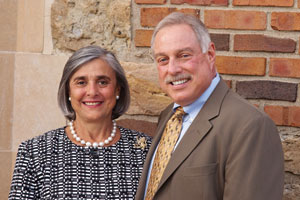


Google Todd Stettner and you won’t find much. Yes, you can find statements attributed to him as executive vice president and CEO of the Jewish Federation of Greater Kansas City. But you won’t find stories written about him. That’s because he does his job well, leading the way for others to take credit for his successes.

His leadership style is one reason Stettner is being honored at Congregation Beth Israel Abraham & Voliner’s 14th annual Purim Gala, Sunday, Feb. 12, at Oakwood Country Club. He will receive the Mordechai Award, which is presented to someone who epitomizes the devotion to the Jewish community or Israel as shown by Mordechai in the Scroll of Esther, which says that Mordechai “...sought the good of his people and was concerned for the welfare of all …”

Jewish Federation President Miriam Scharf can’t think of a more deserving recipient than Stettner.

“As the CEO of the Kansas City Jewish Federation, Todd has been instrumental in creating a collaborative, open and engaging environment in the Jewish community. He has earned the respect and admiration of lay leaders, staff and his colleagues around the country,” Scharf said.

Stettner’s friendly leadership style is easily noticed when you first enter his office. One can’t miss the candy jars on his conference table, put there as an open invitation for people to stop in for an informal chat.

“I started doing that when I became the COO of the East Bay Federation in Oakland. The lay people loved it. I thought it would be a good way to get my staff to come in my office because they don’t want to come in and see the boss. That way I could informally find out what’s going on,” he explained.

It worked and he continued the practice when he came here as Kansas City’s top Jewish Federation’s official in 1999.

“People come in with their children and their grandchildren,” he said.

The road to KC

A native of The Bronx, N.Y., Stettner, who now has more than 33 years of experience in the social service field under his belt, didn’t always know he was going to spend a lifetime in the field of Jewish communal service. But he’s always liked being involved in organizations in high school and college. He served as president of his high school chapter of the National Conference of Christians and Jews and among other things was on the Intra Fraternity Council while he was an undergrad at Marrietta College in Marietta, Ohio. College was where he first really discovered his Jewishness.

“In New York it’s easy to be a Jew. Even though Jews are still a minority … Jewish culture is so much a part of the culture of New York. Because of that I sought out my Judaism more and started taking religion courses,” he said.

His first taste of Jewish communal work came just after graduation in 1971. He worked as a temporary fundraising assistant at Federation of Jewish Philanthropies in New York.

They liked him and wanted to keep him full-time, but instead he chose to go to grad school at the Wurzweiler School of Social Work of Yeshiva University. He graduated with a master’s degree in social work, with an emphasis in the field of community organization, in 1974.

His first full-time job was at the Milwaukee Jewish Federation. During the two years he was there, he met his future wife, Shirley. They now have two grown sons. Jordan and his wife, Ali, live in Chicago. Youngest son Max lives and works in New York City.

Todd Stettner has worked either with Jewish federations or community centers his entire professional career. Besides Milwaukee and New York, he’s worked in the San Francisco Bay area, Tucson, Ariz., and Seattle.

While Stettner was in California, national federation officials decided it would be a good idea to train high-level executives to become CEOs. A management program was created and Stettner was invited to participate in the first two-year-program. Part of the program included an internship, which he served in the East Bay Federation in California. As had become a pattern, the leadership liked Stettner and asked him to stay on. This time he would become the first person in that size federation to hold the title of chief operating officer.

“They offered me the job ahead of schedule. I just really hit it off with them and I did that for five years,” Stettner said.

Ready to be CEO

After five years as COO of East Bay, Stettner was ready for his own federation. He interviewed here for the position being vacated by A. Robert Gast. Kansas City appeared to be a good fit for Stettner, and it’s been his home for almost 13 years now. That’s longer than any other place he’s ever been.

“They say some things are beshert (meant to be). ... The strategic plan had just been approved in 1998 and they were looking for someone to implement it. When I read it, a lot of the ideas were very similar to what we’d been doing in California,” he recalled. “I was interviewing at another community and they said we don’t want you to go to that other community. You’re our guy.”

Stettner likes being in Kansas City and is proud he was able to bring the strategic plan “from paper to reality.”

“You can get your arms around a community like this. You can feel that you are making an impact. In the big city … it was hard to make a difference. It was hard to really make change. It is much easier to make change in a community like Kansas City. The impact is much stronger. I like being at a place in my job where I could make an impact.

Stettner doesn’t use the term collaboration when he discusses the Jewish Federation’s accomplishments over the last several years. But he’s been a part of a lot of collaborative efforts that have made a big impact. One of those efforts is The Funders Council, which was created by Stan Bushman and the late John Uhlmann.

“It started as a very loose get together with the Jewish Community Foundation, the Jewish Heritage Foundation and Federation. I said to Merilyn (Berenbom, former Federation president) this is really an incredible thing that we should be doing on a more regular basis. So we started to meet quarterly and then as we got to know each other better, trust began to build and it has grown so now we meet almost monthly,” he said.

“It’s really unique in the entire federation system. There is really no other community that I am aware where the foundations and the federations work together like we do,” he said.

His collaborative manner also helped keep the Jewish Community Campus “whole” when the Lewis and Shirley White Theatre was being built.

“There was a lot of tumult that came with the building of the theater,” he said, explaining that some of the agencies strongly considered moving out of the Campus at that time. “This was when Pella Fingersh was president and we really worked very hard to keep the Campus whole and I think that’s been very important for the community.”

It would be remiss not to mention the Jewish Federation’s continued fundraising success under Stettner’s leadership. While it’s been hard for Jewish Federations nationally to raise more dollars due to the downward economy, Stettner said Kansas City has been able to grow the Annual Campaign as well as supplemental giving.

“Everything has shrunk a little during the recession. But over the years we’ve been involved in a number of emergency campaigns — the intifadas, the Israel emergency campaigns, the Lebanese war — all of which Kansas City has done a fabulous job raising funds,” he said.

Stettner is honored to be BIAV’s choice for this year’s Mordechai Award.

“Because we have BIAV, there are many people who come to this community who wouldn’t come otherwise. I think that adds to the richness of the fabric of the community,” Stettner said.

“We don’t have a very large Orthodox community in Kansas City. In some places the Orthodox community goes their own way and doesn’t really integrate with the rest of the community. That’s not the case here and to a large extent that’s been because of its leadership — both rabbinic and lay,” he continued. “I have been a participant in the Purim Gala for a while and sometimes they’ve come to me for suggestions as to who the honoree should be. So I was very flattered when they came to be and asked me to be the honoree. I think they are an important part of the community and I think they give a lot back to the community, far more than their numbers dictate.”
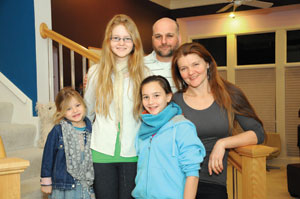
A pioneer is a person who is among the first to settle a region. The members of Zemach family are pioneers who live in Moshav Kadesh Barnea, a small village in Israel’s Negev Desert. They moved there 10 years ago from Rehovot.
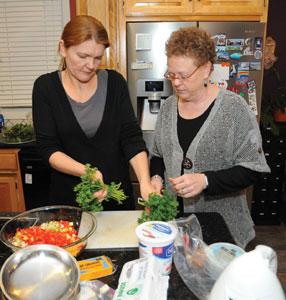
The Zemachs — Chami and Oksana Zemach and their daughters Gali, 13, Tamar, 11, and Michal, 4 — are traveling around the world for a year to share what Chami called “the normal story about what people do and what people are like in Israel.”

They were in Kansas City for a few days the week of Jan. 16.

The Zemachs left Israel Aug. 1, 2011, and will return exactly one year later. Their oldest daughter, 22-year-old Yulia, stayed behind to continue her education. The younger children are being home schooled during this journey they call The Israeli Family Project. When it’s all said and done they will have visited 27 countries and four continents.

Kansas City was not originally on their agenda. When they arrived in the United States in November, coincidentally Israeli emissaries to the United States were meeting in New York. The Zemachs visited with the emissaries, who were able to connect them with Jewish community across the country. Lilach Nissim, the Jewish Federation of Greater Kansas City emissary, arranged for the Zemachs to stay at the home of Sharon and Peter Loftspring while they were here.

Sharon Loftspring said the Zemachs were delightful to have as houseguests.

“It was a really, really fun experience for us. I think the best part was talking to them casually at night after they come home.

They are interesting, interesting people,” Loftspring said.

Chami Zemach said they decided to take this trip because they’ve had a chance to visit with a variety of people who visit their desert village. This convinced them people wanted and needed to know more about Israel, not just the Israel that is shown on television.

“We know that people around the world really want to know about Israel. We want people to know that Israel is much more than the conflict,” he said.

They planned the trip for more than two years and believe they will tell their story to thousands of people before the journey is complete. While in Kansas City, they were featured on NBC Action News and KMBC-TV 9. Their activities included visits at the Hyman Brand Hebrew Academy, Congregation Beth Shalom, the Jewish Community Center Heritage Center with Rabbi Scott White and an informal dinner at the home of Sheila and Ken Sonnenschein.

Living in the desert

When the Zemachs moved to Kadesh Barnea, only about 30 families lived there. It has now grown to 55 families. Chami described the village as an agricultural area where people grow lots of fruits and vegetables.

“People are really flourishing there in the desert,” he said. “It’s very interesting to see how new areas are being developed and being created there.”

In Israel, the Zemachs own a factory called Desert Magic. It produces jams, sauces and chutneys made from fruits and vegetables grown nearby.

“We started this business in our home to see if it was something that could work. After a few months it started to grow and they built the factory,” said Chami, an Israeli native. Their products are sold in Israel and the United States.

The Zemachs are very involved in their community because they believe it is important to take an active role in building the Negev area.

“We really believe that the Negev and the desert is a big challenge for Israel. This is where the development of Israel should be. Israel should grow to this area because it is half of Israel and hardly populated at all. Just about 20 percent of Israelis live in the Negev,” Chami said.

Connecting with people

On the first leg of their trip in Europe, Oksana, who was born in Belarus and moved to Israel more than 20 years ago, said they met mostly non-Jewish people.

“Here we are in many Jewish communities, but we have also had programs in public schools and churches,” she said.

Her favorite way to talk to people is while cooking Israeli food together. She said while they cook, they talk about life.

“Food brings people together and Israeli food is very special. It comes from many different countries and is very interesting,” she said.

The food they plan and prepare for these dinners, Oksana said, is almost always foods Israelis eat every day, “nothing fancy or expensive.”

“Usually we have about two hours to do this and it’s kind of magic. We make a lot of food, about eight or nine dishes for 20 or 30 people,” she said.

Chami said this project has taken his family to places that tourists don’t usually find. So far he’s greatly enjoyed meeting the people, and has some interesting stories to tell.

“Israelis don’t know that that there are many people around the world that are very supportive to Israel,” he said.

One of his favorite stories is about a non-Jewish woman he met in The Netherlands. She discovered about 15 years ago that there were 182 people from her city that were deported to Auschwitz. Chami said the woman decided there should be a memorial in the city and took it upon herself to build it.

“After they built the memorial, they started a ceremony once a year on the date the Jews were deported,” Chami said.

The Zemachs just happened to be there on that date during this journey and were invited to participate.

“The ceremony is actually a walk through the town on the route where they made the Jews go to the railway station. So about 200 people walked in the evening,” he said. “The girls had the opportunity to put the flowers on the memorial. We were the only Jews there,” he said.

Chami said the journey to this point has met their expectations.

“Of course we have had many surprises and have learned a lot everywhere we’ve been,” he said. “We’re very happy that we have had the opportunity to meet with so many people and to tell them about Israel and fill them in on daily life and not about the conflict.”

You can keep up with the Zemachs journey on Facebook at the The Israeli Family Project.

“We write every day about what we are doing and share our stories,” Chami said.

They also welcome emails at . Check out the family’s video on You Tube at www.il-family.com.

For Emily Adler, the essential part of her involvement with United Synagogue Youth is giving others a place to belong.
“I try my best to reach out at conventions and talk to as many kids as I can,” she said. “It’s one thing to get people to come to conventions but (I want) to get them to feel like someone will notice if they’re not there… I try to reach out and try to make people feel comfortable.”

Known as Emi to her friends and family, the 18-year-old Adler is the regional membership and Kadima vice president for USY and held a similar position in the local USY group last year.

This month’s Salute to  Youth honoree, who is the daughter of Meg and Randy Adler, likes that she can make a difference by being in these positions.

“This year we’ve really tried to approach USY as a community rather than a youth group. It’s a place where everyone can feel at home and feel accepted,” said Emi, who is a member of both Congregation Beth Shalom and The Temple, Congregation B’nai Jehudah.

Many of the teens involved with USY have attended the Herzl or Ramah summer camps. Having attended camp at Ben Frankel, Emi knows what it’s like to join USY and not know very many people. She wants everyone to experience the inclusionary spirit she did.

“Freshman year at the spring convention, I went not knowing a single person my age. There were 14 other freshman girls in my cabin — by the end, we were like a family,” she said.

Stefanie Williams, director of informal education and youth activities at Beth Shalom, says she’s impressed by Emi’s commitment to USY and her enthusiams for the youth organization is “unrivaled.”

“She was very enthusiastic about it and came to every weekly program and really wanted to create a place for other people like it had been for her,” Williams said.

According to Williams, Emi comes in extra early to prepare for programs and stays late to assist with the clean-up.

“There’s a nice camaraderie ... Her efforts are definitely appreciated by all, and she’s inspired other people to come early and set up and be a part of it from start to finish,” Williams said. “It’s neat to see somebody find their place and just excel.”

Emi also participated in an organized trip to Poland and Israel in 2010.

“It was such an eye-opening experience. We had a lot of regional board members on our trip. They inspired me to reach out and be myself and make friends without any regrets,” she said.

The content of the trip also provided a learning experience for her.

“Going to Poland, you can read and go to museums and learn as much as you can about the Holocaust, but the thing that really gets you is being able to reach out and touch things and realize people were there … It made me appreciate Israel so much when I got there,” she said.

Outside of youth group, Emi is a senior at Blue Valley North High School. An avid debater, she is also involved with Future Business Leaders of America. She has competed at various levels with FBLA, placing first in the district and third in the state last year.

In the classroom, she serves as a teacher’s aide in the advanced computer applications class, helping students learn the Microsoft Access database program.

“It’s really fun. The business department at my school is great, and I’ve gotten a lot out of working with a variety of teachers there,” Emi said.

She plans to attend the University of Missouri and major in business with a minor in Spanish. While in college, she wants to stay connected to the Jewish community through Hillel and by attending synagogue in Columbia, Mo.

Emi isn’t sure of her exact career goals but says she will probably work at her family’s business, Kansas City Audio-Visual, at some point.

“She’s just an amazing young lady who loves to make people happy and loves to be helpful,” Williams said. “She’s the person you know (who), even if you haven’t talked with her in a really long time, (will) be there for you. She’s going to be successful in the future because of it.”


WOUNDED MARINE UPDATE — A few weeks ago we published a story about Marine Corporal Yevgeniy Shenker’s injuries while serving our country in Afghanistan and the financial struggles his mother, Larisa Shenker, was facing as she helped him recover. NBC Action News picked up the story as well and following Beth Vaughan’s report, the Coalition to Salute America’s Heroes came forward with a $2,500 gift to the family. Mike Meyer, vice president for programming of the Coalition to Salute America’s Heroes, told NBC Action News the coalition makes these types of donations because, “It’s very important in their recovery that they have a loved one around to support them, because it can get pretty lonely in a hospital a thousand miles away.” So far there has been no word whether the Jewish community has set up an organized fund to help the Shenkers.

PRESIDENT RABBI — Rabbi Debbie Stiel of Temple Beth Sholom in Topeka has spent the past two years serving as president of the Midwest Association of Reform Rabbis. MWARR’s membership is a little more than 100, and its president’s main responsibility is planning the Annual Kallah. The Annual Kallah is early next week and Rabbi Stiel will conclude her term at that time. MWARR’s president also speaks for the rabbis in the region with the Central Conference of American Rabbis when the need arises. The meeting is in Phoenix, which is not a part of the region but, as Rabbi Stiel says, is a great place to go this time of year for Midwestern rabbis. “This conference is a wonderful way for us as rabbis to let our hair down and enjoy some time together and study. It’s been great for me to go to for years and this was my opportunity to give back by putting it together.


THE TEBOW PHENOMENON — Those of you who follow professional football, or even watch the  late-night comics, know all about Denver Broncos quarterback Tim Tebow. He is deeply religious and led the Broncos to a seven-game winning streak and a trip to the playoffs. He has been seen praying on the field, on the sidelines and lifting his fingers skyward to indicate praise and thanks to God. Tebow’s devotion to God (and Jesus) has been a topic of conversation this winter and Rabbi Arthur Nemitoff chose to share his thoughts about it in last week’s Bisseleh Bytes email blast sent to members of The Temple, Congregation B’nai Jehudah. He is allowing us to share his thoughts with our readers.

“Two weeks ago, a boy in our religious school approached me and asked if I thought Tim Tebow’s prayers to God helped him and the Broncos win,” Rabbi Nemitoff wrote.

“It was an interesting question, and one that —with different variations —is asked all the time: ‘If I pray hard and sincerely, will Aunt Martha get better?’ ‘Let’s pray that Mommy gets the promotion.’ ‘I pray that God will bless and protect Israel.’ “

Rabbi Nemitoff’s response to the religious school student: “Prayer is ALWAYS good. It keeps US focused on that which is bigger than us. I don’t know if God listens (and responds) to Tim Tebow’s prayers ... but I do know that Tim Tebow listens to his own words ... and is inspired to be the best that he can be as a result.”

When most people hit “retirement age,” they retire. Eileen Garry didn’t take that route. Instead she began working for what was then known as the Museum Without Walls. Almost exactly 20 years later, Garry quietly retired as executive director of The Kansas City Jewish Museum of Contemporary Art late last year.
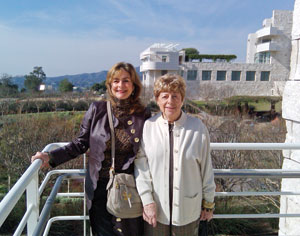
Now 86, Garry has assumed the title of executive director emeritus. She was supposed to retire early this year, but stepped back sooner than expected when she needed to undergo a hip replacement. She has recovered from the surgery, and plans to stay active with the gallery.

“If somebody needs me for something, I will be happy to pitch in,” she said during a recent interview at her home. “This is like my baby. I brought it from nowhere to this, and I think we’ve done a good job with it.”

She has absolutely loved working with the organization and said “it was probably the best period of time in my life, period.”

“I loved working with the people,” she continued. “I would have continued on, but I’m too old. I’m sorry it’s over, but they needed somebody young and adorable to come in and do what I did. I’ve done good stuff.”

Marcus Cain has taken over for Garry as KCJMCA’s executive director. He served as curator during Garry’s tenure, and is excited to continue working with her in a new capacity.

“Working with Eileen has been a true gift. Her contributions to the development and vitality of KCJMCA and her advocacy for artists and their work for the past 20 years in this organization is an incredible legacy that will live on for generations,” Cain said.
“She continues to be a source of inspiration and support for me personally as well as for everyone at KCJMCA. I am looking forward to this new chapter in our friendship. Knowing Eileen, she will continue to do amazing work in this community, and I look forward to following her progress.”

It’s undergone a variety of name changes over the year, but its mission has remained constant. KCJMCA’s purpose is to provide innovative art exhibitions and related programming that engage seniors and diverse audiences from all segments of our community to enrich lives and celebrate our common humanity through art. KCJMCA realizes this goal through its celebrated Epsten Gallery venue at Village Shalom and through its Museum Without Walls exhibition partnership program.

Garry is proud of KCJMCA’s successes and always shares the credit with those she’s worked with over the years.

“We’ve had some wonderful people who have been on staff … and they set the tone for our exhibits,” she said.

Regina Kort, who recently finished her term as president of KCJMCA’s board, said Garry has been the organization’s heart and soul from the very beginning.

“Because of her dedication, enthusiasm and hard work our organization has evolved into one of the premier spaces in the Kansas City area that features up-and-coming regional and national artists. We have been fortunate to have an executive director of Eileen’s caliber,” Kort said.

A devoted volunteer

Garry moved to Kansas City from New York in 1946 as the wife of Marshall Garry. She served as a “professional volunteer” for several years, while raising three children, Joshua, Paul and Stephanie (today all are married with children, and Garry now has three great grandchildren).

Over the years she accepted leadership roles in a variety of organizations including (but not limited to) her children’s school, Jewish Federation of Greater Kansas City, Jewish Family & Children Services, the Central Agency for Jewish Education and the National Conference for Community and Justice. As a founding member of Congregation Beth Torah and its third president, she still speaks passionately about the congregation and the Reform movement in general. Earlier, she was an active member of The Temple, Congregation B’nai Jehudah. During that time she served as an officer and board member, president of its sisterhood and spent six years representing the congregation on the national board of what is now known as Women of Reform Judaism.

Becoming an art aficionado

Garry’s involvement with the Museum Without Walls came at the invitation of Sybil Kahn in 1992. Kahn and her late husband, Norman, founded the organization.

“I was a volunteer and I loved it and then I went to work with her,” Garry reminisced. “We had a really good relationship.”

KCJMCA Past President Michael Klein noted that the board worked closely with Garry over the years to stabilize the organization through the creation of an endowment, two additional staff positions, the successful completion of a five-year strategic plan and a solid foundation of private, individual donor support. He said over the past 20 years Garry has remained a constant presence at KCJMCA, originally working under Kahn, the former executive director, five KCJMCA presidents, three assistant directors, two curators and one administrative assistant.

Garry pointed out that it was Klein who suggested the Museum Without Walls move into Village Shalom before it opened to run the Epsten Gallery. The gallery space was donated by Bobby and Jackee Epsten. KCJMCA has run the gallery since its inception, but is only housed at Village Shalom. KCJMCA is a completely separate non-profit organization.

“We are not part of Village Shalom. We have to raise our own money to bring our exhibits in and those exhibits can cost anywhere between $6,000 and $10,000 each,” she said.

While she has always liked art, she didn’t consider herself an expert when she started this journey. Now she does.

“I adored art in my own way. I was not an aficionado. I was not a real art person. But Sybil taught me a lot about how to appreciate art and I’ve loved every minute of it,” she explained.

Garry can point to many highlights during her time as KCJMCA executive director. She is most proud of the reputation it has earned.

“The Epsten Gallery and the Kansas City Jewish Museum has become a real entity in Kansas City. There is no definitive Jewish art gallery in Kansas City. This is the closest that it comes,” Garry said.

She has enjoyed meeting many wonderful artists including Victor Babu, who taught ceramics at the Kansas City Art Institute for more than three decades, and ceramicist Irma Starr.

Then there was the exhibit of Herb Adler’s cut glass some years ago.

“It’s the most magnificent collection of cut glass, I think, in this part of the country. As a result it was shown at the Nelson. That is one of our highlights,” she said.

“I’ve adored meeting the artists,” she continued. “Some artists who came out of New York were discovered here and were picked up by the Nerman. Others were picked up by the Nelson.”

Then there are the successful fundraising campaigns she organized over the years, including UrbanSuburban, KCJMCA’s annual fundraiser that most recently raised almost $200,000 for the organization.

While she is no longer working every day, she hopes KCJMCA continues to be a vital part of the community.

“There’s nothing like us, that I know of, in Kansas City,” she said. “We have definitely made a name for ourselves.”

Over the past couple of years, Jewish Federation officials discovered a troubling statistic: 50 percent of Jewish Federation donors don’t know what the organization does. If they did understand its mission, they often could not explain it succinctly. So a new marketing strategy that will tell the Jewish Federation’s story better will debut on Super Sunday, Jan. 29.
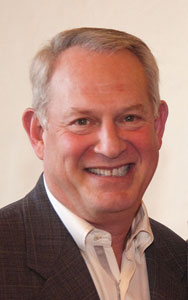
Jewish Federation materials will now include a new tag line, “everywhere. everyday.” Todd Stettner, Jewish Federation’s executive vice president and CEO, explains that the tag line “showcases the fact that we are global in scope.”

“We help people in need around the world, 365 days a year,” he said.

Its new mission statement is short and to the point: “To sustain and enhance Jewish life at home and around the world.”
Stettner added that Jewish Federation’s new marketing materials have been reorganized to better showcase what the agency does: raising funds to support a wide variety of programs that fit into five areas of service:

• Safety Net Services: Including programs like Jewish Employment Services, counseling subsidies for individuals and families under stress and the Gesher and Chesed Emergency Assistance Funds
Youth & Family Services: Including programs like Sasone, scholarships for the JCC’s Child Development Center (CDC) and the PJ Library

• Youth & Family Services: Including programs like Sasone, scholarships for the JCC’s Child Development Center (CDC) and the PJ Library

• Senior Adult Services: Including programs like JET Express, the Heritage Center and the assistance fund at Village Shalom

• Jewish Identity & Education: Including programs like Taglit-Birthright Israel, scholarships for Jewish campers and the Student Leadership Mission to Israel at KU Hillel

• Israel & Overseas: Including programs like children’s medical assistance in Romania, emergency foster homes in the city of Ramla, Israel, and welfare support for elderly Jews in the former Soviet Union

Why now?

When Immediate Past President Bill Carr first assumed the presidency in the fall of 2009, one of his key objectives was to more effectively communicate the importance of the Jewish Federation. He chose Ira Stolzer to lead the way because he had a strong friendship with him and was confident it was good job for him.

“I knew he would be the perfect fit for the challenge and the opportunity. I am thrilled with the results of the work of Ira, Jane Martin (Jewish Federation’s director of strategic marketing) and members of the marketing committee who have created an exciting and vibrant brand strategy,” Carr said.

Stolzer admitted that he was a prime example of the image problem Jewish Federation faced.

“When I came on the board as marketing chair, I had no idea how many Jewish lives were made better due to the amazing financial support from the Jewish Federation’s annual fundraising efforts. I soon realized it was going to be a unique opportunity to articulate what the Jewish Federation does in a simple, easy and engaging message that would resonate with our community,” Stolzer said.

The process

Stolzer explained that he and Martin conducted a dozen focus groups — along with many one-on-one interviews — with donors and non-donors, through which they gained important insights on Jewish Federation. Stolzer also personally interviewed the agency’s entire senior staff as well.

Martin said they interviewed people who fell in a variety of age categories as well as across the board in communal involvement.

The result was the new mission statement and marketing campaign.

“I am really excited to see the creative message come to life. We believe this will help our community better understand the good work the Jewish Federation does and how it’s made possible through their financial support — everywhere, everyday,” Stolzer said.

Current Jewish Federation President Miriam Scharf is impressed with the new brand strategy being rolled out.

“Ira and the marketing department managed to take the more than 75 programs and services we support and package them into an easy-to-understand message. As we introduce our new message at Super Sunday, and begin reaching out to donors and volunteers in 2012, I look forward to creating a better understanding of the important work we do. When you look at what we accomplish each year, it’s easy to see how we help people ‘everywhere, everyday.’ ”

Martin said they’ve been discussing the new campaign with members of the Jewish Federation board as well as affiliated agencies for the past several months.

“They feel it’s easy to understand and memorable. Every board member now knows it and can repeat it,” she said. “It’s nice that we are now working together and speaking the same language.”

The five areas of service, Martin explained, make it easier for people to understand exactly what Jewish Federation does. For example, she said they learned through the focus groups that many people are under the misconception that the majority of funds Jewish Federation raises go to Israel.

“In fact, 66 percent of the funds we raise stay right here in Kansas City,” she said. “The remaining funds do go primarily to Israel and overseas, but some fund national programs and organizations.”
Martin said that a new website will be rolled out the week of Jan. 23, incorporating all the new marketing materials.


One way to describe the Jewish Federation of Greater Kansas City’s Shorashim I mission to Israel last October is by what it was not.
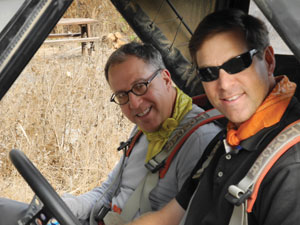
It was not like any mission previously sponsored by the Jewish Federation. It did not include couples or families. Its brief, seven-day itinerary was not pre-determined before participants got involved. It did not rely on standard modes of transportation. And, while history and religion were ever present in the background of the group’s activities, they were not the primary focus.

The focus instead was to provide a group of 15 men — mostly successful 40- to-60 year old business professionals with varying degrees of connection to the Jewish community, some of whom had never been to Israel — a quick immersion into the Jewish state with the ultimate goal to motivate increased engagement in the Jewish community.

A measure of magic

The idea for a men’s mission was originally proposed in 2008 by then Jewish Federation President Ward Katz, who had heard about similar missions sponsored by Jewish Federations in other cities. About a year ago, after recruiting John Isenberg and Steve Karbank to serve with him as co-chairs, Katz’s vision for Shorashim I began to come together.

Mission chairs and participants Peter Beren, Max Goldman, Edward Goldstein, Glenn Goldstein, Arthur Liebenthal, Aaron March, Michael Rainen, Peter Shapiro, John Starr, Mike Fishman and Todd Stettner, executive vice president and CEO of Jewish Federation, met three times before departure on Oct. 23 to learn and get to know one another better. The itinerary, which incorporated the best ideas from other cities as well as from participants, was arranged and tweaked up to the last minute by the Jewish Federation’s special campaign projects director and veteran mission planner, Debbie Granoff, and Gail Weinberg, financial resource development director. They assured everyone’s needs were met before, during and after the mission.

“I had been to Israel many times before, and all trips to Israel are special in their own way,” said Karbank. “But this trip had that measure of magic. “It wasn’t the itinerary, although it was great. It wasn’t the food or the wine or the places we stayed, which were also great. There was something that happened that was really dynamic and wonderful and heartwarming and exciting and thrilling, and I think everyone on the trip felt it.”

Shorashim I’s non-stop schedule offered what proved to be just the right mix of business, political, military, cultural and recreational activities, with the spotlight on people on the cutting edge of Israeli society.

Air, sea and land

The day after arrival, the group rode in jeeps and ATVs to Tel Gezer, following in the footsteps of the fighters in their breakthrough to Jerusalem in 1948. Back in Jerusalem that evening, Major General Mickey Levy took participants on a tour of the ramparts of the Old City and for a visit to Israel Police Force headquarters.

“We went underground into the station,” said Isenberg, “to an area where they had walls of big screen televisions. We saw video of what happened at the Dome of the Rock when the Intifada started 10 years ago. We could see that there isn’t anything that goes on in the area that they don’t know about.”

The second and third days of the trip featured Israel by air, sea and land. “We got helicopter transportation for two days,” said Katz. “That may sound like a total luxury, but it really was necessary to do so much in such a short period of time.”

Traveling from Jerusalem to the Golan Heights in helicopters piloted by ex-military personnel allowed for a birds-eye view of the country’s small size and close proximity to the borders of Jordan, Lebanon and Syria. Accompanied by an expert in Israeli security, the group enjoyed super fast tornado boat rides along the Mediterranean coast toward Rosh Hanikra and the Lebanese border, followed by another flight to Atlit to participate in a Navy Seal graduation.

“Even though we needed translators to understand what these young men were about to do with their lives, this was a deeply moving experience, especially with the release of Gilad Shalit the previous week,” Stettner said.

Nation of Dedication

The next morning it was off again in helicopters to an Israeli Defense Forces Training Center in the Negev, where participants were taken on a guided tour of the IDF Urban Combat Center and learned about some of the most complex military challenges facing the IDF today.

“They constructed a whole city on this base that resembled a typical Arab city,” explained Katz. “They even had explosions and the call to prayer on loud speakers, all designed to replicate the kinds of physical and psychological stress that soldiers face in urban warfare.”

One of the places that touched both Karbank and Isenberg deeply was an Ayalim Youth Village. The Ayalim initiative, which receives Jewish Federation support, provides students the opportunity to settle in Israel’s peripheral areas and serve as agents of social change by offering housing and academic scholarships in return for community service.

“The nearly 500 students who currently live in 11 student villages throughout the Negev and Galilee volunteer with more than 20,000 disadvantaged youth,” said Karbank. “It’s a kind of 21st century Zionism and certainly a place where venture philanthropy could help businesses get started.”

Throughout the week, participants were impressed by the talent and dedication of the people they met. The Jewish Federation had included the book “Startup Nation” by Dan Senor and Saul Singer in reading material provided before the trip, so a surprise encounter and conversation with one of the book’s heroes, Better Place founder Shai Agassi, in the company showroom felt like interacting with a celebrity. For added excitement, the men got to test drive electric vehicles that Better World leads the world in producing.

Inspired to connect

Others were inspired by Raya Strauss Ben-Dror. As co-owner and board member of the Strauss-Elite group, a multi-national organization with almost $1 billion in sales, Ben-Dror represents one of the most influential families of the Israeli business sector. Ben-Dror explained why she decided to step down from business to devote her time to philanthropy.

Equally memorable were the three wineries the group visited, two in the Golan and one in the Judean Hills. Of the several hundred wineries in Israel, a high percentage are boutique operations making 100,000 bottles or less a year, according to Isenberg, who started Wines Across Israel, which arranges wine tours in Israel.

For Stettner, one of the most rewarding moments occurred on the first full day of the trip. “We met David and Miri Leichman at Tel Gezer for a briefing about the area and shechechayanu,” he said. “Then we rode jeeps into the town of Ramla to meet with young adults from the Keshatot program, which the Jewish Federation helps fund. Someone noticed a plaque recognizing our support on the wall and said, ‘Boy, I didn’t know that we do so much!’”

Isenberg, who’s been to Israel at least 10 times, couldn’t get over that wherever the group went, when they mentioned they were from Kansas City, there was instant recognition and appreciation.

“I don’t know yet if our goal of expanding participation in the Jewish community worked,” he said. “But the meetings we’ve had with participants since getting back have been positive. If we can take those feelings and experiences and turn them into energy to build a stronger Jewish community, it will have been a successful mission.”

For more information about Shorashim or other Israel and overseas missions offered by the Jewish Federation, contact Debbie Granoff at 913-327-8106 or .

“Don’t Hug the Tour Guide!” by Natalie Jane Toubes; Xlibris Corp., 2011

Ever wonder what it would be like to visit Europe, China, England, Quebec, Israel, South America, South Africa? Natalie Jane Toubes can tell you because she’s been to all these places and more. And you can find out what she has to say in her book “Don’t Hug the Tour Guide!”
Toubes’ book paints vivid scenes of fascinating countries all over the globe and many cities right here in the United States for both seasoned and armchair travelers.

Toubes, who taught French and English in high schools and colleges in Chicago, Iowa City, Anchorage and Kansas City, is truly an experienced traveler. She and her now retired husband, Dr. Daniel Toubes, have traveled throughout their entire married lives. Her book covers the 1960s through 2009 — and she plans a sequel since she has even more adventures under her belt.

Toubes said she wrote the book because she had so many wonderful experiences that she wanted to share them with others.

“I felt that by writing this book, it would be interesting to travelers and also people who are thinking about traveling — just about anybody who likes to travel or thinks about it,” she said. “It might encourage them to do it. It’s a wonderful, educational experience.”

In the introduction to her book, Toubes says for as long as she can remember she’s loved to travel. She remembers day trips she and her father and mother took when she was a child, which she believes instilled in her a sense of adventure.

“I always said I wanted to see the world before I left it,” she said. “I’ve been very fortunate.”

Toube’s book is filled with little tidbits and insights from all over the world, including India, which inspired the book’s title.

She writes: “As the trip drew to a close, I became very sad. The group of people we traveled with was very compatible, and we became good friends. To say good-bye was very hard. I hugged Sunil, our guide, and the look on his face was unforgettable, a look of total surprise. Women do not touch men in public in India!”

The secret to remembering her various travels is keeping a detailed journal. Toubes said she would sit down and write about her day every night before she went to bed.

“If you have a journal, you remember and the trip lasts a lifetime,” she said. “I could not have written this book if I had not kept a very detailed journal. I had to do a little research, of course, but wouldn’t have remembered half the things (without the journal).”

She also has a tour book of whatever city or country she visited so she could look up spellings or certain details about it.
In addition, her husband always takes lots of photos, so when she gets home, she immediately goes through them and identifies each one.

“What always bothered me is that people take one picture after another and don’t write down anything about them,” Toubes said. “You know they’re not going to remember.”

All the photos in the book were taken by Daniel Toubes.

When Toubes is not traveling, she enjoys knitting, cooking and reading. She and her husband have been members of Congregation Beth Shalom for 40 years.

The “partially” self-published book is available online from Amazon and Barnes & Noble, and is on the shelves at Rainy Day Books in Fairway. The cost is: hardback, $29.99; paperback, $19.99; $3.03 for Kindle; and $7.99 for Nook.

Toubes said the book has done fairly well and she wants to get started on the sequel.

“I’ve had such a great time … You feel like a citizen of the world. (Traveling) is a good thing; I just wish everybody could do it,” she said.

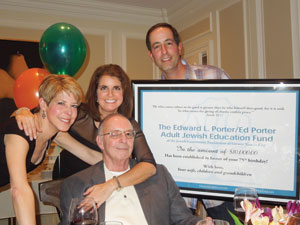
THE PERFECT BIRTHDAY GIFT — For his 75th birthday, Ed Porter received what he called “the perfect gift” from his wife, Karen and his children and their spouses: Deb and Mike Gill, Barbara and Ron Hill and Ed and Carol Porter. The family established the Ed Porter Adult Jewish Education Fund at the Jewish Community Center. “I was surprised and really touched,” said Ed. “To have my children carrying on the values I’ve tried to model is the best present a father could ask for.”



JEWS IN THE TV NEWS
BUSINESS — I don’t know why, but Jewish people always want to know if someone else, especially celebrities, are Jewish. We have discovered that NBC Action News (channel 41) may have the largest percentage of Jewish people on staff than any other newsroom in town. We’ve done stories about Najahe Sherman, Gary Lezak and Justin Unell. We know Jeff Penner and Sloane Heller are Jewish as well as photographer Eric Schutlz. Most recently The Chronicle’s former editor Rick Hellman joined the staff as news desk assignment editor. We recognized one of his assignments recently when Congregation Beth Torah and Pleasant Green Baptist Church, who have worked together for years feeding the needy during the winter holidays, were featured in a story. Rick tells us Rob Low at Fox 4 is also Jewish. We wish Rick lots of luck in his new job!

MED STUDENT SEEKS
PEOPLE TO INTERVIEW — Rachel Myers, a member of Congregation Beth Shalom and a first year medical student at the University of Kansas, is seeking a grant related to testing for Jewish genetic diseases. The proposed project is called “Jewish Genetic Screening: Evaluation of the barriers and strategies to increase education and awareness for young Jewish adults.” If she is awarded the grant, she hopes to determine several things including when genetic testing for Jewish genetic diseases is most appropriate, how much information individuals have and want prior to screening and how the level of awareness and screening rates can be improved amongst the varying Jewish denominations to increase prevention. To accomplish this task, she plans to interview patients participating in screening, physicians, genetic counselors, religious figures and other community members that have a connection to or interest in Jewish genetic diseases. As part of the grant-seeking process, she needs to show she has established contacts worth interviewing. If you have undergone screening, have a Jewish genetic disorder, are a carrier of a particular gene, or know of anyone else that may be affected, Myers would really appreciate conducting a brief interview. She is the daughter of Allison and Alan Myers.  Contact me at or 913-951-8425 if you would like to get in touch with Myers.

PETITION FIGHTS FOR GROSS — A petition to secure the release of Alan Gross from his Cuban prison cell has appeared on the White House website, http://wh.gov/DJO. Gross has been in a Cuban prison cell since Dec. 3, 2009. This appears on the website, “It is time that he is brought home. This administration has spoken out on Alan’s behalf, but it is time to do more. It is time to do whatever it takes to get Alan released and returned to his loved ones. His wife had to sell their family home. One of his daughters and his 89-year-old mother have cancer. His wife has had surgery. Alan has lost over 100 pounds during his imprisonment and has developed some serious health problems. He is 62 years old and his family fears that if Alan has to serve out his 15-year sentence imposed by the Cuban court system, they may never see him again. Alan’s family needs him home with them as soon as possible.” The petition needs 25,000 signatures by Jan. 24 so that it will be reviewed by White House officials and receive a response. Messages in support of Gross may also be sent through a link that will go directly to the appropriate staff at the White House so they can learn how many people are concerned about Gross’ plight. That link is: http://www.whitehouse.gov/webform/contact-american-jewish-issues-outreach-team.

The headlines are very similar, but appear 31 years apart. Gabriel Yehudah Goodbinder, born Jan. 2, became the first Jewish baby of 2012. He is the son of Jay and Darcy Goodbinder. Darcy was the first Jewish baby on Jan. 6, 1980, and was featured on the front page of the Jan. 11, 1980, edition of The Jewish Chronicle.

Gabriel was born at 9:45 p.m. at Shawnee Mission Hospital. He has light brown hair and hazel eyes.

“His eyes haven’t differentiated yet,” Jay said.

He weighed 6 pounds, 3.4 ounces and was 18 inches long. He is the first child for the Goodbinders, who were married Nov. 1, 2009.

Darcy said Gabriel’s actual due date was Jan. 16.

“We definitely discussed the possibility that he could be the first Jewish baby, but we had no idea. My mom was always two weeks early with her children, so we thought that I probably would go early,” said Darcy, who has three siblings. Her mother, Patti Kroll, is Congregation Beth Shalom’s Polsky Religious School director.

Like all new parents, the Goodbinders are not getting much sleep. But Darcy praised Jay for his helpfulness in allowing her to get in as many naps as possible. She recently retired as the chef in the Heritage Center’s kitchen. Jay is a chiropractor at the Neuropathy Center.

“We’ve been very excited this whole pregnancy. We think it’s a blessing and a miracle,” Darcy said.

“It’s changed your paradigm on life,” Jay added.

The “First Baby” contest is sponsored each year by The Chronicle: The Goodbinder family will be treated to prizes from the following advertisers:
Cigar & Tabac, Ltd.: “It’s a Boy” cigars
Cosentino’s Price Chopper: $25 gift certificate
Craig Sole Designs: Bouquet
Gates Bar-B-Q: $25 gift certificate
HyVee, 91st and Metcalf: $25 of diapers or baby food
Irish Crystal Co: Reed & Barton frame
Johnson County Community College Performing Arts Series: Two tickets to “Stuffed and Unstrung — Henson Alternative,” Feb. 18
Knocky’s Liquors: $25 gift certificate
Riley’s Phillips 66: $25 gift certificate
Sheridan’s Lattés & Frozen Custard: Gift certificate
Theatre for Young America: Baby’s first live theater performance
Urban Table: $25 gift card