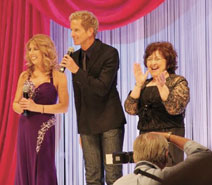
FASHION FUNDRAISERS — Last month Natalie M. held its annual benefit fashion shows at the Overland Park Convention Center. This year three shows raised approximately $70,000 for the 35 organizations that participated, including Kehilath Israel Synagogue of which Natalie M’s Natalie Nearenberg and Myra Nearenberg are members. The shows have been sponsored by Natalie M. for the past seven years. An estimated 5,100 people attended the show that featured 700 student volunteers, modeling prom, party and special occasion dresses. The Natalie M. store, which has been in business since 1973, specializes in women’s fashions including bridal, prom, special occasions, pageant wear, foundation, sportswear and accessories in all sizes.


LANDMARK BLOGS — The National Council of Jewish Women commemorated the 39th anniversary of the landmark Roe v. Wade decision last month by launching a blog contest to hear first-hand from its advocates why Roe is important to them. Ellen Portnoy, an active member of Greater Kansas City Section who currently serves as co-president along with Meg Adler and Berenice Haberman (and a contributing writer to The Chronicle), submitted an entry. She did not win, but her entry was chosen as a finalist and published in NCJW’s online journal. Here’s a portion of her entry:

“To my daughter,

My birthday is January 23, 1955. The day before I turned 18 the world changed. Roe v. Wade was adopted. For the first time, women in the United States could obtain legal abortions. I have tried to instill in you the importance of women’s rights. I told you what the world was like then and how it has changed.

… Living in Kansas, we have seen the ugly side of the abortion wars, where murder has been committed in the name of saving children. But where are the pro-life advocates when children are born and have no support? … [I believe] that every woman has the right to choose and to have a safe, clean medical procedure.”

TOMMY — If you plan to catch “Tommy” being produced by the Jewish Community Center at the White Theatre, you’ll catch a glimpse or two of Jewish actress Lyndsey Agron. She said she is thrilled to be returning to The White Theatre after appearing in “Well, Hello Gorgeous...The Music of Barbra Streisand.” Agron holds a Bachelor of Music degree with an emphasis in vocal performance from the UMKC Conservatory of Music. She has also appeared at The New Theatre, Starlight Theatre, Chestnut Fine Arts Theatre, Great Plains Theatre, Crown Uptown Dinner Theatre, Bearcreek Farms Resort, Nebraska Theatre Caravan, Wichita Children’s Theatre and Cornwell’s Dinner Theatre. Ticket information for “Tommy,” which will be produced Feb. 11, 12, 16, 18, 19, 23, 24 and 26, is available at www.jcckc.org or by calling the box office at 913-327-8054.

BARN PLAYERS — K.I. member and veteran actress Irene Blend will be appearing in the musical comedy “How to Succeed in Business Without Really Trying” at the Barn Players Theatre, 6219 Martway in Mission. The show will run from Feb. 24 to March 11. For more information and reservations, call 913-432-9100.

WASHINGTON — Israel, the United States and Iran have all gone deep into mixed-signals territory.
Conversations with Israeli officials, including Defense Minister Ehud Barak, left one prominent journalist convinced that Israel will strike Iran by year’s end. Yet two weeks ago, Barak had said that any possible Israeli attack on Iran is “far off.”

Leon Panetta, the U.S. defense secretary, said in December that any military strike would only set Iran’s nuclear program back a couple years — a remark that some Israelis read as conveying a sense of resignation to the idea that if Iran really wants a nuclear weapon, eventually it will be able to get one. But in a television interview broadcast Sunday, Jan. 29, he vowed that the U.S. would take “whatever steps are necessary” to stop Iran from acquiring a nuclear weapon.

Meanwhile, Iran is responding to international sanctions with a mix of threats to shut down the Strait of Hormuz and efforts to placate Western concerns about its nuclear program by allowing in inspectors and calling for new talks.

Two questions remain the focus of considerable speculation: Will Israel strike Iran? And will the sanctions cause Iran to bend?

The first question was the subject of a much-discussed Sunday New York Times Magazine cover story by Ronen Bergman, one of Israel’s best-connected security journalists. It featured rare and extensive on-the-record interviews with top Israeli officials, most prominently Barak.

Recent moves by the Iranians have underscored the significance of the second question.

Last week, Iranian President Mahmoud Ahmadinejad said that Iran was ready to sit down for talks to discuss its nuclear program. On Sunday, a team of inspectors from the International Atomic Energy Agency, the United Nations nuclear watchdog, arrived in Tehran.

The team, according to the Associated Press, includes two weapons experts and will visit an Iranian nuclear facility near the religious city of Qom. President Obama’s revelation in 2009 of the until-then secret underground facility helped the U.S. make the case to the world community for intensified sanctions, leading to the recent international squeeze on Iran’s economy and energy sector.

The inspectors’ visit is the first since an IAEA report in November concluded that Iran was engaged in activities — particularly in the area of enhanced uranium enrichment capabilities — that could have no other discernible purpose but weaponization.

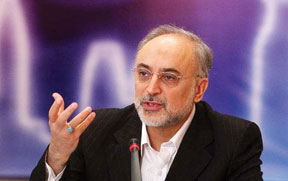
Iran continues to insist that its nuclear program has strictly civilian purposes. Ali Akbar Salehi, Iran’s foreign minister, was quoted by various media on Monday as saying that he was “optimistic” about the results of the inspectors’ three-day visit, and that it could be extended “if necessary.”

“One shouldn’t get too carried away, but I assume they have something to offer or they would not agree to schedule this visit,” said Barbara Slavin, a senior fellow at the Atlantic Council who has written a book on U.S.-Iran relations titled “Bitter Friends, Bosom Enemies.”

But Michael Adler, an Iran expert at the Woodrow Wilson International Center for Scholars in Washington, noted that the Iranians resisted setting a formal agenda for the inspectors’ visit, which suggested a lack of seriousness by the Iranians.

“Iran has a history of offering to talk when it is under pressure, and then stalling so that the talks delay punitive measures against it,” Adler said.

Iran is also sending mixed messages to the United States in the region. In addition to its threat to shut the Strait of Hormuz in response to mounting sanctions, Iran’s army chief warned a U.S. aircraft carrier not to return to the Persian Gulf. But other Iranian officials later seemed to backtrack, calling the entry of another U.S. carrier into the gulf a routine event. Also this month, Iran test-fired cruise missiles that could be used against U.S. ships.

Israel’s plans, meanwhile, also have been the subject of speculation.

Bergman in his New York Times Magazine article concluded that an Israeli strike before year’s end was all but inevitable.

“I have come to believe that Israel will indeed strike Iran in 2012,” he wrote. “Perhaps in the small and ever-diminishing window that is left, the United States will choose to intervene after all, but here, from the Israeli perspective, there is not much hope for that.”

A number of Iran experts questioned his conclusions, noting that his article included a wealth of Israelis warning against such a strike — and even referred to Barak’s Jan. 18 statement that any decision to strike was “very far off.”

“It was a very odd article considering all the people he quoted who said that a strike was a bad idea,” Slavin said.

In part, Bergman argues, the feeling that Israel will need to strike Iran stems from what he suggests is Prime Minister Benjamin Netanyahu’s belief that the U.S. will not attack in its stead should Iran be on the verge of developing a nuclear weapon.

U.S. officials, including Panetta, have tried in recent weeks to emphasize their commitment to stopping Iran from acquiring nuclear weapons. In an interview broadcast Sunday, Panetta told the CBS newsmagazine “60 Minutes” that the United States would take “whatever steps are necessary” to prevent Iran from developing a nuclear weapon, calling it a “red line” for both Israelis and the United States.

Asked about the possibility of military action, Panetta responded that “there are no options that are off the table.”
Panetta also stressed the urgency of the situation, suggesting that Iran would be able to develop a nuclear weapon in approximately a year.

“The consensus is that if they decided to do it, it would probably take them about a year to be able to produce a bomb and then possibly another one to two years in order to put it on a deliverable vehicle of some sort in order to deliver that weapon,” Panetta said.

In articulating the notion that Iran could be able to develop a nuclear weapon in fairly short order, Panetta seems to be on the same page as Israeli officials.

In a statement Monday after returning from the annual economic forum in Davos, Switzerland, Barak again sounded a note of concern.

“Over the course of the various meetings” with other leaders at the forum, Barak said, “we repeatedly emphasized our stance that we must urgently intensify and broaden the sanctions against Iran. The determination of world leaders is critical in order to prevent the Iranians from advancing their military nuclear program.

“We must not waste time on this matter; the Iranians continue to advance [toward nuclear weapons], identifying every crack and squeezing through. Time is urgently running out.”

“We are about building strong families.”

That’s the motto Jacob Schreiber lives with as executive director of the Jewish Community Center of Greater Kansas City. Schreiber came to Kansas City in August 2009 when the JCC, and other Jewish agencies, were facing very difficult economic times. Since that time he has discovered that if the JCC is going to survive and thrive, it needs to strengthen its commitment to engaging more young families — and to building a vibrant Jewish future. So the JCC is doing just that.

In December the JCC announced that it was expanding its Child Development Center preschool and taking over the library space in the Jewish Community Campus previously occupied by the Hyman Brand Hebrew Academy.

“Expanding the CDC to meet demand underscores the JCC’s ongoing efforts to create a lifelong destination spot for families and individuals. It’s commitment to quality care, learning and the environment will be integrated into the new Pre-K suite and updates to the current space,” explained JCC Vice President Robin Sterneck, who has been spearheading the efforts to upgrade family programming.

Construction on the new Pre-K suite is expected to begin in March and will be complete by Aug. 1, just in time for the 2012-13 school year to begin. This phase of the expansion is expected to cost $505,000. The expansion was designed by RDG, an international architecture and design firm, whose projects are funded by the Bill Gates and Warren Buffet foundations.

When the funds are available, another $182,000 will be spent on enhancing the current CDC space. Plans include refurbishing and refreshing all existing CDC classrooms; redesigning and “greening” the playground — including new landscaping and equipment to be in line with current industry trends and parent expectations; and updating existing CDC teacher and office spaces to be more functional and teacher- and parent-friendly.

Schreiber believes the renovation is necessary to keep the facility competitive with other child care and preschool facilities in the area.

“The CDC facility has not been adequately updated in 20 years, and this lack of delayed maintenance may soon catch,” Schreiber said. “While our program is second-to-none, newly built and renovated facilities with updated designs and decor pose a competitive challenge to our program. Today’s parents expect something new and better each year, and we need to begin delivering or face the inevitable consequences.”

Fundraising efforts for the expansion have begun. Schreiber said the JCC will ensure that expansion and renovation of the current CDC “public square” will be completed on schedule even if the fundraising campaign is not totally complete. But as stated above, renovation on current CDC classrooms and the playground will not begin until funds have been raised to cover the cost of these elements.

As reported previously, the CDC expansion will make it possible for the CDC to expand its enrollment from about 176 students to 226 students. That should increase the agency’s bottom line by more than $100,000 per year. But the expansion has a much bigger effect than just enhancing the budget.

“The JCC’s lifeline is young families, and the CDC is our best pipeline,” said Schreiber.

“Each new child and family added through the CDC creates a multiplier effect in participation and income via other JCC services, such as memberships, day camp, child enrichment programs, Jewish family programs, fitness classes, theatre patrons and much more,” he continued.

The JCC is currently in the process of contacting all families on the CDC waiting list to inform them of next year’s opening. The official CDC enrollment process will begin soon.

“This is a rare opportunity for families to join this premiere Jewish preschool that has had a waiting list for 20 years,” Schreiber said.

Besides the JCC, Schreiber believes HBHA could also benefit from the CDC growth.

“Currently 25 to 33 percent of HBHA’s kindergarten classes are comprised of CDC graduates,” he said, noting that if there are more CDC Pre-K students, more Pre-K students could enroll at HBHA.

While the JCC is investing in families, that doesn’t mean it’s abandoning its programming or commitments in other areas.

“The JCC is very committed to families and to supporting each member, young and older, through the cycle of life. There are few places in our society that offer care, guidance, holistic nurturing and community from your toddler years through your golden years, but the JCC is one of them,” Sterneck pointed out.

Investing on other levels

The CDC expansion may be the most visible change the JCC is making to show its focus on families. But it’s not the first. It began more than a year ago when it revamped its Chanukah celebration and renamed it Maccabee Town. The new celebration was deemed a huge success, and attracted several hundred families in both 2010 and 2011.

Older children are also benefitting from expansion in the JCC camp programs. Sterneck explained that the JCC, and its “valued donors,” have been proactively investing in its long-standing day camps for the past 18 months or so.

“Both the preschool and the day camps work with children and families to offer values-based learning, fun and care during critical developmental years. Thanks to the combination of time-honored traditions and caring and qualified staff, with new activities and updated facilities, the CDC and our Jewish day camps remain vibrant and important aspects of the JCC and its family focus,” she said.

Prior to last year’s camp season and continuing through the upcoming summer, Schreiber said the JCC has invested more than $90,000 in improving its camps. Last year Bridey Stangler was named interim camp director and was retained as its permanent director for this year. Schreiber said it is the first time the JCC has employed a person whose sole responsibility is camp.

“We’ve added more specialists. We’ve added different camps. We’ve added half-day options. As a result, camp grew 12 percent last year,” Schreiber said.

Camp enrollment officially begins Feb. 12, with early enrollment beginning Feb. 10 for families with children enrolled in CDC, Kids Konnection or who are Grand Members. As was the case last year, non-members may enroll in some part-time camps. For the very first time, parents can complete camp enrollment online.

Those who frequent the Jewish Community Campus will notice a new construction project on the outside as well beginning in March. A new outdoor camp program pavilion, named after Phillip A. and Dorothy Byer, and made possible by Michael Kahn, the Byer Foundation’s trustee, is being added to the camp landscape to enhance outdoor activities. Construction begins in March and the pavilion is scheduled to be dedicated June 15, the first Shabbat of the summer camp season.

More enrichment, sports programs

Schreiber believes the JCC has also lagged behind a bit in what it offers in the way of enrichment programs for children. A new suite in the expanded CDC will result in more enrichment programming for that age group. Research is ongoing to expand enrichment programs for elementary-age school children as well.

The JCC’s youth sports department, under the direction of Bob Hennecke, has already taken steps to change the focus of its programming.

Now, Schreiber said, it is concentrating on skill building programs for young athletes.

“This is more convenient for parents than leagues,” he said. “In one year, thanks to Bob, we’ve nearly doubled our participation.”


As Bob Dylan said, and Rabbi Arthur Nemitoff reminded the congregants of The Temple, Congregation B’nai Jehudah on Rosh Hashanah, “the times, they are a’changin.”

“As a society there is no looking back, we are always looking forward,” Rabbi Nemitoff explained.

Why are they changing? More and more people need a reason to stay connected to their congregation and to their Judaism.

Congregations and organizations all over the country are searching for ways to keep, and hopefully even expand, their membership.

Rabbi Nemitoff and the Reform congregation’s leaders hope they can strengthen what is already the largest congregation in the city’s membership through what they have called the Tefillah Team. The Tefillah Team will find ways that members can become more strongly connected to the congregation through prayer and music.

“As cherished as our prayer books and melodies are, we hear from many how they struggle with spirituality,” Rabbi Nemitoff said in his sermon. “They are not moved by the words of our prayers, by the music we sing, or by the lessons we teach. There is a yearning, a longing for meaning, connection and continuity. We believe it can be found in prayer ... words, music and meditation … here at B’nai Jehudah.”

Rabbi Nemitoff said this is a pretty “radical process” and to the best of his knowledge no other congregation in the country is attempting to do anything like this.

“We’re inviting anybody in the congregation that wants to do this to be a part of this,” he said.

This is a continuation of the shared vision process B’nai Jehudah conducted several years ago, which resulted in a published version of the congregations vision, purpose and goals. Its core purpose: “To Nurture Jewish meaning, connection, continuity.”

Its core values: “Open hearts, kedusha (holiness), derech eretz (common decency).” Its BHAG (Big Holy Awesome Goals):

“Every congregant pursues an individualized Jewish path. In so doing, the individual, the community and the world become better.”

The process of change

The process of searching for what is meaningful to the congregants began a few months ago and will continue through April.
Rabbi Nemitoff said the data collected by the Tefillah Team participants, as well as related ongoing conversations, “will shape how we will nurture our congregation’s spirituality in the decade to come.”

Those who chose to become a part of the Tefillah Team were asked to make the following commitments:

• Participate in two learning sessions, understanding traditional views of prayer and music as well as its purpose, philosophy and practice;

• Watch five 10-minute on-line videos (or DVD), where scholars explore modern expressions of Jewish prayer, meditation, music, and spirituality;

• Attend 10 erev Shabbat services between November and April;

• Complete an online (or written) and anonymous “reflection response” after each service attended.

Since the original components were put together, B’nai Jehudah’s leadership determined that anyone who attended a Shabbat service, not just official Tefillah Team participants, was welcome and encouraged to complete the “reflection response” regarding the service. All these responses, regardless of whether or not the responder is an official member of the Tefillah Team, will share how the person felt before coming to services, what their experiences were during services, how have they changed and what their experiences were as they left.

One of the most important parts of the response, Rabbi Nemitoff explained, was learning “what moved them and what didn’t move them.”

“The goal here is giving anyone who wants to the opportunity to craft and re-imagine what prayer will look like in the next decade or two at B’nai Jehudah,” Rabbi Nemitoff said.

More than 120 members originally signed up for the Tefillah Team, and about 100 of them are actually following through with the commitment.

The data analysis

Another committee, led by Rabbi Neal Schuster, formerly an assistant rabbi at B’nai Jehudah who is now the senior Jewish educater with KU Hillel, and Howard Mayer, the board’s immediate past president, will tally the data.
“The analysis team will then offer reflections on the data to the clergy. Then it’s up to the clergy to begin to re-imagine prayer, in all it’s different aspects, reflecting back to what the congregation has told us,” Rabbi Nemitoff said.

Making changes

Change is never easy, but Rabbi Nemitoff said what is most amazing about this process is that all three members of the clergy are open to change.

“Whatever it is that we hear, we will do our very best to respond to it in an authentic, Jewish way,” he said.
This is not, Rabbi Nemitoff reiterated, about any member of the clergy team. It is about prayer.

“It’s about the experience,” he said. “People can respond to what we say, what we sing or what we do, but not who we are.”

To help people figure out what they like and don’t like, Rabbi Nemitoff said the clergy has taken the opportunity to experiment with prayer during this time.

“One of the things that we’ve done is engage this wonderful musician, Noah Aronson, to come in four times during the year. He came in once already and he is coming in again in February, April and May. During those times he is helping us extend what we do and take what we do and put a new flavor on to it,” Rabbi Nemitoff said. Other cantors and musicians will make special appearance as well.

“Our goal here is to find out what our style is going to look like, what it is that resonates most with people. We’re going to figure that out,” he said.

Different types of services are being experimented with as well, such as the amcha (Hebrew for people) service which was held last week.

“We will try to lead a service that’s not led by the clergy,” he said last week. “We want to all pray together and sing together and all do things in a non-leadered way. … We will just see what this feels like. … We don’t know what we will choose.”

As the son of a Reform cantor, Noah Aronson grew up around the synagogue and listening to his father sing. He loved music, but he never thought he would make Jewish music a career. That happened quite by accident.
Aronson is described as an energetic and soulful composer and performer whose unique musical style propels his music into communities across the country and in Israel. One of those communities is right here at The Temple, Congregation B’nai Jehudah. He is helping the Reform congregation redefine its music as part of the Tefillah Team project. He will sing at B’nai Jehudah for the second time as part of the Tefillah Team, and the third time since this summer, at Shabbat Chadash on Friday evening, Feb. 17. Erev Shabbat services begin at 6 p.m. in the chapel.

Aronson was raised in South Orange, N.J. His career in Jewish music began while he was studying piano and jazz composition at Berklee College of Music in Boston in 2004. He started teaching music at Sunday school at Temple Beth Elohim in Wellesley, Mass., for extra money.

The cantor at Beth Elohim knew Aronson’s father, Cantor Ted Aronson, (who is retiring after 45 years at the same congregation, Temple Sharey Tefilo-Israel, this year). So he decided to approach the younger Aronson about writing some music for Beth Elohim. That was something he had never really done before.

“In fact I had never really listened to much Jewish music. I didn’t get much enjoyment out of listening to Jewish music. I enjoyed singing in my choir in high school and enjoyed it when my father sang in synagogue and in camp, but I don’t think I ever bought a CD of Jewish music and listened to it on my own,” Noah Aronson said.

He took on the challenge, saying when he wrote the music for the synagogue, he didn’t pull from any Jewish influences.

“I pulled from many different popular American influences,” he explained.

One thing led to another and he eventually created a whole musical service for Beth Elohim, which the congregation uses today. He continues to serve the congregation as its artist-in-residence.

He enjoyed the process and today teaches and composes a wide-array of new liturgical works, “spreading the music out to cantors’ conferences and other national conferences as well as the cantorial school at Hebrew Union College.

Aronson released his first entirely Jewish solo album in May 2011 and the title song, “Am I Awake,” was a winner in the New Voices Song Competition. He is a founding member of the Jewish artist’s collective NuRootz as well as a member of the highly acclaimed Jewish A Capella group Six13.

In addition to his Jewish music, Aronson is a singer/songwriter and musical theatre composer. Currently enrolled in the BMI Musical Theatre Workshop, he is in the midst of composing an original musical entitled “The Playhouse” with collaborator George Merrick and is developing a musical Web series entitled “Connections” with Patrick Gallagher.

Working with B’nai Jehudah

Aronson connected with Rabbi Arthur Nemitoff and Congregation B’nai Jehudah about six months ago. He came here last summer and conducted a camp-style Shabbat for the Reform congregation. He and Rabbi Nemitoff also discussed Aronson’s ideas about where Reform Jewish worship was going and, in particular, what Aronson was doing.

“Rabbi Nemitoff was attracted to the idea that a synagogue under the leadership of one person, like me, could actually develop a unique voice, a unique sound, so that whenever you walk into that place you instantly know you are in that place,” Aronson said.

As Rabbi Nemitoff developed the Tefillah Team idea for B’nai Jehudah, Aronson came on board to breathe life into the texts that have been used for thousands of years and give them modern relevance. His innovations are among other ideas being introduced to the congregation during the Tefillah Team project where members can get a sense, and have a say, in what they envision prayer to be at B’nai Jehudah.

Over the past 10 years or so, Aronson believes the Reform movement has leaned heavily toward turning all prayers into songs. He said that has the potential to be very beautiful, but he doesn’t necessarily agree with that trend.

“I strive to try to keep one cohesive flow and remind people that even though these are beautiful songs, more importantly they are prayers and weave into one another as we ostensibly try to elevate the congregation.”

“My intention when I write is the individual prayers themselves are lovely, but each one is supposed to lift you closer and closer (to God). That is my personal stamp on what I am trying to do,” he said.

Aronson has enjoyed working with Rabbi Nemitoff.

“He is probably one of the most innovative rabbis I’ve worked with. His constant insistence in doing what he thinks and what he knows is best for his community is truly something to be admired,” Aronson said.

Rabbi Arthur Nemitoff enjoys working with Aronson as well, as do clergy at congregations he has assisted in one way or another. Popular Jewish musicians such as Craig Taubman and Dan Nichols have nice things to say about Aronson’s work as well.

“Noah Aronson is writing some of the most sensitive, sophisticated, and welcoming Jewish music I have heard in a long time. I feel strongly that Noah’s creative voice will resonate for years to come throughout the liberal Jewish world,” Nichols said.

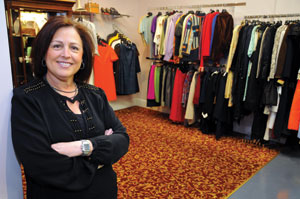
When it’s fashion week in New York, it’s also fashion week at Her Majesty’s Closet, a couture consignment shop for women owned and operated by Barb Bloch.
Fashion Week kicks off Feb. 9 in both places. Her Majesty’s Closet will celebrate that night with a fashion show beginning at 6 p.m. featuring spring clothing and accessories. It will take place in the brand new space the store moved into last month, directly next door to its original shop on the south side of 83rd Street in Corinth Square near First Watch.

Bloch explained the Prairie Village shop was inspired by pop-up designer shops and boutiques popular on both coasts. Her Majesty’s Closet specializes in designer labels. More than 40 famous names can be found there including Bill Blass, Geoffrey Beene, Nina Ricci, Paulene Triggere, Yves Saint Laurent, Chanel, Prada, Minolo Blahnik, Gucci and Louboutin.

“You will only find designer labels here and it’s all real,” Bloch said. “You will find all the high-end brands and we have a lot of vintage also. We’ve got anywhere from the ‘40s to current styles. We also stock some vintage jewelry and handbags.”

Bloch said Her Majesty’s Closet is very well known for its shoes, furs, handbags and cocktail wear, all of which are “in excellent condition.” The store is also known for its large St. John knits department. The store carries a variety of sizes as well as price ranges.

“I’ve got Chanel jackets that would cost $4,000 or $5,000 new and we have them for $950. It’s not cheap, but for someone who wants Chanel and wants the look, it’s affordable because it’s a fraction of the regular price,” Bloch said.

The store gets its merchandise from estates as well as individuals.
“Often these women buy something and are on the fashion cycle so once they wear it they don’t want to wear it again,” Bloch said.

Her Majesty’s Closet is not the first store of its kind in the area. But Bloch believes what sets this store apart from others is that others don’t carry the quantity of couture available at Her Majesty’s Closet.

“A lot of consignment stores will tell you they have a particular label just to lure you in the store. Then they don’t have it or they just have one piece,” she explained. “We have lots of Oscar de la Renta, lots of Chanel, lots of Armani Black Label, lots of Geoffrey Beene …,” she continued.

Who shops at Her Majesty’s Closet? Bloch said they are people who appreciate couture as well as quality fabrics, construction and design. Customers come in all sizes and ages, from young women to senior citizens.

“Some appreciate fashion but can’t afford these pieces new,” she said. “We also have people who love vintage and who buy into the recycling.”

While she’s only owned Her Majesty’s Closet for two and a half years, Bloch said she grew up in the garment industry. Her family manufactured ladies coats and suits. Professionally she worked as a recruiter for the Carlisle Collection, a clothing line sold by personal consultants, where she learned all about wardrobe building.

Bloch has also served two terms as regional director for the Fashion Group here in Kansas City. In addition she collaborated with Sybil Kahn on a book about the history of the garment industry.

Next week’s fashion show — which got its start when the store first opened as a way to attract customers — will feature 11 models, all customers, showing almost 80 different outfits.

“Every outfit, shoes, jewelry, handbag, coat … worn on that runway is put together with pieces that have come in on consignment and are new in the store for spring,” Bloch explained.

The show is free; reservations are not required but are recommended. The evening also features music, wine and appetizers. The store will be open for shopping as well.

“It’s really a fun, fun evening,” she said. “It’s grown from the 75 people who attended the first show to more than 100 that came in the fall. I’m hoping for about 150 people this time, and it will be recorded and placed on the website,” Bloch said.

Her Majesty’s website has grown along with the actual store. Now customers can purchase clothes directly from the website.

Bloch loves the consignment couture concept and often wears clothes from the store. So do her employees.

“Almost everybody who works here was a customer before they started working here,” she said. “I think we are a very warm and friendly environment and we’re not high pressure. I think we give our customers a great shopping experience.”


Her Majesty’s Closet

The couture consignment shop is located at 4107 W. 83rd St., Prairie Village, Kan. Store hours are Monday through Friday: 10 a.m. to 5 p.m.; Saturday and Sunday: 9 a.m. to 4 p.m. For more information call 913-341-7774 or visit www. hermajestysclosetldt.com.

The Jewish Federation of Greater Kansas City’s Israel shlichah (emissary) has returned to Israel. Lilach Nissim, who arrived here in October of 2010, is experiencing health problems that prompted her decision to return to Israel. There she will continue to seek further medical treatment while having the support of her family nearby. A Jewish Federation emissary typically stays in the community for two years.
Nissim is a native of Jerusalem and was the Jewish Federation’s fourth emissary. She came here from missile-torn Sderot, where she worked as a youth coordinator and manager of a youth center for children at risk. Nissim was responsible for spreading the word about Israel in both the Jewish and general communities. She organized such events as Yom HaZikaron (Israel’s memorial day), Yom HaAtzmaut (Israel Independence Day) and Israeli movie nights.

Nissim also wrote a monthly column for The Chronicle.

“Lilach Nissim brought her special brand of Israel and Zionist education to every corner of the community from preschools to adult education classes. She was passionate about her work. We have received a number of emails in response to her early departure, which praised her work and extended wishes for a speedy recovery,” said Alan Edelman, Jewish Federation’s associate executive director.

Edelman said the Jewish Federation plans to continue the emissary program in the future. He will begin the process of searching for a new emissary within the next few months and expects one to be on board by September of this year.

More than 20 years ago, Barry Shrage, president of Boston’s CJP (Combined Jewish Philanthropies — its Jewish federation) was one of the first to recognize the benefits of sending high school graduates and young adults to Israel. Today that program — Taglit-Birthright — has sent more than 10,000 young Boston area Jews on first-time free visits to the Jewish homeland. Upon their return, CJP’s Campus and Post-Campus Initiatives have become national models that teach students to become lifelong advocates for Israel.
Shrage has made a difference in Boston — as has Todd Stettner, director of the Jewish Federation of Greater Kansas City since 1999. So it made “perfect sense,” said Margie Robinow, chairman of the 2012 Purim Gala, “to ask Barry to be the featured speaker at this year’s event when Todd will be presented with the annual Mordechai Award.”

“I grew up in Newton, Massachusetts, at the same synagogue as Barry and his family,” explained Rabbi Dani Rockoff, spiritual leader of Congregation Beth Israel Abraham & Voliner, which has sponsored Purim Gala since 1998.

“Occasionally he would speak to the congregation and I remember always being impressed and inspired by his thoughtful words and the passion with which he delivered them,” Rabbi Rockoff added. “I was pleased that Todd, our honoree, suggested Barry as a guest speaker at BIAV’s Purim Gala and I am thrilled that he is coming. It should be a very memorable evening!”

Purim Gala, slated for Sunday, Feb. 12, at Oakwood Country Club, is an annual fundraiser for Congregation BIAV, the area’s only modern Orthodox synagogue. The evening will begin with a silent auction and cocktail reception at 5 p.m., followed by a seated dinner at 6 p.m. The Lev Simcha Orchestra, headed by Rabbi Binyamin Davis, will be playing throughout the evening, as guests have an opportunity to bid on one-of-a-kind items of jewelry and Judaica, as well as sports tickets and gym memberships.

“I am delighted to have Barry come to Kansas to honor Todd,” added Robinow, “as I have been inspired by his visionary efforts in connecting community, promoting education and keeping focus on what is most important for the continuity of the Jewish people.”

Shrage has been instrumental in the creation of several cutting edge programs in Boston, designed to engage the next generation in meaningful Jewish life, and create a welcoming, inclusive Jewish community. Projects include Me’ah, an intensive Jewish adult education curriculum; and Ikkarim, a Jewish learning program for parents of young children. Pioneered in Boston, both programs are now being replicated nationwide.

Lisa Bernard, this year’s Jewish Federation Women’s Campaign co-chair, and co-chair of Purim Gala 2011, added that “It’s so important to have role models like Todd and Barry who reach out to the Jewish community, regardless of synagogue affiliation. Kansas City succeeds because everyone — from the unaffiliated to the most ardent synagogue supporter — is welcomed, included and nurtured.”

Stettner is a strong supporter of Israel. He has been involved with this community’s Partnership with Kibbutz Gezer-Ramle since its inception. Last year he became involved with a new program, Elem-Derech, aimed at developing innovative ways to effectively treat and rehabilitate disaffected, at-risk Israeli youth.

Like Stettner, Shrage also is one of Israel’s most passionate and effective advocates in Boston. More than 20 years ago, he helped to establish the Boston-Haifa Connection, a sister city relationship that has resulted in mutually beneficial social programs. He and his wife Ellie live in Newton, Mass., where they raised their two children. They also have two grandchildren.

Tickets are still available to Purim Gala 2012. For more information, call Barry Rubin at Congregation BIAV at 913-341-2444 or email him at . The invitation and forms to place ads and congratulatory greetings for the Tribute Journal are also available online at: www.BIAV.org/purimgala.

After spending the past 17 years of her career as an advocate for people living with serious health issues, Amy Goldstein recently was selected as a Sunflower Foundation Advocacy Fellow. She is one of 15 health care professionals chosen from across the state of Kansas to participate in the 2012 Fellowship program.
Goldstein is the senior director of programs, services and advocacy for the Mid America Chapter of the National MS Society. It serves 253 counties in Kansas, Western Missouri, Nebraska and Pottawattamie County in Iowa. The Mid America Chapter offers programs and services to more 11,000 individuals living with MS and annually raises more than $3.5 million to create a world free of MS.

Goldstein understands the importance of advocacy initiatives and working for people in need.

“I think advocacy is so important,” she said, “in order to allow people to realize their own potential.”

She sees the fellowship as an opportunity to improve her leadership skills in advocacy work. The foundation wants the same result.

“The Sunflower Foundation: Health Care for Kansans, based in Topeka, was created in August 2000 as part of the $75 million settlement between Blue Cross and Blue Shield of Kansas, the state attorney general and state insurance commissioner,” as stated on its website, www.SunflowerFoundation.org.

As part of the foundation’s commitment to improve the health of all Kansans, the fellowship program was started to help “leaders in health-related nonprofit organizations develop the understanding, experience and expertise they need to become powerful voices for the Kansans they serve,” according to the website.

“We look for people who have clear professionalism in their field and a depth of knowledge,” said Doug Farmer, the foundation’s vice president for policy. “We want diversity in each class by geography, gender, ethnicity, issues and topic.”
Goldstein fits this profile perfectly.

“I want to improve the lives of people with MS,” she said. “I want to provide an opportunity for them to have a voice, and teach them to be self advocates, as well as advocate for them.”
She believes being a Sunflower Foundation Fellow will help her to meet this goal.

With a master’s degree in social work from the University of Kansas, Goldstein has advocated for people living with a variety of health issues. Although she began her career as a clinical social worker, she soon moved into working in both administration and community outreach. It was during her eight years at the American Cancer Society that she helped open and became the first director of the Kansas City Hope Lodge, which provides free lodging for people undergoing cancer treatments.

“Amy exhibits passion about her issue, MS; and her background in issue advocacy is strong,” Farmer added. “We were excited about how excited she was about both her field and about learning more.”

Goldstein was nominated to be one of this year’s fellows by someone who participated in last year’s fellowship program. Farmer said that fellows either can be nominated by others or self nominated.

As a fellow, Goldstein must attend six, three-day education sessions, during a 12 month period. During these seminars, they attend lectures given by experts from around the country, as well as role play. For example, Goldstein said, at the first session in October they had media training where they heard lectures and then practiced talking in front of cameras.

One session is held in Washington, D.C., where the fellows have the opportunity to put their advocacy training to work. “We facilitate a relationship between fellows and members of congress,” Farmer said. “We want them to know how to bring up an issue, who to talk to and what to ask.”

Farmer said that the Sunflower Foundation also hopes to foster relationships among the growing number of fellows. “We try to help them work together,” he said. “We plan to institute a series of meetings around the state to get fellows together to talk about important current health issues, and how the foundation can facilitate better health for all Kansans.”

Besides her full-time job and her new commitment as a Sunflower Fellow, Goldstein is also the married mother of two. She and her husband, Barry Dicker, are members of Kehilath Israel Synagogue, where they married eight years ago. As a lifelong member of K.I., she currently serves as a vice president of its board of directors. Their older son, Gabe, is in kindergarten at the Hyman Brand Hebrew Academy, while their younger son, Jacob, attends the Jewish Community Center’s CDC.

This full-time advocate and mother is doing what she loves best.

“I think I always have been an advocate,” she said. “It is fun to do this for work and personally.”

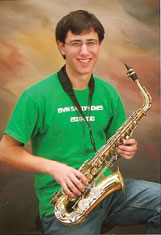
JEWS AT THE SUPER BOWL — I don’t know for sure if any of the New York Giants or the New England Patriots are Jewish, but I do know one Jewish Kansas Citian will be a starter in Super Bowl XLVI. Avi Sonnenschein, who is in his first year of studies at Indiana University, will be playing alto saxophone with the IU marching band, “The Marching Hundred” to open Super Bowl XLVI. The band was selected from among several Indiana colleges and universities for this opportunity. Avi will be just left of the 45 yard line in the opening musical set, “Rock in the USA.” Following his graduation from Blue Valley North High School in 2010, Avi spent a gap year in Israel. He is the son of Sheila and Ken Sonnenschein and a former Chronicle Salute to Youth honoree.
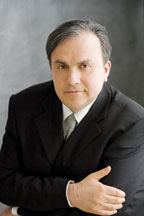


JEWS PERFORMING WITH THE SYMPHONY — Several Jewish musicians will come to Kansas City to perform with Kansas City Symphony over the next year. The first is pianist Yefim Bronfman, the son of Holocaust survivors who was born in Tashkent in the former Soviet Union and immigrated to Israel when he was 14. He will be here Friday and Saturday, March 30 and 31, and Sunday, April 1. At that time the Symphony, under the direction of Michael Stern, will present the second of its world premieres this season with Daniel Kellogg’s new work celebrating our City of Fountains, and Mozart’s glorious final symphony. Bronfman returns for a work that has won him great acclaim, Bartók’s Piano Concerto No. 2. Critics have described Bronfman’s playing as “exquisite” and described “a finely spun whir of notes that verged on the unbelievable” (Los Angeles Times). Sponsors include the Sosland Foundation. For ticket information call 816-471-0400 or visit www.kcsymphony.org.



ANOTHER WIN FOR SPIN! — SPIN! Neapolitan Pizza’s margherita pizza was crowned one of the nation’s best dishes of the year by Restaurant Business magazine. A panel of food experts from around the country selected the top dishes of the year from restaurants throughout the U.S. “When folks in the restaurant business are asked to name their favorite dishes, it’s not easy to narrow down the choices,” notes the magazine in its article announcing the 2011 Clean Plate Award winners. Co-owner Gail Lozoff said SPIN! is “truly honored to have our pizza included among the nation’s best restaurant dishes.” Besides being award-winning, the margherita pizza is also waistline friendly at just 189 calories in a slice taken from a full-size pizza. A different panel of respected food experts at TheDailyMeal.com, one of the most heavily visited “foodie” websites in the country, recently named SPIN! one of the “Rest of the 101 Best Restaurants” in the nation. In addition, SPIN!’s architecture won Best of Show at the Mid America Design Awards.

GREAT JEWISH BOOKS — Community Editor Marcia Montgomery contributes this mini review about “One Hundred Great Jewish Books” by Rabbi Lawrence A. Hoffman:
This is a fantastic book that will give any reader many hours of reading pleasure. What a daunting task to come up with only 100 great Jewish books! Rabbi Hoffman suggests books in several categories: biography, spirituality, theology, poetry, fiction, history and political theory. Readers will love diving into the book to see just who Rabbi Hoffman’s choices are in order to find books you’ve already read, ones that may have escaped your attention or ones that you always intended to read but never got around to. Rabbi Hoffman gives a brief synopsis of each pick and his reasons for that particular selection. In the realm of fiction, he includes Isaac Bashevis Singer, Philip Roth, Chaim Potok and Bernard Malamud. But one wonders where are Saul Bellow, Henry Roth, Michael Chabon, Jonathan Safron Foer? Perhaps Rabbi Hoffman will write a sequel! “One Hundred Great Jewish Books” is a paperback and is available at bookstores and online.