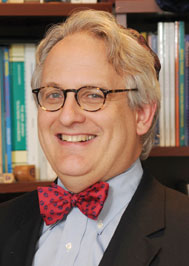

The board of directors of The New Reform Temple has recommended that Rabbi Alan Londy be retained as the congregation’s permanent rabbi. Rabbi Londy began serving the Reform congregation on an interim basis on July 1, 2011, while it searched for a permanent rabbi to replace Rabbi Jacques Cukierkorn. In late December 2010 the congregation announced that Rabbi Cukierkorn’s contract would not be renewed and the congregation and the rabbi ended its professional relationship in April 2011.

Michael Grossman, NRT’s president, said the congregation’s membership will vote on this recommendation during a special membership meeting following Shabbat services on March 2. NRT expects to offer Rabbi Londy a three-year contract.

“When I came here my intention was to be the interim rabbi,” Rabbi Londy said early this week.

“As I contemplated my future, I felt that at this time of my life that even though I loved the interim work, I wanted to have a less nomadic life. So I began to do a rabbinic search as New Reform Temple was conducting its rabbinic search,” the 55-year-old rabbi continued.

Since Rabbi Londy was hired specifically as an interim rabbi, NRT was required to get special permission from the Central Conference of American Rabbis, the Reform movement’s rabbinic organization that assists in the placement of rabbis to its member congregations, to offer him a permanent position.

Grossman reported that the search committee, led by Ann Darke, reviewed 12 applications for the position. It was during that time that NRT discovered that Rabbi Londy was seeking a “settled position elsewhere.”

Rabbi Londy said, “Eventually we mutually agreed that if I’m looking for a permanent pulpit and they are looking for a permanent rabbi, let’s explore if I can remain. And that’s what happened.”

In a letter to members last week, Grossman said members of the search committee thought Rabbi Londy had done an excellent job as the interim, the committee decided to “approach him as a possible candidate for the settled position at NRT.”

After careful consideration the committee concluded that Rabbi Londy is the best choice for NRT.

“He has done an excellent job reuniting the congregation, improving procedures and making services more meaningful to members,” Grossman said.

One of the things that impressed NRT leadership is the way Rabbi Londy connected with members through focus groups. His goal was to gain a greater understanding of the congregation over the past several months.

“We believe the congregation will be able to build on its current momentum more quickly as a result of the continuity afforded by retaining Rabbi Londy,” Grossman said.

Following the formal vote scheduled to take place in two weeks, an installation ceremony will be planned. The ceremony is tentatively scheduled for a date in June.

Rabbi Londy attended a classical Reform congregation while he was growing up in Troy, N.Y. After graduating from Cornell with a Bachelor of Arts degree in Near-Eastern studies, he attended the Jewish Theological Seminary of America and was ordained in 1983. He also holds a Doctor of Ministry in pastoral counseling from Hebrew Union College in New York City and he has taken extensive courses at the Interim Ministry Network, the only national certification institute for international interim clergy, which is endorsed and recognized by the CCAR.

The first part of Rabbi Londy’s rabbinical career was spent serving Conservative congregations. He was the assistant rabbi of Beth El Congregation in Baltimore from 1983-1988; the head rabbi at Temple Israel in Orlando, Fla., from 1988-2000; and the head rabbi at Temple Beth Sholom in Smithtown, N.Y., from 2000-2006.

He returned to his Reform roots in 2006 when he became rabbi/rabbi educator at Temple Israel of the City of New York, where he served for five years.

Rabbi Londy and his wife Jane are the parents of two children. Their 24-year-old daughter lives in Israel. Their 21-year-old son lives in North Carolina and is an apprentice studying sustainable architecture.
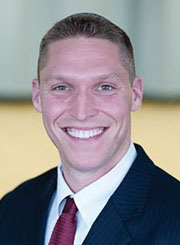
Rabbi Shmuly Yanklowitz has been chosen by Kehilath Israel Synagogue to serve as its next rabbi. Rabbi Yanklowitz will take over Aug. 13, when Senior Rabbi Herbert H. Mandl retires after serving the traditional congregation for 35 years.
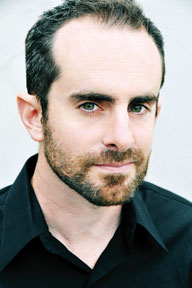
K.I. President Steve Osman said the congregation’s board of directors unanimously approved the search committee’s recommendation to hire Rabbi Yanklowitz. The search committee was chaired by Geoff Friedman. Osman said K.I. is very excited to welcome Rabbi Yanklowitz to the area.

“We believe he will not only carry on the traditions followed for nearly 102 years, but revitalize and bring a new sense of spirituality to our membership,” Osman said.

Rabbi Mandl said he is very proud that Rabbi Yanklowitz will be his successor.

“He demonstrates not only tremendous enthusiasm and vigor, but a tremendous amount of maturity for his age. I wish him well in his future endeavors. May he grow from strength to strength,” Rabbi Mandl said.

Rabbi Yanklowitz and his wife Shoshana visited K.I. in early December. Since July of 2010, he has served as director of Jewish life and senior Jewish educator at UCLA Hillel in Los Angeles. The program serves approximately 3,000 students. He obtained his smicha (rabbinic ordination) from the Yeshivat Chovevei Torah Rabbinical School in the spring of 2010.

The young rabbi and his wife are looking forward to moving here.

“After visiting communities around the country, we found that the warmth and generosity at K.I. was unparalleled. We are thrilled to be moving to Kansas City and to be taking on leadership at Kehilath Israel,” he said.

“My vision for K.I. is to build upon the rich traditions of the congregation and to expand as a mission driven congregation to inspire growth for each individual and family at the shul and to partner to further develop the broader Kansas City Jewish community,” he continued.

Rabbi Yanklowitz is originally from Highland Park, Ill., a suburb of Chicago. He attended the University of Texas in Austin and earned a Bachelor of Science degree in communication studies with a concentration in business foundation, where he was an honors student.

He also holds a Master of Arts degree in leadership, moral development and psychology from Harvard University. Continuing his education, he earned a second master’s degree, this one in Jewish philosophy from Yeshiva University. He is currently a doctoral candidate in epistemology, moral development and developmental psychology from Columbia University.

Rabbi Yanklowitz has served internships at congregations in Massachusetts, Connecticut, Boca Raton and Montreal. He has also served as a chaplain in the U.S. Army.

The rabbi is also founder, president and chairman of the board of Uri L’Tzedek. It is described as the Orthodox social justice movement.

In addition Rabbi Yanklowitz has served as a volunteer mission leader and educator. As such he has traveled to Israel; Ghana, Africa; Pune, India; Senegal, Africa; Thailand; Ukraine; El Salvador; France; Germany; Guatemala; and Haiti. In the United States he has volunteered with the San Diego wildfire crisis relief and provided assistance in the aftermath of Hurricane Katrina in New Orleans.

Shoshana Yanklowitz is a nurse and the daughter of an Orthodox rabbi from New York.

Bestselling author, scholar and LGBT (lesbian, gay, bisexual and transgender) activist Jay Michaelson will be in Kansas City Tuesday, Feb. 21, to discuss his latest book, “God vs. Gay? The Religious Case for Equality” (Beacon Press, 2011). The event begins at 7 p.m. at the LIKEME Lighthouse, 3900 Main Street, Kansas City, Mo.

David Wheaton, one of the event sponsors and a member of Congregation Kol Ami, said Michaelson’s book and the discussion of it here “could not be more timely and relevant in our current social/political/religious landscape.”

“Harmful rhetoric and misconceptions in the public arena intensify the pain and suffering of LGBT people, their families, friends and congregations. The consequences are sometimes tragic as revealed in the continued reports of forced conversion therapies, bullying and teen suicides. The dialogue, respectful scriptural analysis and new perspectives presented in Jay’s book can help guide LGBT people, congregations and clergy toward dignity, compassion and justice,” Wheaton said.

The discussion and reception is being sponsored locally by Kol Ami and Jewish Family Services. Nationally Michaelson’s book tour is also being sponsored by the Forward; Nehirim (“lights”), a national, nonprofit and nondenominational organization Michaelson founded which builds community for GLBT Jews, partners and allies; and Zeek Media Inc., a nonprofit organization founded by Michaelson in January 2002, which publishes the online magazine Zeek: a Journal of Jewish Thought and Culture.

Michaelson, who lives in upstate New York and grew up in a Conservative Jewish family, is the author of four books and 200 articles on religion, sexuality and the law, and a leading religious advocate for sexual minorities whose work has been featured in the New York Times, NPR and CNN. Michaelson holds a Juris Doctorate degree from Yale Law School, a Master of Arts degree in religious studies from Hebrew University, a Master of Fine Arts in writing from Sarah Lawrence, and a Bachelor of Arts from Columbia where he graduated magna cum laude. He is currently completing a doctorate degree in Jewish thought at Hebrew University.

In publicity for “God vs. Gay,” Michaelson writes that “At this moment, there are people who are contemplating ending their lives because they believe their sexuality to be a sin, a flaw in the fabric of their soul, or perhaps a curse from God.”

In the book, Michaelson makes the case that religious people should favor gay rights because of religion, not despite it. Weaving in his personal coming out story, he speaks to those who struggle to reconcile their faith and sexuality. Michaelson re-examines Scriptures from the Hebrew Bible and the New Testament and argues that homosexuality is not only natural, but put in stark religious terms, sexual diversity is part of God’s plans.”

He explains that the main argument of “God vs. Gay” is that while there are a tiny handful of ambiguous and limited verses that talk about same-sex intimacy they are subject to interpretation. He also notes that homosexuality is not specifically mentioned in the Bible because that concept wasn’t invented until the 19th century.
“You can take a narrow interpretation, such that they apply to hardly anyone today, or a broad one, such that they ban everything LGBT. So, the question is, which interpretation do you choose to take?”

Michaelson said to give an honest answer to that, you have to ask what fundamental values weigh into this decision.

“In the book, I go through a dozen or so which compel us to take the narrow reading: values like love, the importance of relationship, justice, honesty, integrity and so on. Overall, the weight of these religious traditions — including a literal reading of the Bible, if that’s how you want to read it — is clearly on the side of full equality and inclusion,” he said.

He decided to write “God vs. Gay” because he felt “we’re at a unique moment of opportunity right now.”

“Because of the increased visibility of LGBT people in the media, the changes in law in some places, and the continued effort by some on the political right to use gay rights as a scare-tactic, this is a defining civil rights struggle of our times. It’s clear to most people that the stereotypes about gay people are no more true than racist stereotypes or sexist stereotypes. At the same time, we have to have a deeper conversation about these issues than the ones often going on in our public sphere,” he said.

For Michaelson, the book is personal as well as political.

“A lot of people, myself included, were raised to believe that religion and sexual minorities were incompatible — that it really is God versus Gay. Personally, I chose the ‘God’ side for 10 years, repressing my sexuality and cutting myself off from other people. Even when I finally gave up, I still thought that coming out would be the end of my religious life. In fact, it was the beginning,” Michaelson said.

The response to his book has been very warm, he said.

“I’ve met dozens of parents of gay kids who are sincerely trying to understand their religious traditions on this issue. I’ve met lots of non-religious people who have never been exposed to this material except through the lens of the bigots. And I’ve met a few hecklers. Overall, it’s been really gratifying to me to see how this work is already having an impact,” he said.

Michael Lerner, editor of Tikkun magazine, praised the book.

“Michaelson shows that ‘God versus gay’ is a myth and that our shared religious values favor equality for LGBT people,” Lerner said.

Like many soldiers, Jack Krashin was only 18 years old when he was drafted into the U.S. Army after he graduated from high school in 1943. Sixty-nine years later, he still proudly speaks of his service to his country, and daily feels the effects of it.
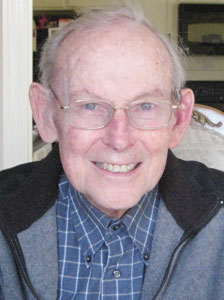
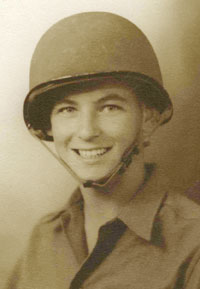
Krashin’s 1943 Army photo is one of 400 photos of soldiers from the Midwest that has been placed on the Wall of Honor that will be featured, along with the exhibit “Ours to Fight For: American Jews in the Second World War,” which opens Sunday, Feb. 19, at the Illinois Holocaust Museum & Education Center, in Skokie, Ill. (See box for more information.) His photo is one of five included on the opening event’s invitation. He is the only representative on the Wall of Honor from Kansas and the metro area.

In addition Krashin’s bio is one of 44 that will be used in a Facebook and Twitter campaign publicizing the exhibit. Krashin’s information will be featured the week of March 7 according to Arielle Weininger, the museum’s chief curator of collections and exhibitions.

When asked about his Army service, the 86-year-old Krashin said in a soft-spoken voice that he is simply proud to have been able to completely perform his combat duties during hard-fought battles.

During the two years Krashin fought in World War II, he earned a Bronze Star, the combat infantry badge and was wounded. As a member of the 30th Infantry Division, he sailed for Europe in February 1944 and served in France, Belgium during the famous “Battle of the Bulge” and Germany. He was discharged in the fall of 1945.

Krashin was a “bazooka man,” the man who fired the rocket propelled anti-tank weapon. He thinks it’s ironic that they chose the “shortest, smallest guy” to carry it.

The bazooka rested on Krashin’s right shoulder whenever he knelt to fire it. The weapon was loud and sat next to his right ear. His hearing loss — he now has a cochlear implant to help him hear better — is attributed to the loud noise the bazooka made when fired.

“We had no hearing protection like they have today. They just said here’s your bazooka, go shoot some Nazis,” he said.

Krashin was awarded for his bravery in battle with a Bronze Star Medal. His Combat Infantry Badge recognizes the fact that he personally fought in active ground combat while an assigned member of an infantry unit in World War II. After he was wounded by shrapnel in battle, he was also awarded a Purple Heart.
The Bronze Star was earned following a battle on Crucifix Hill where his squad leader was injured, and presumably killed. The squad needed to be led back to safety and Krashin was trusted with the task because he was an assistant squad leader.

“Our squad leader was listed as missing in action and never found,” said Krashin, a member of the local Jewish War Veterans chapter. “Two others were also decorated for heroism that day besides me.”

He remembers having a huge “adrenaline rush” that day.

“It put my whole body out of control. I didn’t know where to turn, to run or hide,” he said. “But I didn’t think that I could be a casualty or be captured. From then on I just tried to get the Germans.”

He was injured in another battle while his unit was on the front lines in Germany.

“We were ordered to move back due to a counter attack,” he explained. “A whole group of men instantly took off for the main line and left me there.”

Krashin was alone and didn’t want to run the risk of being captured. So he didn’t move for a while.

“At that point all hell broke loose, mortars and artillery were flying. When I was able to find the others, some flying shrapnel struck me in the leg,” he explained.

After he was wounded, he was able to run until he found a vacant fox hole.

“I jumped in it and put a tourniquet on my leg using my bandolier (ammunition belt) and tightened it using my bayonet,” he said.

He eventually passed out and woke up in the dark. He doesn’t know how long it took before a medic found him.

“I was surprised they found me. They treated me with a sulfa drug and a couple of guys carried me to the aid station,” he said.

Krashin was sent to a hospital in Belgium, where he had surgery. When he first got to the hospital and his dog tags were being checked, the soldier greeted him by saying “hello Lantzman.” That’s Yiddish for a Jewish person from the same area you are.

The injury didn’t send him home, however. After he recovered from the surgery, he joined a postal unit in England.

“It was a break for me. I couldn’t stand the cold anymore,” he said.

But before Krashin left Germany, he was often used as an unofficial interpreter when the unit was in a town or village.

“He knew Yiddish so he could run interference with the population,” Fannie, his wife of 60 years, said.

Even during this mild Kansas City winter, today Krashin is always cold. He suffered frost bite on his hands from the cold conditions he faced all those years ago in Europe.

“That’s from sleeping on the cold ground,” he explained. In addition, it’s because the coats they were issued weren’t nearly warm enough for the conditions.

After his Army service, Krashin attended the University of Missouri and then went into his father’s wholesale jewelry business.

He later worked for himself for about 10 years and then worked in retail jewelry stores. He is now retired from the jewelry business after a 60-year career.

The Krashins are members of BIAV and are active at Chabad and the Torah Learning Center. They have four children, 11 grandchildren and “4.5 great grandchildren.”

“The fifth is due in May,” Fannie said.

Skokie exhibit information

Kansas City resident Jack Krashin is one of 400 people whose photos will be showcased on the Wall of Honor when the exhibit

“Ours to Fight For: American Jews in the Second World War” opens in Skokie, Ill. The traveling exhibit, which was created and is circulated by the Museum of Jewish Heritage — A Living Memorial to the Holocaust in New York, opens Sunday, Feb. 19, at the Illinois Holocaust Museum & Education Center. It will be on display through June 17. For more information, visit www.ilholocaustmuseum.org or call 847-967-4800.

“Ours to Fight For” explores and celebrates the achievements of Jewish men and women who were part of the American war effort on and off of the battlefield. In their own voices and through their artifacts, letters and photographs the “Greatest Generation” tells the stories of what the war was like for all its participants, and for Jews in particular. Approximately 500,000 Jews served in all branches of the U.S. armed forces during the war and 52,000 were decorated for bravery.

The voices are drawn from more than 400 interviews conducted with Jewish servicemen and women throughout the country.

“Ours to Fight For” powerfully illustrates what it was like to be American — and Jewish — in a time of war.


History can be buried, but that doesn’t mean it must be forgotten.
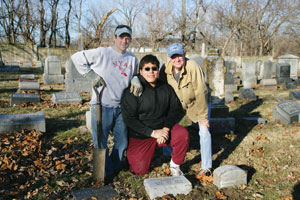
That is the opinion of photographer and preservationist Bruce Mathews and the numerous volunteers and local citizens who have been working to preserve Elmwood Cemetery. The cemetery covers 43 acres in the heart of Kansas City, and is the final resting place for many city founders, 12 former mayors and many others who have made a significant contribution to the development of Kansas City.

A 2-acre tract in the southwest corner of Elmwood Cemetery is owned by The Temple, Congregation B’nai Jehudah. Buried here are many of the Jewish Kansas Citians that influenced local history.

“These are Jews that worked in the community,” said Andrew Kaplan, B’nai Jehudah’s president. “Anyone who questions if Jews were involved in the development of this community just needs to learn about the names found here.”

Mathews has made it his mission to preserve the entire cemetery, including B’nai Jehudah’s section, helping to organize upkeep and restoration efforts. He believes the contributions made by those interned in Elmwood are crucial in understanding the present Kansas City.

“These are some of the people that gave us the Kansas City spirit,” Mathews said. “That spirit may have taken a hit in recent years, but it is coming back as strong as ever. These people helped create that unique spirit and here we can preserve their memory.”

The Jewish section has received a helpful boost in the form of several sizable donations from Mary Davidson Cohen and her foundation. Her grandparents are buried in Elmwood.

“Mary has a warm spot in her heart for the cemetery,” Kaplan said. “She has given $5,000 over the last five years and she just recently gave another $6,000. She has been a great supporter.”

Listed on the National Register of Historic Places, this beautiful park-like setting was designed by George Kessler, designer of Kansas City’s parks and boulevard system. The cemetery first opened in 1872. Because of its age, the cemetery was sorely in need of repairs and attention when Mathews took charge of the project.

“The work is never-ending,” Mathews said. “The grass was so tall, it hid many of the graves. Trees were overgrown. The people that have helped here are not afraid of work.”

Mathews expresses his gratitude to all of the people that have helped and volunteered their time.

“Not just one person does all this work,” Mathews said. “It is done by a lot of people coming together.”

Several local Boy Scouts have given a lot of time to the project recently. One Eagle Scout, Rodrigo Gonzalez, raised more than $600 to buy new headstones for six unmarked Jewish graves in the cemetery. Gonzalez personally placed the stones to give these unnamed individuals a proper burial. Though Gonzalez is not Jewish, Kaplan is inspired by his example.

“That is the real definition of the righteous Jew,” Kaplan said. “Doing something for someone out of respect and in appreciation of other people.”

Many Boy Scouts were able to complete their Eagle Scout certification thanks to their work at Elmwood.

“It’s a life-changing event for some of these young men,” Kaplan said. “And watching them do this for complete strangers, you get a bit choked up.”

In addition to the Eagle Scouts, several historical societies have been very active in restoration efforts. Volunteer opportunities are available the fourth Saturday of every month. Elmwood receives no government funding and relies on the volunteer assistance.

Mathews’ personal dedication to Elmwood, and the hard work of many others, has resurrected the cemetery from a run down and decaying spot, to a beautiful and peaceful setting.

“I have appreciated this opportunity to give back to the city and do community service, and I wanted to make the most of it” Mathews said. “And on top of that, here is a chance to learn a lot about the rich history of the city. It’s a great situation that I am very pleased about as more and more people become involved.”

For more information on Elmwood Cemetery go online to www.elmwoodcem-kc.org. There you can learn about the Family History Project as well as how to volunteer to help the cemetery.

The history of Elmwood is detailed in the book, “Elmwood Cemetery: Stories of Kansas City,” written by 24 authors and compiled by Mathews.

“It meant a lot to be able to put the history together,” Mathews said. “I doled the parts out to 24 great people in the community to work on this and they did a fantastic job. We are in our second printing now, and excited to get more copies out.”

The book is available at all Kansas City booksellers and on the Barnes & Noble website, bn.com.

More about Elmwood

“Everyone that has a street named after them is buried here,” said photographer Bruce Mathews, referencing the many familiar names found on the tombstones at Elmwood Cemetery.

To see a list of those buried in Elmwood, go online to www.elmwoodcem-kc.org. Individuals are organized by profession in easy-to-navigate sections.

Also on the website visitors will find a cemetery map, pricing information and the Family History Project and family photos. If there is a belief that a family ancestor is buried in Elmwood, there will be information on their birth, marriage history, biographical sketches and death date and location. This section is continually being updated all the time.

A widow with several children is faced with a difficult financial situation. Her husband, the main income earner, has passed away. She is in poor health and has little work experience outside the home. The family savings is gone having been spent on her husband’s funeral arrangements and her own medical bills.

Thanks to Jewish Family Services, this family is getting the help it needs. It gets financial assistance for immediate needs, and through the JFS Holiday Projects, this family will also receive traditional Jewish holiday foods and Chanukah presents to celebrate the holidays, as well as other items to help them with daily necessities.

As high unemployment and increasing living expenses continue, more people than ever are coming to JFS seeking help. Those who reach out for assistance go through a confidential financial and needs assessment with a JFS case manager. This process ensures that all clients receive the appropriate assistance. Case managers focus on meeting the immediate needs of an individual or family such as assisting with rent, utilities and medical costs. The JFS holiday projects focus on providing food and gifts to allow families the ability to celebrate according to Jewish tradition during their time of financial difficulty.

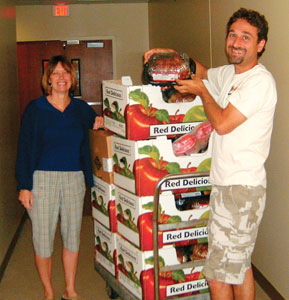
In addition to food and gift donations received through community drives, volunteer groups have also collected personal care items and cleaning supplies. These are daily essentials clients can’t afford; those “extras” like cleaning supplies for the home, cosmetics, shampoo and toothpaste, among other personal care supplies. Unfortunately, these are items most food pantries cannot provide. That’s where community volunteers play a vital role. This past Chanukah, Congregation Beth Shalom’s Sisterhood donated 58 personal care and cleaning supplies packages. This project was organized by Carol Yarmo, Beth Shalom Sisterhood’s vice president of community service. Her commitment to the long-term project ensured its’ success.

“We are very hopeful that the year-long drive that Beth Shalom’s Sisterhood is holding will continue to be this successful, as the need will always be there,” said Anna Feldman, JFS older adult case manager and holiday project coordinator. “Many of our life-crisis clients were extremely thankful for receiving such wonderful products.”

JFS volunteers also play an important role by distributing the holiday and personal care items. Currently, JFS is seeking volunteers to help with its Passover project. Volunteers are needed on Tuesday, April 3, to bag produce from 9 to 11a.m., and 1 to 3 p.m. to bag dry goods in the Jewish Community Campus Social Hall. Drivers are also needed for the upcoming Passover holiday to help with deliveries during the morning and afternoon of Wednesday, April 4, and Thursday, April 5, along with the morning of Friday, April 6.

Feldman said it’s important to remember why all this work is done — to make a difference in people’s lives. For example, an elderly Russian couple spent its life savings to immigrate to the United States. Because of their age and poor health, they weren’t able to start over and accumulate new savings upon their arrival. With their only income being a small Social Security stipend, after they pay the essentials of rent and utilities, there is little left. Thankfully, JFS donors, volunteers and staff, have stepped in to help.

“Our holiday assistance program not only provides this family with items they truly need, it also makes a huge difference in regard to their general well-being and happiness,” Feldman said. “What may seem like a small gift to those more fortunate means so much more to the individuals and families with which JFS works. It shows them that they are a part of the Jewish community and that the community truly cares about them.  This is largely what gives them a sense of belonging in a foreign country.”

Those wishing to help through donations and/or by volunteering are asked to contact Feldman at JFS at 913-730-1452 or at .

JFS steps out again to help families in need with Passover food drive

Families and individuals who struggle to make ends meet on a daily basis may find themselves having to skimp on those traditional special holiday food items.

Jewish Family Services hopes to remedy that situation with its annual Passover Food Drive. From now until March 26, JFS is collecting Passover food items that will be packaged up and delivered to those in need for the week-long holiday. Passover begins with the first Seder on Friday evening, April 6. JFS anticipates helping more than 150 families with Passover food packages.

Food items should be taken to the JFS office in the Jewish Community Campus during business hours or dropped off in the bin outside of the office. Items needed should be marked “kosher for Passover” and include: walnuts, gefilte fish, matzo, Shabbat candles and sweets (such as jelly candies, macaroons and cake or brownie mix).

Monetary donations are also needed to purchase items. Donations may be made by sending a check to Jewish Family Services Holiday Project, 5801 West 115th Street, Suite 103, Overland Park KS 66211, by calling (913) 327-8250 and providing your credit card number, or by going to the agency’s website at www.jfskc.org.

Volunteers are needed to help pack the Passover food packages along with delivering them. Deliveries will be made April 4-6.

If you know someone who is experiencing economic difficulty and could use some help this Passover, or, if you would like to volunteer for the Passover project, contact Anna Feldman at 913-730-1452 or at . All information will be kept confidential.

SOULFARM HERE SATURDAY NIGHT — Soulfarm, whose live shows are full of Mediterranean flavor with captivating guitar leads, dance rhythms and strong percussion breaks, will be in Kansas City one night only this Saturday, Feb. 18. The concert will take place in downtown Overland Park at t.a.s.t.e. restaurant (7938 Santa Fe Dr.) Doors open at 9:30 p.m. The food and beverage is not under Vaad supervision. Soulfarm was founded in Israel by Grammy Award winner lead guitarist C. Lanzbom and guitarist and lead singer Noah Solomon Chase. Their sound has been dubbed as New American music, full melodic songwriting and progressive modern arrangements. The band’s new album “HOLY GROUND” is available on iTunes. RSVP at soulfarmkc.eventbrite.com or call 913-269-0249 for more information.

GOURMET KOSHER — Bitayavon, a new publication featuring gourmet kosher recipes and insightful articles, was recognized by the Magazine Innovation Center as one of 2011’s hottest magazine launches. Bitayavon, which features kosher recipes not only for Jewish holidays and Shabbos dinners but for every day, was chosen from a group of more than 800 new consumer titles published from October 2010 to September 2011. Launched in February 2011 as a 40-page local magazine in Brooklyn, N. Y., Bitayavon has since grown to a 76-page magazine sold worldwide in kosher specialty stores, supermarket chains, at newsstands and retail outlets such as Barnes & Noble.

“You don’t have to keep kosher to love the recipes, tips and information we provide to our readers,” say Shlomo and Shifra Klein, co-founders and publishers of Bitayavon. “We are all about revolutionizing the concept of kosher cooking to meet the needs of the growing kosher foodie population as well as those who look for easy and affordable recipe and meal ideas.”
The mission of the magazine is to create a modern culinary publication that appeals to everyone who loves good food, as well as those that keep completely kosher. The bi-monthly magazine provides readers with gourmet kosher recipes, tips and insightful articles related to the kosher lifestyle. A digital version of Bitayavon will be available in the near future. For more information and to subscribe to Bitayavon, visit http://www.Bitayavon.com.

A STAR IS BORN — Photographed at dress rehearsal, Kayla Israel, daughter of Maya and Loren Israel, formerly of Overland Park (now living in Cincinnati), played the part of Princess Ying Yaawolak, youngest daughter of the King, in the ‘King and I.’ The production was presented at the Carnegie Theater in Covington, Ky. The show hosted well-seasoned Broadway performers as the principle characters. Loving theater, Kayla attends the children’s program at the Cincinnati Conservatory of Music. Last season Kayla had the lead role of Cruella de Vil in ‘101 Dalmatians.’ Kayla’s extremely proud Overland Park grandparents, Gayle and Alan Israel, k’velled over their granddaughter’s talent and success.


YOUTH KICKBALL — Live2PlaySports, owned by Aaron Zitron, is organizing recreational kickball leagues this spring for children and teens, ages 5 and up. Leagues will begin April 14. Games in the teen league will be played at the Jewish Community Center. Youth league games will be played at Brookside Park (100 E. 56th Terr., Kansas City, Mo.) Zitron, a Kansas City native, has more than 12 years of youth and adult recreation league coordination experience. As a parent, he appreciates safe, supervised and fun activities for kids. “I have two boys and play in an adult kickball league myself. My oldest son wanted to play kickball. I decided to start a kids’ league so that he and other kids could also participate in the fun sport of kickball.” To register a child or teen for spring kickball, or for more information, visit Live2PlaySports.com.

REMEMBER DEADLINES — Please don’t forget that since we started publishing the paper on Thursdays, we changed our deadlines as well. The deadline to get articles in the paper — generally every type of article, photo and celebration announcement — is one week prior to publication. For example, if you want an article published in the issue of March 1, the deadline is noon on Thursday, Feb. 23. We appreciate your help in sticking to these guidelines.

Correction

In last week’s article on K.I. Scout Shabbat, two Scouts were omitted: Shai El Luger, son of Michal Luger, and Matan White, son of Chaim and Katie White. Each received the Maccabee Medal.

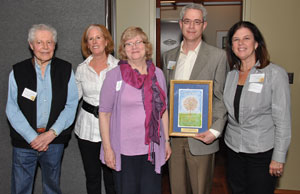
The Bushman Community Endowment program, begun in 2007 by the Jewish Community Foundation of Greater Kansas City, is celebrating its successes. BCE was established as a way to help local Jewish agencies and congregations learn ways to better cultivate planned giving, thus allowing them to build their endowments and keep their vital programs flourishing. It was originally slated to last three years, but the participating organizations were doing so well that Bushman and JCF committed to extend the program an additional two years. Now The Temple, Congregation B’nai Jehudah has completed all five of its fundraising goals in just four years. They are the first organization to accomplish all five annual goals.
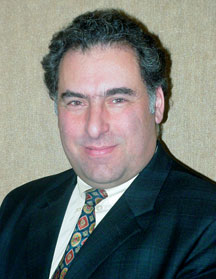
“The significance of B’nai Jehudah reaching its five-year goals in planned giving is immeasurable. Along with the BCE teams from other agencies and congregations, we can be assured that we will see security and stability in our Jewish community for years to come. Planned giving, though, is much more than a five-year program. It is just the beginning. It is our hope that everyone in our community will take the opportunity to leave a legacy,” noted Merilyn Berenbom, BCE’s chair.

BCE’s roots

BCE was founded with a grant from the Stanley J. Bushman Supporting Foundation. Since 2007 $800,000 has been invested in this signature JCF program. Diane Azorsky, assistant executive director and director of community endowments, said Bushman has invested this money in an effort “to train and motivate our organizations to secure their financial futures through planned giving.”

Since its inception, all of the participating organizations and synagogues have collectively raised an estimated $30 million from a total of 302 individual donors and families.

BCE participants were chosen by an application process. Each organization that was accepted put together teams of lay leaders and professionals who came to mandatory training sessions to learn about all the different components of a successful planned giving initiative. Azorsky explained that those facets include the art of speaking with their most loyal donors about leaving a legacy gift.

“The program began with each organization establishing its own unique participation goals,” Azorsky said. “As the goals were met, they received a $12,000 incentive grant.”

“These annual goals were based upon the number of commitments secured rather than dollar goals. Such goal setting helped reinforce the fact that anyone, no matter what their net worth, can leave a meaningful lasting gift to the organizations they love,” Azorsky continued.

Lauren Hoopes, JCF’s executive director, added that the goals established by the participating organizations were part of comprehensive deferred giving plans.

“We helped them figure out such things as how to identify the best people to talk to. What is the right way to approach these people? How many gifts can we expect to get from them? How are we going to acknowledge and thank them for these generous gifts?” Hoopes said.

“These gifts, even more than any others, are based on long-term relationships,” she added.
Another important aspect of BCE, Hoopes noted, is that it has demonstrated to community leaders just how valuable a resource JCF is.

B’nai Jehudah’s Director of Development and Endowment Debra Goldstein said she now feels like she has a “home to go to” at the Jewish Community Foundation to get the support she needs.

“I can’t tell you how vital that is,” she said. “This program has turned out to be more of a win-win then they even understand.”

BCE’s future

Because the first group of 10 organizations was so successful, four more organizations were invited to participate in the program in 2010. They are referred to as the second generation of BCE.

“These organizations have started from the beginning. They are becoming educated, have created their deferred giving plans, and established their goals. All of them met their first year goal, and have received their first $12,000 incentive grant,” Azorsky said.

BCE’s legacy

For Hoopes, the truly exciting thing is that BCE has helped to change the fundraising culture in the Kansas City Jewish community. Endowments and planned gifts are better understood as a vital permanent part of an organization’s fiscal health.

“The financial incentive that was part of structured goal making has ended for B’nai Jehudah because they’ve accomplished all of the goals associated with the incentive grants. But they aren’t finished; there really is no finish. This is just the beginning of what is going to hopefully be a permanent change in the way they approach their relationships with their congregants and the way they approach resource development for The Temple,” Hoopes said.

In fact B’nai Jehudah’s Executive Director Jeanne Adler said, “Goal setting is a very important piece of what we learned from the program.”

The program stretched from three to five years, Azorsky said, because most of the organizations involved were having success with it.

“Once they hit those three-year goals it was time to look at their plans again and create a new road map for moving forward,” Azorsky explained.

“It wasn’t because they were unsuccessful and needed more time,” Hoopes reiterated. “It was because they were successful and they have come to embrace the value of planned giving and endowments. They now understand how important it is to keep the momentum going.”

Since the fall of 2010, Congregation Beth Shalom, the city’s largest Conservative congregation with approximately 763 family units, has been making changes to strengthen its financial health. The latest change continues the restructuring of its clergy staff. The hazzan (cantor) position has been eliminated, as has the position of director of the Polsky Religious School. These positions will be replaced by what is currently being called “clergy 2.” That person will take charge of all the music and education programs at the congregation.

With this change comes the announcement that Hazzan Robert Menes’ contract will not be renewed when it expires July 31. In addition, Patti Kroll will no longer serve as director of the Polsky Religious School. The position of director of the Rose Family Early Childhood Education Center, held by Judy Jacks Berman, is not being affected by this change.

Beth Shalom President Kurt Kavanaugh, DDS, explained that Hazzan Menes was given the opportunity to apply for the “clergy 2” position, but declined. He also said it has not yet been determined if Kroll will remain a part of the congregation’s staff in another capacity.

Hazzan Menes came to Beth Shalom in 2006 and enjoyed serving the community.

“I’ve loved being here in Kansas City,” he said last week. “Congregation Beth Shalom has been fantastic. While I may not be happy with the process, it’s definitely my choice to find something else.”

Shoring up its finances

Kavanaugh explained that these latest announcements stem from recommendations two task forces made in late 2010 to solidify the congregation’s financial situation. Following those recommendations, the board voted to eliminate the assistant rabbi position, which was held by Rabbi Adam Stein, effective July 2011. During that time the congregation also voted to close its Wornall campus; it officially shut down in July as well.

In addition, the task force’s original report recommended that a second clergy oversee the congregation’s education.

“We’ve never had that model, but it’s one we did not create. It’s been done other places and that information and recommendation was shared with senior staff back then. The information in that report was not secret,” Kavanaugh noted.

The recommendations were put in motion, Kavanaugh explained, as contracts began expiring.

“The assistant rabbi’s contract came up last year, so that was the proper time for that. Our hazzan’s contract comes up this year,” thus the timing was ripe for that change, according to Kavanaugh.

The congregation’s president said Hazzan Menes had been aware for some time that depending on the state of the congregation’s finances this year, his contract might not be renewed.

Searching for clergy

With this newest change, Beth Shalom is searching for both a senior rabbi and a person to become “clergy 2.” Kavanaugh said the congregation hopes to hire the new senior rabbi by the end of March and “clergy 2” by the end of May.

The congregation is searching for a senior rabbi to replace Rabbi Robert Tobin, who left the congregation when his contract expired last summer. Rabbi Alan Cohen, who served as senior rabbi from 1989 to 2008, returned to lead the congregation during this interim year. The senior rabbi search committee is being led by Dr. Norman Kahn Jr. and Alan Edelman.

Two candidates have accepted invitations to visit Beth Shalom in the coming weeks. Rabbi David Glickman, currently an associate rabbi in Dallas, will visit Feb. 24-26. He has also served as a congregational rabbi in Biloxi, Miss., a student chaplain in Seattle and a program director at Camp Ramah.

Rabbi Dr. Geoffrey Haber, who has 20 years of experience in the congregational rabbinate, plans to visit Beth Shalom March 9-11. He is currently a chaplain at the Hospice of the North Shore and Greater Boston. Rabbi Haber has served as a pulpit rabbi in the Boston area, New Jersey, Calgary and Chicago.

A committee led by Jeff Goldenberg and Steve Flekier is leading the search for “clergy 2.” Kavanaugh explained that candidates for that position will have both music and educational experience.

He said music plays a huge role in the congregation, “So the ‘clergy 2’ person must have musical ability and a nice singing voice.”

“In addition, the person needs to have the organization skills and the administrative skills to oversee all the education at Beth Shalom,” Kavanaugh said.

In yet another administrative move, the congregation hired Elaine Levine as its executive director. She began serving Sept. 6.

Boris Usherenko

JOB TITLE & DUTIRES: Architectural designer; I have a contract through a recruiting agency Aerotek to work for Black & Veatch. My duties include the production of contract documents and construction administration services.

EDUCATIONAL BACKGROUND: Kyiv National University of Construction and Architecture (Ukraine); a degree from Johnson County Community College; courses in Computer Aided Drafting, Architectural and Structural Drafting, and Auto CAD (2D and 3D).

SPECIAL/SPECIFIC JOB TRAINING: Architectural Design, Draftsman/3D; Building Information Modeling (BIM)

HOW JES HELPED ME GET THIS JOB: JES helped me evaluate and improve my resume and cover letter writing. The most important thing for me was the psychological, emotional part. It was the time when I felt depressed and helpless. I thought that all my efforts wouldn’t ever have any result. But my meetings with Joyce Hill (JES career counselor) and Gayl Reinsch (JES director) and the JES workshop sessions were for me like a sip of fresh water. They reinstated my motivation; I started my work search process again with more confidence and ambition.

ADVICE FOR OTHERS: Don’t give up on job hunting and keep learning new things no matter how old you are.

Jewish Employment Services is a joint program of Jewish Family Services and Jewish Vocational Service offering members of the Jewish community resources to help in the employment search. For more information call Gayl Reinsch at 913-327-8278.