

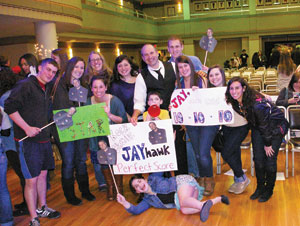
TWINKLE TOES — For the second year in a row the Kansas City Jewish community has had a representative invited to perform in KU Student Union Activities’ “Dancing with the Stars.” KU Hillel Executive Director Jay Lewis was paired with Bridget Qandil, the owner of Camelot Ballroom in Overland Park, in the event held earlier this month. Lewis and his partner did a Broadway routine to “Oh What a Night,” a Frankie Valli hit from the musical “Jersey Boys.” Lewis said he had a blast. “I was nominated to participate by a large group of Hillel students so I was happy to represent them and KU Hillel in this event. There were over 500 people in the Kansas Union Ballroom. It was fun to do something completely outside of my comfort zone and I really enjoyed how much the students and my family enjoyed that I was doing it.” Publicity before the event noted that Lewis’ prior dancing experience was limited to watching “So You Think You Can Dance” and dancing in his living room with his wife and two kids, Keaton and Mckenna. On the night of the competition, Lewis had a large group of supporters sitting in the audience. Many of KU Hillel’s student leaders showed up with signs and banners to cheer him on. Lewis danced exceedingly well and received all “8s” from the judges. While Lewis unfortunately lost to KU football player Daymond Patterson, he gave KU Hillel great exposure to the KU community.

ENVOY HAS TIES TO KC — The JTA has reported that Israel has appointed its first Ethiopia-born ambassador to Ethiopia, Belaynesh Zevadia. What it didn’t report is that while working in the Israeli Consul General’s office in Chicago, she got to know several members of the local Jewish community including Jewish Federation Executive Vice President and CEO Todd Stettner and Marvin Szneler, executive director of the Jewish Community Relations Bureau|American Jewish Committee. Zevadia was the first Ethiopian Foreign Ministry cadet. She made aliyah at the age of 17 and studied at the Hebrew University in Jerusalem, earned a bachelor’s degree in international relations and African studies and a master’s degree in African studies. Here she also worked as a diplomat in Houston.
“This is proof that in Israel, opportunity is available to everyone — native Israelis and new immigrants alike,” Zevadia said.
Foreign Minister Avigdor Lieberman said in a statement that Zevadia’s appointment “conveys an important message to Israeli society, which is currently dealing with the issue of racism towards Ethiopians in Israel.”

PUPPY LOVE — Hyman Brand Hebrew Academy third-grader Brianna Katz is concerned about puppy mills. She has learned that Missouri is a national hot spot for puppy mills and got Kansas City Mayor Sly James to sign her petition to stop them when James visited HBHA in February. Brianna’s passionate drive against puppy mills also got her a cute photo and story in the most recent edition of 435 South magazine. She is the daughter of Vicki and Gary Katz and belongs to Congregation Beth Shalom.

COMMUNITY VOICES — Another member of the Jewish community was well featured in the March edition of 435 South. Congregation Beth Torah President Michelle Reznik Cole was described as an energetic mother of two, wife, entrepreneur, lay leader and school volunteer. She shared her secret with readers for balancing her activities with a two-minute rule, in her own words.

OU GUIDE TO PASSOVER — The 2012 OU Guide to Passover is out, providing new and interesting features addressing commonly asked questions fielded through the social media, to the extensive lists of food and other products that are certified kosher for Passover by the OU. The guide, with a press run of more than 60,000 copies, will be directly available through the mail to all OU members and Jewish Action subscribers. Individual copies can be ordered on the OU Passover website, www.ou.org/passover-guide.
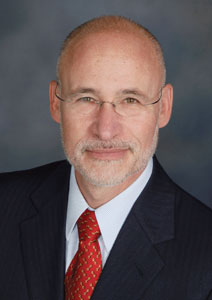
“It’s not your grandfather’s seder,” says Rabbi Arthur Nemitoff when describing the Community Second Night of Passover Seder sponsored by the Rabbinical Association of Greater Kansas City, Jewish Family Services and supported by congregations. It takes place at 6:30 p.m. Saturday, April 7, at The Temple, Congregation B’nai Jehudah.

Reservations are currently being accepted for the seder and must be received by Wednesday, March 28. After that date, reservations will be accepted on a space-available basis. Reservation forms are available at area congregations and at the Rabbinical Association’s website, www.kcrabbis.org. For information, or to inquire about confidential financial assistance, contact Annette Fish, administrator/program director for the Rabbinical Association by email, or call 913-327-4622.

The food will be kosher-for-Passover and prepared under supervision of the Vaad HaKashruth of Kansas City. The meal will be served under Rabbi Nemitoff’s supervision.

As in year’s past, this contemporary seder will be multi-denominational, noted Congregation Ohev Sholom’s Rabbi Scott White. Rabbi Nemitoff, senior rabbi of the host Congregation B’nai Jehudah, is once again the lead organizer for the spiritual portion of this event. He said this year’s service features the participation of more local clergy from Reform and Conservative congregations than ever before. Besides Rabbis Nemitoff and White, participating clergy include Rabbi Alexandria Shuval-Weiner and Cantor Sharon Kohn of B’nai Jehudah; Rabbi Alan Cohen and Hazzan Rob Menes of Congregation Beth Shalom and Doug Alpert, spiritual leader of Congregation Kol Ami.

This seder will be family-friendly and include traditions and customs of the Passover seder while incorporating meaningful events of our day into an interactive and hands-on seder experience. Modern day readings and additions will focus on maggid, the telling of the Exodus.

For the last several years this seder has been an experiential seder. That is what sets the evening apart from what one might remember as “your grandfather’s seder,” Rabbi Nemitoff said.

“This is not sitting at a table, either small or large and having Uncle Sammy sleep during half the seder and having Aunt Bertha talk through it all and having your grandpa shush everybody,” Rabbi Nemitoff explained.

The plans for the evening are not yet totally complete, but Rabbi Nemitoff expects it will begin as it has the past couple of years with the participants being in Mitzrayim, the land of Egypt.

“We will experience what it meant to be slaves in Egypt. We will experience the first part of our seder in a sense of closeness and discomfort and without any sort of what I would call lavish relaxation,” Rabbi Nemitoff said.

That’s an aspect of the seder that’s made an impact on participants.

“I enjoyed the entire evening from the moment I arrived,” wrote one participant who is self-described as of advanced age.

“The initial gathering place consisting of the long sparsely adorned tables set the stage for the feeling that we were indeed still slaves in Egypt and it seemed so right that we did what we did there and then began our trek to the Promised Land and the feast that followed.”

As the evening progresses participants will hear the maggid (the telling of the Passover story) and rotate through creative stations. If there are enough families to warrant it, Rabbi Nemitoff said a special family section may be created for the telling of the maggid.

One seder participant from the past noted that the creative telling of the story was “awesome!”

“I invited a friend who is a non-Jew; she was overwhelmed by the experience and enjoyed the informative way the rabbi told the Passover story.”

At the different stations, participants will have the opportunity to sing songs led by Cantor Kohn and Hazzan Menes. They will also help prepare a meal for the homeless.

“One of the key statements in the Passover Haggadah is let all who are hungry come and eat. We take that seriously in our community with all of our various food collection programs and food serving programs. So one of the things that our participants will do is prepare a kosher for Passover meal that will be served to the hungry in our community during the following week,” Rabbi Nemitoff said.

This mitzvah project has proven to be a very popular part of the evening recently.

“One theme my family found most interesting is that we take care of feeding all who are hungry. I loved that and thought it was the best message for my kids and for me,” was written on a post-seder comment card.

Rabbi Nemitoff said the seder will be concluded in lavish style, with tables with table cloths and fine food. He expects it will end by 9:30 p.m.

“We will have a wonderful community experience,” he said. “We really do hope the community will consider joining us. It’s not B’nai Jehudah’s seder. This is not Beth Shalom’s seder. This is not New Reform’s seder. This is the community seder and it’s really meant to allow everybody in the community to come together and celebrate,” he said.

The food, and the entire evening, has gotten rave reviews in the past.

“Very enjoyable! Very creative! Food was very good. The idea of different groups breaking up and rotating to experience different things was great!”

If you are a fan of children’s books, cholent or books written by people with Kansas City ties, you’ll want to seek out “The Cholent Man,” written by Danny Zeldin.

Zeldin grew up in Kansas City and is the son of Stan and Joyce Zeldin. He taught Judaic studies in the upper school at Hyman Brand Hebrew Academy for two years, leaving the school in 2007.

He still teaches Jewish and general studies, but he now lives and teaches in San Diego. He moved there in July 2011 from New England.

The book explains why we eat cholent on Shabbat. It’s main character, Avrumy, meets a friendly stranger one Friday afternoon. As explained on the book cover, “After a journey together into the past, Avrumy discovers the reasons behind this long surviving Shabbat tradition. As dream blends into reality and reality fades back into dream, Avrumy grows to realize that cholent is much more than just a tasty food; it is a tradition whose observance helps keep us spiritually healthy and permanently united — and it’s yummy.”

The 24-page book was published last April by AuthorHouse. It can be purchased on the publisher’s website as well as amazon.com and barnesandnoble.com.

Zeldin said he came up with the idea for “The Cholent Man,” as he searched for a subject that had not yet been addressed in other Jewish children’s books. He also wanted to make sure he wrote a book with an educational component.

“My first thought was food. Kreplach, gefilte fish, charoset, hamantaschen, sufganiyot, sheep’s heads … if you’re outside looking in, you’d be right to think that Jews eat some pretty strange stuff,” Zeldin said.

He pointed out that next to sheep’s heads, cholent may be the strangest food Jews eat.

“I was unable to discover any children’s literature on the subject,” he said. “After researching cholent’s history, I decided there was definitely a story to tell.”

He believes the book is geared toward older elementary school students.

“I did a book signing at an Orthodox elementary school in Brooklyn. The fourth and fifth graders were a great audience. They responded very well to it and asked more questions than we had time for,” Zeldin said.

He knows that the book is aimed toward a small audience.

“It was written for the family that regularly makes cholent on Shabbat, but that also lives the lifestyle represented by the characters in the book. I have had some non-Orthodox parents tell me that their kids like the book, but more consistent appreciation for the book has come from mainstream Orthodox families,” he said.

“The Cholent Man” features illustrations by Jade Fang, an artist from Malaysia who studied in the United States and now lives in Singapore. Zeldin searched for the illustrator himself and Fang was his first choice.

“I had an idea what I wanted the characters to look like and I narrowed it down to three artists whose work seemed to best represent the images I had in my head,” he explained. “After Jade sent me her first pencil drawings it was clear that the book found its illustrator.”

He thinks Fang’s drawings are “truly amazing.”

“Jade spent several months researching Jewish villages and dress from the book’s setting, and it is her artwork that truly brought the book alive. As a bonus she learned some new words like dreydl, boychikl, and tati,” he said.

Zeldin has considered writing more books.

“I have some drafts of other works, including a novel, but those dusty pages know they have to wait until summer break in order to get my full attention,” he said.

“Hemingway once said, and I’m paraphrasing, that discussing one’s work before it is finished is like stripping the stuff off of a butterfly’s wings. I’d hate to mess with such beauty,” he continued.

A member of the Jewish community, 17-year-old Sonia Larbi-Aissa, competed among the world’s best and brightest during an international debate in South Africa this January.
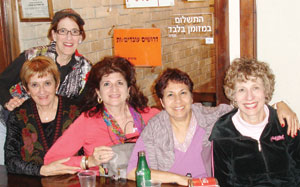
Sonia is a junior at The Barstow School and at one time attended Hyman Brand Hebrew Academy. She represented the United States at the tournament with two other teammates and an alternate teammate.

Sonia has participated in debate at Barstow since eighth grade and attends a debate camp for girls each summer in Minnesota. Last summer coaches from the United States World Scholars Debating Championships team held auditions for the team at debate camps throughout the country. Sonia decided to try out.

“I applied because it really appealed to me,” Sonia said. “Especially the international part.”

The audition included a debate round with a partner as well as individual speeches.

“It ended up being a really good debate,” Sonia said. “It was really fun.”

Sonia was invited to a more selective round of auditions, but team USA coach Kate Shuster said she knew Sonia would be on the team before her second audition even started.

“We knew right away when we auditioned her that she was a great candidate for the team,” Shuster said. “Within 30 seconds we had agreed.”

Shuster said coaches don’t usually agree on candidates that quickly, but Sonia stood out above the rest.

“She had sterling recommendations and academic credentials but what really stood out to us is that she had unusual poise for someone her age,” Shuster said. “She was a special case and we knew in our guts immediately that she would make the team.”

Sonia was the only Midwesterner on this year’s team. All her other teammates live in California.

“We are really happy that she’s on the team,” Shuster said. “Sonia was a great ambassador, not only from the United States but from the Midwest.”

Sonia found out that she had made the team in the fall and began preparing for the world tournament with her teammates and coaches.

Shuster said the team used technology, such as Skype, to have practice debates and coaching sessions.

“Students were given topics and then asked to deliver speeches,” Shuster said.

Sonia spent at least two hours a week in preparation for the tournament.

International debate differs from the policy style of debate in which United States students participate. In U.S. policy debate students research a topic that they debate throughout the year in pairs of two.

In international debate, the topics vary from round to round and three students participate on each team every round, instead of two.

“Each person gives a speech and then one person gives a reply,” Sonia said.

Sonia gave the reply speeches for the U.S. team during the tournament.

“It’s the most challenging speech of the debate,” she said.

In international debate, participants are given a list of potential debate topics before the tournament to research, but some topics are not revealed to the students until the tournament.

“Half of the rounds are impromptu and half of the rounds are prepared,” Sonia said.

Sonia and her teammates participated in eight preliminary rounds at the tournament. Their topics ranged from racial profiling to foster care reform.

Participants are judged on style, presentation, organization and strategy.

The U.S. team went 2-6 in the tournament.

“A lot of losses were split,” Sonia said. “We would consider that a success.”

Shuster described the international competition as fierce.

“It’s much harder than anything that is available to high school debaters in this country,” Shuster said. “The students we compete against speak four or five languages. ...We are talking about the very brightest students in the world.”

Sonia’s trip to South Africa was as cultural as it was academic.

She said she made friends with debaters from other countries. And during downtime Sonia and other students visited historical sites in South Africa.

Sonia said one of her favorite parts of the trip was a visit to Robben Island where Nelson Mandela was held captive.

“It was kind of over powering,” Sonia said.

Sonia will continue to compete with the U.S debate team at other international tournaments this year.

“When you are on the team, you don’t just go to this tournament,” Shuster said.

Sonia and her teammates are slated to compete in the Pan-American Debate Championship in July in Chili.

“I definitely plan to continue this style of international debating,” Sonia said.

Sonia’s mother, Nancy Larbi, supports Sonia’s international endeavors.

“It’s really preparing her for the future and preparing her to be a contributor in the future,” Larbi said. “Your communication skills are very important no matter what role you play in society.”

The lawsuit between Rabbi Jacques Cukierkorn and The New Reform Temple has been terminated. On Wednesday, Feb. 29, Johnson County District Court Judge David W. Hauber granted NRT’s motion to compel arbitration.

“With that, the next step is for the plaintiff (Rabbi Cukierkorn) to submit a demand for arbitration, if he intends to proceed, which we assume he does,” stated NRT President Michael Grossman in a statement to The Chronicle.

Rabbi Cukiekorn said he does expect to move forward with arbitration.

Rabbi Cukierkorn filed the lawsuit in late September, claiming NRT breached the separation agreement the two parties mutually agreed to in March 2011. That was precipitated by a decision made in December 2010 by NRT’s board of directors not to renew the rabbi’s contract, which was to last through June of this year. Payments, as agreed to in the separation agreement, began April 1, 2011, and were to continue through June 14, 2012.

According to court documents obtained by The Chronicle, NRT stopped making the agreed upon payments in mid-June of last year. At that time NRT sent Rabbi Cukierkorn a letter stating that unless he could provide documentation relating to monetary transfers from NRT’s discretionary fund, the congregation would cease payments agreed to under the separation agreement.

Rabbi Cukierkorn’s lawsuit asked the court to enter judgment against NRT, requiring it to comply with the terms of the separation agreement and provide full payment, as well as interest.

Rabbi Cukierkorn is now the rabbi of Temple Israel of Greater Kansas City, which recently celebrated hitting the 100-family member milestone.

NRT hired Rabbi Alan Londy to serve as interim rabbi last summer and offered him a three-year full-time contract earlier this month.

HOLY COINCIDENCES — It was a week of chance meetings for Devra Lerner when she recently travelled to Israel for her niece’s Bat Mitzvah. As she checked into Beit Shmuel in Jerusalem, the first person she ran into was Jonathan Edelman, who was just leaving Israel to return to Kansas City for his cousin Leah Sosland’s Bat Mitzvah.
Later Devra met with former HBHA teachers Ilana Dickman and Na’ama Nagar, and Wendy Claster, the mother of four HBHA graduates for a reunion. They were talking about HBHA as they enjoyed a hummus dinner in a small restaurant on Diezengoff, when a woman from another table approached them and asked if they were from Kansas City. “Yes,” was the response. “Were you talking about Hyman Brand?” was her follow-up question. “Yes. And who are you?” the group questioned. “I’m Diane Fields.” She is the wife of Rabbi Phil Fields, a past headmaster of HBHA. The women learned the former headmaster, his children and grandchildren all have made aliyah to Israel.
Finally, while at the King David Hotel, Devra and her brother-in-law, Dr. Speedy Zweiback, ran into the Hon. Daniel B. Shapiro, the American Ambassador to Israel. Hailing from Champaign, Ill., he recalled his days as a youth-grouper in MoVFTY.

GOVERNMENT BLESSINGS — Rabbi Zalman Tiechtel of the Chabad Center for Jewish Life at KU believes we were blessed with an extra day last week on Feb. 29. He was determined to make that gift worth its value, so he accepted the honor of serving as Chaplain of the Day at the State of Kansas House of Representatives. At the invitation of Jewish Rep. Lana Gordon of Topeka, he gave the invocation as the legislators prepared to begin their day. It included in part, “Beloved G-d, bless the members of this House of Representatives and guide their deliberations, that they may govern this great state with wisdom and justice, grace and compassion, bringing honor to your name and your blessing to humankind.” Describing the experience, Rabbi Tiechtel told me, “As the State of Kansas boasts a vibrant and growing Jewish presence, there is no doubt that having a prayer recited by a representative of the Jewish faith is a great way of expressing our Jewish pride and presence in the Sunflower State.” Amen!

ROCKCANROLL FOOD DRIVE — During the month of March, “rockCANroll,” a non-profit hunger relief organization that collaborates with rock concerts, schools, corporations and individuals to collect healthy and nutritious non-perishable food for distribution to local food pantries, will be partnering with Manischewitz in a nationwide effort to collect food. Yachad: The Kosher Food Pantry and Congregation Beth Torah have signed on for this special project. During the month of March, you’ll see a food collection bin made to look like a Manischewitz soup can at Beth Torah. Deposit donations into these special bins and Manischewitz will match donations by sending kosher canned goods to Yachad! Visit www.rockCANroll.org for more information.

WOMEN IN THE ARTS — The exhibit “Vanguards and Visionaries: Kansas City Women in the Arts” will continue through April 21 at The Leedy-Voulkos Art Center (2012 Baltimore, Kansas City, Mo. 64108) in celebration of the UMKC Women’s Center’s 40th anniversary. This exhibit honors some of the local women artists who have been instrumental in shaping the visual arts landscape of Kansas City. Featured artists include two Jewish artists — Rita Blitt and Shea Gordon-Festoff — as well as Philomene Bennett and Janet Kuemmerlein. These four women have all made a strong impression on the visual arts in Kansas City for the past four decades. Each of these seasoned artists was asked to select another artist whose work she feels embodies the same artistic voice that she has. Exhibiting side-by-side with these artists will be Jane Booth, Cheryl Toh, Karen McCoy and Jessica Kincaid. In keeping with the Women’s Center’s 40th Anniversary theme, “Telling Our Stories for 40 Years,” the “Vanguards and Visionaries” exhibit celebrates the woman’s voice in the visual arts — its past, present and future.


For many teens summer provides the opportunity to relax and sleep in, but 17-year-old Jessica Mielke takes a different approach to the break from school.

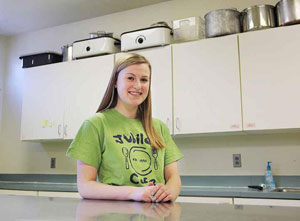
Jessica, a senior at Free State High School in Lawrence and a member of Congregation Beth Torah, volunteers on Tuesday and Friday mornings at the Jubilee Café. The Jubilee Café provides hot breakfasts free of charge to Lawrence residents at 7 a.m. every Tuesday and Friday. She started volunteering at the café in 2006 as part of her mitzvah project prior to her Bat Mitzvah.

Her mitzvah project was the step that connected Jessica to a community that, she said, she looks forward to working with and serving every summer.

Jessica is one of many teens and projects featured by authors Diane Heiman and Liz Suneby in their book, “The Mitzvah Project Book: Making Mitzvah Part of Your Bar/Bat Mitzvah … and Your Life.” (For more information on “The Mitzvah Project Book,” visit the website online at www.mitzvahprojectbook.com.)

Heiman said she has noticed a trend in the last decade for youth to include a mitzvah project as part of their Bar or Bat Mitzvah. The mitzvah project can be any social action activity that helps others.

Heiman said she and her friend Suneby decided to join forces to create a book that would help students create mitzvah project ideas that fit each student’s personality.

The book includes examples of mitzvah projects from adolescents, such as Jessica, throughout the country.

“What is great about the book is it’s not prescriptive it’s aspirational,” Suneby said.

The book provides ideas for projects that students can use as a springboard to create their own unique mitzvah projects.Heiman said the idea for the book came from Suneby’s love of Mitzvah Day, an initiative where congregants partake in single-day mitzvah projects throughout the country.

Normal 0 false false false EN-US X-NONE X-NONE /* Style Definitions */ table.MsoNormalTable {mso-style-name:"Table Normal"; mso-tstyle-rowband-size:0; mso-tstyle-colband-size:0; mso-style-noshow:yes; mso-style-priority:99; mso-style-parent:""; mso-padding-alt:0in 5.4pt 0in 5.4pt; mso-para-margin-top:0in; mso-para-margin-right:0in; mso-para-margin-bottom:10.0pt; mso-para-margin-left:0in; line-height:115%; mso-pagination:widow-orphan; font-size:11.0pt; font-family:"Calibri","sans-serif"; mso-ascii-font-family:Calibri; mso-ascii-theme-font:minor-latin; mso-hansi-font-family:Calibri; mso-hansi-theme-font:minor-latin; mso-bidi-font-family:"Times New Roman"; mso-bidi-theme-font:minor-bidi;}

“We both really love Mitzvah Day,” Suneby said. “We just wanted to get more kids excited.”

Heiman said the concept of mitzvah goes beyond one day of service or one community project.

“I saw how volunteering for one day can inspire people to volunteer for more than one day,” Heiman said. “It’s about taking the first step.”

While working at Jubilee Café started out as a mitzvah project for Jessica, it has become a mitzvah lifestyle for her. She continues to serve at Jubilee Café in the summer, when many University of Kansas students are no longer in town. Jessica said she noticed a void of volunteers in the summer and was eager to help fill that need.

“I just do it in the summers and that’s when they really need people,” Jessica said.

Jessica arrives at the café, which is held in the basement of the First United Methodist Church, at 6 a.m. to help prepare the meal. Patrons are served from 7 to 8 a.m. Heiman said Jessica’s ongoing dedication stood out among the submissions for “The Mitzvah Project Book.”

“Her commitment to her charity wasvery mature, very admirable,” Heiman said. “She really made a difference.”

One of the unique things about the Jubilee Café is that, unlike many free meal programs, the café serves its patrons restaurant-style, as opposed to buffet-style, when there are enough volunteers.

The Jubilee Café has a full-service breakfast menu, which includes eggs, biscuits and gravy, hash browns and a variety of pancakes.

Jessica said working at the café gives her the opportunity to have conversations and really connect with the people she serves.

“It’s a really good time,” Jessica said.“You meet a lot of great people.”

Jessica’s family members have also volunteered at the café.

“It has been a wonderful experience for our family,” said Diane Mielke, Jessica’s mother. “Starting out I never would have imagined that she’d be doing this years later.”

Jessica will graduate high school this year, but she said she doesn’t plan to end her service at Jubilee Café.

“I’m hoping to continue doing it through the summers,” she said.

As for “The Mitzvah Project Book,” Jessica recommends the book to anyone looking for a mitzvah project of their own.

“It can definitely get ideas going,” Jessica said. “You should try to tie something to your project that you are passionate about.”

A new standing committee was established to bring together a select group of Jewish communal leaders from across the country to discuss the best ways to strengthen and build the Jewish community both nationally and throughout the world. The Jewish Federation of Greater Kansas City has been invited to join this conversation, and has now taken a seat at what is known as the Jewish Federations of North America’s (JFNA) Global Planning Table (GPT).
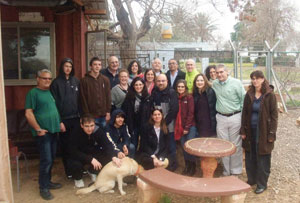
The GPT is an initiative that plans to strengthen the way the Jewish community prioritizes and takes collective action to address Jewish needs worldwide. When the discussions are over, it is hoped that the GPT will provide a new structure and process for Jewish Federations and their partners to analyze the needs of the Jewish people in Israel and 70 nations across the globe, determine priorities and assess the impact of philanthropic giving.

The discussions officially got underway earlier this year. Jerry Silverman, president and CEO of JFNA, has explained that the planners are charged with the enormous undertaking of building and establishing their Federation’s strategies on both a local and global level.

“Planning is increasingly essential to effective fundraising. The work that planners do makes a huge impact on their individual communities and across Jewish Federations,” Silverman said.

Kansas City’s record in support of overseas needs is probably one of the reasons it was invited to the GPT, said Todd Stettner, executive vice president and CEO of the local Federation.

“In addition to Kansas City’s long history of serving on the national allocations committee — first ONAD ((the predecessor to the GPT), and now with the Global Planning Table — I think JFNA recognizes how much time and effort has been put into creating a truly relevant system to allocate Kansas City dollars to our Israel and overseas partners. Our process is in line with the JFNA and Global Planning Table process, in that we have areas of excellence that provide guidelines for the programs that we fund,” said Miriam Scharf, president of the Jewish Federation of Greater Kansas City.

As a member of GPT, Kansas City is a representative of the large intermediate Federations (Federations that raise between $4 million and $11 million annually). It qualified for an invitation to the GPT because it meets the requirement of giving at least 20 percent of the funds from its annual campaign to Israel and overseas needs.

“That requirement eliminated a large group of Federations,” Stettner said, “because the fashion these days has been to give lesser amounts overseas from the annual campaign than we did in the past.”

Kansas City raised $4.6 million through the annual campaign in 2011. Of that total, Stettner said Kansas City gave approximately 32 percent to Israel and overseas programs. An additional $1 million in supplemental campaigns was also raised in 2011 — that includes donations directed toward a specific special fund such as Joplin tornado relief or the PJ Library.
Like other communities, Kansas City has reduced the amount it has given to Israel and overseas needs over the years.

“Twenty years ago that figure was probably closer to 40 percent and 10 years ago it was about 34 percent,” Stettner said.

No decisions will be made this year. The various committees that make up the GPT will meet throughout 2012, sometimes in person and other times using technology such as video conferences and conference calls. New priorities are expected to be decided upon in 2013.

“The ultimate goal is to develop a system of how we look at — and address — the needs in the Jewish Federation system on a national level. But it obviously will not dictate what we do locally because that’s always going to ultimately be a local decision,” Stettner said.

Initial discussions will center on the dollars given to Israel and overseas programs and organizations. Stettner said this is not the first time the Federation system has attempted to come to a consensus in how it distributes funds to Israel and overseas concerns. That first effort, which came after the merger of United Jewish Appeal and Council of Jewish Federations, failed.

For the last couple of couple of years the two largest international Jewish organizations — Jewish Agency for Israel (JAFI) and American Jewish Joint Distribution Committee (JDC) — have lobbied to save and/or increase their funding from local Jewish Federations. The current split nationally is about 75 percent of Israel and overseas funds go to JAFI while 25 percent of those funds go to JDC.

“There never has been a resolution of the split issue,” said Stettner, referring to the failure to come to a consensus years ago.

“However, there was a decision at that time that allowed Federations to begin to designate some monies to projects that they wanted to give to in Israel and overseas. We do that here.”

For many years, Kansas City has been funding specific projects in Bulgaria and Romania in Europe and Gezer and Ramla in Israel.

“What the Global Planning Table is going to do is allow us to continue that and also to broaden it,” Stettner said. “The key thing with the Global Planning Table is it will really look at all of the overseas needs, which you can compare to what we do locally both in terms of how we view our designated overseas dollars and what we give out locally.”

Stettner is referring to the process arrived at here in Kansas City several years ago when the Jewish Federation began funding programs instead of agencies.

“We look at the needs of the community and the programs that can meet those needs. We’re not looking at how much we can give one particular agency such as the Jewish Community Center or Jewish Family Services. We look at what is the need and what program is being done to meet that need and that’s how we fund. That’s what’s going to happen on the international level,” Stettner explained.

In other words, JAFI and JDC will have particular programs funded, with fewer dollars given to the agency itself for core purposes. Due to these expected changes, JAFI and JDC also have seats at the GPT so their opinions can be heard.

“We’re going to ask what are the needs in Israel and the former Soviet Union and South America, wherever there happens to be Jewish communities, and discuss how we are going to meet those needs. If JAFI has three programs that meet those needs and we think those are the most important, then we’re going to fund those. If JDC has several programs that meet other needs, we’re going to fund those programs,” Stettner explained.

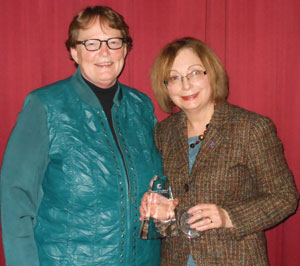
Sharon Katz, SAFEHOME executive director, received the Juliene Maska Advocate of the Year Award from the Kansas Coalition Against Sexual and Domestic Violence (KCSDV) during its ninth annual Safe Homes, Safe Streets reception in Topeka on Feb. 8.
“Sharon is an incredible asset to the work in Kansas”, says Joyce Grover, KCSDV executive director. “We are so fortunate to have her as a colleague.”

Since taking the helm of SAFEHOME in 1992, Katz has expanded services, increased revenue and raised the agency’s standing as a respected and valuable part of the community. Beginning with only a skeleton staff, Katz herself often answered the 24-hour hotline and oversaw critical shelter repairs, while also writing grants and meeting with community members and potential donors.

Under her leadership the past 20 years, SAFEHOME has seen tremendous growth in services, moving from simply providing emergency shelter to offering a whole spectrum of professional supportive services including education and prevention, professional counseling, a unique and effective transitional housing program, a staff attorney, on-site district court program, and healthcare advocacy — services that now serve 6,500 people per year.

“It is difficult to describe a person whose life and passion embodies the meaning of the words pioneer, visionary, dedication, inspiration and champion for victims of domestic violence,” said Don Curtis, president of the SAFEHOME board of directors.

At one time, faced with an outdated and undersized facility, Katz spearheaded the purchase, renovation and a $6.2 million capital campaign to move the agency into a state of the art domestic violence facility. When initial plans to purchase and build a new facility were foiled by people afraid to have a domestic violence shelter in their community, Katz did not lose heart and continued seeking other options, including the purchase and renovation of the former hotel that became today’s SAFEHOME facility as of August 2006.

“We at SAFEHOME, as well as throughout the state of Kansas, owe Sharon Katz a huge debt of gratitude for daring to commit herself to helping victims of domestic violence and dedicating her life to this cause,” said SAFEHOME Associate Director Janee’ M. Hanzlick.

Katz was delighted to be recognized by KCSDV.

“The idea of being an advocate is what I’ve always seen myself as. I may be the director, I may be the professional making sure everything happens, but what I really want to do is save women’s lives and help victims of domestic violence. That’s being an advocate and I was really honored by that,” Katz said.

Katz said the most gratifying thing about her tenure has been the growth and professionalism of the agency. Her biggest achievement to date may be spearheading the move to SAFEHOME’s current facility.

“This makes it so much more comfortable of a place for victims and their children,” Katz said.

When SAFEHOME acquired the new building, the agency anticipated it could accommodate 40 women and children.

“We thought it was as big as we’d ever need,” Katz said. “We still say that our limit is 45, but we accept victims and their children who are in danger beyond the 45 if there is no other safe option.”

Due to the economy, and a new procedure followed by police departments in Johnson County, SAFEHOME quickly began accommodating 45 on a regular basis. In fact SAFEHOME has accommodated as many as 57, “but that includes people sleeping on mattresses in the living room.”

“When people are in lethal situations or in severe danger, we take them in.”

Katz said SAFEHOME’s biggest challenge is finding ways to meet the needs of the larger numbers the shelter needs to serve. One reason those numbers are growing is the way police departments handle domestic violence incidents. At the urging of Johnson County District Attorney Steve Howe, and with the assistance of SAFEHOME, police now conduct “lethality assessments” at the scene of domestic crimes. If it is determined, through a very short questionnaire, that the victim is at risk of becoming a victim of homicide, additional steps are taken.

“The officer will turn to the victim and say ‘I am afraid for your life. I have this cell phone here and I am calling SAFEHOME right now and I really want you to talk to someone there.’ So the last six months of 2011 we averaged 70 additional calls a month because of that.”

Katz said the new approach is making a difference for a large number of victims, who are either agreeing to a follow-up call or coming in to speak with a SAFEHOME staff member.

“We are continuing to save lives, but it’s been very difficult for us to keep up with it staff wise and space wise,” Katz said.

Katz is honored to work with these women and that she, and the agency, has been recognized for its works.

“I just hope we’ve saved a lot of lives.”


For the second year in a row, Conservative Congregations Beth Shalom and Ohev Sholom will celebrate Purim together. New this year is the location, and the addition Congregation Kol Ami.

The gathering takes place at 6 p.m. Wednesday, March 7, at Ohev’s Asner Hall. It begins with a special Mincha service, followed by a light Israeli-style nosh — including hummus and pita bread — and a full Megillah reading. The evening will conclude with a Jewish musical revue featuring members of the three congregations.

Ohev Rabbi Scott White said all three congregations have played an equal role planning the service and the festivities. All are also encouraging their members to come in costume.

“It’s all about collaboration,” he said. “All three will have equal leadership roles in the evening as well, as far as prayer, reading in the Megillah and providing music.”

As for adding a Reform congregation to the mix, the Conservative rabbi simply said, “Purim is Purim.”

“There’s not a Reform way of doing it or a Conservative way of doing it or an Orthodox way of doing it. I don’t think it’s a reach for Kol Ami to be joining us,” Rabbi White said.

Kol Ami’s spiritual leader Doug Alpert said the congregation was looking forward to joining Ohev Sholom and Beth Shalom to celebrate Purim and “contributing our wonderful music to celebrate the chag.”

“It’s a great pleasure to have worked with Rabbi White and Rabbi Cohen, and both communities,” Alpert continued. “This is an easy, comfortable and rewarding collaboration for me personally.”

Rabbi White said the music that evening should be a treat.

“All three congregations have some musical talent among the congregants and that certainly applies to Kol Ami. They’ve got a musical troupe over there,” Rabbi White said. “They are far more than guests; they are playing a central role in the program itself.”

Rabbi White said the tone of the Purim holiday is very freilich, very happy, so the music that evening will be upbeat and danceable.”