

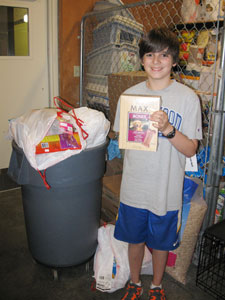
WAGGIN’ TAILS FOR WAYSIDE WAIFS — After Jonah Golder’s family adopted a puppy from Wayside Waifs this summer, Jonah thought the animal shelter would be a good beneficiary for his mitzvah project. He initiated “Waggin’ Tails for Wayside Waifs,” collecting toys, supplies and cash donations from his elementary school, Briarwood Elementary, for the shelter. Jonah is the son of Heather Schlozman and Robert Golder and will become a Bar Mitzvah on Nov. 10 at Congregation Beth Shalom.

BIG CAMPAIGN SET FOR MARCH 30 — StandWithUs is urging schools, campuses, synagogues, community organizations and individuals to celebrate Israel by designating March 30 as the day to buy up Israeli goods at local stores. The date was chosen because the anti-Israel boycott campaign has planned a global boycott of Israeli products for the same day (March 30). Protestors will stand outside stores, asking shoppers not to buy Israeli products. StandWithUs, in partnership with the American-Israel Chamber of Commerce, successfully countered a similar boycott day on Nov. 30, 2010. They mobilized Israel supporters in every store that the boycotters had targeted worldwide. March 30 is an opportune day for Israeli products because the Jewish holiday of Passover is in April this year. For more information, and to learn what stores carry Israeli products, visit www.BuyIsraelGoods.org.

KANSAS CITIAN FOUNDS ISRAEL TOUR COMPANY — Barry A. Kaplan, a marketing and sales specialist who relocated to Israel three and a half years ago has launched a new company, BAK Tours to Israel. BAK Tours to Israel offers complete services including: meeting at the airport, hotels, meals (full or half board), licensed and experienced tour guides, buses of all sizes with appropriately licensed and experienced drivers, tips and entrance fees. Trips can last anywhere from two full days or more. All itineraries are custom made to the wishes of the clients. BAK will also offer Bar and Bat Mitzvah services in Israel. The website is still under construction, however more information can be obtained by emailing .

HBHA SCORES IN JUMP FOR JUDAISM CONTEST — Hyman Brand Hebrew Academy’s team of Cameron Burns, Avery Parkhurst, Sophia Porter and David Robinow was one of six finalists for the fifth annual NCSY National JUMP Leadership Competition. The tie for first place this year went to Hebrew Academy of Nassau County of Uniondale, N.Y., and Yeshiva Atlanta of Georgia. The NCSY (international youth movement of the Orthodox Union) teen leadership training program, called JUMP, empowers students to become aware of individual and communal issues facing the Jewish people and to commit to making positive changes in their schools and communities. Two years ago, the JUMP competition expanded to a national program including 15 yeshiva day schools around the country. JUMP kicked-off the year in October with a National JUMP Leadership Training Seminar. Fifteen yeshiva day schools from across the country came together for a two-day comprehensive leadership program in Stamford, Conn. JUMP culminated last week with the top six schools presenting their results. Each team discussed what they accomplished and reflected both their successes and setbacks. The judges were then able to analyze the true leadership capabilities of the students.

BEACH READS — I actually took a vacation this month and while I was gone I read two paperback books that had been sent to us for review. The one I liked the best, “The Wedding Beat” by Devan Sipher (NAL Trade Paperback Original), goes on sale April 3. It is written by the real-life (unmarried) writer of the New York Times “Vows” wedding column and it’s about a male, fictional, Jewish and unmarried wedding columnist at The Paper. I agree with Jennifer Belle’s observation — she’s the author of “High Maintenance” — “Nothing feels more right than love gone wrong from a man’s point of view. Sipher gives us the male Bridget Jones — winning, elegant and terribly lost. No cold feet here. I do, I do, I do!” Sipher has written the wedding column for more than five years, covering more than 1,000 weddings. Another reviewer (Susan Shapiro, author of “Five Men Who Broke My Heart”) praises it as “Laugh out loud hilarious, hip and deeply heartfelt all at the same time, as if Woody Allen was younger, cuter and wrote a wedding column.” I never laughed out loud, but I think it is worth recommending.
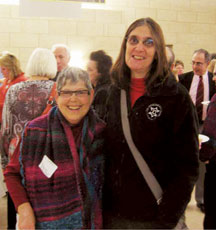
Worshippers at Congregation Beth Torah’s Rosh Hashanah morning service heard Rabbi Mark Levin make a tongue-in-cheek “genius suggestion.”
On that day just about six months ago, the Reform rabbi suggested that congregants make it a habit to “stop in at Beth Torah” every single Friday night. Note that he said stop in, not attend.

Rabbi Levin wasn’t and isn’t asking members to devote 90 minutes or so every Friday night to worship. He is asking them to just come to the synagogue sometime between 6 and 8 p.m.

“I am not telling you you have to come in to pray, although you may want to. I am not telling you what time to arrive or leave. I am saying that a Jewish community, to be a community, must show up weekly together at the same time and place, and Shabbat is that time and Beth Torah is that place,” he announced in his sermon.

“You will see friends, and spend 15 minutes talking, and perhaps then leave. Or maybe you’ll just come late for Kaddish, or to stand with a friend saying Kaddish, and then go to dinner. Maybe you’ll walk through the front doors at 6:15, eat a little something, and head off for a movie. Maybe you show up for the oneg and conversation. I don’t care,” he continued.

Citizen or consumer?

Rabbi Levin’s erev Rosh Hashanah sermon explained the difference between being a Jewish citizen and a Jewish consumer. He explained consumers make decisions that benefit themselves. Citizens act for mutual gain.

“Citizenship often involves short-term sacrifice for long-term gain, like interrupting your schedule for Kaddish or coming together for Rosh Hashanah worship. If I do this for you today, I am hopeful you will reciprocate when I need you tomorrow,” he proclaimed.

He asked the congregation, “Are you a citizen of the Jewish world, or are you a consumer.”

Rabbi Levin wants members of Beth Torah to be citizens of the congregation and citizens of the Jewish world. In that way they will be able to reciprocate when they need someone to talk to or laugh with or grieve with. Citizens, he believes, form communities.

Citizens build community

From its beginnings in 1988, Rabbi Levin said Beth Torah has always strived to bring modern American Reform Judaism to Johnson County. But things have changed a lot in the last 20 years. While Beth Torah is as large as it’s ever been, with approximately 660 member families, that’s not a trend that other congregations in this city, or across the nation, are experiencing.

“The Jewish population of Kansas City is clearly changing rapidly. Anyone who works in the communal field will tell you that,” he said in a recent interview. “There are clearly fewer families that are affiliated citywide. The youth population is down, I would guess, 30 to 40 percent in the last 20 years. The city is clearly aging.”

Something has to be done, as he pointed out in his sermon, if we are to have a Jewish community with Jewish communal services in 20 years. He really believes that means acting as a community. He credits the ideas he is putting into practice now with what he read two decades ago in a book written by Rabbi Lawrence Hoffman, “The Art of Public Prayer,” in which Rabbi Hoffman points out there no problems of liturgy, there are only problems of community.

“A lot of people are throwing a lot of money at this. The truth of the matter is we are the community we need. If you will just be the community, then we have the community we need,” Rabbi Levin said.

“We just have to show up at the same place at the same time and it’s there. It doesn’t have to be manufactured. It’s there. I know everybody’s got their own schedules but everybody has 15 minutes every Friday night,” he continued.

As he said in his sermon, “You may even stay for worship! You are the solution to the problem of community. Entering Beth Torah you’ll meet someone, or join a conversation, shmooze, nosh — all those good Yiddish words — then if you want to take off, you may. And you will know that you have done your part to preserve Judaism and the Jewish community of Kansas City. You know why? Because you will have a good time. There’s an extraordinary energy here when there are hundreds of people milling around, praying, eating, shmoozing. Come Sunday morning and you’ll see! You will in short order look forward to the people. You may say the Shema, you may not.  But you will see and enjoy the people; and you will be glad to be creating community for yourself and for others."

Being the community

Rabbi Levin explained the old model Beth Torah used was “we had worship because we’re a synagogue. That’s what synagogues do. We have religious school because we’re a synagogue. That’s what synagogue’s do.”

Because that’s what synagogues do, Beth Torah will still have worship, and religious school and adult education and social justice projects. But through conversations and surveys over the last year he has learned that what people need and want from the synagogue is relationships with other people and a place where they will feel welcome and secure.

So, Rabbi Levin said everything Beth Torah does from here on out — including the new come as you are, come when you can and leave when it’s convenient attitude for Friday night — will be designed from the perspective of bringing people into a relationship with one another.

“In terms of the Friday night worship … if folks don’t have a relationship, they are not going to come to worship. I hear it all the time. Mark, I come but I don’t know anyone anymore. So I said, no, it’s about checking into the community. Just come,” he said.

The community today

So far, Rabbi Levin’s genius idea has changed Beth Torah’s program life. He said attendance at worship has gone up 50 to 60 percent.

“There are times it’s been up two or three times. On Sukkot we had twice as many people as we’ve ever had,” he said.
“Currently I believe that during the school year between Friday night and Sunday morning we have upwards of 30 percent of the congregation participating in activities over any given weekend,” he continued.

He compared the success Beth Torah is having to evangelical churches.

“They claim 42 percent attendance. Studies about them claim 28 percent, so we are rivaling the institutions that claim a high percentage of their members show up on the Sabbath,” he said.

He said the energy in the sanctuary at worship has changed enormously since this plan was instituted. The average Friday night attendance has grown to around 170 to 180 people.

“When you have 180 instead of 100, there’s a much greater energy in the room. People have commented very seriously on feeling really vibrant in a way that wasn’t necessarily the case before. We’ve always had Shabbatot that 250 people attended. When the choir sings Sermon in Song we would get 200, 250. Now we get 325. So far we’ve had four or five Shabbatot that were special events where we’ve had over 300 people,” he said.

Rabbi Levin is happy to hear that people are becoming more comfortable just showing up regardless of the time or the clothes they are wearing.

“A number of people are coming early, eating and shmoozing. A number of people are staying after until about 8:20 or 8:30. We have more children come. They go into babysitting and come in for the Torah service,” he said.

But he would love to see even more people come and leave and “not feel bad about it.”

“I want people to stay for 15 minutes. It really is about community. You come. Eat the food, visit with the people and go home. If they think ‘I have to stay, it would be rude to leave,’ it won’t work.”

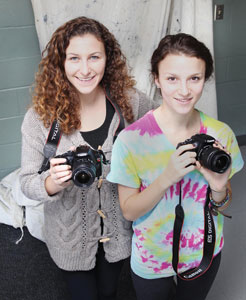
Sisters Alex and Emily Goldman of Congregation Beth Torah are like many Jewish teens in the Kansas City area — they’re involved in school and outside activities, are driven in their academic pursuits and are always up for having a good time with friends.
However, that’s where the Goldman girls’ path diverges from their peers. The twosome started a business together — an endeavor in which they don’t make any money.

Alex, a senior at Blue Valley North High School, and her sophomore sister, Emily, started Photos4Good a little over a year ago. Photos4Good provides no-cost professional photography services for non-profit organizations. The business venture is a combination of both girls’ interests.

“I have been doing community service — about 100-plus hours — for the past several years,” Emily said. “Alex is very into photography, so we were looking for a way to do something together.”

Alex and Emily knew how non-profits struggle to afford good photographic services because of their tight budgets. So rather than charge for photography services, the girls — and the other teens they have recruited to work with them — earn community service hours and the organizations get some great photos. It was their “tikkun olam” solution — helping repair the world using one photo at a time for other organizations working to accomplish the same goal.

“It incorporated both our passions,” Alex said.

Helping in the community was a concept about which Alex and Emily were very familiar.

“Our parents have always encouraged us to get involved,” Alex said. “We do family community service together. Now that we’re old enough to have a skill set that’s useful, we’re doing it,” she said.

“They taught us to recognize how lucky we are to live where we do,” Emily said.

The Goldman girls came up with the idea in the spring of 2010 and talked the idea over with their father, Max Goldman, who has his own consulting business.

“I thought it was a terrific idea because so many of these organizations struggle in this area,” Goldman said.

The girls’ father provided additional advice — when asked — but otherwise, was pretty hands’ off.

“I helped them brainstorm and to be a sounding board,” he said. “It’s been great working with them.”

The matter in which Photos4Good operates is simple. Once a contact is made, the sisters meet with its staff to talk about the photo needs. They shoot each event using a single-lens reflex camera that can take up to 60 images in a second.

In the beginning, the two would go out together on “assignment,” with Alex shooting the photos and Emily in charge of gathering and grouping people. Then the girls review the images they captured.

“We delete the ones we don’t like and edit them,” Emily said. “Within a few days we put them on Dropbox for them to pick up on line.”

Organizations that hire Photos4Good get listed on its website providing added visibility for the non-profit.

Since starting in the summer of 2010, Photos4Good has been quite busy. Their first assignment was for the Children’s Place followed by the Children’s Center for the Visually Impaired, where their father had served on the board of directors. Traci Todd-Murphy was looking for an inexpensive, quality option for photos at an event.

“They were fantastic,” said Todd-Murphy, CCVI’s marketing and communications manager. “They needed little direction and did a very good job.”

The photos have been used on CCVI’s website, Facebook page and in local publications.

“They’re so independent ... and they’re really mature for their age. We just swap emails on what is needed and we get great turn-around time,” Todd-Murphy said. “I’ve been very pleased with what they’ve shot for us.”

Through word of mouth, additional assignments have come in. Photos4Good has worked with a number of clients including the Ronald McDonald House, Jewish Family Services, the Will to Succeed Foundation, SAFEHOME and Harvesters.

Things are so busy that the sisters have recruited friends to help out including Jewish teens Jonathan Bush, Lily Lieberman and their younger brother, Jake.

Emily and Alex have spent very little to get their business up and running.

Their dad provided the initial camera; other volunteer shooters check out equipment from their school. The graphics on the website were free. With the photos being digital, there is no printing costs other than providing a CD of the images, if the client prefers. The website domain was $40 and they have spent a small sum on a limited printing of a brochure. Recently, they hooked up with another website, Smugmug.com, where they send clients who want to purchase photos. A portion of those proceeds goes back to the event sponsor.

The sisters have been balancing their business endeavor with other activities. Alex is co-editor of the BVN newspaper, is involved in debate and cross country. She’s completed her college search and will attend the University of Pennsylvania in the fall. Once settled in, Alex hopes to continue some form of Photos4Good at Penn. As for Emily, she’s active in Saadia BBG as well as the BVN tennis team and Spanish Club. In April, Emily is going to Israel to attend school for two months through the Alexander Muss program; she’ll even miss Alex’s high school graduation. When she gets back in town, Emily will jump right back into action with Photos4Good.

Both teens have enjoyed their new endeavor, but for slightly different reasons.

“I like the photography so much,” Alex said. “I enjoy looking at all the photos. You get cool angles and all the people are so sweet. ... And I like the people watching.”

Alex and Emily aren’t bothered at all that they won’t make money from this adventure.

“It wasn’t why we started this,” Emily said.

“I’m really proud of what they’re doing and their initiative,” their father said. “It’s been a very good learning experience for them.”

“Many Israel programs are either based on politics and foreign policy or very light … falafel,” said Amy Beth Oppenheimer, the film maker who created the documentary “Faces of Israel: A Discussion About Marriage, State and Religion in the Jewish Homeland.” “Faces of Israel,” she said, “explores everything in between.”
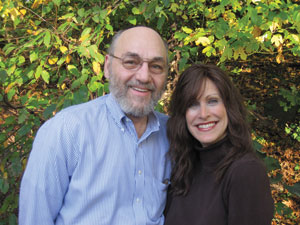
Oppenheimer will be here on March 28 and 29 to present two different programs to members of the Jewish community. The first program is specifically for teens in grades seven to 10 as part of citywide B’Yachad program. A program for adults will be held the next night.

“At Beth Torah, we saw this as an excellent opportunity to follow up on Rabbi Mark Levin’s Rosh Hashanah sermon, which challenged members to live as citizens of the Jewish people,” said Rabbi Vered Harris, who is helping to coordinate the events.

The adult program will be held 7 to 8:30 pm, on Thursday, March 29, at Congregation Beth Torah.

They hope the community will gain “a deeper understanding of the issues created by the interception of religion and politics in the Jewish homeland,” said Rabbi Harris. “As well as offer a venue for meaningful discussion about Israel, more information about some of the complicated aspects of religious expression and the role of religion in Israel.”

Oppenheimer hopes to deliver this experience. Her documentary offers “cutting edge questions about the state and grass roots efforts in Israel,” she said. “Regardless of a person’s background, everyone gets something from the program.”

While enrolled in a one-year program at Haifa University, Oppenheimer became interested in how the state and religious groups work together — and do not work together — in Israel. She started with the marriage process. Although she had no experience working in film, she learned as she worked.

As a registered student at Johns Hopkins University in Maryland, she was able to get financial support through the school’s Woodrow Wilson Fellowship, and tech support from the school’s Digital Media Center.

She graduated from Johns Hopkins, but continued working on her documentary.

Currently Oppenheimer is traveling throughout the country presenting the Faces of Israel Programs for which she has developed a curriculum and a series of programs.

“Faces of Israel does a good job of balancing tough questions and the challenges the state of Israel faces,” she said. “People come out feeling uplifted and engaged.”

The two programs she will be presenting in Kansas will be totally different. The program for teens is more interactive, with stories, clips from the documentary, discussion groups and activities.

For adults, the program delves much deeper into issues facing Israel, including talking about Israel Supreme Court decisions and the role of the Chief Rabbinate. “This is a more sophisticated program about religion and state in Israel and topics concerning it,” she said.

She stressed that “neither program is a film screening with lecture. They are more of a dynamic program and presentation where there is interaction with the audience using media.”

Oppenheimer is constantly updating the curriculum that goes along with the program in order to keep current with events in Israel. The film itself is current with issues as she filmed portions of it at different times.

Those interested in attending the March 29 program should call Congregation Beth Torah at 913-498-2212. It is free and open to the public. This program is not intended for teens.

Beth Torah and its co-sponsors — the Hyman Brand Hebrew Academy, the Jewish Community Center, the Jewish Federation of Greater Kansas City and The New Reform Temple — are working together to offer this program for free to the community.

“The 4 Steps to a Successful Marriage,” by Sam and Terry Krause, $12.95

What makes a successful marriage? There are probably as many answers to that question as there are successful marriages. One couple, Sam and Terry Krause, believe they have the answers, so they wrote a book called “The 4 Steps to a Successful Marriage.”

The four steps come at the end of the book, but don’t try to skip ahead. They won’t make much sense unless you read the whole book, which isn’t asking too much; it is comprised of 112 pages. In the introduction, the authors say they purposely made the book short and concise so people could read it again and again.

The Krauses have been married almost 30 years. Terry Krause said people have frequently remarked that they have never seen a couple together as much as the two of them, so they must have a really happy marriage.

“We would say we have a successful marriage — not always happy. But we have the ability to return to that original purpose we agreed upon when we got married; that original commitment,” she said in a phone interview from New Jersey. “We thought we could write a really effective and compelling marriage book.”

Terry Krause is a Kansas City native where she was a member of the SYO youth groups at Kehilath Israel Synagogue. Her parents are Lillian Greenberg and the late Allan Greenberg.

“My dad certainly needs no introduction to the Kansas City Jewish community,” she said. “He was the youth group director for the local NCSY chapter at Kehilath Israel — in fact, the K.I. youth lounge was named for him. He was an advocate for all of us public school children who needed our finals to be rescheduled so they would not conflict with the Jewish holidays. My mom — the powerful woman behind the great man — lives at Village Shalom.”

She says she still has tons of relatives in Kansas City. Krause graduated from Southwest High School, then left for college. She came back for summers, but never really lived here again. She attended the Rhode Island School of Design in Providence, then moved to New York where she worked for many different designers, such as Diane von Furstenberg and John Weitz.

Sam Krause was born in Israel, but has been a New Yorker since age 9. He is a sought-after public speaker, who Terry Krause says can regale a crowd for a hours with stories about his marriage, his previous jobs as a cab driver and standup comic, as well as surviving the past eight years as a heart transplant recipient.

The Krauses are Orthodox Jews who believe spirituality is a big part of a successful marriage. There are lots of references to Jewish law and kabbalah in their book, and the Lubavitch Rebbe, Rabbi Menachem Mendel Schneerson, is quoted throughout.

But Terry Krause said that should not deter non-Jews from reading it. She says the quotes are no different than quoting, say, Ralph Waldo Emerson.

“It’s just something a little more theological, but there’s nothing esoteric about the quotations. My dentist, who’s Greek Orthodox, bought 10 copies. There’s nothing specific to Jewish readers,” she said.

Krause said she does believe two people getting married should be of the same religion, regardless of what that religion is.

“When you’re the same religion, you have a ground of being that’s agreed upon. I think that’s really, really important.”

One of the points the Krauses make is that there is both content and context in a marriage. Content refers to things like paying the bills, raising the kids, finding a house in a good neighborhood with good schools, etc. These are all part of the larger context that has to be created by the couple.

“The metaphor we use in the book is that it’s like a fruit bowl that has to hold the fruit,” Terry Krause said. “The fruit may change or someone eats it or it rots and you throw it away, but the bowl is always there. So the bowl would be the context.”

There’s also commitment — the couple must be committed to making the marriage work. Krause said it’s like the Greek armies who crossed a bridge to fight their enemies, then actually burned the bridge behind them so they could not retreat. There was no alternative but to stay and fight.

Perhaps the most difficult concept to grasp is re-creation, which happens during a conversation. It’s more than just listening and trying to understand.

“It really is about re-creating not just the words he’s saying but the body language he’s expressing and the kind of physical presentation and all the thoughts and the attitudes and the points of view and the opinions that are contained within his words, really using all that entire set of properties to literally re-create the thing that your spouse is saying,” Terry Krause said.

And during this re-creation exercise, there’s absolutely no interrupting.

No easy task! But it seems to be working. Krause said the response to their book has been great. Her husband has received 10 speaking engagements as a direct result of the book and they’ve had numerous book signings.

The book is available on the Krauses’ website, www.thefoursteps.org, amazon.com and barnesandnoble.com.

The Krauses reside in Northern New Jersey. They have six children and three grandchildren.

JEWISH HERITAGE DAY — This Sunday, March 25, is Jewish Heritage Day at Livestrong Park at the Legends, as Sporting Kansas City takes on Dallas. As in the past, several local rabbis will participate in a ceremonial kickoff preceding the game. Once again the Vaad will be supervising the sale of kosher hot dogs. A portion of the proceeds will benefit SASONE and the Hyman Brand Hebrew Academy Sports program. Kickoff is at 6 p.m., and tickets are still available by contacting Emily Hanover at or calling 913-387-3838. The first 150 registered will receive a T-shirt. My Hebrew is rusty, but it looks to me like it will say Sporting Kansas City on the front.

OPENING AT A THEATER NEAR YOU — “In Darkness” begins its run here on Friday, March 23, at the AMC Town Center, Glenwood Red Bridge and Cinemark Palace. Nominated this year for an Academy Award for Best Foreign Language Film, “In Darkness” is based on a true story. Leopold Socha, a sewer worker and petty thief in Lvov, a Nazi-occupied city in Poland, one day encounters a group of Jews trying to escape the liquidation of the ghetto. He hides them for money in the labyrinth of the town’s sewers beneath the bustling activity of the city above. What starts out as a straightforward and cynical business arrangement turns into something very unexpected — the unlikely alliance between Socha and the Jews as the enterprise seeps deeper into Socha’s conscience. The film, directed by Agnieszka Holland of “Europa Europa,” is also an extraordinary story of survival as these men, women and children all try to outwit certain death during 14 months of ever-increasing and intense danger.

LET ALL WHO ARE HUNGRY — When you read this, Passover will be just about two weeks away and JFS is winding up its annual campaign to collect kosher-for-Passover food for those who don’t have the financial means to purchase it for themselves. Once again, JFS is partnering with Yachad — the Kosher Food Pantry, to provide enough kosher-for-Passover food for the entire week. The food drive is still in need of walnuts, gefilte fish, matzah, grape juice and sweets (such as jelly candies, macaroons and cake or brownie mix). Food items may be dropped off at any time in a barrel outside the JFS Kansas office in the Jewish Community Campus. Financial donations are also being accepted. Send checks to Jewish Family Services Holiday Project, 5801 W. 115th Street, Suite 103, Overland Park KS 66211, or call (913) 327-8250 to use your credit card. Donations can also be made on the agency’s website: www.jfskc.org/donate. JFS is also seeking volunteers to pack the Passover food packages along with delivering them. Deliveries will be made April 4-6. Contact Anna Feldman at 913-730-1452 or .

PASSOVER PHONE APP — Just in time for Passover, OU Kosher — the world’s most recognized kosher symbol — has launched a new OU Kosher phone app to search the kosher status of all OU products for Passover and year-round. The free app is available for download for iPhones, iPads, iPod Touch and Androids. To download this app, simply select “OU Kosher” from the iTunes App Store or use direct link to the app from the OU’s website at www.ou.org/apps. The direct application can be downloaded at http://itunes.apple.com/ke/app/ou-kosher/id491138771?mt=8. In addition to the ability to search for more than 600,000 products, manufactured in nearly 8,000 plants, in more than 90 countries around the world — the app provides the most up-to-date kosher alerts; new product updates; and allows easy access to ask a question or to call the OU Kosher information hotline. The app can be used in conjunction with the OU website and Passover Guide. Additionally, the OU Kosher Facebook and Twitter accounts plan to help prepare for the eight-day holiday by featuring kosher for Passover products, recipes and articles to educate and engage fans and followers.


PAREVE CAKES AT HEN HOUSE — Last week the Hen House at 117th and Roe began selling pareve cakes, much to the delight of many kosher consumers. The Vaad posted the good news on its Twitter and Facebook pages and drew lots of responses. For more local kosher information, Like the Vaad HaKashruth on Facebook, follow it on Twitter or go to its website,  http://vaadkc.org.

Just last year I read the best-selling novel, “Cutting for Stone,” by Abraham Verghese. The book, set in Addis Ababa, Ethiopia, is a multi-generational saga of Dr. Shiva Stone and his family. As interesting as the book was, I did not add Ethiopia to my bucket list of travel destinations. Ethiopia was too far away, just another third world country offering nothing that would tempt me to visit.

However, I quickly changed my mind about visiting Ethiopia when I received a call from my friend, Bari Freiden. She and her husband, Dr. Floyd Freiden, heard about a JDC mission trip to Ethiopia and Rwanda to visit JDC-IDP projects in those countries. Would we be interested in going with them?

My husband, Dr. Michael Blum, immediately called Trish Uhlmann to get more information about the trip. Trish, who is chair of the international development program of the JDC, was the chair of this trip and was thrilled with the possibility of us joining the group.

I emailed the JDC and told them “yes,” add us to the list.

As we started preparing for the trip, Michael ran into Dr. David Kaplan at Congregation Beth Torah. He subsequently signed up to go on the trip with us. So, on Feb. 7, the six of us from Kansas City joined the other trip participants, including several JDC board members and national staff, for the 13-hour plane ride on Air Ethiopia from Dulles to Addis Ababa.

The ‘Joint’

I was familiar with JDC work in Romania and Russia but was not really familiar with its history or the extent of JDC’s projects throughout the world. For 96 years, the American Jewish Joint Distribution Committee (JDC) — also referred to as “the Joint” — has exemplified the principle that all Jewish people are responsible for one another. JDC’s reach is global, yet it is uniquely equipped to make a deep impact locally.

Active today in more than 70 countries, JDC and its partners work to rescue Jewish lives at risk, bring relief to Jews in need, renew lost bonds to Jewish identity and Jewish culture, and help Israel overcome the social challenges of its most vulnerable citizens, both Jewish and non-Jewish.

The Joint’s IDP

The Joint’s reach extends beyond the global Jewish community by providing non-sectarian disaster relief and long-term development assistance worldwide. Since its inception in 1914, JDC’s non-sectarian efforts in the form of the International Development Program (JDC-IDP) have been carried out in more than 60 countries by offering humanitarian aid to those who have suffered from man-made and natural disasters such as earthquakes, famine, extreme poverty, political instability and war.

JDC-IDP addresses victims’ emergency needs and then provides longer-term rehabilitation and development assistance. Training is an essential part of these efforts, as JDC-IDP works to enhance the abilities of local partners and to ensure that the projects continue even after JDC’s involvement has ended.

All IDP projects are independently funded, with start-up money coming from local governments, NGOs or philanthropists interested in projects in developing countries. The role of the JDC is to assist each project raise the initial funds and to help in the development of the program, with the final goal being for each project to run independently without further assistance from the JDC.

Unity Scholarship Program for Women

One of the outstanding IDC program in Ethiopia is the Unity Scholarship Program that provides young women with full college scholarships, including room and board. In Ethiopia, the number of women enrolled in higher education has traditionally been very low with boys having the priority to attend university if the family can afford to send them. A major donor, Rita Levi-Montalcini from Rome, began the scholarship program that the JDC helps administer. The actual scholarship awards are part of the IDP. It costs just $7,500 to send one young women to the Unity College in Addis for three years, which cost includes room and board.

At a restaurant located on the hill where 14,000 Felasha Jews were encamped before being airlifted to Israel in 1991, we met with 20 young women who had received college scholarships. Most of the young women were current students, but we also met with some of the graduates, all of whom were employed. The local woman in charge of the girl’s dorm, Tegest Heruy, spoke beautifully to our group about the importance of giving talented young women the chance to attend college and how much the recipients are able to give back to their families, communities and Ethiopia. An interesting coincidence is that Tegest’s son and daughter both live in the Kansas City area and Tegest has visited here several times.

IDP projects in Gondar, Ethiopia

On Feb. 13 we flew to Gondar, a one-hour plane ride north of Addis. We immediately drove to one of the rural school projects funded by IDP donors. Even before we entered the school compound, several students rushed out to meet us. After Trish cut a dedication ribbon, we entered the school yard where the voices of more than 100 children greeted us in song. The singing continued as we set up tables where our assignment was to give five de-worming pills to each student in the school. We told each student “swallow, swallow” in Ethiopian as they drank their glass of water. While the students waited in line for their medicine, Michael pulled out his bag of magic tricks and did a few simple sleight of hand tricks. Michael would continue to entertain the children we met, with his largest audience being the 500 students at the Agahozo Shalom Youth Village in Rwanda.

After handing out the last of the pills, we visited some of the classrooms, which were exact replicas of a one-room Kansas prairie school, with desks for the students neatly lined up and a simple chalk board at the front of the room. Before we left the school, we were treated to an Ethiopian coffee ceremony and other refreshments by the school staff.

There were two moments that stood out for me that morning. One was the unveiling of a plaque at the school that read “Salej Kidane Meheret Primary School implemented by the JDC and funded by the Osher Foundation — US February, 2012.”

The other moment was a stop at another village school to see a classroom built with funds raised by the teenage son of one of the JDC board members on our trip. This young man had come to Ethiopia four years earlier with his family. After that trip, this young man decided that he wanted to help build a classroom on his own so he proceeded to raise the cost of one school room, $17,000, from family and friends. We were able to see the finished project and watch the young man’s mother put her hand in cement to dedicate her son’s project.

IDP Projects in Rwanda

In Rwanda, the main IDP program is the Agahozo Shalom Youth Village 40 kilometers east of Kigali, which is home to 500 Rwandan orphans from the ages of 13 to 18. After the Rwandan genocide in 1994, philanthropist Anne Heyman read about the crisis and went to the JDC to discuss a special project she and her family wanted to fund. The JDC assisted in purchasing the land, finding an architect to design the village and working with the local government to obtain building and other permits.

Modeled after the Yemin Orde Youth Village in Israel, every Rwandan village nominates the neediest of its orphans to live in Agahozo Shalom for four years. The selected students spend the first year getting adjusted to living in a location where lack of food and shelter is never a worry. During this first year they also receive extensive counseling to heal their emotional wounds.

I spent time talking to one of the first-year students who spoke beautiful English. He told me about his learning to get along with the other students and about the need for “tikkun olam.” It touched me to hear these Hebrew words coming from a Rwandan orphan. In a country ravaged by hatred and killing less than 20 years ago, the words one student shared with me validated the efforts of the JDC by helping to develop these non-sectarian projects. In a world where there is so much destruction and tearing down, Rwanda is a proud example that a country can be rebuilt and that enemies (the Hutus and the Tutsis, which ethnic designations are no longer used in Rwanda) can learn to live together in peace.

I will be forever grateful that I was able to see for myself the humanitarian work that JDC does for both Jews and non-Jews throughout the world. When Trish called me earlier this week and asked what project we might be interested in funding, my answer was “I really don’t know as it is so hard to choose just one.” Michael and I will decide which project to support after we share our extraordinary trip experiences with our children and our oldest grandson, Mitch. It will be a worthy conversation to have with our family.


A propaganda broadsheet has been produced and distributed by a group calling itself the “Occupy Kansas City Journal.” Leonard Zeskind, president of the Institute for Research & Education on Human Rights, reports the broadsheet contains assertions usually reserved to the Aryan Nations and Ku Klux Klan. One panel of this broadsheet contains a depiction of a stereotypical Jew along with words: “So what have those ‘Great Humanitarians,’ the Jews, been pouring into the well of white culture over the past half century.”
The propaganda broadsheet at issue is available on a website www.occupykcjournal.com. It was also mailed to several Kansas City Council members.

Dated Jan. 22, 2011, it is a collage of photos and cartoons that are not appropriated to be republished in The Chronicle. It is graphic with more than one sexual scene, several unflattering photos and comments about President Barack Obama and nasty comments aimed at a variety of minorities.

A press conference was held Tuesday, March 13, to discuss the broadsheet. It was was attended by leading advocates from the Occupy Kansas City movement, including Michael Enriquez; Marvin Szneler, executive director of the Jewish Community Relations Bureau|American Jewish Committee; Anita Russell, president of the Kansas City, Mo., branch of the NAACP; and Zeskind.

Zeskind said Enriquez spoke out strongly against the contents of the broadsheet, making it clear that Occupy Kansas City leaders did not agree with the material that was propagated in the movement’s name. Enriquez reiterated that the mainstream movement was not associated with the propaganda in any way.

Earlier Zeskind said such claims published in the broadsheet and on the website are both racist and anti-Semitic “and the fact that they are being made by a group using the ‘Occupy KC Journal.com,’ has magnified its import.”

At the press conference Szneler said when he saw the page, which he called the work of “purveyors of hate,” he really couldn’t make sense of the connections between all the images on the page. He noticed immediately, however, “that they are disgusting, racist, bigoted and hateful.”

“Like many bigots, they are equal opportunity haters. I am Jewish, but know full well that hatred against Jews is usually accompanied by hatred of African Americans, gays and lesbians, Hispanics and anyone who does not match the ideal description of the bigot.”

Szneler thanked those representing the mainstream Occupy Kansas City movement for stepping up at the press conference “to say no to hatred, bigotry and anti-Semitism.”

“They not only are doing the right thing, but they remind each and every one of us, not only those assembled here today, but all of us, to speak up and say no to hatred. Whether it’s an innocent joke, bigoted comment, or an act of violence like this mailing — we cannot stand by quietly. We cannot tolerate hatred for one second.”

Zeskind pointed to a poll conducted in December 2011 by the Pew Research Center that found that 44 percent of Americans support the Occupy Wall Street movement, with an even larger number supporting its goals. He said large percentages of Americans, however, do not support the anti-Semitism and racism found in this broadsheet.

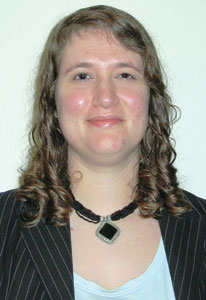
Congregation Beth Torah has hired Rebecca Reice to fill the position of rabbi educator that is being vacated by Rabbi Vered Harris in June. Reice, who will be ordained by Hebrew Union College-Jewish Institute of Religion in Los Angeles at the end of May, will assume her duties at Beth Torah on July 1.
Rabbi Mark Levin said Reice is very immersed in her Judaism and comes with only the highest of recommendations.

“I’m very excited to be working with her. She is very talented,” Rabbi Levin said.

Reice was born and raised in Chapel Hill, N.C. She attended the University of Texas at Austin, where she earned a Bachelor of Arts degree with special honors in Plan II (honors liberal arts) and psychology. After completing her undergraduate studies, she worked for the Hillel of Silicon Valley as a Hillel Steinhardt Jewish Campus Service Corps Fellow.

She began her rabbinical studies with HUC-JIR in Jerusalem in 2006. Since then she has earned a Master of Arts degree in Hebrew letters (2009) and a Master of Arts degrees in Jewish education (2010), both from the HUC-JIR Los Angeles campus.
The rabbi-to-be said she is especially interested in music, storytelling, liturgy and the Tanakh (Hebrew Bible). In addition she loves to cook and garden. Her husband, Asher Lazarus, is an engineer with IBM and a passionate triathlete.

Reice said when she first learned about the opening at Beth Torah, she consulted her hometown rabbi and personal friend, Rabbi John Friedman of Judea Reform Congregation in Durham, N.C. Coincidentally, Rabbi Friedman is close friends with Rabbi Levin and grew up in Kansas City, attending The Temple, Congregation B’nai Jehudah.

“He (Rabbi Friedman) said don’t miss this opportunity to meet with Rabbi Mark Levin,” Reice said.

She was also attracted to the way Beth Torah described the congregation and the position in the job posting, saying it used “visionary language.”

“There was a certain attitude about life-long learning and about how a community could function that was really exciting to me,” she continued.

Reice, who will be 29 when she joins the congregation’s clergy staff, said she had a fantastic initial conversation with Rabbi Levin and Michelle Cole, the congregation’s president, on the HUC-JIR Cincinnati campus.

“I felt it was a really clear and open community, which is something I value and was very exciting. At the end of my interview they handed me a giant bag of of Beth Torah things, including the citizen band, which I had learned about in my research from a great video that is on the home page of the Beth Torah website,” she said.

She said she has been telling her friends she’s already been embraced by the community.

“I come from the South and I talk to strangers. I’m just naturally friendly, that’s my attitude toward the world. Then I walked into a congregation where it seems like everybody talks to strangers. Everyone was friendly and open and sweet,” she said.

“That to me is an incredibly precious part of synagogue life that isn’t available everywhere. I’ve been to plenty of synagogues in this country where nobody talked to me at the oneg,” she continued.

Reice is excited to work with the staff at Beth Torah, who she already calls family.

“That’s the kind of commitment that I see the professional staff and the lay leadership have to each other," she said.
"I think that relationship between laity and clergy says so much about a congregational culture, and it’s a question that I kept asking congregations during my interviews this year and I was so moved to see what it looks like at Beth Torah.”

Reice and her husband plan to return to Kansas City to become more acquainted with the area the weekend of March 23.


Put down the guns and pick up a soccer ball.

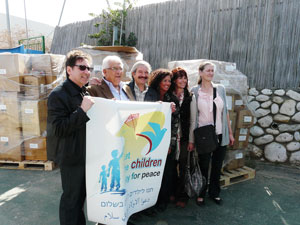
That is one of the goals of the Let Children Play for Peace effort, an organization started in Kansas City by an Israeli Jew and an Egyptian Muslim. Let Children Play for Peace has collected hundreds of new toys and is delivering them in equal amounts to children in Sderot, Israel, and the Gaza Strip. Soccer balls, kites, stuffed animals and more were delivered to Israel last month and will be handed out to children who live in an area where simply playing can be hard to do when surrounded by violence.

“We want to bring attention to peaceful efforts by helping with children’s needs,” said Sam Nachum, the Jew in the partnership. “Most of the time these children have no toys, and we don’t think that is fair.”

Born in Israel, Nachum moved to Kansas City in 1978. He had met Dana, who he would eventually marry, a few years earlier while she was visiting Israel and she lived here. Nachum saw first-hand the effect violence can have on children and how damaging it can be.

“They can forget what it is like to be a child,” he said.

Work on this project began around three years ago during the conflict in Gaza. The reports of the fighting were so bad that Nachum, a member of Chabad House, knew he had to do something to help. One night at a gathering at the Jewish Community Center, a Muslim man, Ahmed El-Sherif, spoke up and Nachum was impressed with him.

“It was very courageous for Ahmed to show up and to speak,” Nachum said. “We began talking and together we came up with the idea of collecting the toys.”

El-Sherif was born in Egypt and, like Nachum, had seen violence before relocating to Kansas City. He and Nachum started the Let the Children Play for Peace organization so that other children might have some relief from the stresses associated with the conflicts in the area.

“Children are the ones that suffer the most, both on the battle field and at home,” El-Sherif said. “Children are innocent yet they still suffer. I think we were inspired to do this because both Sam and I lost a lot of our childhood. People don’t realize how damaging that can be. We want to help kids today, on both sides, try to avoid the same things that happened to us.”

Some could consider toys as luxury items; however El-Sherif and Nachum see them as more than that.

“Most of the time, people send medicine or food during these times,” Nachum said. “The needs of children are often forgotten. But to see their faces light up when they get these new toys, you realize how much they mean to them."

What started as a two-man effort quickly morphed into a large-scale organization with volunteers from a variety of groups and faiths joining.

“We really knew that something had to be done, and to send something that would benefit children, who have no part in the fighting, made sense,” said Nick Awad, a volunteer with Let Children Play for Peace. Awad is a Palestinian Christian, a minority where he is from, and also wants an end to the fighting. “What everyone involved wants is for the shipments to lead to more efforts where people reach out to both sides.”

Awad says that helping children has been a cause that so many different people can support, and the more people that volunteer and donate, the more children that can benefit. Nachum agrees.

“Everyone has come together and been so supportive,” Nachum said “No one has heard the idea, and said they didn’t like it. No matter what side you are one, everyone has been able to remember what the important thing is and that is helping children.”

The help included raising more than $9,000 to pay for the scosts, taxes and other red tape involved with shipping the toys to the Middle East. Nachum and a group of 16 volunteers from Let Children Play for Peace all personally flew out to area to help with the delivery. While there the volunteers received considerable media attention, appearing on television, radio and in newspapers.

“We want to make sure the toys go where they are supposed to go,” Nachum said. “That is everyone’s concern now.”
The deliveries have gone well so far, but the shipment to the children in Gaza is still waiting on final approval. The organizers know they must be diligent when dealing with so much conflict. However, they hope the potential rewards will be more than worth it.

“This help can open the door for dialogue and communication between the two sides,” Sherif said. “Maybe people will think twice before they will do action that will damage a child’s life.”

“Our main goal is that one day, the children of Gaza and the children of Israel can come together and play,” Nachum said. “We want to build a soccer field in-between the two where they can play. That is a dream of Ahmed and me. For these kids to meet on that field instead of the field of battle.”

For more information on this organization or to donate, visit www.letthechildrenplayfor peace.org.