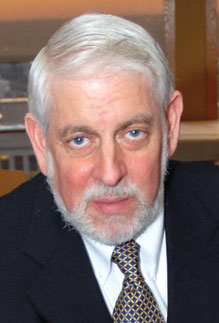

Michael Klein can be described as a visionary, a person who has had unusually keen foresight, especially when it comes to the Jewish community. Over the years that foresight has included helping steward the move of The Temple, Congregation B’nai Jehudah to its current location in Johnson County. He has also been instrumental in seeing the Jewish community’s home for the aged, now known as Village Shalom, also move to Kansas, located just a hop, skip and a jump from the Reform congregation.

Earlier this year Klein was honored, along with his entire extended family, for his contributions to Village Shalom. Now it’s B’nai Jehudah’s turn to honor Klein as one of its most devoted benefactors and his ongoing support for the congregation at Comedy Tonight: A benefit for The Temple, Congregation B’nai Jehudah, Saturday evening, June 2. (For more information, see below.)

“We are so grateful to be able to honor someone like Michael, who has given so much of his time and energy to help us move into the future,” said B’nai Jehudah Rabbi Arthur Nemitoff. “I can’t think of a better venue in which we can pay homage to his work on behalf of the congregational family.”

Klein has been a member of B’nai Jehudah for almost four decades. A Kansas City native, he completed his undergraduate work at the University of Pennsylvania’s Wharton School, and then earned his juris doctorate at the University of Michigan Law School. Described as a dedicated and generous member of B’nai Jehudah, he first served on the congregation’s board of trustees from 1989 to 1995. Due to term limits he stepped away from the board for many years, returning to the board again last year.

“During that stretch of time I was the head of the art committee, which I still am, and I was on the education committee. I’ve always had an interest in education. I am simply concerned about how to transmit Jewish values to a new and younger generation,” Klein said.

His desire to make sure Jewish values are transmitted to younger generations is the reason Klein recently underwrote the commissioning of the Paul Mesner Puppets to develop a special High Holiday presentation “to the delight of the youngest members of our congregation.”

He decided changes needed to be made to children’s services about four years ago after attending High Holiday worship with his nephew and great-niece.

“It brought back all the memories of how bad youth services were when I was small,” Klein said. “The kids were squirming, the parents were unhappy because their kids were squirming and it was generally not a good time for anyone. I think that whole thing is fairly universal across all synagogues and all Jewish denominations.”

So he visited with Rabbi Nemitoff about his concerns.

“To his credit, he was willing to listen to an idea. I said that you cannot hope to even begin to teach children if you can’t engage them and clearly the youth services that I had seen were not engaging anyone,” Klein said.

Klein said Rabbi Nemitoff helped craft an entirely new service for children using the puppets.

“They’ve done it two years now,” Klein said. “The kids were absolutely spellbound. I watched my nephew’s daughter again and she was just bug-eyed throughout the entire service.”

From what he’s seen just with his own family, Klein thinks the creative services are accomplishing the goal of educating and transforming Jewish values to young children. For example, he noticed that his great-nephew Jonah, who was only about 2 ½ years old at the time, walked around following Yom Kippur services telling everyone “I’m sorry.”

“It amazed me that, as young as he was, he picked up part of the lesson that if you do something harmful you need to say I’m sorry, which is the message from the Jewish High Holidays,” Klein said.

An added bonus to the change in service, according to Klein, is the increase in extended families attending it.

“The kids were no longer squirming, the parents were enjoying it and then suddenly the grandparents started coming,” he said.
“It really has gotten to the point where a lot of the young kids are looking forward to services. When was the last time that happened?”

Setting the plan in motion to change the children’s services is just one example of what Klein has tried to do during his tenures on the board at B’nai Jehduah.

“I’ve tried to look at things with a new eye and see how things can be done better and how the values that are important to Judaism in general and the Temple in particular can be carried on,” Klein explained.

In addition to his service to B’nai Jehudah, Klein has also committed his time and energy to the Jewish Community Foundation, Flo Harris Foundation, Village Shalom and its predecessor Shalom Geriatric Center, and Kansas City Jewish Museum, where he also was a past president and one of its earliest supporters.

Today Klein is semi-retired from US Toy Company, a family-owned company founded in 1953. About two-and-a-half years ago he sold his interests in the business to his two nephews, but has stayed on at their request.

He is proud to be associated with B’nai Jehudah and the Jewish community and he believes B’nai Jehudah plays an important role as an anchor in it.

“We need things like The Temple to be able to transmit our Jewish values to the next generation. It’s one thing if someone said I don’t need to go to a temple or synagogue to teach my children right from wrong. Yet The Temple, and Judaism, give a vessel in which to put those values that makes it easier to transmit from generation to generation. That’s why I think the Temple is important.”

Comedy Tonight

Comedy Tonight: A benefit for The Temple, Congregation B’nai Jehudah, takes place at 7 p.m. Saturday evening, June 2, at the Westin Crown Center. This evening will feature “Jewtopia,” off-Broadway’s longest-running comedy hit, featuring co-creators Bryan Fogel and Sam Wolfson.

In addition to live comedy, the evening will feature cocktails, desserts, and live and silent auction.

Funds raised from the event will benefit B’nai Jehudah and its programs. For more information about the event, or to purchase tickets, go to bnaijehudah.org, or call 913-663-4050.
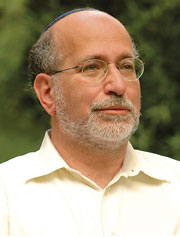
The Kansas City Jewish Community has made a big impression on Rabbi Joseph Telushkin. So much so that the rabbi, whose book “Jewish Literacy: The Most Important Things to Know About the Jewish Religion, Its People and Its History” is the most widely selling book on Judaism in the past two decades, is coming back here to be the keynote speaker at the community’s annual all-night Shavuot celebration on Saturday, May 26, at Kehilath Israel Synagogue.
More than 500 people came to hear Rabbi Telushkin when he was here three years ago. As Rabbinical Assocation President Rabbi Herbert Mandl describes it, it was a standing-room only crowd.

“I did this a few years ago and I had a very nice turnout so I’m very much looking forward to coming back to Kansas City,” Rabbi Telushkin said in a telephone interview last week.

“It was an extraordinary experience. I go and I speak in many communities but it’s very moving to have so many people in attendance. I hope it happens again,” he said.

The event greatly appeals to Rabbi Telushkin because it is sponsored by the Rabbinical Association and a variety of congregations from all the movements.

“It’s always moving when you feel you are coming to a community and speaking to different communities. Obviously when you speak at just one synagogue you are more limited to the nature of the outreach you are doing,” he said.

“I really had a wonderful experience here before. To be able to speak on a higher level as one can and to feel that people are really being reached is a dream for a speaker,” he continued.

Rabbi Telushkin was ordained at Yeshiva University in New York, and pursued graduate studies in Jewish history at Columbia University. He resides in New York City with his wife, Dvorah Menashe Telushkin, and their four children.

He lectures throughout the United States, serves as a senior associate of CLAL, is on the board of directors of the Jewish Book Council and is spiritual leader of the Synagogue for the Performing Arts in Los Angeles.

Rabbi Telushkin’s Shavuot topic will be “Seven Lessons from a 2,000 Year Old Rabbi That Still Matter for all Jews Today.” The 2,000-year-old rabbi he is referring to is Hillel. Rabbi Telushkin believes that many of Hillel’s teachings “remain exceedingly relevant” today.

“We’ll start with his most famous teaching where a non-Jew approaches him and he defines the essence of Judaism for this non-Jew by saying ‘what’s hateful unto you don’t do unto your neighbor. This is the whole Torah, the rest is commentary now go and study.’

“So he really takes seriously the pre-eminent significance of the ethical in Judaism. What makes that clear is that the non-Jew did not ask him ‘Oh tell me about Judaism while I’m standing on one foot.’ He said, ‘Convert me to Judaism on the condition that you can explain it to me while I’m standing on one foot.’ So this is a question, almost in a legal form, coming from a would-be convert. So Hillel very much takes the essence of Judaism on that and that’s one of about seven examples that I want to give.”

Rabbi Telushkin said that even within that example there are other interesting parameters he will discuss.

“One is why doesn’t he choose a verse like love your neighbor as yourself? Why does he come up with his own formulation and a negative formulation — what’s hateful unto you? What’s the reason he chooses to do that?”

That’s just a taste of what Rabbi Telushkin will discuss for about 45 minutes. He usually follows his prepared remarks with a question and answer session.

Many of the special presenters at the annual Shavuot program choose not to participate in additional study sessions throughout the night. Unlike those speakers, Rabbi Telushkin plans to participate in the study sessions and is looking forward to it.

“I am actually speaking three times. The speech on Hillel will happen at 10:30. Another speech is at 1:45 in the morning and another speech will be about 3:30 in the morning. That can knock a person out for a couple of days,” he said.

The all-night study session, Rabbi Telushkin said, is an old Jewish tradition.

“In recent years it’s getting a little more popular. I think people are attracted by the unusual nature of staying up all night and studying. Though admittedly the last time I was there I had literally 500 or more people there at my first talk, but I’m not going to have a crowd of nearly that size at 3:30 or 3:45 in the morning. But people try and do it and it’s very moving that people do. Since the holiday celebrates the giving of the Torah, it’s that appreciation of the Torah that they are acting out on that day.”

The world-famous author, who was named by Talk Magazine as one of the 50 best speakers in the United States, most recently published “Telushkinisms: Wisdoms to the Point,” in late February.

“It’s the first book I have really coming out as an Internet book. It gives a variety of thoughts of mine on different subjects,” he explained.

For the past two years he’s been working on a book about the Lubavitcher Rebbe, Rabbi Menachem Mendel Schneerson. He hopes to have it finished in about a year. He chose to write about the Rebbe because he was a rabbinic figure who had an extraordinary outreach.

“He took over a small movement in 1951 and he turned it into this extraordinarily dynamic movement. As far as I can understand he was supervising the first attempt in all of Jewish history to try to reach every Jewish community in the world. I want to try to come to an understanding of what motivated him to do this and how did he influence so many people to follow his lead,” Rabbi Telushkin said.

“It’s really a study in leadership and in this instance of an exceedingly dynamic and influential leader,” he continued.

All-night Shavuot program

The community’s annual all-night Shavuot celebration begins at 8:30 p.m. Saturday, May 26, at Kehilath Israel Synagogue.
Two Mincha services will be held at 8:30 p.m., a traditional and a learner’s service. A dairy buffet will follow at 9:30 p.m. The keynote speech, will be given at 10:30 p.m. Study sessions and teen activities will be offered throughout the night. The event will conclude with a sunrise service and breakfast.

Participants may attend all or some of the activities. There is no charge for the study sessions, however reservations are requested. This program is cosponsored by The Rabbinical Association of Greater KC and area congregations and funded by the Frank Morgan Fund and Goldie Chalet Fund of Kehilath Israel Synagogue.

Reservations for the dairy buffet are required. For more information regarding the cost or to make reservations, contact Annette Fish, administrator/program director for the Rabbinical Association, or 913-327-4622 or visit www.kcrabbis.org.

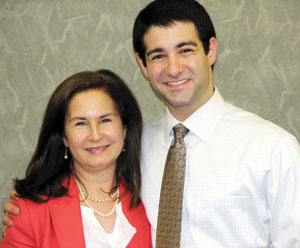
Village Shalom’s upcoming 25th annual Father’s Day Run/Walk event is a family affair. Just ask Jennie Stolper and her son, Jeff.

Back in 1987, the Associate Board of Shalom Geriatric Center (Village Shalom’s predecessor) initiated a large-scale annual race to raise funds that would benefit dementia-care programs for SGC residents. Associate Board members Jennie Stolper and Dr. Andy Jacobs co-chaired what was then called the “May Day Run.”

With no prior experience in organizing an event of that magnitude, Stolper and Jacobs oversaw the logistics of that first race, set in the heart of downtown Kansas City. They pursued every available avenue to secure sponsorships and donations, and to solicit free radio airtime to advertise the event. Jennie said, “It was just so amazing to see everything actually come together that first year.”

Being a new mom at the time, Jennie brought her baby, Jeff, along to some of the race-planning meetings. It must have made an impression on him.

Twenty-five years later, Jeff Stolper is now president of the Village Shalom Associate Board, and is overseeing the various plans for this year’s silver anniversary race — now called the Father’s Day Run/Walk. The event coincides with Village Shalom’s centennial year.

A couple of years ago, when Jeff decided to become involved in volunteer work, he naturally gravitated to Village Shalom, where his mom had invested so much of her energy years earlier. “I had been looking to get involved with a charitable organization, and wanted to make sure it was going to be something I legitimately cared about,” commented Jeff.

Coincidentally, Jeff’s grandfather, Robert Navran, was temporarily residing at Village Shalom for physical therapy and rehabilitation. Jeff visited him there every day for two months. During those visits, Jeff saw “what a great place Village Shalom is, and I thought it would be nice to help out.”

His mother, of course, suggested that he join the Associate Board, which is aimed at developing volunteer and leadership opportunities for young Jewish adults. Now in his second year as a member, Jeff serves as its president. “I was born and bred to do this,” he quipped.

Added Jennie, “The fact that it’s a full circle now, with Jeff being on the Associate Board, and the fact that he did actually come with me when he was a baby to meetings — it’s pretty special.”

It’s a tradition that Jeff hopes will continue. “After seeing my grandfather come here,” he said, “I know that Village Shalom still needs to be here when I’m ready. For now and future generations, I think it’s extremely important to have a stable, solid place” to care for Jewish senior adults.

The community is invited to join in Village Shalom’s family tradition, the 25th Annual Father’s Day Run/Walk, on Sunday, June 17, at 5500 W. 123rd St., Overland Park, KS. Race-day registration begins at 6 a.m., and the 5- and 10-kilometer event begins at 7:30 a.m. The event will also feature a Kids’ Fun Run and other family attractions.

Funds raised through race sponsorships, donations and registration fees will help to provide essential support for Village Shalom’s programs and services that directly benefit individuals and their families confronting the challenges of Alzheimer’s disease and dementia.

For sponsorship opportunities, to register for the race or to make a donation, visit the race website, www.fathersdayrun.org, or call Monica Pontarelli, Village Shalom development associate, at 913-266-8469.

Ruthie Bergman is a member of the Village Shalom Associate Board.

Avid golfers that have been cooped up inside all winter long — OK maybe not so much this past winter — often pencil in Memorial Day weekend as their time to head back out to the links. This year members of Oakwood Country Club can count on a big celebration of Kansas City’s golf history to go along with lots of great golf.
Oakwood Country Club, originally known as The Progress Club, officially opened its one and only golf course on Memorial Day weekend in 1912 at its location at 9800 Grandview Road in Kansas City, Mo. The club plans to celebrate the 100th anniversary of its golf course with several special events on Memorial Day weekend. (See below for more details.)
The Progress Club was first established in 1881. The original club moved several times before taking up permanent residence at the golf location.

When the Progress Club golf links opened on Memorial Day 1912, there were just three other private courses plus the public Swope Park and Excelsior Springs courses available to golfers. Today, at 100 years, Oakwood is the city’s oldest private golf courses. Originally designed by well-known golf architect Tom Bendelow, the course has seen several improvements over the years with designs by Scott Miller, Tom Watson and Craig Schreiner. Watson has been an honorary member of the Oakwood for many years.

“It’s a gem of a golf course,” said Todd Stice, head golf professional for Oakwood. “I have played extensively and it is as beautiful as any course around.”

Ward Katz has been a member of Oakwood most of his life and, as a former president, can be considered one of the club’s historians. He’s a third generation member, following in the footsteps of his grandfather, a charter member, and his father. The course was located quite a distance from where most of the Jewish community lived when it opened.

“My grandfather and father would take a street car out to Waldo, stop and have lunch, then take a train to a town called Dodson, then finally a horse and buggy out to Oakwood to spend the weekend,” Katz said. “This is when a country club was really out in the country. But even today, Oakwood is rare among local golf courses in that there are no houses around the course preserving a serene feel. Common sights on the course are deer, wild turkey, fox, blue heron and even an occasional peacock. The club’s iconic lake is teeming with fish.”

Katz said Oakwood began its existence as a strictly Jewish club. It was created after members of The Temple, Congregation B’nai Jehudah decided to form an organization for their families to enjoy social activities. Founded just 11 years after B’nai Jehudah, Oakwood remains one of the oldest Jewish institutions in the city. As an interesting side note, many of the founders of these two landmark institutions would later go on to start Menorah Hospital, the predecessor of Menorah Medical Center.

By 1910, members were looking for a more rural setting so that the Jewish community might enjoy the new, popular game called “the golf.” A town club was also retained for the use of the members for card-playing and social affairs during the winter months.

“It was a very important hub for business and social activity,” Katz said. “The club provided a venue outside of religious settings where Jewish men could get together and talk in an informal environment.”

Oakwood stopped having an exclusive Jewish membership in the mid-‘80s. However its Jewish heritage still factors large in the makeup of Oakwood.

“I’m sure the club was a source of pride for the Jewish community then,” Katz said. “Kansas City was a rough and tumble place, but here was a place our group could come together and grow those community bonds.”

The Memorial Day celebration will provide an opportunity to look back at the entire history of Oakwood.

“It’s great when you look back and find new pieces to the history,” said Polly Kramer, Oakwood’s vice president. “This is where Harry Truman would play cards and catch the train. You can always find things about the club that you didn’t know about.”
Katz and Stice agree that that the weekend events would not be possible if not for the commitment many men and women have to Oakwood. Their dedication has been reflected in the work they have done to make sure these events go smoothly.

“It has taken the work of very knowledgeable volunteers to complete a whole range of events,” Katz said. “It’s needed as we are anticipating a lot of participation.”

“Everyone is very excited for all of the events,” Stice said. “It’s a great celebration to celebrate the past, and to kick off the next 100 years.”

Katz also invites those interested to visit Oakwood’s website, www.oakwoodcountryclub.org, to learn more about the events and history of Oakwood.

“The Memorial Day celebration will be an important event,” Katz said. “It’s historical for us (Oakwood), and it’s historical for our city.”

Oakwood’s anniversary weekend

Members of Oakwood Country Club and the community have the opportunity to take part in several events Memorial Day Weekend to celebrate the 100th anniversary of Oakwood’s golf course at 9800 Grandview Road in Kansas City, Mo.

The first event, a couples’ open twilight golf with dinner, drinks and prizes, is Friday, May 25. A Centennial Smoke-out Barbecue will be held Saturday, May 26. A gold tournament followed by The Bee’s Knees Bootleggers Balls takes place Sunday, May 27. The celebration ends with the Centennial Gold Tournament Tuesday, May 29. Teams from several other country clubs have been invited to compete in this tournament, with the proceeds going to First Tee (www.thefirstteekc.org), a charity that benefits young golfers of all backgrounds.

“That is something everyone will play to win,” said Todd Stice, head golf professional for Oakwood, who will play on the Oakwood team. “But more importantly, it’s for a good cause. For a variety of reasons, it’s one of the things I am most looking forward to.”

Both competitive and more laid back golf will be held over the weekend. Whatever skill range, Stice believes everyone will find a game that suits them.

Events are open to members and their guests. For more information on prices or activities, or to make a reservation, call 816-761-5501.

“When we were planning events, the goal was to have activities for all age ranges,” said Polly Kramer, vice president of Oakwood Country Club. “We have a great nexus of people that belong to Oakwood. I’m most excited to see everyone come together for this big celebration.

Sailors looking for the next great open body of water would not normally come to Leavenworth, Kan.
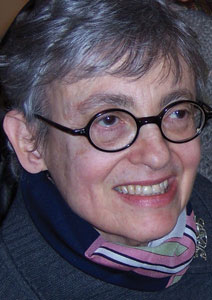
However, in Berlin in 1936, Siegfried Held was only looking for an escape. Fleeing the Nazis, Held immigrated to Kansas City, where he had relatives. He soon met and married Linette Goldmon, a woman born and raised in the tiny Jewish community of Leavenworth.  Together they moved into her mother’s home there. His life, once that of a wealthy Berlin banker, had completely changed. Previously an avid sailor, in Leavenworth Held now had no place to sail, and even if there had been a place, there was no money for a boat. He earned a meager living, working for the IRS. In 1944 he and his wife gave birth to a daughter, Kathy.

The Helds’ daughter would be raised in a safe place, away from the war in Europe. However, tragically both of Kathy’s parents died during her adolescence, leaving her with only the memories of her parents and the culture and worlds they came from.

“When my father died I found all of his old documents, and I felt like I became the caretaker of my family’ history,” Kathy Green said. “Looking through his mementos and various items, I got a sense of this other city, Berlin, and about life there. I kept looking, and finding interesting bits of history here and there.”

Now continuing with that role as caretaker for her family history, Kathy has released her memoir, “Sailing in Kansas.” With a title inspired by her father’s love of sailing, her book tells both the story of her family leaving Berlin, and her own experiences growing up in the small Jewish community in Leavenworth.

In her preface, Kathy writes “These tales of my early years in the small Jewish community of Leavenworth, Kansas, also tell of a childhood lived in the shadow of a great city, the Berlin of my own father’s youth and my own childhood daydreams. As an adult I have lived in a number of great cities: Chicago, Boston, Philadelphia, and Jerusalem. But none of these really figure in this book. They have been my adult homes, the places where I really live. But the most important places for these reflections, the ‘Two Cities’ of this ‘Tale,’ are Leavenworth and Berlin. Maybe I will never stop living in those two cities. In fact, Berlin and Leavenworth formed me. They were the cities of my childhood.”

Living with her grandmother and going to high school with many poor kids, Kathy said she always felt different both religiously and in life experiences. This made the support of the local Jewish community even more important.

“My family tried very hard to be a part of the gang. There were only 20 Jewish families living there at that time, so being part of the community was very important,” Kathy said. “That led to great closeness for us all; it was like an extended family. We all knew each other very well.”

Kathy’s family were members of Temple B’Nai Jeshurun in Leavenworth. Her family was very active in the synagogue.
Today the temple is closed, and Kathy has no more family living in Leavenworth. However, after the book came out, Kathy did begin receiving calls and emails from high school classmates and others she knew from town.

“They were people she hadn’t talked to in years, reaching out and telling her they remembered her,” said Art Green, Kathy’s husband. “Once they saw the book it brought back a lot of memories for them as well.”

“The response was more than I could have imagined,” Kathy said. “The outpouring of support was very important to us.”

After leaving Leavenworth to go to college, Kathy met and married theologian and scholar Arthur Green, founder and currently rector of the Hebrew College Rabbinical School. She taught Jewish Education at the Reconstructionist Rabbinical College in Philadelphia. She previously authored “The Jewish Family Book,” co-edited with Sharon Strassfeld, along with several essays in the field.

The book opens with Kathy and Art traveling to Berlin, years after her father’s death. She said the experience felt like they were living out his trip “back” to Berlin, since he never had a chance to return after fleeing the city.

“The emotions were very powerful, and the various associations I felt for things made it a very emotional trip,” Green said.

Kathy and Art visited Kathy’s grandmother’s grave in Berlin’s vast Jewish cemetery. The gravesite was undamaged and Kathy made sure to collect a memento. She took a clod of dirt from the grave and transported it all the way to her grandfather’s grave in Leavenworth, to lay it there with him.

“It was fascinating that this simple clod of dirt could mean so much,” Art said.

Kathy is glad that the book will be something she can pass down.

“I wanted to leave these memories to the next generation,” she said.

Kathy is currently battling Parkinson’s disease, and communication can sometimes be difficult. That made getting her story out all the more gratifying.

“There is a Berlin legacy, and a Leavenworth legacy, and they are both parts of her and made her the person she is,” Art said. “Writing the book was a deep self-examination, and it helped her recover a part of herself. It’s a piece of herself we will always have.”

Kathy and Art currently live in the Boston area. or more information on Kathy Green’s book or to order a copy, go online to www.sailinginkansas.com.


MORE CHICKEN SOUP — Deborah Shouse, local writer, editor and creativity coach, recently had two essays published in “Chicken Soup for the Caregiver’s Soul.” Shouse and her partner Ron Zoglin have traveled the globe, sharing stories focused on finding the blessings and gifts of the caregiver’s journey through Alzheimer’s. Using Deborah’s book, “Love in the Land of Dementia: Finding Hope in the Caregiver’s Journey,” they have raised more than $80,000 for Alzheimer’s research and programs. The book was put together by Joan Lunden with Amy Newmark, publisher of “Chicken Soup for the Soul,” and published in March.

ISRAELI ATHLETE SINGS, TOO — A loyal reader sent me this little gem last week by way of www.mideasttruth.com. JTA also provided this report:
Moran Samuel, a wheelchair-bound Israeli athlete, has another talent: singing. On April 29, Samuel won the gold medal in rowing at the International Adaptive Regatta in Gavirate, Italy. But organizers had failed to secure a recording of “Hatikvah.” No anthem? No prob. On the podium, Moran took the mic and belted a dazzling a cappella rendition of the Israeli national anthem. Hear her rendition of “Hatikvah” at http://www.mideasttruth.com/forum/viewtopic.php?t=10911.

HONORING PRECIOUS LIVES — Habtnesh Ezra, President of the Ethiopian Jewry Foundation, Inc. wants the worldwide Jewish community to know that Ethiopian Jews remain grateful for the love and aid that concerned Jews around the world have given them to help them realize their dream of aliyah “However, over 4,000 Ethiopian Jews tragically lost their lives for Judaism en route to and in the refugee camps in Sudan before their dream of aliyah could be realized. Their righteous memory will be observed throughout Israel on Sunday, May 20.” Ezra is asking everyone to join Ethiopian Jewry in remembering this loss of precious Jewish life in your prayers and thoughts on this date.


In today’s mobile society, it’s hard to find someone who has spent 35 years at the same job. In 1977, when Rabbi Herbert J. Mandl arrived in Kansas City to serve Kehilath Israel Synagogue, even he would have said it would be tough to fathom that he’d be here that long.
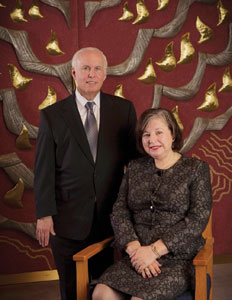
“I absolutely thought this would be an intermediary stop. I had never been to the Midwest before. I had been the assistant rabbi in a mega congregation and I assumed I would end up on the East Coast in a mega congregation,” he said.

But he and his family fell in love with Kansas City and the congregation, which now serves 600 members. So much so that when he retires on Aug. 1, he has no immediate plans to leave the area.

“Three of our four children live in New York, so I expect down the road we’ll move to that area. But for now we’re sticking around,” Rabbi Mandl said in a recent interview.

The congregation is honoring Rabbi Mandl with a gala weekend June 1 through June 3 (see below for details). Now 67, he is enjoying looking back at the past 35 years and ahead to the future.

Keeping the tradition

The rabbi was born and raised in Baltimore. He went to rabbinical school after graduating from Johns Hopkins University and was ordained by the Jewish Theological Seminary of America in New York City in 1969. While serving his first two congregations in Canada, he began working on his doctorate from the University of Montreal. He completed it in May 1981 here in Kansas City. He obtained an Orthodox ordination in 1974.

His first job in the rabbinate was senior rabbi of Congregation Beth Sholom in Edmonton Alberta Canada. Prior to coming to Kansas City, he worked as an assistant rabbi for six years in Montreal.

One thing that intrigued Rabbi Mandl about K.I., and something he still loves about it today, is the fact that it is a “traditional” congregation. In his words, that’s a congregation with “an Orthodox service with mixed seating.”

“I had never heard the word traditional in that sense before I applied for this position. It is a Midwest concept born in Chicago back in the ’40s,” he explained.

In 1977, Rabbi Mandl estimates there were about 25 other traditional congregations in the United States, all with more than 500 families. Today there are fewer than a dozen in the country that match that description.

The congregation was 65 years old when Rabbi Mandl came, and its steady rabbinic leadership was another thing that attracted him to it.

“I thought the fact that there had been a rabbi here for almost 40 years spoke well for the congregation,” he said. “The day school was just starting to bloom in those days and that was attractive to us. There was also talk of moving to Johnson County because we were in Kansas City, Missouri.”

Now when steady rabbinical leadership is mentioned, Rabbi Mandl’s name is near the very top of the list, not only for K.I., but the entire city. The rabbi with the longest tenure in K.C. is Rabbi Samuel S. Mayerberg of The Temple, Congregation B’nai Jehudah, where he served for 40 years. Next on the list is K.I.’s Rabbi Maurice Solomon, who came to K.I. in 1934 and retired in 1972 — five years before Rabbi Mandl joined the congregation (following short stints at the congregation by Rabbi Gilbert Shoham and Rabbi Avraham Radzik). Other famous K.C. rabbinical names served less time in Kansas City, including Congregation Beth Shalom’s Rabbi Gershon Hadas (32 years) and Rabbi Morris Margolies (27 years). Congregation Beth Torah’s Rabbi Mark Levin has actually been in K.C. one year longer than Rabbi Mandl, arriving in 1976, and has served as the Reform congregation’s spiritual leader for 24 years.

Simply put, K.I. President Steve Osman said the congregation is deeply appreciative for Rabbi Mandl’s commitment to the congregation.

“For 35 years Rabbi Mandl dedicated his life to doing what was best for K.I.,” Osman said.

“Rabbi Mandl is a man of great intellect with superior communication skills. He set a standard for all events that will be difficult to match,” Osman added.

The rabbi has contributed to the congregation’s steady leadership, steering its move to its current location in Overland Park in 1986. He is proud that over the years he has continued to guide K.I. to go out of its way to offer community services and “to do things the right way.”

“We built the mikvah and offered to have it here because we had it in the old building and thought it was the right thing to do. When I developed the citywide all night Shavuos program, we were the ones to say we’ll do it here. Most of the citywide Yom HaAtzmaut celebrations have been here as well,” he said.

A legacy of accomplishments

Although he chose the rabbinate, Rabbi Mandl said he had always wanted to be a lawyer and a politician. Over the years he put some of those skills to work, taking on a variety of causes. One was kashrut, working tirelessly to see to it that kosher food was available in the community. He is credited with creating the Vaad HaKashruth. He currently serves as its chairman, a position that the Vaad’s Executive Director Mendal Segal said he will keep as long as he lives in Kansas City.
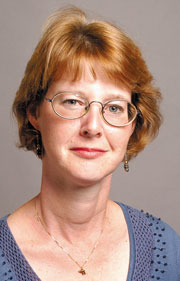
“When I first came here there were a couple of strongholds that were not kosher. One was Oakwood and the other was the Alameda Plaza hotel. I hammered away at both until we got both of them kosher,” he said.

Among the rabbi’s many other accomplishments in the kosher realm, and quite possibly the one that impacts the most people, is the role he played to get fresh kosher food sold at the Hen House Market in Leawood when the city’s only kosher free-standing butcher shop closed.

He’s also been actively involved with the Rabbinical Association of Greater Kansas City, serving as president three different times — once each in the ’70, ‘90s and currently. Last year the RA’s governing body changed its bylaws, allowing the rabbi to serve a third consecutive year as president. This way he could continue to hold that leadership position during his last year as an active pulpit rabbi.

“I thought that was a nice tribute from my colleagues,” Rabbi Mandl said.

He didn’t confine his work to the Jewish community. He lobbied the Missouri legislature to remove the phrase “year of our lord” from the Missouri marriage license. He got Hebrew added to the airport welcome signs in Kansas City, St. Louis and Springfield, Mo. He fought for the repeal of the blue laws (mandating stores close on Sunday) in Missouri.

“In my younger years I was a real political activist for local issues that needed to be resolved,” he said.

He also received two political appointments over the years. From 1980 to 1986 he served as chairman of the Missouri Health Facilities Review Commission — a nine-member governor-appointed body that controls health care costs in Missouri. Then he served a six-year appointed term (1990-1996) on the Kansas Public Discloser Commission, which regulates ethical behavior of legislators and state employees.

K.I. rabbi emeritus

Contractually Rabbi Mandl has no specific duties when his title changes to rabbi emeritus. He expects to attend morning minyan several times a week, sit on the pulpit on Shabbat when he’s in town and assist the new rabbi, Rabbi Shmuly Yanklowitz, when asked.

“I’m sure after all these years congregants will seek advice, although I’ve made it very clear to the congregation that there’s a new rabbi and he’s the boss. That’s the way it should be,” he said.

Rabbi Mandl has taught theology at Rockhurst University for the past 20 years and plans to continue teaching in his role as adjunct professor for the immediate future. He’s also been invited to take part in two prestigious opportunities overseas.

In February he’ll conduct research at the Vatican. The library is only open by invitation, said the rabbi, whose doctorate was in Catholic and Jewish law.

“I’ve also been invited to be a part of the Oxford Round Table next year, which is a roundtable of 45 scholars from around the world. How I got invited to that I’ll never know. You can’t find out, it’s a closed invitation system,” he said.

He and his wife, Barbara, will also travel more often to visit their four children — Aron lives in Houston while Seth, Debbie and Miriam live in New York.

When congregation’s historians look back on Rabbi Mandl’s tenure, he hopes they remember him for his “loyalty to the congregation.”

“My children paid the price of some of that. The congregation came first, very often, before family. Of course my wife was always there and always understanding no matter what the hour was.”
As an example, he points to a story one of his daughters told during the celebration of the Mandls 25th wedding anniversary.

“We were on our way out of town on vacation. I think we had gotten as far as Columbia (Missouri) and somebody died. I turned around and came back,” he recalled.

In 35 years, he’s missed just one Shabbos when he’s been in town. He even came to the synagogue when he had walking pneumonia and attended services with the assistance of a wheelchair while nursing a back condition just a few years ago.

“I bet that’s a record that’s hard to beat,” he said.
Rabbi Mandl really has no idea what he will do with himself on Aug. 2.

“But these two overseas things that have come up tell me that there will be opportunities opening up,” he said. “I’m on a couple of local boards I will continue doing. I’m really leaving my options open.”

Rabbi Mandl’s retirement tribute

Kehilath Israel Synagogue will honor Rabbi Herbert J. Mandl and his wife Barbara the weekend of June 1.

On Friday night, June 1, a kosher Shabbat dinner, catered by Steve Ellenberg, will follow worship services. Special family speeches and memories will be shared that night.

Saturday, June 2, will be Shabbat services and a luncheon catered by Cathy Levin. Rabbi Mandl’s friends and family will lead the services and the community is welcome to attend. There is no charge for this special Shabbat morning.

Sunday, June 3, join K.I. for the Gala Celebration to thank Rabbi Mandl for his dedication and service. The evening begins at 6:30 p.m. with cocktails followed by an elegant dinner catered by Steve Ellenberg. Pictures, music, speeches and many surprises will be on the program for the evening.

Reservations for the three events are limited and required. Contact Rochelle Kanter at 913-681-8224 or K.I. at 913-642-1880 for more information.

At least one event connected with the National Day of Prayer in Kansas Thursday, May 3, in Topeka excluded Jewish people. In fact, according to a story published in the Topeka Capital-Journal, no non-Christian groups were represented at the event, held on the on the steps of the Kansas capitol and featuring Kansas Gov. Sam Brownback as master of ceremonies.
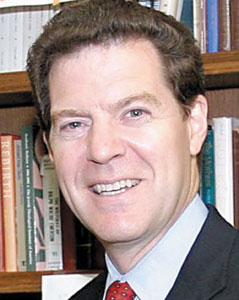
The event was organized by a group called the Capitol Commission, a national non-profit devoted to “Reaching Capitol Communities for Christ.” According to the Capital-Journal article, Brownback urged Kansans to “beseech God through prayer to help us in our time of need” through the “economic, fiscal, social and moral” crises the state faces.

Prayers were given by a variety of Christian religious leaders and legislators and students from Christian school sang songs.

Rabbi Debbie Stiel, who has served Topeka’s Temple Beth Sholom since 2006, said she wasn’t even aware of the event until a newspaper reporter called her for a comment. While researching it, she learned that the mission of the National Day of Prayer Task Force is to mobilize prayer in America and to encourage personal repentance and righteousness in the culture.

According to its website, the National Day of Prayer is an annual observance held on the first Thursday of May, inviting people of all faiths to pray for the nation. It was created in 1952 by a joint resolution of the United States Congress, and signed into law by President Harry S. Truman. The task force is a privately funded organization.
The task force’s mission worries Rabbi Stiel.

“If you go online and look at the National Day of Prayer organization, you’ll see its vision is preserving the national Christian heritage and fostering unity within the Christian community. That is how these kinds of things so easily become very focused in a particular religious direction as opposed to open to all religions. This is why as Jews we’re so concerned about programs like this and so adamant about separation of church and state,” Rabbi Stiel said.

The separation of church and state is an issue that concerns Marvin Szneler, executive director of the Jewish Community Relations Bureau|American Jewish Committee, as well as the fact that this particular event did not appear to be open and welcoming to all faiths.

“An event featuring prayer, in the best of circumstances, is non-sectarian and welcoming to all and even then is in some tension with the bedrock American principle that religion is not the business of government. When a conscious effort is not made to be non-sectarian, events like these are particularly problematic. I was not in attendance, but from reports I have heard, the atmosphere at this National Day of Prayer was Christian of a particular kind, and others were not included and felt unwelcome,” Szneler said.

The JCRB|AJC greatly values Brownback’s passionate support for the state of Israel, Szneler added. In addition he pointed out that the governor has been a strong advocate on many issues of importance to the Jewish community.
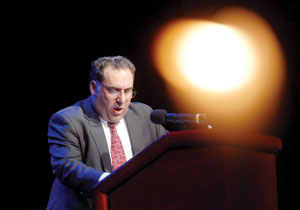
“However, we do not always agree with every elected official on every issue, and strong support for some issues does not immunize them from us sharing our concerns on other issues,” Szneler said.

“Today, prayer events are common. But when not non-sectarian, they cause particular concern regarding the separation of church and state and what the U.S. Supreme Court has labeled its most fundamental principle — that all faiths must be treated equally by government,” Szneler continued.

Rabbi Stiel also believes it is wrong for the governor to participate in these types of prayer events.

“If there’s a group that wants to go off on their own time and do that sort of thing, that’s one thing, but to say that’s representing Kansas and for the governor to be involved in it, I think that’s wrong,” she said.

Brownback is very open about his Christian beliefs. He attended, reportedly at his own expense, “The Response: A Call To Prayer for a Nation in Crisis” in Houston in August 2011 at the invitation of Texas Gov. Rick Perry. He read two passages from the Bible, Matthew 5:3-16 and 2nd Corinthians 7:13-14, and offered a prayer that day.

Once again noting that she didn’t attend the prayer event in Topeka, Rabbi Stiel pointed out that she believes there was definitely a Christian bent to it.

“It was not interfaith in who was invited and it was not inclusive in its language,” she said.

In fact, Rabbi Stiel believes that under this governor’s administration, “there is definitely an attempt to bring Christianity more and more into the state’s legislation and beliefs.”

Rabbi Stiel said she isn’t sure whether the National Day of Prayer took place at the capitol before Brownback became governor. She does believe that there was more separation of church and state under Gov. Kathleen Sebelius’ administration.

“When she was inaugurated as governor, I was asked to be a part of the prayer service. I mentioned that I was a bit uncomfortable with that because I really think that prayer should be separate from government. She came up to me afterwards and said she agreed and appreciated my words. I’m sure if it did happen, it was not with the same very narrow focus that this administration has,” Rabbi Stiel said.

Rabbi Stiel pointed out that Kansas legislative sessions always open with prayer. She is asked to give that prayer “very occasionally.”

“I know in the Senate, when they do not have a special chaplain, the regular chaplain always ends the prayer in Jesus’ name. I know that he’s been asked not to, but he does. That happens sometimes in the House as well,” she said.

The governor has attended the Topeka Reform congregation’s annual blintze brunch several times. This year, Rabbi Stiel said, he asked if he could  read a proclamation in support of Israel that he was making as governor.

Congregation Beth Shalom will be seeing a summer of changes in its clergy. In addition to getting a new rabbi, Hazzan Robert Menes will be leaving for a new job in Las Vegas.
Hazzan Menes has been with the congregation for the last six years. Before coming here, he was an agricultural engineer in Victoria, British Columbia, then studied at the Jewish Theological Seminary and became a part-time cantor in the New York City area.

“I’m the luckiest person I know, because when I saw my calling as being an agricultural engineer, I thought, ‘This is it.’ In Victoria, I got involved in the synagogue. I got tired of my job, and it was twice in my life I found careers that were my calling,” he said.

He will be moving to Temple Beth Sholom in Summerlin, a suburb of Las Vegas, in July. The Conservative congregation is the oldest in the state of Nevada.

“I see tremendous opportunity in Las Vegas. It’s actually very similar to Beth Shalom here,” he said. “The rabbi is committed to engaging people any way we can.”

One of the focuses on his new position will be to integrate more instrumental music into religious services.

“I’m not averse to using electric guitar — maybe some people will hook into that. I want to get out of (using) elevator music,” he said.

He will also be working with a youth choir and work to some extent with the supplemental Hebrew school.

“Music links that emotional side to the intellectual side of Judaism. I don’t think Judaism would have this kind of pull without music. Music without the thought is not as fulfilling — I need both,” he said. “I try to show that a cantor is more than a singer, not just someone who uses music in the service. That’s the smallest part of what I do.”

Hazzan Menes said he will miss his friends, students and others in the Kansas City Jewish community when he leaves.

“There are a few Bar and Bat Mitzvahs that stick out in my mind, where the student made a unique effort to do something special and succeeded. I will remember my lunch and learn class — we’ve had so many great discussions over the last few years. It’s been tremendously rewarding,” he said.

The congregation will also miss him.

“The cantorial skill that he brings to leading the services, his enthusiasm for what he does — that’s a very infectious type of enthusiasm. His skills in the traditional cantorial fields are evident to everyone and anyone who attends any of the services he leads,” said Rabbi Alan Cohen. “He is a mensch. He’s been a good person to work with.”

The congregation recently decided to redefine the role and responsibilities of the hazzan.

“Because that person is being asked to have a skill set that will allow that person to develop and oversee the educational programs, we might have to relinquish a bit the quality of the voice he has (when hiring a new person),” Rabbi Cohen said.

Overall, Hazzan Menes has enjoyed his time in Kansas City and is proud of the work he’s done making more Torah study accessible to the community online. He will leave his sound files of such work accessible to the Jewish community after he leaves.

“It’s been a good experience. It hasn’t been without ups and downs, but what I take away is what I learned from the people,” he said.

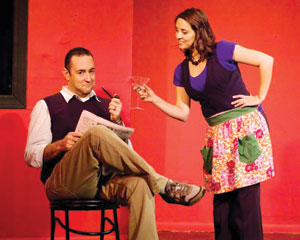
MOTHER’S DAY COMEDY — “The Union,” a sketch comedy show featuring real-life married couple Corey Rittmaster and Monique Madrid is on tap for 7:30 p.m. Mother’s Day (Sunday, May 13) at ComedyCity, located at the Westport Flea Market, 817 Westport Road on the Missouri side. Rittmaster grew up in Overland Park. Based in Chicago, the actor/improvisers and veterans of KC ComedyCity most recently toured with The Second City on board Norwegian Cruise Lines. They’ve written a new sketch comedy show that they’ll perform here. Madrid will also preview her new one-woman show that will make its debut next month at the Women’s Funny Festival, an event run by the same producers of the Chicago Sketch Fest. Be advised that the show is intended for those 16 and older as there may be some adult themes and language. Hey, with improv you just never know! For ticket information, contact ComedyCity at 816-842-2744 or visit www.comedycity.cc.

RUN BENEFITS JAZZ FEST — Alan Gaylin’s BRGR Kitchen + Bar is once again sponsoring the “BRGR LUV 4 JAZZ 5K” run to support the Prairie Village Jazz Festival, also presented by BRGR Kitchen + Bar in partnership with the Prairie Village Municipal Foundation and the City of Prairie Village. The run takes place Saturday, May 19, beginning and ending at BRGR Kitchen + Bar in the Corinth Square Shopping Center in Prairie Village. The beneficiary of the run, the Prairie Village Jazz Festival, takes place Saturday, Sept, 8, at Harmon Park. In its third year, the festival boasts an impressive lineup of musicians. Already booked is multiple Grammy-nominated singer and pianist Karrin Allyson, who will headline. A portion of the Prairie Village Jazz Festival proceeds will go to Heartland Habitat for Humanity, celebrating its 25-year anniversary this year. Those interested in participating in the BRGR LUV 4 JAZZ 5K can pick up registration materials at BRGR Kitchen + Bar or find information online at brgrkitchen.com or prairievillagejazz.org.

ISRAELI ATHLETE SINGS, TOO — A loyal reader sent me this little gem over the weekend by way of www.mideasttruth.com. JTA also provided this report:

Moran Samuel, a wheelchair-bound Israeli athlete, has another talent: singing. On Sunday, April 29, Samuel won the gold medal in rowing at the International Adaptive Regatta in Gavirate, Italy. But organizers had failed to secure a recording of “Hatikvah.” No anthem? No prob. On the podium, Moran took the mic and belted a dazzling a cappella rendition of the Israeli national anthem. From choppy waters to vocal chops, this athlete’s got what it takes. Hear her rendition of “Hatikvah” at http://www.mideasttruth.com/forum/viewtopic.php?t=10911.