


Emissaries help JCC campers ‘put a face’ to Israel
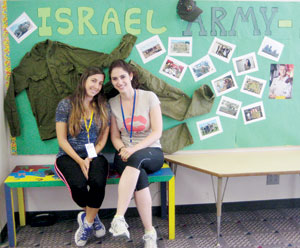 Every summer the Jewish Community Center brings an Israeli emissary here to teach campers at its Barney Goodman Camp. This year not one but two shlichot (female emissaries) will be on staff. Ma’ayan Osher-Levinger and Paz Riecher arrived here the last week in May and will remain through the last day of camp, which is Aug. 3.
Bridey Stangler, director of JCC camps, has worked with a lot of Israeli shlichot at camp over the years, but she was blown away by what they can offer when she recently traveled to Israel to attend a working seminar on the subject. She is more excited than ever before about having them at camp.
“They will be such a valuable resource for us and our campers this summer,” Stangler said. “We also hope to share them with the community. If other groups want to invite them to events to learn about them and a little more about Israel while they are here in June and July, we would love to help arrange that.”
Before camp even started on Monday, June 11, they had already been out and about in the community. Along with their host family, Jacob Schreiber, JCC’s executive director, and his wife Edna Levy and their children, they made deliveries for Yachad-The Kosher Food Pantry. At the end of the first month, they will switch host families.
Groups who wish to make arrangements to meet with the shlichot should contact Stangler or Danny Altshull at the JCC camp office, 913-327-8060.
“We just want to show them the good side of Israel,” Osher-Levinger said.
“We want to tell everyone that it’s safe to come and visit Israel,” Riecher added.
The shlichot are among more than 200 emissaries representing the Jewish Agency for Israel at Jewish summer camps all over the world. They have all completed their army or national service, speak conversational English and have experience working with children and teens in youth movements, community centers and/or the army.
The two young women met for the first time at a training seminar about a month before they came to Kansas City. In the army, Osher-Levinger was an intake officer. She decided who would enter the army as well as where and what they would do.
“It’s like a psychologist. We had a lot of training before we started,” said Osher-Levinger, who has previously spent time in the States as well as Europe.
Riecher trained soldiers to shoot mortars, weapons that fire explosive projectiles. This is her first visit to the United States. Both women will travel across the country for a month after camp before they return to Israel.
Kol Yisrael
The classroom where the shlichot will spend time with the BG campers is decorated with photos of the people and places of Israel. Most of the people in the photos are friends and family of either Riecher or Osher-Levinger. An army uniform is tacked to the wall as well for an added personal touch.
Each BG group will see the shlichot once a week for a Kol Yisrael lesson. During that time, Osher-Levinger explained, they will teach the children about life in Israel.
Emily Williams, BG’s programming director, explained that the shlichot have a dual mission this year.
“The most important thing is for our campers to really get to know our home culture in a lot of ways. We also want them to be able to put a face to the country and to our traditions and see how another Jewish community functions,” said Williams, who is a teacher who has earned both bachelor’s and master’s degrees. She teaches religious school at The Temple, Congregation B’nai Jehudah, where she is also a member, and has been involved in the camp world for the past 15 years.
The second part of their mission, Williams said, is to enhance the campers experience through some varied and unique programming opportunities. One of those ways is through the new teva (nature) program.
“With nature, the kids get to experience the outdoors in a new way. Instead of just being in the outdoors and playing all the time, they get to examine their surroundings and also compare what we have here in Kansas with Israel. Of course Israel’s arid desert-like existence is very different than our climate here in Kansas. Food and nature is so much a part of their culture. For example during the summer we talk a lot about the shuk in Israel, where here we get our groceries from (a grocery store). So it’s important for our mission as a larger Jewish community to interact and to share our knowledge and our experiences with each other,” Williams said.
In fact, Williams said the shlichot will help the campers compare “our world here in the Midwest to theirs in Israel.”
“Our vision and what we tend to know and internalize in our generation is not necessarily how Israel is now. We want to update the campers’ vocabulary and the kids’ imagery of Yisrael,” Williams said.
In addition to the planned interactions with Kol Yisrael and teva, the shlichot will be out and about among the campers whenever they have a free moment, including some splashing time at the pool, as well as the weekly Shabbat celebration.
Riecher, a 22-year-old from Ein Vered, a moshav (cooperative agricultural community) located in central Israel, became a shlichah because she really wanted to see how Jewish people live in the United States as well as how they connect to their religion and how they feel about Israel.
Osher-Levinger, 21, is from Or Yehuda, a part of the Tel Aviv region, and also wanted to learn more about American Jews.
“I felt it was very important to see another Jewish community because it’s so different in Israel because it’s Israel. I want to show the world that Israel is not a bad place, that you can do whatever you want. It’s not like you see on TV, it’s so different,” Osher-Levinger said.
While they are here, Riecher said they would especially “like to hang out with the youth.”
Williams said the shlichot will not work the entire time they are here. On evenings and weekends, they hope to show the young women the highlights of the metro area.
“We’ll take them to the Plaza and Lawrence. They haven’t had a chance to explore our own Jewish community, but we hope to show them all the good works we do here in Kansas City also,” Williams said.
When they return to Israel, both Riecher and Osher-Levinger plan to study for their college entrance exams.
 “The World Without You: A Novel” by Joshua Henkin (Pantheon, 2012)
 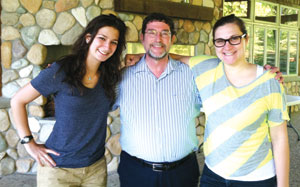 KC SONG LEADERS — Several people with ties to The Temple, Congregation B’nai Jehudah, got together at Hava Nashira, the song leaders’ workshop held annually at Olin Sang Ruby camp in Wisconsin. It’s a program for training song leaders, music teachers, rabbis, cantors and music specialists in leading Jewish music in camps, congregations, community centers and other types of Jewish programming and was founded in 1992 by the late Debbie Friedman, Cantor Jeff Klepper and Jerry Kaye, director of the Olin-Sang-Ruby Union Institute Camp in Oconomowoc, Wis. There were more than 250 participants this year including three participants and one faculty member who were all confirmed at B’nai Jehudah. Rabbi Larry Karol (confirmed 1970), who is now the rabbi of Temple Beth-El, Las Cruces, N.M., was on staff. Rachael Klein (confirmed 2007) is beginning studies at Hebrew Union College-Jewish Institute of Religion in Jerusalem; Bess Wohlner (confirmed 2000) is a fourth-year rabbinical student at HUC-JIR in Los Angeles; and Rabbi Ken Chasen (confirmed 1981) is a rabbi at Leo Baeck Temple in Los Angeles.
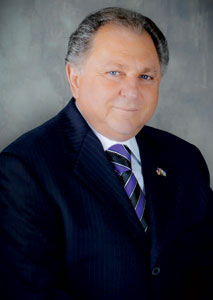 Sam Devinki’s photo will soon be displayed in a prominent spot on the wall at Kehilath Israel Synagogue. That’s because K.I.’s board of directors decided to recognize him for a lifetime of work on behalf of the congregation by bestowing upon him the title of honorary president for life. Two other men have also been given that honor by K.I. — the late Morten Brown and the late Sherman W. Dreiseszun.
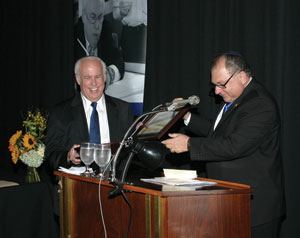 Devinki was born in Ragensberg, Germany, in a displaced persons camp. He and his parents moved to Kansas City in 1950 when he was 4 years old. As they settled into life in Kansas City, the Devinkis joined a local synagogue. But when Devinki was 5 and it was time for him to begin Hebrew school, his parents couldn’t quite afford all the costs associated with that religious education. That’s when K.I.’s Rabbi Maurice Solomon stepped in.
 Breast cancer survivor and Grammy-winning artist Sheryl Crow is headlining a benefit for Back in the Swing at 8 p.m. Saturday, July 14, at the Johnson County Community College’s Yardley Hall. The musician, mother and Missouri native will perform select songs from her legendary career and share personal reflections from the heart. Merry and Ed Prostic and Sherry and Gary Forsee are serving as honorary chairmen of the event.
 The book, according to Unell, features more than 500 “fascinating pieces of research” on everything from prevention of primary breast cancer to preventing the occurrence of breast cancer. It also gives tips on bone health and heart health and others areas concerning women’s health.
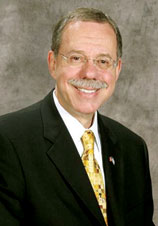 Vic Bergman is a very modest man, describing himself as “a working class kid from New York, (the) first college graduate of the family.” That “working class kid” recently was named Best Lawyer in the category of product liability for Greater Kansas City.
 Just as King Herod commissioned the Western Wall as part of a Temple renovation in 37 BCE, the Child Development Center at the Jewish Community Center now has a commemorative wall of its own, enriching its first expansion in more than 20 years.
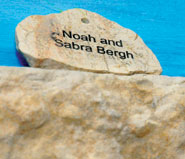 The CDC’s wall originated as white stone from Hebron. From that supply 55 individual stones were crafted, many nearly 18 feet by 18 feet and weighing about 40 pounds.
 Sid Shachnow isn’t your average retiree. The Army major general, who led the Green Berets for 32 years, is also a Holocaust survivor who immigrated to the United States from Lithuania more than 60 years ago.
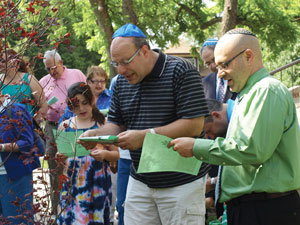 RABBI CRAIG LEWIS INSTALLATION WEEKEND — Rabbi Craig Lewis’ installation as rabbi of the South Street Temple in Lincoln, Neb., was featured in the June 1 edition of The Jewish Press in Omaha. In the article, reporter Sarah Kelen noted that he is the congregation’s 29th religious leader since its founding in 1884. The Temple’s historic sanctuary was full, as Temple members, a number of Lincoln’s Christian clergy and other members of the Jewish and general community joined together to welcome Rabbi Lewis and to share in Shabbat prayer. Lincoln Mayor Chris Beutler welcomed Rabbi Lewis, who is a native Kansas Citian and the son of Stu Lewis and the late Hilary Lewis, as a new addition to Lincoln’s interfaith leadership. David Polson, head of the Lincoln chapter of the University of Kansas Alumni Association, was also on hand to greet Rabbi Lewis (KU 1996) with a “Rock chalk.” Rabbi Lewis’s mentor and friend, Rabbi Kenneth Kanter, director of the Rabbinical School at Hebrew Union College-Jewish Institute of Religion in Cincinnati, officiated at the installation. Other events that weekend included the dedication of a tree on the Temple’s grounds in honor of Rabbi Lewis.
 CELEBRITY SIGHTING — Ben Wilinsky, a Prairie Village resident who graduated from KU earlier this month with degrees in journalism and Spanish, visited his sister Lara in New York City over the Memorial Day weekend. (Lara currently works as associate producer for the HGTV show “Selling New York,” which airs on Thursday nights). While in New York, Ben went to Barnes & Noble where he met Jimmy Fallon, who was signing his new book, “Blow Your Pants Off.” Ben plans to move to Chicago soon and teach kindergarten through eighth-grade English in the inner city schools as part of the Teach for America program.
  One hundred years ago today, May 31, 1912, the Jewish community established the Moshav Zkeinim Home for the Aged Society. Now known as Village Shalom, the continuing care retirement community began celebrating its 100th anniversary earlier this year and will continue to do so through its Ages of Excellence Celebration in November.
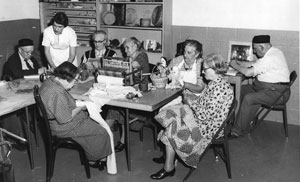 Indeed Lewis is proud of the care Village Shalom offers seniors, and said it can’t be matched anywhere else in the community.