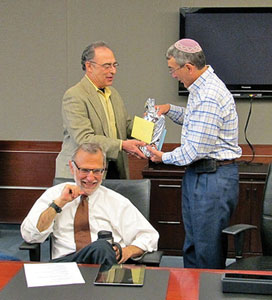

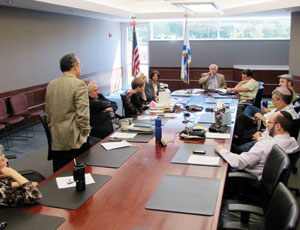
Like many Jewish communities, Kansas City has a board of rabbis, known here as the Rabbinical Association of Greater Kansas City. The unusual thing about what the rabbis call the RA here is that every rabbi from every congregation — Orthodox, Conservative and Reform — is a member.

“We all think it is unique,” said Rabbi Mark Levin, who has been a rabbi in Kansas City since 1976. He has served as the spiritual leader of Congregation Beth Torah since its inception in 1988. He added that Chabad chooses not to participate in the RA, noting that the Lubavitch organization also doesn’t use the word congregation in its description.

Rabbi Levin said the RA hasn’t always been such a cohesive group.

“When I came here in the ‘70s, this was not the case. We have worked hard to make sure that there is an ecumenical understanding and a spirit of cooperation among the different movements and we are a community that can work together,” Rabbi Levin said.

It’s not that rabbis in other communities don’t work together. Rabbi Daniel Rockoff of Congregation BIAV said he has Orthodox colleagues who serve on their respective rabbinical boards.

“Nonetheless, it is apparent that this is a particular value of our Jewish community, to work collaboratively on all levels between synagogues, organizations and rabbis. When I interviewed at BIAV, it was made clear from the leadership that it was expected of their rabbi to serve on the Rabbinical Association. I see this as an opportunity to both serve as the Orthodox voice within the larger community and also work closely with my colleagues on issues of joint interest and concern,” Rabbi Rockoff said.

The RA’s president, Rabbi H. Scott White of Congregation Ohev Sholom, is proud that the local rabbis actually like each other.

“Our meetings have no shortage of good humor and fellowship. We’ve even been known to socialize with each other — across denominations — in leisure time, if you can believe that,” Rabbi White said.

As Rabbi Rockoff explained, at its core the RA is a forum for rabbis from the entire community to meet and discuss issues of common interest and concern.

“In addition, the RA seeks to proactively address certain needs within the Jewish community. In recent years, the RA has taken a more active role in creating educational programming,” he said.

According to Rabbi White, the legacy of cooperation among the rabbis began in the late ’70s. That’s when Kansas City became one of a handful of communities to establish a joint beit din for conversion, comprising rabbis from all three major movements.
“Most community models soon faltered, due to intra-Jewish politics,” he said.  “But at least one such beit din is still in operation — albeit rarely — and it’s right here in Kansas City.”

What does the RA do?

The overall purpose of the RA is to maximize the vitality of Jewish religious life in Kansas City. For instance the RA is credited with creating the local Vaad HaKashruth many years ago and now plays an advisory role in it.  The RA also plays an advisory role with the community mikvah, located at Kehilath Israel Synagogue.

“We also work with the Jewish Community Relations Bureau|American Jewish Committee to monitor and protect Jewish community interests, such as the growing activity of Hebrew Christians within our Jewish community. Other examples of our myriad of regular business activities include primary supervision of the Jewish Community Chaplaincy and rabbinic liaison by RA members with various local Jewish organizations,” Rabbi White explained.

Throughout the year the RA sponsors an assortment of programs. The programming cycle begins in late summer with the annual education program called Day of Discovery (Aug. 26 at the Jewish Community Campus). A citywide Selichot observance is next (Sept. 8 at Beth Torah), usually followed by community programming for Passover and Shavuot.

The rabbis point to the fact that most of these programs would never get off the ground without the dedicated, professional and tireless efforts of Annette Fish, the RA’s administrator/program director.

“Annette truly breathes life into the organization and brings order and follow-through to the various programs and initiative. Any success of the RA can be attributed in large measure to Annette’s efforts,” Rabbi Rockoff said.

Rabbi Levin believes one of the most important things that has come from this collaboration among the rabbis is the communitywide conversion course, known as the Judaism for Conversion Candidates class presented by the RA. It’s a course where students learn the Orthodox, Conservative, Reform and Reconstructionist perspectives.

“People can get a full range of religious experiences through a communal course. I think that’s an important innovation. It wasn’t always that way in this community. Every synagogue had its own conversion course,” Rabbi Levin said.

“The accommodation that we have made is that each rabbi officiates at the actual conversion individually according to his or her own standards, but we educate communally,” he continued.

Facing hurdles
Rabbi Rockoff believes the challenge of the RA in the future will be its ability to continually redefine itself and its mission.

“Creating a venue for rabbis to meet will always be a priority but that is only one goal. If the RA is to be a dynamic and relevant entity within the community, it must continue to look at new and creative ways to fill a niche that only it can,” Rabbi Rockoff said.

Rabbi White said there are three challenges facing the RA and they are all the same: money, money and money.

“We remain most grateful to the funders without whose support we couldn’t exist, to wit, the Jewish Federation, the Jewish Heritage Foundation and the Jewish Community Foundation. Private individuals have stepped forward as well to fund individual programs, for whom we are most grateful. But the truth is that, like many organizations, our financial situation is often quite precarious,” the RA president said.

Rabbi Rockoff agreed.

“What worked before may not be working anymore, or perhaps needs to be modified. As the RA tweaks its goals, new funding sources will have to become available to support those new initiatives,” Rabbi Rockoff said.

Rabbi White noted that funding worries extend much further than simply RA programs and activities.

“Members of our association, to a person, stay abreast of demographic and religious trends among American Jews. Prominent among those trends is an ongoing decline in synagogue affiliation. Many of us see that as writing on the wall for virtually all American Jewish communities of any size. We believe collaboration now will make consolidating congregational resources — historically an anathema in many communities — more do-able, as it becomes necessary later,” Rabbi White said.

The decline in affiliation rates is an issue that greatly concerns Rabbi Levin. He said he’s often hearing people say, “It’s not worth it to me” when it comes to the fees associated with congregation membership. He worries people no longer want to “step up to the plate”  so that we can have a community that knows how to observe Judaism.

“I think the greatest challenge is for people to assume their responsibility as a member of the community,” he said.
Rabbi Levin hopes he doesn’t see a day where Kansas City no longer has the kind of congregations that we have had historically.

“We are at a point now where people need to say ‘I want and am willing to participate in an active Jewish community,’ ” he said. “I think that confronts the Rabbinical Association as leaders of congregations who have to find a way to bring this case before people so that they see what’s happening.”

Personally, Rabbi Levin really wants to be a part of a full-service Jewish community.

“I was once offered a job at a nice congregation in a smaller city. I didn’t want to go because there was no Orthodox community there ... I want to have a full-range Jewish community for myself and my family — an active Orthodox congregation, kashrut, a mikvah, a religious perspective that comes from the Orthodox perspective and not simply Conservative or Reform …

“I think the Kansas City Jewish community needs to confront if having a full-range Jewish community is going to continue to be the case,” Rabbi Levin continued. “Not that Orthodox is in danger here, it’s not. But whether we’re going to continue to have all the full range of services that we’ve offered, I think people are going to have to decide whether they are going to actively be involved in that.”

More information about the Rabbinical Association can be found at kcrabbis.org or contact Annette Fish, Rabbinical Association administrator, or 913-327-4622.
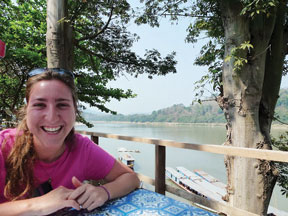
Usually when an Israeli comes to Kansas City for the summer to work at summer camp, it’s to spend time teaching Jewish children about Israel. This summer the Boy Scouts of America are the beneficiaries of the expertise of Israeli Scout Shir Gilo, who is spending the summer as a camp counselor at Camp Naish, a 1,100-acre camp located in Bonner Springs, Kan.
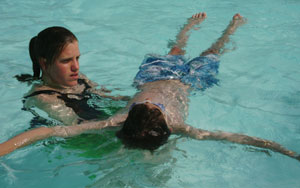
Gilo, 24, is a native of Beit Hashmonay; a small village located about 5 kilometers south of Ramla in central Israel. Beit Hashmonay is under the jurisdiction of Gezer Regional Council, which has a close relationship with the Jewish Federation of Greater Kansas City and a sister-city relationship with the city of Leawood.

She got connected with the Boy Scouts of America Heart of America Council through Terry Dunn, president and chief executive officer of JE Dunn Construction. Dunn’s wife Peggy Dunn is the mayor of Leawood. He was a member of a delegation from Leawood that traveled to Israel in October 2011 to attend dedication ceremonies for two sites named in honor of Leawood — Leawood Square and Leawood Trail.

While he was in the Jewish state, Dunn, an active volunteer for the Boy Scouts who serves on the national board of directors and is past president of the local board, met with a group of Israeli Scouts, known in Israel as Tzofim. That’s how he met Gilo.

“Shir was a founder of her village’s troop and I mentioned if she had an interest in coming here, my wife and I would be happy to sponsor her,” Dunn said.

Gilo explained she was Dunn’s guide for the visit with the Tzofim.

“He asked me if I wanted to come and see Scouts in the U.S. and I said of course I want to,” Gilo said.

When she completed her army service a couple of years ago, Gilo worked for a year as an Israeli Scout leader. Unlike Scout leaders in the United States, Gilo explained that Scout leaders in Israel are paid professionals, not volunteers.

Gilo is very proud of the Tzofim, the first Zionist youth movement in Israel founded in 1919. While similar to the Boy Scouts of America, its members are both boys and girls and it was the first egalitarian Scouting movement in the world. The Tzofim have about 90,000 members, both Jewish and Arab, in Israel, with more than 160 tribes (troops) in almost 100 cities, towns, moshavim and kibbutzim.
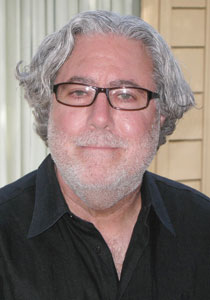
Gilo is a pioneer of sorts because the Tzofim troop in her village was established when she first joined the organization. She said the organization has been very instrumental to her small village.

“I can tell that before the Scouts and after the Scouts the village doesn’t look the same. People are more united, people are now one big family,” she said.

The others that were in her troop are all still very close.

“It’s amazing. It changed my life as well as my brother’s life and my sister’s life. It’s something that’s very, very important in my family,” she said.

Gilo’s father even spent time as a guide for the Tzofim Friendship Caravan, a group of Israeli Scouts that travels throughout North America each summer as emissaries, sharing their lives in Israel through song, dance and story. A Tzofim Friendship Caravan has stopped in Kansas City several times during the past few years.

So Gilo jumped at Dunn’s offer to spend a hot summer in Kansas.

“I wanted to come to the U.S. because I like to see other cultures, even though the U.S. and Israel are similar in a lot of things,” she said.

Not long after Gilo met Dunn, she quit her job as a Scout leader to travel with another friend she met in Tzofim who was a troop leader in Gezer. It’s not uncommon for Israelis to travel in between military service and attending college.

“I spent four months in the east (including Kathmandu, Nepal),” she said. “When I came to the United States it’s really two sides of the world.”

Gilo is a part of a counselor exchange program that’s in place at Camp Naish. Last year the camp hosted counselors from Taiwan and in the past have had counselors from the Czech Republic.

As a member of the pool staff, Gilo gives swimming lessons and helps the boys earn the swimming merit badge.

“I teach them all the things you need to know in the water … swimming, how to save people in the water and how to save yourself.”

She really enjoys working with kids one-on-one.

“The best is when you have a kid who is afraid of the water who then has a smile on his face after he learns to float,” she said.
“In the end he went from being terrified to having a huge smile on his face. That was my best day here so far,” she continued.

Gilo is enjoying her time at Camp Naish.

“The people are amazing. Everybody is so happy. They like to help and want me to feel at home all the time. It’s amazing.

They help me make my work here amazing,” she said.

Dunn said he and the mayor were glad to underwrite Gilo’s job at Camp Naish this summer. He believes it’s been a positive experience for everyone.

“I’m getting great reviews from all,” Dunn said.

Gilo will be at Camp Naish until it ends on Aug. 6. She will fly home a couple of days later.

She has had a few days off here and there, but basically she is at Camp Naish all the time. Before camp began she spent time with two host families and toured the local sites including the Harry S. Truman Library and Museum and the Jewish Community Center.

Ironically, one of the two shlichot working at the JCC this summer, Paz Riecher, is Gilo’s cousin.

“It’s funny, I never met her in Israel. I met another cousin when I was in India and she told me that her cousin would be here,” Gilo said.

Since she’s been at Camp Naish, she’s been inducted into the Order of the Arrow, Scouting’s National Honor Society. Its mission is to fulfill its purpose as an integral part of the Boy Scouts of America through positive youth leadership under the guidance of selected capable adults.

“It was a really impressive ceremony. It was very, very special for me,” Gilo said.

She’s enjoyed comparing the Scouting system of the two countries.

“It’s different than in Israel. The basic main goals are the same but how you get it is different and its’ very interesting to see how the Scouts work here,” she said.

When she completes her time at Camp Naish, she will become a student at Jerusalem University. She plans to study Bible and Judaism.

In the future, Gilo hopes to continue working in some capacity with the Scouts.

“I really, really, really love it,” she said. “They need adults who can help them and direct them what to do. They helped me understand things about myself.”

It’s Mark Katzman’s first time at the Kansas City Fringe Festival, but he’s not attending as part of the audience. He’s the author of one of the 168 acts.
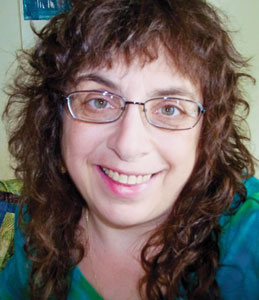
The play is called “Crisscross” and delves into the complicated relationship and love triangle among a woman and two men.

“It’s really about the way their lives and relationships crisscross and the little things they say to each other crisscross to their other relationships. Not only are the two men friends but the woman ends up being involved with both of them,” Katzman said.
Katzman said the play is not appropriate for younger children but that adults and teenagers might appreciate it.

The Fringe will be the play’s debut, although Katzman saw “Crisscross” performed as a staged reading in 2006 at the Downeast Arts Center in New York City while he was a playwright in residence there.

“It’s very heartening to have actors bring the words to life. The writer is very isolated … they bring things that you wouldn’t necessarily have thought of. Actors really bring in energy and emotion and nuance that might be there in the page but (doesn’t show) until someone embodies it,” Katzman said.

Originally from Kansas City, Katzman now lives in Vermillion, S.D., with his partner, Sara Henning. Although he has written art books before, playwriting is a different experience for Katzman — not one for the faint of heart, he says.

“If it’s not a passion, it’s really better to stay away. It’s not for everyone. If you have that writing spark, it’s something you’ll do forever,” he said.

Last year, Katzman attended United States Fringe Festival Conference in Minneapolis, where he met the KC Fringe Festival’s executive director, Cheryl Kimmi.

“In visiting with him I could tell he is a writer with original thoughts who’s not afraid to challenge and push the traditional norms,” Kimmi said. “We encourage people to put thought-provoking material out there. It’s much more than entertainment; the arts can be a catalyst for change.”

Katzman is excited to return to his hometown.

“It seemed like a great opportunity, not just to see my family but to start to enter the Kansas City theater life. There really is quite a vibrant scene in Kansas City,” Katzman said.

Katzman said his play uses language in unusual ways, making veiled references to issues but not spelling them out.

“My roots are in Harold Pinter and Samuel Beckett, so there are humorous uses of pauses and silence to get certain emotional feelings across. There is a story, so you can follow the story, but it sometimes doesn’t go in an exact linear way,” he said.
He got the idea for the play from observing everyday conversations among the people around him.

While it’s Katzman’s first time seeing one of his plays performed on stage, he has another first to celebrate as well — his directorial debut.

“I have certain ideas I want to get across in certain rhythms and gestures. I like to have the idea of improv in there as well. I don’t think two shows will ever exactly be alike,” he said.

The Fringe Festival is not like other venues. All the plays at the festival, which is unjuried, run 60 minutes unless otherwise noted, and set changes can only take 10 minutes. Last year, the festival attracted about 15,500 attendees.

Three local actors, Sarah Pinzl, Sam Cordes and Kyle Dyck, will perform the show.

“I think this affords them a chance to do alternative theater. It’s not the typical production for a dinner theater or anything like that. At the Fringe Festival, you will have a gathering of a wild variety of entertainments; that’s what I think is exciting to people who understand fringe concepts,” Katzman said.

Other acts at the festival will include Here Be Zombies!, Kansas City Magic Cabaret and Surrender Dorothy.

Fun at the Fringe

All Fringe Festival attendees must purchase a festival badge for $5. Play tickets are separate; buy “Crisscross” tickets for $5 by calling 816-359-9195. Performances of “Crisscross” are at 11 p.m. July 21, 3:30 p.m. July 22 and July 26, and 8 p.m. July 28 at the Metropolitan Ensemble Theatre, 3614 Main in Kansas City, Mo. The festival runs July 19 to 29. There will be a free opening night party at 6:30 p.m. July 19 at the KC Rep's Spencer Theatre.

Looking for books to put on your summer reading list? Lawrence, Kan., resident and Kansas Poet Laureate Caryn Mirriam-Goldberg just published “The Divorce Girl,” (Ice Cube Press). In fact she just received copies — boxes and boxes of them in fact — on Monday.

The author describes the book as a coming of age story focused on a teenage photographer who finds ways to survive and thrive through her art, an eccentric community and her own curiosity. She said she wrote “The Divorce Girl” out of her own experience growing up in a very tolerant and hands-on Jewish community in Central New Jersey during the hardest time of her life.

“I navigated the uncertainty, violence, fear and loss of family during this time through my involvement in my temple and through long talks with my youth group adviser as well as amazing experiences in my youth group, JFTY and NFTY,” Mirriam-Goldberg said.

She said the book is full of Jewish content.

“I’m not just talking about my main character’s involvement in her synagogue, but what seem to be vital Jewish values: how we see our work as so connected to tikkun olam, making life out of a broken world and how much we value community, facing difficult situations directly, asking for and providing help, and creating art, literature and new learning out of whatever life gives us,” the author said.

She is the child of divorce, but the book is not about her specifically.

“I took the frame of what I lived, but I inserted all new characters. So it was difficult and wonderful and inevitable altogether.

It’s something that I started writing a very long time ago and it’s something that I always knew that I would write,” Mirriam-Goldberg said.

When divorce came to her family, Mirriam-Goldberg said she began narrating what was happening to her in her own head.

“I became a writer during that time, that’s when I first started writing like a maniac after years of drawing like a maniac. I just knew every moment that I’m going to write a novel about this one day,” she said.

She believes it’s good that she didn’t try to write the novel when she was still a teenager.

“I waited until I had enough distance that I could really look at what would be the purpose of a book like this and what could this book give readers,” she said, adding that she wanted it to be a story that could resonate with people and have some meaning.

This may be Mirriam-Goldberg’s first novel, but she’s written a total of 14 books including “The Sky Begins at Your Feet: A Memoir on Cancer, Community, and Coming home to the Body,” which was a Starred Book by Library Journal. Her books also include four collections of poetry and the anthologies: “An Endless Skyway: Poetry from the State Poets Laureate (co-editor) and “Begin again: 150 Kansas Poems” (editor). She is also the founder of Transformative Language Arts — a master’s program in social and personal transformation through the written, spoken and sung word — at Goddard College where she teaches.
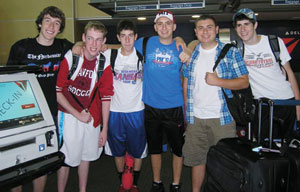

In addition, Mirriam-Goldberg facilitates community writing workshops, and with singer Kelley Hunt, Brave Voice writing and singing retreats.

Her next book “Needle in the Bone: How a Holocaust Survivor and Polish Resistance Fighter Beat the Odds and Found Each Other,” is the true story of Lou Frydman, a Holocaust survivor and Lawrence resident who passed away in January, and Jarek Piekalkiewicz. It is based on extensive oral histories with each of them.

“That is a book that I wrote simply because I’m friends with both families. I was spending time with all of them together and I kept hearing about these two men and their remarkable friendship and what they’ve been through and the next thing I knew I was offering to do it and they were saying yes. That comes out in mid-November and will be published by Potomac Books,” Mirriam-Goldberg said.

What type of writing does she like best?

“That’s like being asked which child you like best,” said Mirriam-Goldberg who came to Lawrence almost 30 years ago after she fell in love with a man from the River City. She’s been an active member of the Lawrence Jewish Community Congregation and plays cello in its monthly all musical service, Shiray Shabbat.

“Whatever I’m doing I’m in love with and engrossed with. That’s not to say that I don’t struggle at times and have to pull back and take a look at things from other angles or put it away for years, but I pretty much love everything that I’m working on,” she continued.

Both of her parents, her father is now deceased, gave their blessings when she chose to write the book.

“I started this book 17 years ago and I did talk to my father about it and told him I was writing a book that fictionalizes the divorce. He said, ‘I always knew you would do that,’ and he had no problem with it,” she said. “He said write what you want.”
She has sent her mother drafts of the book.

“About a year ago I sent her the whole thing. I said let me know if there is anything in here that strikes too close to home, even though the mother in the book is completely fictionalized and very, very different from my own mother. She was totally fine with it. I felt like because there is a similar emotional resonance to real people I needed to go that path and give these real people a heads up as much as I could,” Mirriam-Goldberg said.

She was appointed Kansas Poet Laureate in 2009 by then-Gov. Kathleen Sebelius, where she promoted literary arts through the Kansas Arts Commission. However Gov. Sam Brownback eliminated funding for the commission last year.

“I have been continuing on since that was dissolved and I’m going to continue on until we can anchor the program to a new organization and go through the process of choosing another Poet Laureate,” she said.

She hopes the novel will resonate with people who have had big challenges in their lives.

“I’ve worked with quite a few people with serious illness through Turning Point in Kansas City and generally lead writing groups for people who are on the margins in one way or another. Everybody has their story, has something they’ve lived through that seemed impossible at the time. I see this book as something that will hopefully uplift readers and inspire them with how in one story one person finds a way to transform her life through making something and through connecting with community. Those are the kinds of stories I love to read, the films I love to watch. I really see this book as putting out there in the world just another song along those lines of how we can find one another and make something of our lives.”

“The Divorce Girl” can be purchased online at www.icecubepress.com or at an independent book store.

‘The Divorce Girl’ launches in Lawrence

The Lawrence Jewish Community Congregation will host a reading, celebration and Havdalah service in honor of “The Divorce Girl,” Caryn Mirriam-Goldberg’s debut novel, at 7:30 p.m. Saturday, July 14. The Raven Bookstore will sell copies of the book, at a 10 percent discount, that evening. The LJCC is located at 917 Highland Drive, Lawrence, KS 66044.


HELPING AMERICAN SOLDIERS — Kehilath Israel Synagogue is collecting items for United States’ soldiers in remote areas overseas. Rabbi Mandl announced this project from the pulpit recently in honor of member Larisa Shenkar’s son Geni, who was seriously injured in Afghanistan. Items can be placed in the collection box in K.I.’s lobby. (Items should not be dropped off on Shabbat.) Money is also needed. Checks should be made payable to VFW Post 7397; note on the check’s memo line Platoons Forward Project.

Here’s the wish list:

Hygiene Items: Wipes, soap, razors, shaving cream, etc.
Prepared Foods: Microwave popcorn, Cup-of-Soup, Ramen noodles, jerky, canned fruit, soups and chili (with pop-top lids), various spices and seasonings, coffee/tea packets.
Snacks: Mixed nuts, dried fruit, trail mix, power bars, fruit bars, sunflower seeds in shells.
Candy: Gum, hard candy, gummy bears, Skittles.
Hand Warmers

GAN IZZY CHAI-A-THON — Campers at Camp Gan Israel Day Camp are participating this month in an unusual fundraiser for Chai Lifeline.

A national organization that helps families of children diagnosed with life threatening or lifelong illness, Chai Lifeline encourages Jewish campers from around the country to participate in an “a-thon” fundraiser. Most camps take on swimming, bowling or even dancing.

But the 2 to 11 year olds attending Camp Gan Izzy this summer will be taking on a new challenge: A Mitzvah-A-Thon.
CGI campers are raising money through pledges for performing mitzvot — from helping out mom and dad, to cleaning up their room, to getting along with their siblings!

“I love it,” says parent Mara Strom Sachs, whose three children — Avinoam Sachs, age 9, Matan Sachs, age 6, and Nili Sachs, age 3 — attend Camp Gan Izzy. “My kids are asking me all day, ‘What can we do to help you, Mommy? Why don’t you sit down and we’ll get you a cool drink.’ ”

Children can win prizes, including a trip to Israel, for monies raised. (The trip to Israel is only for those that raise $3,500 or more.)

The entire community is invited to join in a celebration BBQ picnic at 5 p.m. Sunday July 15, at the Torah Learning Center.
Party-goers on the 15th can further the cause through a silent auction on artwork created by the CGI campers.

There is a charge for the event, which includes dinner, crafts and games. For more information and to RSVP, contact event chair Amy Jacobson at 913-909-3408 or visit cgichai.eventbrite.com.

CHECK OUT THESE APPS — the Weizmann Institute of Science has announced the launch of two new applications for iPad and Android tablet devices — one for its quarterly Hebrew magazine Hamachon, and another for its online Interface magazine (English). These are among the very first digital magazines in Israel. These easy-to-read quarterly magazines are geared toward the general public, featuring cutting-edge news and discoveries from the Weizmann Institute of Science, including a diverse range of topics from cancer to genetics, astrophysics, alternative energy, computer science, archaeology and more. These digital editions provide an enhanced reading experience with added interactivity, as well as offering extra content including images, videos, podcasts and even songs and poetry readings. The apps are available free to download and subscribe to from the iTunes App Store and Google Play.

FORBIDDEN FRUIT? — Add this to the “now I’ve heard everything file”: JNS.org reports that an Islamic group said tomatoes are forbidden to eat because they are a “Christian food,” according to a report on NowLebanon.com.

The “Popular Egyptian Islamic Association” posted on Facebook that the tomato “praises the cross instead of Allah,” claiming that the interior of a tomato resembles a cross when the tomato is cut in half.

Additionally, the group cited “a sister from Palestine who saw the Prophet of Allah in a vision and he was crying, warning his nation against eating [tomatoes].”

B’nai B’rith International has been supporting Jews around the world since 1843. In 1995, the organization began sending humanitarian aid to the Cuban Jewish community. Several Kansas Citians want to become a part of that group which is helping Cuban Jews, so they plan to take part in the B’nai B’rith Cuban Jewish Relief Project Mission in December.
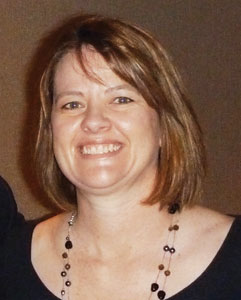
Mark Wasserstrom, the president of B’nai B’rith Lodge 184, the largest of the three lodges in Kansas City, plans to participate in the mission scheduled Dec. 6 to 13. He is recruiting others to join the group along with Rabbi Jacques Cukierkorn, who is a native of Sao Paulo, Brazil, and is the rabbi of Temple Israel of Greater Kansas City. Wasserstrom said B’nai B’rith just completed a mission to Cuba in June and has another one planned in November as well. Officials hope 25 to 40 people participate in the December mission.

Participants, who must be members of B’nai B’rith, will spend seven days and six nights in Havana, Santiago and Guantanamo in Cuba and one night in Miami. The itinerary includes sharing erev Shabbat and a Shabbat meal with the Jewish community of Santiago; meetings with the leaders and members of the Cuban Jewish community; and a trip to the Holocaust Memorial in Havana.

Wasserstrom is interested in the project because he thinks establishing an ongoing relationship with the Jewish community in Havana is a worthwhile project.

“Since the official count of the number of Jews in Cuba is 1,200, there is such a small Jewish community that I think the Jewish community of Kansas City could actually manage to have a significant impact on the community in Cuba,” Wasserstrom said.
“The other part of the project that is exciting is that there are enormous historic pressures to open Cuba back up. So when Cuba opens and the U.S. blockade ends and the remaining restrictions on travel end, I think that we will see a significant increase in dealings with Cuba,” he continued.

The U.S. government restricts travel to Cuba for American citizens. Restrictions have been modified over the past few years and Cuban-Americans can now travel freely to the country. Students and religious missionaries are also allowed to travel to Cuba if they meet certain restrictions. It is legal for U.S. citizens to take this trip because B’nai B’rith has official religious missionary credentials through the U.S. Treasury department.

The B’nai B’rith website reports that the Jewish community in Cuba, although small, is thriving.

“When the Soviets left in 1990, the Cuban government declared that communism and religion could coexist. The Jewish community is now enjoying a revival. The disarray of the Soviet era has given way to a true sense of cohesiveness today. They are Jews that the rest of the world can look to with pride,” notes the website.

“Although there is no anti-Semitism in Cuba, daily life is very hard for all Cubans. The average person earns between $15 and $35 per month. Food is rationed. Not many quality items are available in pesos, and must be purchased with U.S. dollars (something not everyone has access to.) A doctor earning $35 per month may hope to supplement his income as a cab driver or a waiter, who can earn $10 a day in tips,” it continues.

Because of the economic hardships Cubans face, Wasserstrom said those who plan to participate — all participants must be B’nai B’rith members — are expected to take at least 15 pounds of supplies to be given as a gift to the Jewish community in Cuba. Upon registration, B’nai B’rith will provide a list of “needs” to participants, which often include medicine and cultural/religious items such as Judaica and books.

In addition to the humanitarian supplies and Judaica B’nai B’rith has been supplying the Cuban Jewish community, it has also sent mammography machines to the hospital and medical texts to the University via the Jewish community.

Rabbi Cukierkorn said Cuba has been described to him “as the Jurassic Park of socialism.”

“Things are changing very little, but it’s fascinating to go see what a socialist nation really looks like,” he said.

Through his book “Accesible Judaism: A Concise Guide” (in Spanish as “HaMadrij: La Guía”), Rabbi Cukierkorn has been in contact with several Cuban Jews.

“When I wrote my book many, many years ago (2004), the first thing I did was to send 12 copies of the book — one for each synagogue — to the B’nai B’rith Cuban Jewish Relief Project,” Rabbi Cukierkorn said.

He said that because there is such a desire for Jewish information, the book is of great value there.

“I’ve received emails from people thanking me for the book,” Rabbi Cukierkorn said.

The Reform rabbi has also seen a picture of the library where there are several copies of his book on a shelf at the Patronato, which functions as Cuba’s Jewish community center and is a part of the largest synagogue in the country.

“There is a picture of an open book and you can see that the pages are used, that people are reading it. What could give a writer more joy,” Rabbi Cukierkorn said.

Rabbi Cukierkorn will take 100 copies of his book to Cuba, compliments of Lodge 184. The members of Temple Israel are giving Rabbi Cukierkorn the time off to take this trip. He is doing so just as any other participant, not as the group’s rabbi.
Wasserstrom is happy that Lodge 184 is able to sponsor Rabbi Cukierkorn on this trip.

“He has a reputation far beyond Kansas City, so it just seemed to make a great deal of sense to get somebody who is sensitive to issues throughout South America,” Wasserstrom said. “Hopefully B’nai B’rith will realize what an important asset Rabbi Cukierkorn is so that he can contribute not only to the richness of Jewish life in Kansas City but that he can share his knowledge and experience with B’nai B’rith and help guide whatever efforts B’nai B’rith can pursue.”

While it’s been said that Jews don’t face anti-Semitism in Cuba, Wasserstrom is worried that Jews are beginning to face more anti-Semitism in other parts of South America.

“Iran has been giving a great deal of foreign aid to South American countries and distributing Arab propaganda along with it. That’s why in December 2011 B’nai B’rith had its first international policy conference in South America in Montevideo, Uraguay,” Wasserstrom explained.

While the B’nai B’rith International organization may be struggling a bit retaining its members — for example membership has slipped tremendously here in Kansas City’s three chapters — Wasserstrom said one of B’nai B’rith’s strengths has always been monitoring world events as they impact the global Jewish community.

“So when we have a situation such as a new strain of anti-Semitism evolving in South American, B’nai B’rith is one of the few Jewish organizations that can effectively address the situation. To have an opportunity to go on a mission to Cuba and to participate at any level in a new program that is of some significance is exciting,” Wasserstrom said.

The registration deadline for this trip is Nov. 1. To learn more about the trip, visit the website at http://www.bnaibrith.org/cubanjewishrelief.cfm or contact Rabbi Cukierkorn through his website, www.rabbicukierkorn.com. or call him at 913- 940-1011.

Kelly Somberg

OCCUPATION: Administrative assistant, Jewish Community Center’s summer camps and community volunteer
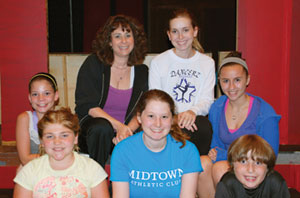
CONGREGATIONAL AFFILIATION: Congregation Beth Torah

WHAT KIND OF VOLUNTEERING DO YOU DO FOR JFS? FOR HOW LONG? I have been a volunteer driver for the JET Express volunteer driver program for more than three years.

WHY DO YOU VOLUNTEER? I’m a lifelong volunteer. I feel it is just part of who I am. I enjoy making a contribution, working with others and giving back to my community.

DO YOU HAVE A SPECIAL STORY OR ANECDOTE TO SHARE ABOUT YOUR EXPERIENCE? One of my favorite riders is Wilbur — he is over 80 years old and volunteers weekly at Shawnee Mission Medical Center. I’ve picked him up almost every Friday morning for the past three years. I think it is fantastic that he still volunteers in his 80s and through JET Express, he remains an active part of his community.

WHAT DO YOU LIKE ABOUT VOLUNTEERING WITH JFS? I love the interaction with the senior adults I drive. They are always so appreciative of the ride and JET Express. We often share stories from our week or about our families, talking about the weather or just sharing a smile. With my parents and grandmother living in Arizona, JET Express has allowed me to stay connected with this generation.

I also love how flexible and easy it is to volunteer for JET Express. I can choose my rides from my computer. It is my choice how many rides I do each week. Many times I can help someone else with a ride while I am running my errands; that’s a win-win in my book.

Make a difference in someone’s life and experience the joy of giving! Jewish Family Services has a multitude of volunteer opportunities to fit your schedule, so sign up today at www.jfskc.org/volunteer/or 913-327-8250.

TELLING THE STORY: TEACHING THE CORE — Last month, Jean Zeldin, executive director of the Midwest Center for Holocaust Education, attended an international conference at Yad Vashem which drew nearly 400 center and museum directors, scholars and educators from more than 50 countries. Sessions were devoted to both scholarship and pedagogy, with discussion focusing on challenges of Holocaust education in the 21st century, transition from personal memory to historical memory, and the centrality of the Holocaust as a touchstone for the study of other genocides. Presenters emphasized the responsibility of Holocaust centers and professionals to provide accurate content and context, especially to educators who must “get it right” and transmit the history in a meaningful way. In keeping with that goal, MCHE recently offered a three-day teacher institute, “1942: The Final Solution,” with in-depth content provided by historian Fran Sternberg, Ph.D., MCHE’s director of university programs and adult education, and pedagogical sessions, including document-based activities, facilitated by Jessica Rockhold, director of school programs and teacher education.

HERITAGE CENTER ACHIEVES NATIONAL ACCREDITATION — The Heritage Center has officially been awarded national accreditation through the National Institute of Senior Centers. It now joins the ranks of just a little more than 200 senior centers in the nation that meet the strict standards and high quality accreditation demand. We extend a hearty mazel tov to our friends who run the Heritage Center. We always knew it was the best in the area!

THE KING AND I — Several members of the Jewish community have roles in the Jewish Community Center’s upcoming production of “The King and I.” It opens July 14 and runs through July 29. You can catch Francine Gollub, Leah Cole, Leah Selmmons, Alexandra Fulford, Carolyn Braverman, Maya Schreiber and Noah Waldman in this Rodgers and Hammerstein family favorite that shares the story of the king of Siam and his relationship with Anna Leonowens, who travels from England to tutor the king’s children. It will be performed in the White Theatre. Ticket information is available online at jcckc.org/boxoffice or by calling 913-327-8054.
2012-2013 CALENDAR ITEMS NEEDED — The Jewish Chronicle is working on the annual Rosh Hashanah publication and we need the help of Jewish organizations, congregations, agencies, foundations and other Jewish groups. Please send us your calendar of special events for the upcoming year (October 2012 through September 2013) so we can add them to our calendar. We don’t mean weekly or monthly events like study groups, but events that may occur once a year or a special event being planned now for the upcoming year.

In order for these events to be considered for placement in the calendar, please send them to us no later than Aug. 1. These can be sent to or .

If you have any questions, call Barbara Bayer, editor, at 913-951-8425 or Marcia Montgomery, community editor, at 913- 951-8426.

Rabbi Alan Cohen is retiring. What’s new about that? He retired in 2008 from the pulpit of Congregation Beth Shalom after serving the congregation for 19 years, didn’t he? True. But last year the congregation came calling again, asking him to serve one more year in an interim capacity.
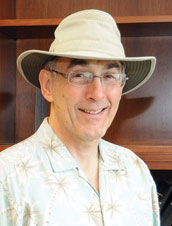
The Conservative rabbi accepted that challenge, and spent the last year handling the pulpit duties of a senior rabbi once again while the congregation searched for, and hired a new senior rabbi. Rabbi David Glickman is expected to arrive at Beth Shalom in July and now, Rabbi Cohen is really ready to retire. He and his wife Linda will be moving to Florida in mid-July.

The immediate future

The Cohens chose Boynton Beach because it featured a warm climate. They like that part of the country, having lived there for 17 years before moving to Kansas City in 1989.

The couple even lived in West Palm Beach for a while, and has maintained connections with a lot of people still in the area. Rabbi Cohen also liked the fact that he has many colleagues in the area who meet on a regular basis to study. Then there’s the amenities of Jewish life nearby that is also appealing.

“There are actually two kosher markets not far from where we will be resettling,” he said.

This past year has been a busy one for Rabbi Cohen. So he plans to take it easy for a while and take his time before making any new commitments.

“For the first six months, I probably won’t do anything real organized because I’ve got to take time to get situated in our new place and take care of all the things that are necessary with a move. We’ve also got a fair amount of traveling on our agenda for the next six months,” he said.

He will be mixing pleasure with business on at least one of his trips. Several days before Rosh Hashanah the Cohens will board a Princess cruise ship, stopping in Hawaii, Tahiti, Samoa and New Zealand before docking in Australia 26 days later.

“During the period of the High Holidays, I will be leading services for those Jewish passengers that want to avail themselves to services for the High Holidays and for Sukkot. It’s not a Jewish cruise, and I’m not the rabbi for the whole cruise,” he said.

He estimates there will be about two dozen Jewish people on the cruise, since the cruise line said they plan to have about that number of prayer books on board.

This isn’t the first time he’s been hired as a High Holidays rabbi. Following his original retirement from Beth Shalom in 2008, he served the small community of Henrietta, N.Y., a suburb of Rochester, N.Y.

“In Henrietta we had a small group; the largest turnout was 50 people. It was very intimate. The cruise will be a similarly small, intimate gathering except it will be at sea. I’m looking forward to it,” Rabbi Cohen said.

Looking back

Rabbi Cohen said returning to the pulpit wasn’t that difficult because it was a job that he had always been very comfortable with.
“I think I had done a reasonable job at it in the course of all those years. So I was able to come back with that skill set in place to help the congregation,” Rabbi Cohen said.

While the role was the same, it was also very different.

“I was coming back almost like a place holder — a person whose position is not to set an agenda or have an agenda or have a vision, but to help a congregation realize its vision and set its own agenda. That’s what I’ve tried to do over this past year,” he said.

This year, Rabbi Cohen said his role was to be there for life-cycle events “and such that might arise.”

“But much of the re-envisioning of the congregation’s life and future was in its own hands to do. They had to set up, as they have done, a very committed group of folks to that process,” he explained.

The past year was relatively easy for him, Rabbi Cohen said. But it was an adjustment to reacquaint himself with a pulpit rabbi’s schedule.

“Sometimes you make plans for things and incidences arise, crises arise, life cycle events come up that need attention right away, so you have to put other plans on hold. It’s a little bit like we put our plans on hold to relocate a year ago, which was our original intention,” he said. “I had gotten very quickly and comfortably adjusted to the idea that I could make my own schedule, that it could be more 9 to 5 than certainly the rabbinate allows for.”

The 66-year-old rabbi never really retired the first time. He became the director of Interreligious Affairs for the Jewish Community Relations Bureau|American Jewish Committee and also worked in the chaplaincy department for Saint Luke’s Health System at the Plaza hospital.

“I worked with Saint Luke’s to bring a Judaic presence to their program,” he said.

The JCRB|AJC position was a part-time position that he was able to continue one day a week this year as well. He did so to continue some of the projects he had begun and “hopefully put in place a process that they can even run beyond.”

Working with the JCRB|AJC was tremendously gratifying for the rabbi. He especially enjoyed the interaction with other clergy.

“I found that the overwhelming majority of the non-Jewish community, whether they be liberal or conservative, mainline Protestant, Catholic or evangelical Christian have a very open attitude toward Judaism,” he said.

He believes he had tremendous opportunities to build some new bridges and strengthen some existing bridges during this time. He helped “create a bond between the Jewish and the non-Jewish community.”

He thinks that bond is stronger today because of his efforts and the JCRB|AJC’s work in general over the years. He believes his non-Jewish colleagues were very appreciative of the opportunity to learn and to share in the various study programs afforded to them during that time.

A bittersweet goodbye

Looking back over the past year, and his rabbinate in general, he believes it was something he enjoyed.

“It was 40 years ago this month that I was ordained, in June of 1972, and I probably would not have stuck to it for all this period of time if I hadn’t enjoyed it. So coming back for the year was coming back to something that I had enjoyed before hand, even the three years when I was away from the congregation between 2008 and 2011 doing the other work, I still had my hand in Jewish communal life. I wasn’t doing the normal congregational rabbinical activities because I intentionally kept myself out of that loop at the synagogue and did not involve myself in life-cycle events and such but I was still involved in Jewish communal affairs and interacting with religious community.”

The Cohens have spent 23 years in Kansas City, making it the community they have lived longer than any previous one, including their birthplaces. So saying goodbye may not be easy.

“I think it’s going to be a little difficult from an emotional standpoint,” he said.

But as he wrote in his final article for Beth Shalom’s newsletter “The Scroll,” “We have traveled together from Israel to Conception Abbey. A part of us will always remain in Kansas City and our loyalties will always be to the Royals and Chiefs with a leaning toward the Jayhawks (sorry to our Missouri friends). There will be parts of KC and Beth Shalom that we will always carry with us.”

Linda Cohen looking forward to retirement

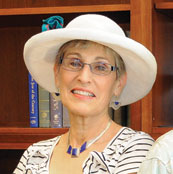
Linda Cohen is retiring not only from many of her duties as a rebbetzin but also as a teacher. Cohen has coordinated the community conversion class since its inception in 2003.
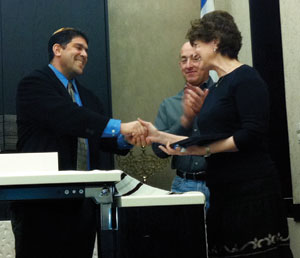
“It was by far one of the most rewarding things I ever did in my life,” she said. “It was just a ball, a lot of fun. The program crossed every line possible — ethnic, socio-economical, age, gender, gender preferences. The commonality was everybody was there because they had an interest in pursuing Judaism. And it really is a testimony to the rabbis also and their participation how successful it has been. It really has been an incredibly successful program.”

Cohen also taught at the Hyman Brand Hebrew Academy for 12 years, taught at Congregation Beth Shalom for several years and volunteered for a number of things, in addition to taking care of her grandsons when they were born.

Immediate retirement plans include a move to Boynton Beach, Fla., and a High Holidays cruise. So what’s next? Cohen said she and her husband, Rabbi Alan Cohen, won’t be lacking in activities to keep them busy.

Boynton Beach is on the east coast, between West Palm and Boca Raton.

“We lived in West Palm at one point a long time ago,” Cohen said. “Alan has lots of colleagues in that area; we have friends in that area, so there were lots of things that made it for us very attractive.”

One of their goals, Cohen said, is to visit children and grandchildren more frequently and for longer periods of time, “and not be tied down to the demands of a congregational life.”

Cohen said moving where their children live was not an option. Their daughter Reena, her husband and their two sons live in Toronto and their son Rafi, his wife and two sons live in a Dallas suburb. A native Canadian, Cohen said she doesn’t like the weather in Toronto and since Rafi is a rabbi, it is uncertain how long he will stay in Dallas.

Once the Cohens return from their cruise and are settled into their new home, they will both start seeking out volunteer opportunities and resume the fun activities they enjoy.

“We would like to get back on the golf course,” Cohen said. “Alan wants to get over to the tennis courts more frequently, we both like to bike ride, we both like to walk. … I like to play Mah Jongg, so I’m going to try to find a group, join a book club.

“There’s a synagogue a half mile from where we’re living that we’ll get involved in. Given the over-60 population of baby boomers that are active in this generation, there are so many activities of all sorts, everything from volunteer to educational to entertainment that neither one of us really anticipate. Spending time with friends of ours that are down there and retired, I have never yet heard anybody say they’re bored.”

Cohen said she’s looking forward to the flexibility of retirement.

“Especially for Alan, not having to be certain places at certain times and his professional life interfering with our personal life, so to speak. And just kind of being free spirits, I guess. We decided to do it now while we are hopefully young enough and healthy enough to gad about a bit.”

‘Lihitraot’ Rabbi and Linda Cohen

Congregation Beth Shalom will bid farewell to Rabbi Alan and Linda Cohen Saturday, June 30, at Shabbat services beginning at 9 a.m. A Kiddush luncheon, sponsored by the congregation and prepared by the Kiddush Corps and friends, will immediately follow worship.

Harold Schlozman is no stranger when it comes to a hospital setting — he spent years working as a pharmacist at the Veterans Hospital in Kansas City. He saw patients on the various wards who were anxious, depressed and in various stages of illness. It was that very setting that inspired him to become a Spiritual Care Volunteer through the Jewish Community Chaplaincy Program housed at Jewish Family Services.

“I vowed that when I retired I would try to bring these people and others comfort and a few kind words and a smile,” he said.
So when the SCV program began four years ago, Schlozman was among the first people in the community to sign up.

“When Rabbi (Jonathan) Rudnick (the Jewish Community Chaplain) asked me to become an SCV, I enthusiastically agreed,” Schlozman said.

Rabbi Rudnick overseas the program that brings care and comfort to Jewish patients in local hospitals and older adult facilities around the metropolitan area. Schlozman is one of 11 in the community who are part of the Spiritual Care Volunteer program at JFS. The mission of the Chaplaincy Program is to address the spiritual needs of Jewish people and their families facing health and healing challenges in the metropolitan area.

Spiritual care volunteers carry out the Jewish mitzvah of bikur cholim — caring for the sick — and the program is making a difference in people’s lives.

SCVs have made more than 4,000 visits in the program’s four-year history. They visit Jewish individuals, patients, residents, their families — even inmates — on a regular basis and bring them the spiritual care resources of the Jewish community and Jewish tradition. The program was started as outreach to unaffiliated Jews who were either in the hospital or residing in assisted living or long-term care facilities.

In cooperation with area congregational rabbis, Rabbi Rudnick reaches out to affiliated patients and residents as well.

These volunteers go through an extensive orientation that covers the fundamentals of being a spiritual care volunteer. Each one has been assigned to one of six area hospitals and six elder-care facilities. Rabbi Rudnick said SCVs visit with patients and residents; they may pray, read or just talk about what is meaningful to them. Volunteers also leave a copy of “The Circle of Healing,” a booklet created by the first community chaplain, Rabbi Nathan Goldberg, and published by JFS. It includes readings, prayers and spiritual resources.

When visiting others, “sometimes we hold hands and we’ll feel the person is more light-hearted merely from the presence of someone who he knows is there to see him and offer him encouragement,” said Schlozman of the experience. “It’s important to do something to help someone who is in need of spiritual comfort.”

Rabbi Mark Levin of Congregation Beth Torah has been a supporter of the spiritual care volunteer program.

“These volunteers bring their caring and listening skills to the bedside of people who may simply want to tell their story to a supportive person,” Rabbi Levin said. “It demonstrates that even people we do not yet know well matter in our lives, that the community is attuned to their welfare. We want to make sure that no one disappears from the community’s radar.”

Rabbi Alan Cohen of Congregation Beth Shalom is part of the Chaplaincy Advisory Board Rabbi Rudnick has established.

“I have been privileged to see this program begin and grow,” Rabbi Cohen said. “Each new cohort has added greatly to the level of care our community can provide by bringing caring lay volunteers into the field of spiritual care. They are a complement to the clergy of our community and exemplify the fundamental principle that all of us should be concerned with ‘visiting the ill.’ ”

Schlozman has found his time as an SCV personally fulfilling.

“I enjoy being with people and meeting people,” he said. “By offering my time, encouragement and presence, I try to help them on the path to recovery or acceptance.”

Rabbi Rudnick said the program’s impact in the Greater Kansas City community has been significant, and Chaplain Jean Murphy agrees. She has been working with the rabbi and his volunteers, first at Villa St. Joseph and then at St. Joseph Medical Center.

“Volunteers add greatly to our effectiveness and each one brings their own personality and spirituality to the mix,” Murphy said.

“It is a great outreach to be able to provide chaplains and spiritual care volunteers of different denominations and different faiths. It adds to our diversity.”

Murphy said Rabbi Rudnick has been an inspiration for her.

“I have learned so much from him and he has provided wonderful resources for the chaplains,” she said. “We are grateful for the support and resources made available to us by Jewish Family Services and Rabbi Jonathan.”

Schlozman highly recommends volunteering for the spiritual care volunteer program.

“If you enjoy being with others, helping others and making a difference in their lives, I encourage you to contact your rabbi or Rabbi Rudnick and become a spiritual care volunteer. We bolster hope for those in need.”

Those wishing to serve as an SCV should contact their congregational rabbi. Unaffiliated individuals wishing to volunteer may contact Rabbi Rudnick at 913-327-8250.