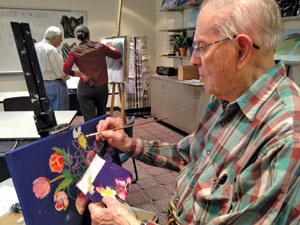


Athletes around the world just competed for the gold this summer and the Heritage Center of the Jewish Community Center has achieved gold as well — accreditation from the National Institute of Senior Centers.

“Accreditation is unique to the senior center field and demonstrates outstanding leadership and commitment to quality programs and services for older adults. The Heritage Center of the Jewish Community Center of Greater Kansas City is thriving and is the only senior center in Johnson County to hold the distinction of accreditation,” noted Sandra Greason, director of the Heritage Center, which serves senior adults 65 and older.

The Heritage Center joins the ranks of just 120 senior centers nationwide to have been awarded this designation by the NISC.

“Considering there is an estimated 15,000 senior centers in the United States, accreditation is seemingly as rare as an Olympic gold medal,” Greason said.

In celebration of its recent achievement, the Heritage Center will host an Accreditation Gala sponsored by The Tutera Group on Sunday, Sept. 9th. Due to limited capacity, the gala is by invitation only.

“We are pleased to have the opportunity to support and congratulate the Heritage Center for its commitment to seniors within our community,” said Randy Bloom, president and COO of the Tutera Group. “At Tutera Group, we share this commitment and look forward to our ongoing relationship.”

Greason added that in addition to “celebrating this accomplishment with our members, we hope to use this opportunity to educate community and state officials about our senior center and remind everyone that our programs are open to all faiths.”

“Whether it’s art, lunch, cards, exercise, book club, day trips or any one of the many programs offered by the Heritage Center, you’re sure to find something just right. Perhaps you’ll even feel you’re part of a gold medal team,” she continued.

Rod Minkin, chairman of the Heritage Center Senior Committee, congratulated the Heritage Center staff including Greason and Sandy Terwilliger, program coordinator, on this accomplishment.

“It was an achievement well-deserved, diligently pursued and a unique distinction.”

Qualifying for accreditation was a rigorous two-phase process, which included the participation of more than 40 community members, lay leaders and JCC staff. The first phase, the community self-assessment phase, is based on nine national senior center standards of operation: purpose, community collaboration, program planning, evaluation, financial management, governance, administration/human resources, record keeping and facility management. The second phase involved compiling supporting documentation related to the self-assessment and national accreditation manual, an on-site review of documentation and the Heritage Center facilities by a certified peer reviewer, and a review of the peer reviewers’ findings and recommendation by the National Institute of Senior Centers’ Accreditation Board.

“Successfully achieving accreditation status takes the work of many people both in the senior center and in the community. When these two groups work together, the rewards will be felt for many years to come. We are pleased to have the Heritage Center of the Jewish Community Center of Greater Kansas City on the list of more than 120 senior centers who meet the standards as developed by NISC. These are centers that are held up as models for others to follow,” said Maurine Arsenault, NISC program manager.

Ruth Buccheit, a NISC peer reviewer from Aurora, Colo., noted the Heritage Center has many strengths “including a caring staff, scholarship assistance to those experiencing financial hardships, number of sponsorships and community connections, user-friendly volunteer computer system for volunteers to log hours, comprehensive volunteer handbooks and wonderful facilities.”

Greason said this accreditation means a lot to the Kansas City Jewish community.

“Accreditation demonstrates to our funders we are aggressively engaged in meeting the needs of older adults in our community at national levels of quality. Likewise, it demonstrates to our members they are part of something special and have many opportunities to learn, make new friends, focus on health and discover new interests all in a safe and well-managed environment.”

David Burnstein attends several programs at the Heritage Center including its exercise classes, SMART Men (sports minded adults reminiscing together) and Jewish educational discussions. He enjoys his involvement in the Heritage Center.

“I love the camaraderie of the exercise classes and friendliness of Heritage Center participants. My cardiologist says keep doing what I’m doing,” Burnstein said.

To learn more about the Heritage Center, go to www.jcckc.org/heritagecenter or call Greason at 913-327-8042.

METZL RELEASES NEW BOOK — KC native and sports medical expert Dr. Jordan Metzl has launched his second book this year, this time in conjunction with the American Academy of Pediatrics called “Home  Strength Training for Young Athletes.” Once again he was featured on the “Today” show. The first-of-its-kind instructional program, which includes DVD, flash cards and apps, encourages parents and coaches to take an active role in the prevention of sports injuries in young athletes. This program is aimed for kids between the ages of 8 and 18 to use at home. On “Today,” Dr. Metzl said “we know strength training makes stronger bones and stronger muscles. The idea of this program is for parents to actually train with their kids at home.” He points out that these types of exercises are also good for parents. “If you are a 45-year-old mom with an aching back, these exercises are as beneficial for you as they are for your 10- or 12-year-old.” Dr. Metzl has been regularly voted among New York’s top sports medicine doctors by New York magazine.
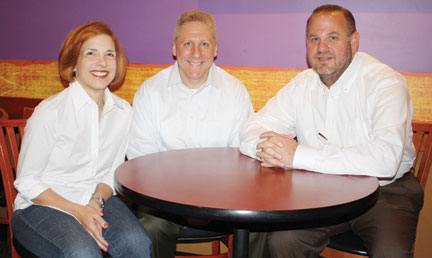
 

KOSHER MAGAZINES MERGE —Two popular kosher publications have merged. Bitayavon magazine is now officially part of Joy of Kosher with Jamie Geller. The new publication will be a multi-featured magazine that will be the only one of its kind on the market focusing on the burgeoning kosher lifestyle.

The new magazine will keep the title Joy of Kosher with Jamie Geller and will continue to feature Geller’s trademark warmth, straightforward approach along with her highly acclaimed recipes. It will also incorporate Bitayavon’s signature style of showcasing new food trends, gourmet cooking and its pioneering approach to focusing on seasonal foods.

“We’re looking forward to combining specific columns and content from each magazine to provide a truly superior product that will better serve both the reader and the industry,” says Jamie Geller, founder and chief creative officer. “Joy of Kosher and Bitayavon have featured some of the best kosher food writing, recipes and photography published.”

Shifra Klein, who with husband Shlomo Klein are co-founders and co-publishers of Bitayavon, agrees. “Not only does this merger combine editorial talents, but it also creates a dynamic publishing team with entrepreneurial experience. Both Shlomo and I look forward to working with Jamie and sharing our vision of upscale, gourmet kosher food with the readers of Joy of Kosher.”

The magazine is offering a limited-time subscriber special for the new Joy of Kosher with Jamie Geller. Visit http://www.joyofkosher.com/magazine/.

Over the years KU Hillel has become known across the country for its quality programs of all types — including Israel, leadership training, outreach and engagement, social justice and religious. Perhaps the most well-known of these programs, and most certainly the largest, is Rock Chalk Shabbat. Last year the KU Hillel board of directors, led by its president, Susie Greenberg, decided to use the popular event as a fundraiser. This year the fundraising campaign is being co-chaired by board members Craig Kolkin and Brad Smuckler.
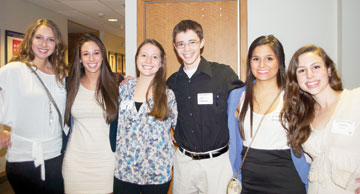
While the event is now a fundraiser, it remains true to its origins as being an absolutely free event. It brings together more than 500 students, parents, alumni, faculty and members of the Lawrence and surrounding communities for a Shabbat experience in the Kansas Union. This year’s event takes place on Nov. 2 and begins at 6 p.m.

The event

This will be the 11th year for Rock Chalk Shabbat, which was originally called Shabbat 150 in hopes of getting 150 people to attend a Hillel Shabbat dinner.

“It became Rock Chalk Shabbat in the fifth year when we decided to focus on the experience itself, and not the actual number of people attending,” explained Jay Lewis, KU Hillel’s executive director.

More than 120 student leaders are involved in planning the event. Hillel students plan every aspect of it from the worship service, to the food, to the cleanup. Last year for the first time members of the two predominantly Jewish fraternities took part as well. The men of Alpha Epsilon Pi served the hors d’oeuvres and members of Zeta Beta Tau were waiters for the dinner, which is served family style.

“The students love showing off Hillel and the university,” Kolkin said.

The event has never been completely sold out, but it’s been close.

“People were standing in the back of the room for services in Woodruff Auditorium,” said Carly Stein, Hillel’s program director.

Smuckler said it’s amazing to see so many people, especially college students, gathered together at Rock Chalk Shabbat given the types of hectic schedules people lead today and the other choices available to students on a Friday night. But once they get to Rock Chalk Shabbat, they are wowed by what Hillel does.

“I took several guests last year and they were literally overwhelmed by the event. I know that they all walked out of there as new supporters of KU Hillel,” Smuckler said.

In many cases, Rock Chalk Shabbat is the first event a young KU student attends as well.

“Once a student attends Rock Chalk Shabbat, we have found that he or she is more apt to attend other Hillel programs,” Kolkin said.

As Greenberg and Kolkin point out, the event is not only for students or those who have students at KU.

“My children love to attend because they have babysitters that will be there and family members that are there. When we go to Rock Chalk Shabbat we invite everybody, including non-Jewish guests,” Kolkin said.

“It’s celebrating Shabbos, but in a very youthful and modern way,” he continued.

Even though there are 500 people worshipping together, Smuckler said it’s a very warm, welcoming and intimate experience.

“It’s done so well that you really feel like you are in a small chapel,” Smuckler said.

A perfect fundraiser

Greenberg said Rock Chalk Shabbat has become an opportunity for parents to see what their students are doing at KU. Turning this event into a fundraiser gives parents and others the opportunity to support KU Hillel’s great programming.
“This event gives parents a chance to support what KU Hillel exemplifies, which is the participation of Jewish kids in Jewish activities while they are not living under their parents’ roofs,” Kolkin explained.

Both Kolkin and Smuckler have served on the Hillel board for four years and are KU alums who knew each other as students. They have each attended several Rock Chalk Shabbats, and say they definitely have an impact on those who do attend. That emotional impact is another reason the board decided to turn the annual event into a fundraiser.

“This event has a way of inspiring people to give,” Kolkin said.

Since Rock Chalk Shabbat is already an established and popular event, Lewis said KU Hillel did not have to create another event for the explicit purpose of raising funds, which could distract them from Hillel’s mission to connect students to Jewish life both on and off campus.

“Having a major fundraiser pivoting around one of our biggest student events kept the focus on the students and student experience,” Lewis said.

The event raised $18,000 last year. The goal for this year is $50,000. Rock Chalk Shabbat is actually funded by a grant from the Jewish Heritage Foundation. Funds raised at Rock Chalk Shabbat, Lewis said, will fund a variety of Hillel programs.

Donations are being sought in three categories: $10,000 Title Sponsor, $1,800 Patron of Hillel and $180 Table sponsor. Gifts are not limited to these three categories; gifts of any size will be accepted.

Kolkin, Greenberg and Smuckler stressed that the local Jewish community is invited and welcome to attend the event.

“The board of directors and KU Hillel as a whole would love to have any member of the Kansas City Jewish community join us on Nov. 2 to experience Rock Chalk Shabbat for yourself so that you can experience what the true impact of the organization is,” Kolkin said.

“Our hope is that after you attend Rock Chalk Shabbat for absolutely nothing, the service will move you like it has moved us and you will want to help support KU Hillel after what you’ve experienced,” Kolkin continued.

For more information about Rock Chalk Shabbat or KU Hillel, visit www.kuhillel.org or email .

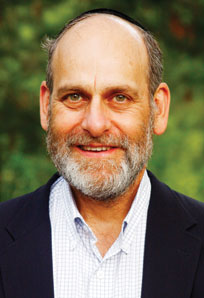
Being a scholar of Jewish philosophy didn’t come naturally to Alan Morinis, but when he discovered the tradition of Mussar, he knew he’d found a way to connect. Morinis, who founded the Mussar Institute in Vancouver, will be speaking at the community-wide Selichot service at 9 p.m. Saturday, Sept. 8, at Congregation Beth Torah on “the experience of yirah as the basis for a prayerful life.”

Morinis will also be leading other programs over the weekend. “What is Mussar and How Can It Change My Life?” will be at 6 p.m., Friday, Sept. 7, at The Temple, Congregation B’nai Jehudah. “Cultivating a Life of Gratitude through the Lens of Mussar” will be at 9:30 a.m. Sunday, Sept. 9, at the Jewish Community Center.

According to Morinis, the main difference between Mussar and regular group rituals is that when you study Mussar, you look inward at yourself, rather than outward at the community around you.

“So much of Jewish life is focused on the external,” Morinis said. Looking at personality faults “becomes the focus of the discipline, because each of us has certain traits in which we have the potential to grow. If we recognize that and … grow in that area, it ceases to become the problem area. People who are impatient can become patient. People who worry can get peace of mind.”

The particular area of Mussar Morinis will focus on at the Selichot program is yirah, which doesn’t have a direct English translation but refers to a feeling of fear, awe and reverence.

“If you’re standing at the edge of the Grand Canyon, you’ll have an experience of awe, because it’s such a dramatic and remarkable thing to see, but you’ll also have fear, because there’s the edge of the canyon, and it’s a long way down … and it’s all wrapped up in one,” Morinis said. “It’s very important to cultivate that inner sensibility. That’s how we know the presence of the divine in the world; when you have one of those experiences, it takes your breath away.”

Morinis, who made the transition from film producer to Judaic scholar 15 years ago at age 47, found the roots of this philosophy in the Torah. At the time, he did not consider himself to have a strong background of Jewish knowledge but found the philosophy accessible nonetheless.

“It’s aimed at helping us in helping us in our everyday reactions with the people who annoy us the most, (who are) the people we love the most, (and) cultivating the kind of person the Torah says we have the responsibility to be,” he said.

When he discovered Mussar, he researched the topic by himself in the library at the University of British Columbia in Vancouver. Although he didn’t know enough Hebrew to read the academic texts in their original form, he found that many of the books were available in English.

“Torah is the foundation,” he said. “It really has to do with the inherent mechanisms of human nature or ways in which we are programmed to change. It’s not an intellectual exercise; there’s learning involved.”

Because studying Mussar is an individual process, the experience will be different for each person, he said.

“We’re really good at collective (in Judaism), but the individual is different, and the Mussar traditionally addresses this and works with the fact of our uniqueness as a central focus. It’s not really prescribing for the collective,” Morinis said.

Although Morinis’ Mussar Institute is based in Canada, there are locals in Kansas City trained to lead classes for those who may be inspired by the Selichot program. Rabbi Alexandria Shuval-Weiner at The Temple, Congregation B’nai Jehudah is a qualified Mussar group leader and will hold Mussar classes in October and November.

Rabbi Shuval-Weiner wants to thank Ellen Miller and Irv Robinson for bringing Morinis to the community.

“Through their own study and engagement with the Mussar Institute, they have come to regard Alan Morinis as a wonderful teacher and inspiring leader. Because of their generosity, we are so very blessed to have the opportunity to study with Alan Morinis at various sites over the course of the weekend. The lessons he will bring are sure to enrich our work of Hesbon HaNefesh (an account of the soul), in preparation for the Holy Days. What a beautiful gift to our community!” Rabbi Shuval-Weiner said.

“Personally, I am looking forward to a special Mussar teaching that Dr. Morinis will be leading on Shabbat afternoon. This particular private session was made available to a select group of people from across the community who completed ‘A Season of Mussar’ with me during this past year,” the rabbi continued.

For additional information regarding Morinis’ Selichot presentation Sept. 8, visit www.kcrabbis.org or contact Annette Fish, Rabbinical Association administrator. While not mandatory, those attending are asked to respond by email to or by phone to 913-327-4622.

The Rabbinical Association of Greater Kansas City sponsors the Selichot program with support from The Jewish Federation of Greater Kansas City. The keynote speaker is made possible by a contribution from Ellen Miller and Irv Robinson, in memory of Freda Rose Miller.

More information regarding Morinis’ presentation on Sept. 7 at B’nai Jehudah can be obtained by calling 913-663-4050. Call 913-327-8077 for more information regarding the Sunday, Sept. 9, presentation at the JCC.

For more information about Rabbi Shuval Weiner’s Mussar class, call 913-663-4050. The class will run from Oct. 3 to Nov. 28 at B’nai Jehudah. Participants must register before the class begins.

System announces exclusive health care partnership

Build-out is under way at the new Saint Luke’s Health & Wellness Center, located in the former gallery space adjacent to the lobby of the Jewish Community Campus. The Health & Wellness Center, when complete, will be a permanent venue for delivering health education.

“We know that a growing number of health care consumers are looking for ways to incorporate wellness into their busy lives,” said Katherine Howell, R.N., M.B.A., president and CEO of Saint Luke’s South Hospital. “The new Health & Wellness Center brings convenient, consumer-focused information in an easy-to-access format.”

Saint Luke’s Health System and the Jewish Community Center recently penned a sponsorship agreement — making Saint Luke’s the Jewish Community Center’s exclusive health care partner.

“This is a unique opportunity for our members, as well as for visitors to the Jewish Community Campus,” said Jacob Schreiber, president and CEO of the Jewish Community Center. “Saint Luke’s has committed to expand the scope of their onsite educational offerings. These are the types of programs that enhance wellness and complement our extensive array of fitness services. We’re proud to partner with Saint Luke’s to promote good health and well-being.”

The Health & Wellness Center classes will begin in September — most are free of charge. Topics range from diet and nutrition, to preventing heart disease, to arthritis and joint care. Teams of physicians, nurses, physical therapists, and registered dietitians are developing a full selection of classes.

For more information, or to reserve a spot in one of the classes, call Saint Luke’s Concierge at 816-932-5100.

Yafit Josephson was born in the United States and moved to Israel when she was 2. After she served in the Israeli army she chose to move back to the United States nine years ago and study acting in Los Angeles. She earned a degree from the University of Southern California, began auditioning for roles and found herself typecast as a Middle Eastern villain in every role.

She didn’t like playing that role, so she created her own.

Josephson will be in Kansas City Sept. 8 and 9 to perform her one-woman show, “New Eyes” as the Jewish Community Center debuts its 2012-13 performing arts season. Ticket information is available by visiting www.jcckc.org. The actress will moderate a post-show talk-back following each performance.

Josephson was raised in Ramat-Hasharon. The daughter of Israeli filmmaker Isaac Josephson (and wife Tamar), who produced two famous comedic Israeli movies, “Charlie Va’hetzi” and “Hagiga Ba’Snuker,” she was exposed to the entertainment industry at an early age.

But she didn’t like what she saw as an adult trying to make it in showbiz.

“After I graduated and started auditioning, I saw that there was a pattern. I was always receiving the role of the bad guy, the villain. It was always the Middle Eastern villain. Coming from Israel I had an issue with this stereotype about Israelis or Middle Easterners so I decided to decline many roles and started writing my own show and explain the true colors of Israel,” Josephson said.

Once she made this decision, she focused her creative energies on writing “New Eyes” with American Jewish playwright Suzanne Bressler. She helped support herself during that time by teaching Hebrew and Judaic Studies, using her acting skills, at the Religious School of Wilshire Boulevard Temple in West Los Angeles. After a year and a half of intense writing, she finally brought “New Eyes” to life on stage in July 2010 and has been sharing her personal life story with audiences ever since.

Josephson said “New Eyes” “tries fix the misconceptions that are out there.”

“It turned out to be a show that is full of laughter, full of hope but also full of dramatic moments. Many people here in Los Angeles see it as a good PR piece for Israel,” she said.

She sees the show as a woman standing up to tell the true story about Israel and Israelis.

“The goal was to expose myself as an actress of course, but also to fix this misconception. But now I realize that this is bigger than me. Many organizations want me to come perform for their organizations so that I can explain what Israel is all about through my own eyes,” she said.

In the show Josephson portrays 18 characters from five different countries. Those characters include a Persian, which is a third part of her own personal identity, as well as French, British, Israeli and American. It explores universal themes of self-esteem, family, identity and cultural differences and similarities.

“Many people who come see the show say it is a story about an Israeli girl but many can relate to it because many of us belong to different cultures. It’s very much the story of an immigrant as well,” she said.

Josephson has been presenting “New Eyes” for two years now. She’s performed in more than 100 shows, all in California. Besides being its co-writer and star, she produces it, books it and publicizes it. It has done well enough that she can support herself on this project alone.

When “New Eyes” comes here next month, it will be the first time it has been performed outside of California.

“I’m really, really excited about that,” Josephson said.

She was able to bring the show to the attention of the local JCC through Naty Saidoff, an Israeli she describes as “a great supporter of hers” who happens to co-own Brookridge Golf & Fitness in Overland Park.

“He is an amazing fan of my show and he’s seen the show many times,” she said. “One day he decided he was going to bring Jacob Schreiber of the Jewish Community Center to Los Angeles to see the show. That was in June 2011.”

Josephson said she and Schreiber began communicating after that and the show was booked about a year ago.

Schreiber said he thought the show fit well with the JCC’s drive to bring more original Jewish-themed performances to the JCC.

“I went to LA to see why ‘New Eyes’ was such a big hit — why its run was extended numerous times. What I found was a poignant and funny work of art that addresses how Israelis and  American Jews are stereotyped — and the havoc that plays on young people’s ability to find their place in the world,” said Schreiber, the JCC’s president & CEO.

“It’s rare to be able to communicate these issues outside of an educational forum, and it’s amazing to actually be entertained during the entire discussion,” he continued.

Schreiber said Kansas City audiences simply do not get to see these types of original works that typically are only available in New York City, Los Angeles or Chicago.

“This is a real opportunity to see what young Jewish artists are creating — while getting glimpses of Israel not readily available in the mainstream media,” he said.

“New Eyes” may be a one-woman performance, but several people will travel with Josephson to Kansas City including her father, who she always introduces during the post-show question-and-answer session, her brother Eliad Josephson who helps produce the show, director Sammie Wayne and technical director Emir Isilay.

She credits her success to both parents, who moved back to the United States when she did.

“Even at times when I doubted I could do this, my parents told me I had to pursue it and continue because I had the talent,” she said. “I owe much of this to them because they really, really encouraged me to continue. Both of their characters are in the show and both of their characters shaped me into who I am today.”

For Seroj Terian, every day on the job is rewarding. Terian is the lead community handyman for the Help@Home program of Jewish Family Services. Terian helps adults age 65 and older or those who are younger but have a physical or mental disability, by doing minor home repairs that allow them to live independently in their own homes for as long as they choose.
“It’s been such a blessing for us,” said Louise Siegel, who’s been a Help@Home member since the program began almost four years ago.

Modeled after successful programs both in the United States and Israel, Help@Home was created to meet the needs of Kansas City’s growing older adult population. The service is provided for a monthly fee, which is based on a sliding scale.
Help@Home members have access to the services of Terian and his volunteer helpers.

“We do all kinds of minor home repairs including plumbing, electrical, paint and drywall, installing safety equipment like handrails and grab bars, etc. We also do many kinds of ‘around the house’ chores like assembling items, moving things, hanging pictures, flipping mattresses, cleaning gutters, etc.” he said.

Terian also provides some computer troubleshooting, as well as hooking up new electronics and components.
Dawn Herbet, who works directly with the program as JFS director of older adult initiatives, said Help@Home members are grateful for the services they receive through the program.

“Every time a member tells me how glad they are there’s a program like this in Kansas City, it just reinforces for me the need for older adults to have options to live their lives independently,” Herbet said. “That’s what Help@Home gives its members — options, support and a sense of security.”

Terian has been the lead community handyman for three-and-a-half years. While others might describe the chores he does as hard labor, Terian likes the tasks he performs.

“I enjoy working with my hands, fixing things, and solving challenges,” Terian said. “Each day is different. I also enjoy working with and getting to know our members and hearing about their life experiences.”

Terian said the services Help@Home provides its members gives them a real sense of security.

“Everyone who owns a home knows that there is -always  something to repair and chores to be done. These tasks become difficult or impossible as people age,” Terian said. “It gives our members peace of mind to know that they can call us at any time when something comes up. They trust us.”

Siegel and her husband became Help@Home members to assist them with chores around their home.

“We were never very good at repairs, so when Help@Home became available we signed up right away,” she said.

Terian put in a microwave for the couple as well as stained a porch swing. When Siegel’s husband passed a little over a year ago, she came to rely on the program even more.

“Someone comes who is qualified to do the job, they come at the appointed time and they’re very friendly and capable,” she said. “I don’t know why anyone wouldn’t sign up.”

Help@Home is open to anyone 65 and older or those younger than 65 with a mental or physical disability, regardless of religion or ethnic background. New members are welcome. For more information or to join the program, contact Dawn Herbet at 913-327-8239 or .

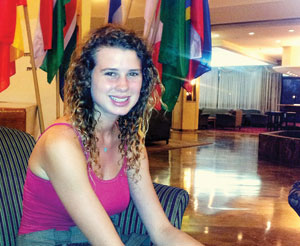
JERUSALEM — She’s tall, thin, has long curly blond hair and a bubbly personality. Rachel Kaplan, the 20-year-old daughter of BIAV members Gary Kaplan and Eileen Kaplan had just walked to the King Solomon Hotel from the Old City after spending most of a week hiking around Israel in a brand-new pre-army training program.

The training program, Mechina Tavor is a preparatory program directed by Amichai Shikli and geared for new immigrant “lone soldiers” those whose parents do not live in Israel or who do not have close relatives here. It is comprised of four women and 15 men who come from the United States, Australia, Chile and South Africa. In addition six Israelis who have already completed the year-long preparatory program are serving as counselors for this group.

Kaplan attributes the decision to come on aliyah and serve in the army totally to growing up in Kansas City.

“Growing up in Kansas City gave me such a great Zionist background from my youth group, NCSY. Now that I’m here, I really appreciate having grown up in such a warm, Jewish community.”

She came to Israel for the first time when she was a ninth-grade student at Hyman Brand Hebrew Academy. She then came again in 11th grade with the “Jerusalem Journey” through NCSY. These experiences motivated her to return for her gap year, after graduating Shawnee Mission South in 2010, for the Bar Ilan University Israel experience. (Bar Ilan, located near Tel Aviv, was conceived in Atlanta and founded by an American rabbi and educator to forge links between the Torah and universal links. Thus in the beginning, students and faculty were religious.)

“Halfway through the year, I realized I wasn’t going to leave Israel,” said Rachel. “This was my country, this was where I should live, and I felt I should serve in the army.”

After returning to Overland Park for a month, she made aliyah in July 2010. Since then, she has attended two kibbutz ulpanim (Hebrew programs) and is now in this pre-army program.

When Rachel goes into the army in November, she will be part of a group called Garin Tzabar, a support system for lone soldiers in the Israel Defense Forces; she will have an apartment at Kibbutz Nir Oz, a secular, agricultural kibbutz in the northwest Negev, 1 1/4 miles from Gaza. There are four others in the preparatory program from her garin and two from another garin who will also be on this kibbutz.

In the preparatory program, Kaplan is the one who has been in Israel the longest, and she is finding it “an incredible experience!”

“It’s giving us the opportunity to experience Israel first hand, alongside Israelis that have been trained a whole year. They explain things in non-stop activities and the whole program is army oriented.”

Among things which stand out in her mind is meeting the parents of a young soldier, Michael Levin, a 21-year-old paratrooper from Philadelphia, who was killed in 2002 while his unit was fighting Hezbollah. An Israeli Jewish Agency friend of Levin’s founded a center to help lone soldiers before, during and after their army service and named it in his memory.

Another experience she especially remembers was going to an abandoned village where Special Forces taught the group to rappel off the side of a building with paint guns, shooting at various targets.

“We’ve had so many opportunities I never thought I would have, learning the country I’m going to be serving,” Kaplan said.

Although Kaplan starts her basic training in November, she is not sure what job she will eventually do in the army.

“I’m in the process of finding a job that fits my skills, that I can give back to the country,” she says.

OHEV SHOLOM IN THE NEWS — Fans of the Huffington Post may have discovered a photo of Congregation Ohev Sholom last week featured in the Aug. 22 article “Rabbis For Obama Launch Election Campaign For Jewish Vote.” The article includes a slide show ranking the most and least populated Jewish states. The photo of the Prairie Village Conservative congregation represents the oldest operating Jewish congregation in Kansas. The article ranks Kansas 24th with 271 Jewish adherents per 100,000 people. Missouri ranks 19th with 370 Jewish adherents per 100,000 people. According to the Rabbis for Obama website, none of the rabbis in the local Jewish community have joined the organization. It’s also interesting to note that the Huffington Post story states, “At this point there are no similar groups such as Priests, Reverends, Gurus or Imams for Obama and no corresponding group Rabbis For Romney.” Helene Saper, who along with husband Byron is a long-time members of Ohev now residing in Tallahassee, Fla., contacted the congregation to make sure people there saw the photo. The entire article and the photo can be seen at http://www.huffingtonpost.com/2012/08/22/rabbis-for-obama-launch-e_n_1822724.html#slide=1060884.

NFTY MU-KU RIVALRY? — Class has been in session for more than a week now at both the University of Kansas and the University of Missouri. Fans of both schools know by now that the 100-plus year old Border War has been shelved because Missouri left the Big 12 Conference and joined the Southeast Conference, better known as the SEC, at the end of the last school year. But could there be another border war brewing in NFTY, the Reform movement’s teen group? A loyal reader Dan Stolper brought to our attention a while ago that the new NFTY president Evan Traylor is a freshman at KU this fall. Marlee Ribnick, NFTY’s membership and communications vice president just happens to be a freshman at MU. Evan, who is a native of Oklahoma City and is a member of Congregation Temple B’nai Israel in Oklahoma City (Rabbi Vered Harris’ new congregation), said he and Marlee have joked about the rivalry between the two schools.

“This summer we were both on staff at the URJ Kutz Camp, and there were even participants from the Midwest that joined in on the fun. While I’m sure that Missouri is a great university, KU definitely has the upper hand! Rock Chalk!” Evan said. Evan plans to study political science and Jewish Studies at KU while Marlee plans to major in journalism and minor in music.

PRESCHOOL HIRES ‘GRADUATE’ — For the first time since Judy Jacks Berman has been director of Beth Shalom’s Rose Family Early Childhood Education Center, a job she has held for 19 years, Berman has had an opportunity to hire a graduate of the school! Jessica Rose was a student in the Pre-K class during Berman’s first year as the preschool director in 1994. Last week Rose, a graduate of the University of Denver, began her duties as an assistant teacher in the preschool. In addition to working at Beth Shalom, Rose is a student in the School Counseling Master’s Program at the University of Missouri-Kansas City. She is the daughter of Dr. Barry Rose and Judy Rose and the granddaughter of Eddie and Ellen Rose and the late Ruthie Rose. The preschool bears her family’s name.
The Kansas City Melton School of Adult Jewish Learning, which is preparing to celebrate its 18th year in Kansas City, will now be run under the auspices of the Hyman Brand Hebrew Academy and will be known as Melton@HBHA. HBHA completed negotiations with the Florence Melton Adult Mini-School to house the local franchise this summer and is ready to begin programming after Simchat Torah. The local Melton program will be directed by Henri Goettel.
Until now the Jewish Community Center had “proudly” hosted the Melton program, in which time it had close to 700 graduates and even more students. Jacob Schreiber, president and CEO of the Jewish Community Center, noted the JCC decided this spring to steer its adult learning programming in a different direction.

“As the JCC begins to focus our programming more toward engaging young families — as well as to responding to national polls in which Jews are asking for more cultural arts and hands-on programs that empower them to express Jewish creativity — we thought it was time to try some new things. That’s why we are thrilled that HBHA has decided to offer the Melton program. It’s still a fantastic formal education course, and we believe HBHA’s creative energy will provide healthy new approaches to marketing it,” Schreiber said. (See related story)

HBHA’s change in focus

Up until now, HBHA has concentrated almost exclusively on educating children in grades K through 12. HBHA Head of School Howard Haas said the HBHA board now hopes the school can become the Jewish educational institute for the area.

“We want to be able to metaphorically knock down the walls of Hyman Brand Hebrew Academy and open up the gifts that we have to the entire community. We want to be able to reach the adult population and we also feel that by letting people know who we truly are it will help grow our own student population,” Haas said.

One reason the school hopes to expand its vision is because it has so many talented teachers. Haas said becoming the home for Melton is just the first step in HBHA’s plan to expand its focus and open its doors to the entire community.

“We are also reaching out to different congregations to see if we can help with their Bar and Bat Mitzvah training their students,” Haas said. “We have the resources here and we’ve been doing this for 40 years, so we want to open up more of our services to the community.”

One service HBHA has already opened up to the community is its morning minyans. Each day school is in session, the school has a traditional and an egalitarian minyan at 7:55 a.m. Haas said people have already taken advantage of the opportunity to worship with the students and are welcome to continue to do so this year.

Haas said HBHA will house Melton and be its administrative support. The Melton@HBHA advisory board will be responsible for raising money to pay for the program.

Melton@HBHA Director Goettel explained that by the time HBHA had decided to seek the Melton franchise for the area, it was too late to apply for traditional funding grants. The board has already successfully obtained enough pledges “from people who care about Melton” to cover the 2012-13 franchise fee. Funds are still being solicited as they are needed to create a scholarship fund, pay for operating expenses and to establish a savings account that will eventually become Melton@HBHA’s endowment.

Courses for 2012-13

Goettel explained that Melton@HBHA will begin on a small scale this year with a class called Foundations for Jewish Living. It’s designed for parents of young children and will be co-sponsored by Jewish Family Services.

One section will be held during the day at HBHA and taught by Marla Brockman. Plans are not complete for a second section, but hopes are it will be held at a congregation on Sunday mornings. The class will be taught over 20 weeks and is open to the entire community.

Susie Hurst, JFS’ director of Family Life Education, said this is a perfect fit for JFS as it wanted to work collaboratively with other agencies.

“The Foundations for Jewish Living course focuses on both parenting skills and the core values of Judaism to enrich Jewish learning and family connections,” Hurst said.

Foundations partners with the Harold Grinspoon Foundation and PJ Library. Kansas City has a large group of young families who participate in PJ Library making it, Goettel said, a win-win for Melton here. She believes these families can benefit greatly from this course.

“We believe that over time children who read these books and watch these videos will have questions that their parents will not be able to answer. This is the background for the parent to understand where our master stories and our values come from so that as they interact with their young children they can pass along that information,” Goettel said.

Goettel stressed that you don’t have to be a PJ Library parent to enroll in this course.

Students who have studied at Congregation Beth Torah the past couple of years will be able to continue their Melton studies. For the last seven years Beth Torah has offered a core Melton class that is a one-hour course over four years versus the traditional two-hour course over two years. When classes begin in the fall, these students will begin their third year. The class will be taught by HBHA’s Michal Cahlon, who also taught this group last year.

For those students who took Melton first-year courses through the JCC last year, there will be no official Melton 2 offerings through Melton@HBHA this year. However, Jill Maidhof, the JCC’s director of Jewish Life & Learning, said students who wish to continue engaging in serious adult education at the JCC will find plenty of high quality, multiple week offerings taught by two of the community’s most popular instructors, Dr. Edna Levy and Hazzan Rob Menes, who will be teaching by teleconference.

The Melton Classic Seminar

One of the things Goettel is really excited about is coordinating a group of Melton students to participate in the Melton Classic Seminar in Israel. A group from Kansas City is scheduled to go to Israel June 17-27.

“Our teacher is Chaim Aronovitz. He’s an extraordinary educator. For people who have never been to Israel before this is really a life-changing experience. For people who have been to Israel, this is an experience unlike any other seminar they’ve participated in. We’re really looking forward to putting that seminar together and going as a group.”

Melton Advisory Board

In addition to fundraising and publicity responsibilities, a Melton advisory board, which is comprised of representatives from the local congregations, will help craft Melton@HBHA for the future. That will include determining from the pool of local Melton graduates when people want to study, where they want to study and what they want to study.

“We have graduates going all the way back to 1996 and the graduate program wasn’t even in existence at that time,” Goettel said. “We think there are folks who really don’t know how many modules Melton makes available and how rich they are. We are hoping by the second semester of this year that we’ll have a cohort of people who are interested in, for example, ‘Beyond Borders,’ which is the primary source record of the Arab-Israeli conflict or ‘Holocaust Through Memoirs and Diaries,’ which hasn’t been offered since 2006. There are wonderful Torah-based and also contemporary issue-based curricula that we think people don’t know about. We’re going to be working through our advisory board to get that word out.”

The following individuals have agreed to represent their congregations and are available to answer any questions about Melton:

Beth Shalom: Erwin Abrams — 410-703-7688, or Sharon Loftspring — 913-814-8687,

Beth Torah: SueAnn Strom — 816-729-9671,

Kehilath Israel Synagogue: Ellen Portnoy — 913-451-6293,

Kol Ami: Rabbi Doug Alpert — 913-642-9000,

Ohev Sholom: David Friedman — 816-289-6521, or Elaine Friedman — 816-377-1758,

Community Contact: Celeste Aronoff — 913-548-7384,

KC Melton Director: Henri Goettel — 816-795-8361,