


Kosher Meals on Wheels to begin delivering meals soon
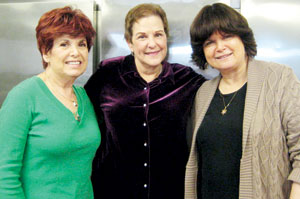 It’s no secret that hunger among members of the Jewish community is on the rise. The newest program in the area set to help tackle this problem, and the first to provide already prepared kosher food to an individual’s home, is Kosher Meals on Wheels. It is being organized under the auspices of the Torah Learning Center and should be up and running sometime in January.
“There’s a serious problem of hunger among our seniors. Our target population is those who can’t get out to get the food. They are also unable to prepare their meals,” explained Susie Klinock, who is the overall chair of the new program.
This is the second major hunger program initiated in the last few months in the Jewish community. Jewish Family Services started the JFS Food Pantry in October. Kosher Meals on Wheels is partnering with JFS to help discover who is in need of this service and JFS is helping train volunteers. Kosher Meals on Wheels is, however, a separate program from any other Jewish food program in the area and should not be confused with the Simcha Box program that has provided food stuff to members of the Jewish community for several years.
The food delivery program is intended for people who are unable to purchase or prepare their own meals. Clients must live in Jackson, Wyandotte or Johnson counties.
Volunteer Esther Friedman said JFS has provided Kosher Meals on Wheels with an initial list of 10 people who are set to be the program’s first clients. Once the glitches are ironed out of the program, organizers hope to quickly expand the client list to 25.
“JFS has told us that they think they have about 35 people who will want this,” Friedman said. “We’ve also been getting calls from people wanting to know how the program works as the word has spread about this program.”
The program is for any Jewish person, whether they keep kosher or not. While most people who receive this service will remain steady clients, in the near future Friedman hopes to assist individuals who may need short-term help, such as those recently released from the hospital.
“Nationally they tell me that’s going to account for between 30 and 40 percent of our clientele,” Klinock said.
How it works
Klinock explained Kosher Meals on Wheels’ first goal is to start delivering four meals at a time to each client on a weekly basis. The plan is for one meant to be a Shabbat meal and consist of an entrée, such as baked chicken, a vegetable and another side like kugel. A nutritionist is helping to determine what the other three meals are and make sure they are healthy and well-balanced.
The meals will be frozen.
“That’s a trend happening all over the country because it’s a lot less complicated. There are very strict rules we have to follow,” Klinock said.
All food will be cooked in the kosher kitchens at TLC, which currently has the capacity to provide meat and pareve meals. In the future they hope to add a small milk kitchen to the facility.
The delivery drives will also visit with the clients.
“A big part of our program that sets us apart is that there are so many people who are lonely. Some of them have virtually no contact with people outside the home, much less with the Jewish community. So we will provide a friendly chat,” Klinock said.
Friedman said she and her husband, TLC Rabbi Benzion Friedman, already visit many seniors who are homebound.
“They are not necessarily financially needy but lonely. We see a tremendous need for this, whether it be for those who are financially at need or just homebound. They are very lonely, can’t get out and having visitation once a week makes a world of difference,” Friedman said.
Klinock added, “It’s really pretty heartbreaking to see these people so isolated.”
Those who can afford to pay for the meals will be asked to make “voluntary” contributions based on a sliding scale.
“But we are very aware that many meals, if not most, will have to be subsidized,” said Klinock, who noted the program’s first 10 clients cannot afford to pay for the service.
Citywide effort
Klinock believes that for this program to be successful, it has to be a citywide program.
“Everybody, every synagogue, every Jewish organization in town has to be involved,” Klinock said.
Committee members are still reaching out to congregations and organizations, but so far all those contacted have reacted positively to the news. Those who have already agreed to support the project in some way, in addition to JFS, include the Vaad HaKashruth of Greater Kansas City, Mitzvah Garden, Hyman Brand Hebrew Academy and Congregations Beth Torah and Ohev Sholom.
“Rabbi Mark Levin has committed Congregation Beth Torah to sponsor the food for this program for the entire month of January,” Klinock said. “Rabbi Scott White of Congregation Ohev Sholom has proposed that volunteers from his congregation will cook one day a month as well as supply the food to be cooked that day.”
Klinock hopes other agencies and congregations will step forward and sponsor other months in a similar fashion.
No federal money is available for this program. All that money is directed to the Johnson County Meals on Wheels program. So volunteers have been searching for funding for the past several months.
“We just got word that we are getting the largest grant we applied for,” Klinock said. “Money has been coming in, but not fast enough.”
They are looking for funds from both within and outside of the Jewish community. In fact they have already received a grant from a Walmart foundation.
“We really need somebody who knows what they are doing as far as searching for grants,” Klinock said. “I feel so gratified when someone calls when they find something that may help us.”
As it gets up and running and continues to grow, Klinock said the program needs such things as stand mixers, commercial refrigerators and freezers. It also needs volunteers. People are needed to cook, clean, deliver meals and take on leadership roles.
“We have enough volunteers to take care of 10 people, but we really want to expand this very quickly and for that we will need more volunteers,” Friedman explained.
Klinock said that volunteer positions are very flexible.
“We’d love to have caterers come and bring in their whole crew. Or if someone wants to volunteer as often as once a week or can only swing it once a year, we welcome that also,” she said.
Ginsberg said the volunteers will be screened by Kosher Meals on Wheels and trained by JFS.
“Our volunteers will be trained to be companionable, to visit and give some comfort,” Klinock said.
The amount of time each volunteer spends with a client will vary, Friedman explained.
“Some people will want to talk and love having guests. Some just want you there for five or 10 minutes,” she explained.
Since the drivers will be 100 percent volunteer, Klinock said, “I’m telling most people to plan on 15 or 20 minutes per home on average.”
Their greatest fear so far is that they will have more clients than they can serve.
“We have a wait list already. We hope to serve 50 as soon as money allows,” Klinock said.
“Based on what we’ve heard from other kosher meals on wheels programs with populations that compare to ours, we are anticipating the need will be from 150 to 200 people. That’s a lot of meals, G-d willing,” Klinock said.
To volunteer call 913-735-3663 (food), or email .
 As we’ve done for more years than we can remember, The Chronicle will shower the first Jewish baby of 2013 with prizes. Information about our annual contest, and the 2013 prize package, appears on pages 18 and 19 of The Jewish Chronicle newspaper.
 From the 1930s to the present, American filmmakers’ varied depictions of Adolf Hitler, the Nazis and the genocide of European Jewry have always involved a coming together of art, commerce, politics and history. In turn, these representations have exerted a profound influence on popular culture as well as public perception of and opinion about these events.
 PBS will air “Curtain Upon Broadway Musicals: A Jewish Legacy,” from “THIRTEEN’s Great Performances” on Jan. 1. Locally it will be shown on KCPT three times, at 8:30 p.m. Tuesday, Jan. 1, at 1:30 a.m. Wednesday, Jan. 2, and 2 a.m. Monday, Jan. 7. It will also air on KCPT 2 at 10:30 p.m. Saturday, Jan. 12; check with your cable company for channel availability.
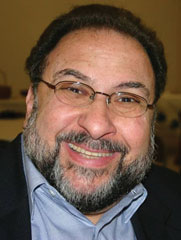 How do you transform a dreary January into a month of light and laughter? Find someone who’s very funny and put that person on stage. The Jewish Community Center is doing just that, presenting Moshe Waldoks, rabbi, standup comedian and co-editor of the “Big Book of Jewish Humor.” Waldoks will present “A Very Funny, Historically Comprehensive and Deeply Moving Overview of Jewish Humor” at 4 p.m. Sunday, Jan. 6, followed by a book signing and sale. The event, taking place in the White Theatre, is free and the community is invited. He will make a second presentation at noon on Monday, Jan. 7.
 The Jewish Community Center presents the Neil Simon comedy “Laughter on the 23rd Floor,” beginning Saturday, Jan. 5, in the White Theatre. Performances are Jan. 5, 10 and 12 at 7:30 p.m. and Jan. 6 and 13 at 2 p.m.
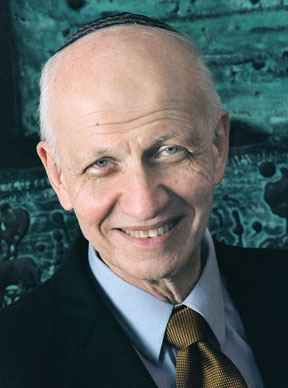 Rabbi Irving “Yitz” Greenberg, one of the American Jewish community’s foremost thinkers and leaders, will be here the weekend of Jan. 4-6 as the featured speaker of the Caviar Family Jewish Scholar in Residence Series at Kehilath Israel Synagogue. The weekend’s events are being co-sponsored by the Jewish Community Center and the Jewish Federation of Greater Kansas City.
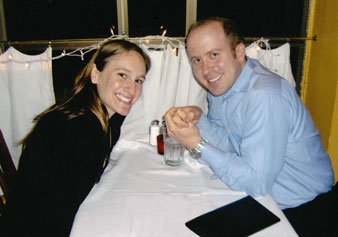 Every year on Dec. 24 about 200 young Jewish people in their 20s, 30s and 40s gather at a hot nightspot in the city to renew friendships and have an evening of good cheer. It’s not a singles event — couples and singles regularly attend — yet every now and then the relationship angels manage to bring two people together. That’s exactly what happened with Leah Karchin and Justin Unell at Bagel Bash 2009.
 Many of us have stuffed ourselves during the past several days on latkes and brisket and other delicacies as we celebrated Chanukah. Some of us in the Jewish community are not fortunate enough to feel full during this holiday, or any other day.
 Rabbi Shuval-Weiner and JFS’ Goldman, both vegetarians, learned quickly that it’s very hard to buy fresh fruits and vegetables on such a small budget.