
Within the last few weeks, three prominent staff members at Congregation Beth Torah have announced their intentions to leave the Reform congregation. This is in addition to Rabbi Mark Levin’s plan — communicated to the congregation in November 2012 — to step down as the pulpit rabbi and restructure his duties at the end of June.

Two staff members are taking new positions out of town — Executive Director Jack Feldman and Music Director Linda Matorin Sweenie. In early December Marcia Rittmaster, religious school and youth groups director, announced her plans to retire at the end of the school year. Several other staff members will remain in their current positions including Rabbi Educator Rebecca Reice and Member Services Coordinator Laura Intfen. Aaron Nielsenshultz, who is currently special programs coordinator, has been selected to manage the religious school following Rittmaster’s retirement.

This information was announced to Beth Torah members Monday, Dec. 23, by Beth Torah President Michelle Cole. In that email she also informed members that Rabbi Rick Shapiro will become the congregation’s interim rabbi effective July 1. (See full story.)

In the email, Cole wrote that change brings with it opportunity.

“This is a time of significant change at Congregation Beth Torah. As we look to the future, we anticipate two phases — transition, and in time, a new normal,” she said.

Feldman has accepted the position of executive director at Temple Sinai in Atlanta. He joined Beth Torah in 2006 after serving as a Reform Jewish camp director. His last day will be Friday, March 21.

“As the Danish philosopher Kierkegaard said … ‘Life can only be understood backwards, but it must be lived forward.’ I’ve been presented with a wonderful opportunity to continue my forward journey,” Feldman said.

“I will leave my Beth Torah family with great difficulty — the past seven years have been nothing short of extraordinary. I have come to learn the true meaning of the word community — for that is what Beth Torah is at its core, and will always be. I’ve been blessed to have worked with a wonderful group of compassionate, caring, dedicated professionals and volunteers. As Nikki, Hannah, Matthew and I look forward to the next stage in our lives, we will always cherish the time we spent in Kansas,” he continued.

Feldman’s family will stay behind in Overland Park until the end of the current school year. That means at the end of May, Nicole Feldman will also leave her job as campaign support staff at the Jewish Federation of Greater Kansas City.
Sweenie has accepted the position of music director at Temple B’nai Israel in Oklahoma City where she will launch a new music program. She will be reunited with Rabbi Vered Harris, who left Beth Torah in the summer of 2012 to become B’nai Israel’s spiritual leader. As Beth Torah’s music director since May 2004, Sweenie serves as the congregation’s primary cantorial soloist and accompanist for worship, coordinates all volunteers in the Adult and Youth choirs and Intergenerational Ensemble, coordinates the B’nai Mitzvah program, and teaches music and Hebrew in the Weiner Religious School. She has shared her musical talents with a variety of Jewish organizations in the community, including singing at JFS’s quarterly healing service with Rabbi Jonathan Rudnick. In addition her musical group Shir Balev, which also features her husband Glenn Philips and Randy Deutch, provides music at the Reform congregation twice a month and around town. Sweenie’s last day at Beth Torah will also be Friday, March 21.

Sweenie said her 10 years as Beth Torah’s music director have been wonderful, both professionally and personally.

“It’s been an honor to be a member of the most incredible staff of individuals, to serve under the great leadership of the congregation, and to be embraced by the community. Glenn and I raised our children here too, so this was not a decision we made lightly. We will truly miss everyone, but we believe this is the right time in our lives to explore different options and to take on new challenges. Temple B’nai Israel has given me an opportunity to build a comprehensive music program, and I am excited to take this next step in my career as a Jewish music professional,” Sweenie said.

Rittmaster came to Beth Torah 23 years ago as a religious school teacher and its youth group adviser. She is capping off the 17 years she has run the school and youth activities program with the accreditation of the Weiner Religious School by the National Association of Temple Educators. Rittmaster is looking forward to being able to spend more time with family, especially her grandchildren, and taking on a new role at Beth Torah.
“I’m not going anywhere, you’ll just see me in a different role,” she said. “For example we have Hebrew read-ins and my job up until now is to make sure things run smoothly. Now I’ll be sitting in a chair listening to students read while someone else does that. There’s things as a full-time staff member that I haven’t felt comfortable volunteering in and now I’ll be able to do that. And of course my husband Larry and I will still be there every Friday night.”

Cole said the Beth Torah community wishes Feldman, Sweenie and Rittmaster the best of luck in the future.

“We are sad that they are leaving but we are happy for each of them as they move on to a new position or stage in life.”

Cole said plans have begun to determine the best way to fill the gaps in staffing. In addition a search committee will be convened to determine the congregation’s needs in regards to these new developments and the best way to move forward permanently.

“We will work closely with Jack, Linda and Marcia in the months we have before their departures to put together a transition plan for each of their roles. We will provide more details as quickly as we can,” she wrote.

“We see this as an extraordinary opportunity for all of us to help shape the Beth Torah of the future,” she continued.

Beth Torah has scheduled two forums with members to discuss the upcoming transition.
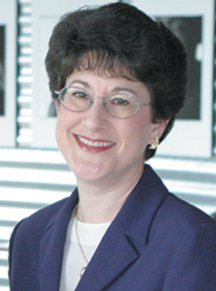
The Temple, Congregation B’nai Jehudah has sent a letter to its membership announcing an enhancement of congregational life on two fronts: chesed/pastoral care and music.
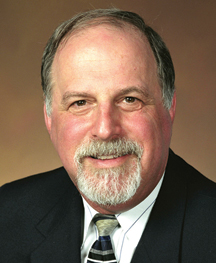
In a longer version of the letter on its website (www.bnaijehudah.org), congregation President Dan Stolper, Cantor Sharon Kohn and Senior Rabbi Arthur Nemitoff stated: “Over the past couple of years, we have become increasingly aware of the rising chesed needs within our community. We are humbly grateful that more and more congregants turn to our staff to be by their sides in moments of illness, aging, family and personal crisis. This has put an increased strain on our capacity to be fully present and to perform all the other duties we ask of our professionals.”

After months of study and discussion, the board of trustees has approved a new position to be called chesed/pastoral care director, so the congregation can devote more attention to the needs of congregants who find themselves and their families facing struggles.

Cantor Kohn, who has served as the cantor of B’nai Jehudah for more than a decade, was a key partner in coming to this decision and will assume the role of chesed/pastoral care director. As she wrote in the letter to the membership:

“Discovering and articulating an Individual Jewish Path (IJP) is our congregation’s Big Holy Audacious Goal (BHAG). I’ve been working on mine. Creating sacred space, sharing stories and simply being present for one another are at the core of the holy work I do. Music and formal prayer are important but not the primary pathways for such communications. What I have come to discover is that this is more effectively accomplished when I visit with people at moments of transition in their lives, when people are ill, one on one or in smaller groups. This is my passion and this is the path that I wish to explore.”

In order to lead this effort as fully as possible, the congregation is providing both the time and financial resources necessary for Cantor Kohn to receive 1,600 hours of clinical pastoral education (CPE) over a two-year period, through accredited programs at Jewish Family Services and at Research Medical Center. Through a combination of classroom work and pastoral care practice at local hospitals and Village Shalom, Cantor Kohn’s goal is to work toward becoming a certified pastoral counselor. In addition to visiting with and comforting congregants who are in need, her duties as the congregation’s first chesed/pastoral care director will include coordinating all of B’nai Jehudah’s pastoral care with the rabbis and staff and working with and enhancing its Chesed (Caring) Committee. Finally, she will continue to coordinate the B’nai Mitzvah program and will participate in one Erev Shabbat service a month.

With Cantor Kohn’s changing responsibilities, the synagogue will hire an individual to serve as music director. This individual will be responsible for the musical life of the congregation, including singing and leading music at three Erev Shabbat Services each month, Shabbat morning and holiday services, Sunday mornings, Machane Jehudah, preschool, youth group gatherings, and life cycle events, as needed. The music director will also recruit and nurture an expanded group of congregant musicians, as well as coordinate the congregation’s summer Shabbat In The Park experiences. It is expected that this person will begin July 1, 2014.

Congregation President Stolper stated that the expansion of services, both in chesed and music, will have no impact on budget.

“Rabbi Nemitoff has secured donor support to fund this expansion of services. We thank the families whose vision and generosity are making this plan possible,” Stolper said.

Rabbi Nemitoff summed up the importance of their joint announcement, by saying, “For 144 years, B’nai Jehudah has worked tirelessly to nurture Jewish meaning, connection, and continuity. What can be more meaningful than supporting folks as they experience struggles in their lives? No one is better equipped to lead our congregation’s efforts than Cantor Kohn.”

Rabbi Nemitoff continued, “We have also come to understand that music is one of the most powerful vehicles through which people discover deep meaning. We look forward to a new music director who will help us find that “sound” to inspire our members and our greater Jewish community. Through chesed and music we will strengthen our core purpose in the coming years.”

Congregation Beth Torah has selected Rabbi Rick Shapiro to begin serving as its interim rabbi. He will join the congregation July 1. Rabbi Mark H. Levin, who has been Beth Torah’s sole pulpit rabbi since its inception and is now being called founding rabbi, will step down from that role and assume new responsibilities, which have not yet been announced, this summer.
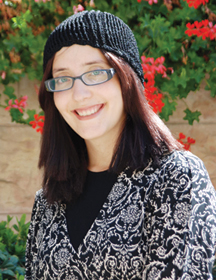
Rabbi Shapiro currently serves as the interim senior rabbi of Temple Israel in Westport, Conn. From 1981 to 2006, Rabbi Shapiro served as the rabbi for congregations in Denver and in Stockton, Santa Barbara, and Palm Desert, all in California. He chose to work as an interim rabbi beginning in 2007. Since that time he has served congregations in Great Neck, N.Y., Cincinnati, Ohio, Pensacola, Fla., and San Diego.

Linda Zappulla, co-chair of Beth Torah’s Rabbi Transition Committee, explained that as interim rabbi, Rabbi Shapiro will handle all rabbinic functions at the congregation.

“As an interim rabbi Rabbi Shapiro has been trained to help us move smoothly through our transition. Having him here will give us time to review and refine our strategic plan, and thoughtfully proceed with our search for a successor rabbi. It will give us time to get used to our beloved founding rabbi (Rabbi Levin) in a different role, and to explore different rabbinic models as we move into our next 25 years,” Zappulla said.

Zappulla said Rabbi Shapiro was the unanimous choice of the Rabbi Transition Committee and the board of trustees to fill this position. During his three-day visit to Beth Torah in December, he met with more than 60 committee, staff, board and congregation members.

“Rabbi Shapiro ranked highly on the criteria we established for this role. He impressed all of us with his warmth, his intellect and his experience with the challenges he faced in a variety of interim experiences. Comments we received about his visit included ‘he’s very warm, he seems to understand the issues we will face, he’s dynamic, and has a sense of humor. He eased our anxiety and made us feel that it will be OK,’ ” she reported.

Rabbi Shapiro said he is delighted to be coming to Beth Torah.

“Rabbi Levin and CBT have an amazing reputation for being an innovative, progressive and caring community, and I am looking forward to working with the lay leadership and staff as they plan for the next chapter in their congregational life,” Rabbi Shapiro said.

Rabbi Shapiro was raised in Southern California. Upon completion of his military service in 1974, Rabbi Shapiro earned his Bachelor of Arts degree in Jewish studies at UCLA and began his studies at Hebrew Union College-Jewish Institute of Religion, where he received his Master of Arts degree in Hebrew letters in 1979, rabbinic ordination in 1981 and his doctor of divinity (Honorus Causa) in 2006.

Rabbi Shapiro is a nationally recognized expert in the area of synagogue transition. He has extensive training and experience as a synagogue transition specialist/intentional interim rabbi. As one of only a handful of rabbis trained in this field, he speaks and writes extensively on the national level. He has been a presenter on synagogue transition issues at the URJ National Biennial as well as to his colleagues at the CCAR National Convention.

Rabbi Shapiro is also a nationally recognized expert in the area of abortion and religious morality. He is the author of “Judaism and Abortion,” a publication detailing the 3,000 year old Jewish position on abortion. He served from 1982 to 1987 as chairman of the Colorado Religious Coalition for Abortion Rights, and from 1986-1988 as a member of the national board of the same organization. He has spoken throughout the United States on the issue of abortion and a woman’s right to choose, and continues to serve as a counselor for women of all faiths who are faced with a problem pregnancy.

Rabbi Shapiro has been an active participant, on both the local and national levels, in the pursuit of religious and social justice, including advocating for reproductive rights, fair and just treatment for agricultural and casino workers, the elimination of racial and religious discrimination, and the promotion of equity in all areas of life for gays and lesbians. He has spoken extensively at both the local and national levels on these issues. He served from 1986-1989 on the Human Relations Commission of Aurora, Colo., and was designated to be the next chair of the commission. In March of 2001 he was honored as the John Chadbourne Humanitarian of the Year by the Santa Barbara Gay & Lesbian Business Association.

Throughout his career, Rabbi Shapiro has also been deeply involved in interfaith issues in every community where he has served. In Denver he served on the executive board of the Denver Area Interfaith Clergy Conference, as well as the steering committee for the Denver Interfaith Consortium for Pluralism in American Life. During his time in Stockton he was an active participant in both in Stockton Metro Ministries and the Stockton Ministerial Association. In his third year in Santa Barbara, Rabbi Shapiro was invited to serve on the board of the Greater Santa Barbara Clergy Association, which he did for five years, two as president.

Rabbi Shapiro is married and he and his wife Lynn are the parents of two grown sons: Ari, an attorney who, with his wife Melissa, lives in Atlanta and Aaron, a senior congressional legislative aide who, with his wife Erin, lives in Washington, D.C.

Women for the Wall is a grassroots organization in Israel that is concerned with preserving Jewish tradition at the Western Wall. Its founder, Ronit Peskin, will be in town Monday, Jan. 13, and will present her views on this topic at 7:30 p.m. in the Social Hall at the Jewish Community Campus. Her visit is sponsored by BIAV, the Jewish Community Center and Jewish Federation of Greater Kansas City.
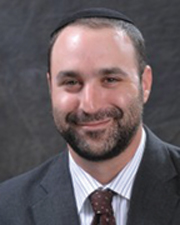
Women for the Wall (W4W) has a similar name but should not be confused with Women of the Wall. The two organizations differ in what they feel is appropriate when it comes to women praying at the Wall.

“The Kotel is a holy place for all Jews, the one place on earth where Jews of all persuasions pray peacefully, side-by-side. This is only possible if we honor the traditions that reach back for thousands of years and have held us together as a Jewish nation,” Peskin explained in an email.

On the other hand, Women of the Wall want to be allowed to wear tallit, read Torah and say Kaddish at the Women’s Section of the Wall, which is currently against Israeli law. Women of the Wall activist Anat Hoffman was here in May, supporting these and other pluralist views, as The New Reform Temple’s scholar in residence. Hoffman also spoke at an event sponsored by the JCC, Federation and other Jewish synagogues and organizations.

Rabbi Rockoff hopes many people will come hear what W4W’s Peskin has to say, because he believes it is valuable for us as a Jewish community outside of Israel to hear different perspectives from inside Israel.

“It is encouraging to hear that there are voices who wish to return the Kotel to what it always has been — a source of unity for Jews from around the world. I have only heard of Women for the Wall recently, but they have already appeared on an international stage at the Federation GA on a panel discussion. I am confident they will provide a balanced and respectful presentation and I encourage Jews of any political or religious orientation to attend this event,” Rabbi Rockoff said.

Peskin founded W4W in April because she feels the Western Wall should be a symbol of unity to all Jews.

“Unfortunately, lately it has become a focus of contention. I hope to share a more balanced perspective on this crucial issue,” she wrote in an email from her home in Kochav Yaakov, which is located about 15 minutes outside Jerusalem.

“Our focus on the trip to K.C. is to share with the community a broader perspective on the issues facing Israel, the Kotel and traditional Judaism,” Peskin continued.

Peskin wrote that she and Leah Aharoni, who is considered co-founder of W4W, formed the organization “when we saw that Women of the Wall was slandering Israel and the traditional community in the international media.”

“We were hoping, at first, after the recent upsurge of media attention and their time in the spotlight, that (Women of the Wall) would become a relative non-issue, not in the news, and just do their tefillah with little fanfare,” she wrote.

“But the flames were just building higher and higher, and we saw that this wasn’t an issue that was going to die down,” Peskin continued.

Peskin was spurred to action because she believed that there would be a lot of collateral damage from Women of the Wall’s stance and that people’s relationships to Israel and Judaism were being damaged, “based on the lies they were hearing from Women of the Wall.”

The final impetus for forming W4W, Peskin said, was when a compromise, proposed by the Jewish Agency’s Natan Sharansky, could not be reached with Women of the Wall to expand Robinson’s Arch into a larger area for egalitarian prayer.

“We were galvanized into action because we didn’t want the Kotel to become collateral damage in Anat Hoffman’s and IRAC’s (Israel Religious Action Center) political fight to change Israel,” Peskin said.

Peskin explained that W4W respects diversity, preaches love and respect for everyone, “despite our differences in opinion,” while at the same time maintains that tradition needs to be respected, especially at Judaism’s most holy site.

“We believe compromises show sincerity and a desire for peace and brotherhood. We look forward to the time when Women of the Wall starts respecting the rights of traditional Jews, and include traditional Jewish values into their fight for ‘pluralism,’ and don’t try to quash the rights of traditional Jews in their so called fight for pluralism,” she wrote.

According to Peskin, W4W is run by women from across the religious spectrum, and has supporters ranging from Haredi (most theologically conservative stream of Orthodox Judaism) and Chassidic to Modern Orthodox to non-observant and even anti-religious and non-Jews.

“People like to label us a Haredi organization, when the fact of the matter is that of the three heads of Women For the Wall, I’m the only one who is even somewhat Haredi, and I don’t fit the standard Haredi model, and the other two heads (Jenni Menashe and Leah Aharoni) are Dati Leumi/Religious Zionist and completely non-Haredi,” Peskin said.

Peskin’s first priority is her husband and three children, ages 6, 4 and 2. When she’s not working on W4W activities, she writes her “very popular, internationally read blog, PennilessParenting.com, about money saving, frugal living, and healthy eating. Occasionally I lead wild edible walks.”

This is the first time Peskin has been to the United States to promote W4W’s views. She said Aharoni will travel to this country to speak about the issues next month.

“We hope to both make more trips in the future,” Peskin said.

Can you define a religious Jew? It’s quite possible your definition is different than that of Rabbi Aaron L. Alexander, the featured speaker for Congregation Beth Shalom’s Sisterhood Shabbat/Kaplan Scholar-in-Residence weekend Jan. 17-18. (For complete information regarding the weekend, see below.)
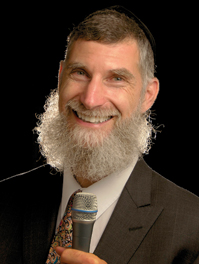
In fact “Redefining ‘Religious’ ” is one of Rabbi Alexander’s topics for the weekend.

“I think one of the terms that has been hijacked in religious life is what is a religious Jew,” he said in a recent phone interview.

The rabbi, who was ordained in 2006, serves as associate dean of the university’s Ziegler School of Rabbinic Studies. He lectures on rabbinics and Jewish law and said he believes when most people hear the word religious Jew they automatically think of a man with a beard and a hat. He said most characterize anyone who fits any other description as not religious and is, in fact, some other form of Judaism. The rabbi personally believes quite differently.

“The religious Jew is the one who in any moment in his or her life decides that the Torah will offer an answer. In that moment that person is a religious person,” he said.

Along those lines, the Conservative rabbi is often asked if he has a definition of a good Jew.

“I used to say no, that’s a ridiculous question. But I think there are some reasonable answers to what makes a good Jew. One of those is does your tradition ever have a veto in the choices that you make in life?

“Because the moment of decision-making, with the tradition as the background, the backdrop, that moment becomes a religious moment for somebody. I think we’ve gotten to a place where people assume it’s all or nothing and everything in between is too complicated to figure out and it’s none of those things. It’s not all, it’s not nothing and it’s actually not too complicated to figure out,” he explained.

Noting that Jewish tradition has been providing us with answers for 2,000 years, Rabbi Alexander said those answers need to be finessed in order to fit the day in which we live.

“So the text that I will be teaching over the weekend will be amplifying specific examples of that to a certain extent but also teaching the questions that one needs to ask in order to see themselves as a religious person. Ultimately that’s what I want. I want Jews to understand that when they make decisions based on their tradition they are making religious decisions,” he said.

Rabbi Alexander is a certified mashgiach (kashrut supervisor) and a prolific writer. He is a regular contributor to the Huffington Post and the Sh’ma Online Journal, commenting starkly on current social issues through the lens of Torah. Rabbi Alexander also contributed traditional text chapters to the first three editions of the JPS series, “Jewish Choices, Jewish Voices.”

He spends his summers as rabbi in residence at Camp Ramah in California along with his spouse Rabbi Penina Podwol Alexander. The couple have two sons, 3-year-old Ariel and newborn Eliav. He was also a founding staff member at Camp Ramah Darom in 1997, where he met Beth Shalom’s Rabbi David Glickman and his wife Annie.

“He has always been an energetic and dynamic leader and teacher. Since his studies at the Conservative yeshiva in Jerusalem, the Jewish Theological Seminary (where he received his master’s degree in Talmud), and his rabbinic ordination from the Ziegler School of Rabbinic Studies at the American Jewish University (formerly the University of Judaism), Rabbi Alexander has become one of Conservative Judaism’s most sought after young teachers and speakers,” Rabbi Glickman said.

“Rabbi Alexander is the associate dean of the Ziegler school, and has a direct impact on creating the next generation of leaders for Conservative Judaism. He brings other passions to the table as well. He is one of the youngest rabbis to ever sit on the Conservative Movement’s Committee of Jewish Law and Standards. Additionally, he is a nationally recognized faith leader who is championing the fight against gun deaths in America,” Rabbi Glickman continued.

Rabbi Alexander said throughout the weekend he will speak unapologetically about what he thinks religious life can look like both individually and communally, “but also in relationship with God.”

The final topic of the weekend is a vision for a religious community beyond boundaries. He said his final speech will, to an extent, tie together all his previous presentations.

“I will be talking about a community and its boundaries and the way in which we perceive people in our community and ourselves in community and how together we become stronger with diversity. There’s a direct impact between what leadership looks like, how people see themselves as religious and in what ways they are religious and how people form a community around that kind of diversity when it’s not all or nothing and when it’s not just too complicated and we’ll have to give up,” Rabbi Alexander said.

Torah, he said, will be a part of every single discussion he has during the weekend.

“Each and every person, Jew and non, but in this case for Jews, has their own Torah. It’s something that is inspired by our tradition and our communities and our relationship with God that is uniquely there that nobody else owns. When they find that Torah, religious life usually falls in lock step with what that Torah is, that core message, the core piece of wisdom that they hear through the tradition of God speaking to them. To a certain extent, the conversations, the text that we look at, we will be workshopping, each one of us finding that piece of Torah inside of us.”

BETH SHALOM SISTERHOOD SHABBAT/KAPLAN WEEKEND

The annual Beth Shalom Sisterhood Shabbat/Kaplan Scholar-in-Residence weekend will take place Jan. 17-18, featuring visiting scholar Rabbi Aaron L. Alexander. Milisa Flekier and Berenice Haberman are co-chairs for the weekend.
Sisterhood Shabbat is celebrated nationally by all Sisterhoods affiliated with Women›s League for Conservative Judaism. In conjunction with this observance, members of Sisterhood and USY will lead the Shabbat dinner prayers and blessings. On Saturday morning Sisterhood members will lead the service. The weekend will conclude Saturday evening with Minchah/Se›udah Shlishit/Ma›ariv and Havdalah. The weekend activities are subsidized by the Abe and Catherine Kaplan fund and Beth Shalom Sisterhood.
Friday night Kabbalat Shabbat Services begin at 6 p.m. with dinner following at 7 p.m. At 8:15 p.m. Rabbi Alexander’s scheduled presentation is “Redefining ‘Religious.’ ” The cost for Friday night Shabbat dinner will be $10. Advance reservations are required. For further information, contact Berenice Haberman at or 913-894-6657.
Saturday morning services begin at 9:30 a.m. in Goldsmith Hall. Rabbi Alexander will give the sermon, “What Religious Leadership REALLY Looks Like.” A Kiddush luncheon follows services.
Minchah services take place at 5 p.m. Rabbi Alexander will discuss “Beyond Boundaries — A Vision for a Religious Community.” Before Ma’ariv and Havdalah there will be a light meal (Se’udah Shlishit) and an interactive text study with Rabbi Alexander that is appropriate for teens as well as adults.

Renowned storyteller Rabbi Hanoch Teller will be here next week, Jan. 9 and 10, as BIAV’s scholar in residence. Having been dubbed a “globe-trotting modern-day maggid,” Rabbi Teller has enthralled audiences on five continents, in more than 40 American states and 24 other countries. He is known to deliver a precious message imbued with joy and drama, laughter and pathos. Even Dr. Mehmet Oz has praised him as “The greatest, and certainly the most entertaining, storyteller.”

Rabbi Teller said to the best of his recollection he has been to the Kansas City area three times before. BIAV’s Rabbi Dani Rockoff said the community’s only Orthodox congregation is thrilled to once again host Rabbi Teller.

“This is a very special weekend dedicated in memory of Allen Wurzburger z’l as we also celebrate the dedication of our new Beit Midrash. The community is encouraged and welcome to attend Rabbi Teller’s talks throughout the weekend,” Rabbi Rockoff said.

Rabbi Teller’s first appearance in the area will be during the day Friday when he will speak at Taste of Shabbat at Hyman Brand Hebrew Academy. He will also visit several classrooms in the lower school.

As BIAV’s scholar in residence, Rabbi Teller will speak four times, the first at a private event Friday evening, Jan. 10. On Saturday he will speak at 11 a.m. at BIAV, “We’re Too Small a People to be a Small People.” Later that afternoon he will speak at a Seuda Shlishit taking place at 5 p.m. following mincha at 4:20 p.m. “To Dream the Impossible Scheme: The Founding of Israel’s Most Improbable Community.” The final event of the weekend will be the Beit Midrash Dedication Saturday night where Rabbi Teller will speak on the topic “Honorable Mentschen.” That evening the sponsors of the Beit Midrash project will also be recognized. The weekend’s events and speaker are sponsored by Irene Wurzburger and Howard and Brenda Rosenthal to honor the memory of Allen Wurzburger z’l.

Rabbi Teller subtitles his “Honorable Mentschen,” talk as “A Primer for Character Development.”

“We all know certain politeness and pleasantness that everyone knows, but it’s always good to hear reminders,” he said.
Born in Vienna and educated in the United States, Rabbi Teller moved to Israel in 1975. He lives in Jerusalem with his wife, their children and grandchildren and continues to study at Mirrer Yeshiva.
In addition to storytelling, Rabbi Teller is a man of many talents. He is a prolific author whose critically-acclaimed books (28 at last count) have sold more than a quarter-of-a-million copies worldwide and are translated into five languages. He has also written and produced two popular documentaries: “Do You Believe in Miracles?” and “Reb Elimelech and the Chassidic Legacy of Brotherhood.”
The rabbi wrote, directed and produced “Reb Elimelech and the Chassidic Legacy of Brotherhood” in 2012 and screenings for it are currently taking him all over the world. Not available for private sale, the documentary has been screened on five continents before capacity audiences. He said the theme of the movie is “ahavas Yisrael, love for our fellow man.”
Rabbi Teller’s wide array of audio lectures on spiritual giants, the lessons of the Holocaust and the birth of the modern city of Bene Brak and various other subjects have been hailed as “audio and pedagogic classics.”
In addition to all this, for decades Rabbi Teller has served as a senior docent at the Yad Vashem Holocaust Museum in Jerusalem. He’s currently working on some new projects, but in a short conversation from his home in Israel last week he said it’s too soon to discuss them.
For those who have never heard Rabbi Teller speak before, he suggests they come “prepared to enjoy.”
“But I have a message. There’s a group of so-called Jewish storytellers and they tell stories that are loosely connected to Judaism but it’s just entertainment. It’s definitely an art and a practice. But I don’t do that. If I tell something, it has to have a message to it,” he said.
“Humbly I think I do tell a story well but it always has to have a message to it,” he said. “I’m going to convey a message but I think it will be in a very, very entertaining way.

BIAV to dedicate Beit Midrash

On Saturday night Jan. 10, during the final event featuring BIAV’s scholar in residence, Rabbi Hanoch Teller, the Orthodox congregation will dedicate its Beit Midrash and in general celebrate the completion of several projects.

Howard Rosenthal, who is sponsoring the weekend’s events, including Rabbi Teller’s presentations along with his wife Brenda and Irene Wurzburger in memory of Allen Wurzburger, explained that within the past year BIAV has balanced its budget and nearly completely paid off its mortgage.

“During this time we’ve also welcomed many new young families with children who have moved into our community and joined our shul. In addition, we have been blessed with the return of many of our now-married children moving back to the community and establishing homes for themselves,” Rosenthal said.

As all this was happening, Rosenthal said BIAV performed a “needs assessment” and found “that we were in need of a major Beit Midrash update as well as moving and updating our rabbi’s offices and administrator’s offices. The kitchen also needed a total remodel.”

“With the last of the updates (kitchen) scheduled to be completed within the next couple of weeks, we felt that this was the right time to dedicate the Beit Midrash. This is really more akin to a Chanukat HaBayit, or dedication of a new home in other words, introducing it and its features to the community and our members,” Rosenthal said.

Basically, according to Rosenthal, BIAV deconstructed the administrative and chapel area of the old synagogue and totally rebuilt new offices, a conference room and the Beit Midrash.

“The Beit Midrash serves as our weekday chapel and is used for services daily. During services, as well as before and after, various congregants gather and learn and study. The entire room is bounded by beautiful bookshelves complete with numerous seforim (books) and study utensils,” he said.

One hallmark feature, Rosenthal said, is BIAV’s new “e-Beit Midrash.”

“We have an iPad loaded with essentially every Judaic sefer ever printed. It has multiple versions of the entire Talmud, Tanach, commentators, Halachah, virtual Jerusalem tours and everything needed for any student of any level to gain knowledge through this e-Beit Midrash. Cross referencing and this sheer volume of Torah knowledge has broadened everyone’s ability to learn more, and at their convenience,” Rosenthal explained.

Major donors to the Beit Midrash will be recognized at Saturday evening’s dedication. For more information about the weekend, contact the BIAV office at 913-341-2444.

SPICE UP THEIR LIVES, FEED THE HUNGRY — If you read this column on a regular basis you know I support our local food pantries, especially the JFS Food Pantry and Yachad-The Kosher Food Pantry sponsored by Chabad. Regular readers probably also know that I often learn things about people, places and things in our community from Facebook.
So as I was perusing Facebook a week or so ago I came across a re-post from a friend — I honestly can’t remember who actually posted it — from a radio station in Pasco, Wash., by DJ Woody. It’s titled “10 Things Food Banks Need But Won’t Ask For” (http://1027kord.com/10-things-food-banks-need-but-wont-ask-for/). Woody’s top 10 things are: spices, feminine products, chocolate, toiletries, canned meats and jerky, crackers and tortillas, baby toiletries, soup packets, socks and canned fruit other than pineapple.

After reading this, I went to the website Woody used to compile his list, AskReddit.com, where this question was posed:

“People who work at or have needed to get food from a food bank, what’s the one food that you wish more people donated and why?” Here’s one of the answers I found the most interesting:

“I am a former homeless and food pantry user, and what I loved most about getting my little box of staples was the occasional luxury foods. Food pantries have tons of canned veggies and beans and even salted meats, but getting to enjoy a bit of chocolate or something else I wouldn’t dream of buying at the time made my holiday.

“Also, spices, especially pepper and red pepper flakes and garlic. They can make any bland dish better and last a good long time.”

I also thought this was thought-provoking:

“I’ve worked at a few food pantries. A lot of people need/request hygiene items, and (in my experience) food banks do stock them, though they’re not frequently supplied.”

“If you can’t afford food, you probably can’t afford tampons, diapers, toothcare supplies, soap, detergent, toilet paper, razors, surface cleaners etc.”

The post ended with great advice, something similar to what a friend told me once.

“I read once that the best policy is to think if you would feed it to your child or your grandmother. If the answer is no, then no one else wants it either.” That includes things that are good to put in kids’ lunch bags for school such as granola bars, individual fruit cups or pudding cups, etc…

Now I was really intrigued so I contacted my friends at JFS to see if the information in the article rang true and if they could add anything specific to the JFS Food Pantry. Jo Hickey, the pantry director, said she had seen a similar list and also found it interesting. She said it is true, and most people already know this, that the item the pantry needs the most is canned protein: tuna, chicken and chili.

“We also go through protein replacements like canned beans very quickly.”

Hickey said other items not frequently thought of are razors, feminine hygiene products, condiments, spices, paper goods and cleaning supplies. Since JFS serves many immigrants from other cultures in the community, items like beets, olives and sauerkraut are very popular. Other considerations are that many European cultures shop frequently (almost daily) so some clients prefer items that are not canned.

“JFS would be happy to provide a reusable shopping bag for donors to keep in their vehicle as a reminder to shop for one more while they are in the store. We are very lucky to have partnerships with groups like Harvesters, The Mitzvah Garden, Liberty Fruit, Price Chopper, Hen House, Happy Bottoms and Giving the Basics, but we should not become complacent and rely on those groups solely,” so, she added, JFS needs your support all the time.

We’re past the big holiday giving times. The next big push for food will be Passover. But don’t wait. Those of us who have, need to make sure we provide for others. It’s cold outside folks. Some people will have to choose whether they can pay their heating bills or their grocery bills. Help them out. Take a bag of food to one of our local Jewish food pantries. Or send them a check. Don’t put it off.

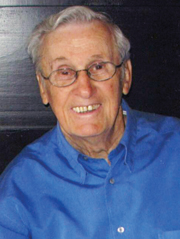
Ask Erwin Stern and he’ll tell you one is never too old to learn something new about yourself. Stern just recently learned the name of the organization that helped him escape Austria following Kristallnacht and eventually arranged for him to come to the United States.

Oeuvre de Secours aux Enfants, known in English as the Children’s Aid Society or simply OSE, is the organization that helped him. According to the United States Memorial Holocaust Museum, OSE is one of three such organizations that operated in France during that time and is the best known. OSE is credited with rescuing 5,000 children during that time.

Betty Stern, Erwin’s wife, read a JTA article published in The Chronicle in commemoration of the 75th anniversary of Kristallnacht on Nov. 7 and was spurred to contact the newspaper about it. The Sterns wonder if there are others in the area who are unaware that they, too, were rescued by OSE.

Erwin’s daughter, Elisa, was helping her father learn more about his roots, specifically where he stayed in France, when she discovered a little more than a year ago that Erwin was one of the children rescued by the OSE. The OSE has an organization in the United States, Friends and Alumni of OSE-USA Inc. (ose.alumni.us.org), which holds regular reunions. A not-for-profit, it was founded in 1994 and its goal is to raise funds for charitable activities by OSE in France and promote fellowship among survivors (the “Alumni”) and their descendants. OSE-USA has no employees and rents no office space. All board members and officers are volunteers serving without pay and all donations are tax deductable.

Erwin had hoped to attend his first OSE reunion last month, but he had to cancel the trip due to illness. He hopes he can attend an OSE reunion in the future.

Erwin is featured in the 2009 edition of the Guide to Jewish Life, which saluted the indomitable spirit of our local Holocaust survivors, as well as The Memory Project, a collection of writings by survivors published by the Midwest Center for Holocaust Education in 2009. Most of the information published in those two publications is still correct, Erwin says, but now he knows a few more details.

Erwin was born in Rechnitz, Austria, on June 4, 1929, and moved to Vienna in 1935 when he was about 6. By 1938, when Germany annexed Austria, he and his parents and two sisters were living with his paternal grandparents in Vienna, where his father owned a prosperous barbershop. After Kristallnacht, their situation became difficult.

“On Kristallnacht they burnt the synagogues and books and took my father’s shop away and they threw us out of our apartment,” he recalled.

When he was almost 9 years old, Erwin’s parents managed to send him and his younger sister, Therese (Terry), who was 6, to France. He thinks they were part of the Kindertransport. Erwin’s older sister did not go with them. He doesn’t know it as fact, but believes that’s because his older sister was too old to be part of the Kindertransport. Originally Erwin and Terry were taken to a villa in Paris. A few months later, when the Nazis were about to take over Paris, they were sent to an area in France just outside Limoges, where they lived in a castle with about 200 Jewish refugees. After two years he and his sister were told they were going to America, a place Stern had never heard of.

He arrived on Ellis Island in 1941 and went to Philadelphia where he and his sister resided with a family for six months. Then he and Terry were sent to Kansas City, where they lived with the Schiff family, who had a son and a daughter about the same ages as the Sterns. A few years later the Schiffs moved to California; the siblings were split up and Erwin lived with the Orloves until he graduated from high school.

Erwin was drafted into the Army and served nine months in Korea. All this time he thought both his parents, his older sister and his grandparents perished in the concentration camps. However soon after he was engaged to Betty in 1955, he learned his father had been sent to Siberia and survived the Holocaust.

“He was 25,” Betty said. “The Schiff family, who were still living in California, read in a Jewish paper from New York that Sigmund Stern was seeking his children Erwin and Teresa.” Now Sigmund was living in Hungary, was remarried and had two sons. Armed with this information, Erwin was eventually able to reunite with his father. Eventually his father and his new family were able to move to Vancouver, British Columbia, where his new wife had relatives.

So for the past 60-plus years Erwin thought he knew his story, until his daughter completed her research. While Erwin was disappointed he couldn’t attend the reunion, his step-brother Victor went and discovered lots of information about Erwin. Now he knows that when he was in Paris, he lived in Villa Helvetia. When he was evacuated in June 1940 to Limoges, he was sent to the Chateau de Masgelier par le Grand Bourg.

Erwin also found out who sponsored his trip from France to the United States.

“I never knew the Quakers sponsored it,” said Stern, who now knows that only 100 of the 200 children who were living in the same castle were given visas to travel to the United States.

The Sterns have been in contact with people in the OSE alumni association, and they hope the OSE historian will check to see if there is even more information available about Stern’s time in France.

“I didn’t know half of it. I didn’t know about the Quakers and I really didn’t know about OSE either,” Erwin said.

Betty added, “That’s why he thought it would be so interesting to talk about this OSE organization because there may be other people in this community who were also involved and don’t know it.”

If you think you may have been rescued in France by the OSE, Stern suggests you contact Friends and Alumni of OSE-USA Inc. at P.O. Box 2184, Livingston, NJ 07039; call 973-992-0340 or email .

Who will be the first Jewish baby of 2014? Will the baby be born on Jan. 1 or will we have to wait until later in the month until we hear the good news? This year, as is our custom, The Chronicle will shower the first Jewish baby of 2014 with prizes. Information about The Chronicle’s annual contest, and the 2014 prize package, appears on pages 12, 13 and 14 of this edition of the newspaper.
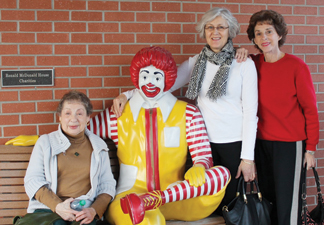
Last year’s first Jewish baby, Amelia Esther Kaye, the daughter of Alison and Adam Kaye, was born Jan. 10. Dad Adam said Amelia is growing up fast, noting that she “already has a few words and signs.”

“She has begun to walk and is a true daredevil. She likes hanging out in swimming pools and jumping waves in the ocean. She gets along famously with her two older siblings. Abigail showers her with kisses, Asa likes to push her down and she keeps coming back to her older brother for more,” Kaye said.

The Chronicle’s First Jewish Baby contest is limited to residents of the five-county greater Kansas City area (Jackson, Clay and Platte in Missouri and Johnson and Wyandotte in Kansas), and the birth must take place in greater Kansas City.

Parents should call The Chronicle editor Barbara Bayer at 913-951-8425, or contact her via email at as soon as possible after the child is born, preferably the day of the birth. A winner may not be declared immediately and could take as long as 24 hours after the initial contact with The Chronicle. The parent or parents must agree to be interviewed and photographed along with the baby for a story in the newspaper to be awarded prizes. The official rules can be found on page 13.

For many years, Jews have been performing mitzvot for Christians during the Christmas holiday. Perhaps the longest running of these projects is the Christmas Mitzvah Project organized by The Temple, Congregation B’nai Jehudah.
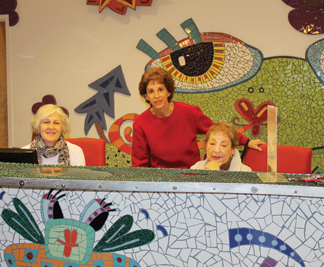
This is the 26th year for the project and it has been organized each and every one of those years by Suzanne Gladney, who is an immigration attorney for the Migrant Farmworkers Project. While she is the top dog, she said it takes many people for it to succeed every year. For two full days, and sometimes more depending on the year, volunteers take over running the two area Ronald McDonald Houses located near Children’s Mercy Hospital downtown. Ronald McDonald Houses provide a “home away from home” for families who don’t live close to the hospital, generally more than 40 miles away. These families are given a place to sleep, meals and snacks. This allows the RMH staff and regular volunteers to have time to be with their families on Christmas.

The idea of planning a mitzvah project at Christmastime came to Gladney after she attended an event sponsored by the Religious Action Center about 28 years ago. At the time she was chair of B’nai Jehduah’s social action committee.

“Everybody was gung ho about it,” she said.

Many congregations across the country were working with hospitals, so Gladney originally made arrangements with Menorah Medical Center to provide volunteers on Christmas. At the time it was located on Rockhill Road where the Stowers Institute is now. But it didn’t work well because volunteers simply can’t replace essential hospital personnel on a holiday.

“People felt like they were just sitting around and not really helping,” Gladney said.

So she went back to the drawing board and someone suggested they try Ronald McDonald House. The idea was well received and Gladney said RMH staffers told her that “if volunteers are willing to come to training, there’s not that much that couldn’t be fixed once the staff gets back.”

Over the years this partnership has worked well. RMH uses volunteers on a regular basis, so those volunteers — in addition to staff — are replaced for Christmas by the Jewish crew. They do everything from answering the phone to making and serving meals to washing linens and anything and everything else that needs to be done.

“They have about 200 volunteers a year that staff the houses,” Gladney explained. “We replace the staff and we have back-up staff people available by phone in case anything goes wrong. It’s a good fit.”

Holly Buckendahl, CEO/executive director of Ronald McDonald House Charities-Kansas City, agreed.

“The Christmas Mitzvah Project is an amazing gift of time and talent for families and staff at Ronald McDonald House Charities of Kansas City. For 26 years our partnership has ensured that families’ needs are met while their child bravely battles life-threatening illness during the holiday season. When life unravels, RMHC-KC provides sources of strength, hope and healing. Our mission would not be possible if it weren’t for supporters like this Christmas Mitzvah Project,” Buckendahl said.

Rabbi Jonathan Rudnick and two of his children will volunteer this year for the third time. He said “as a family who has received warm care and hospitality from RMH in the past,” he was happy to learn of the project and be able to give back to an organization that helped him. Now a seasoned Christmas Mitzvah Project volunteer, he is impressed with how well RMH trains its volunteers.

“It’s very well organized so you feel like you can deal with anything that comes up,” Rabbi Rudnick said.

The volunteer training indeed pays off. Gladney remembers one year when Gloria and Alvin Fry were working a shift (they were regular volunteers for many years) a water pipe broke. Instead of panicking and simply calling a staff member, the pair cleaned up the mess and called the plumber on call (also a volunteer.) When everything was all repaired, they then placed the call, informing the staffer about the incident and reporting it was all taken care of.

“A lot of what you do is common sense,” Gladney said. “It’s stuff we are all capable and competent to do and once you have the training you can take care of it.”

“It is really a place where you can give staff time with their families at Christmastime and you can say, ‘I got that done. I did it.’ ”

Stan Stern, a teacher of gifted education at Shawnee Mission South High School, has been involved with the project because he “feels like I’m helping in some small way.” While he’s at RMH he has seen firsthand how generous people in the community are and is very impressed by it.

“People will just walk in with gifts and presents for the kids and food and all kinds of things. One year there was a present dropped off for every single child that was there. Things like that happen all the time and I think that’s really cool,” Stern said.

Many Christmas Mitzvah Project volunteers give more than their time to this project. The project is responsible for evening meals on both Christmas Eve and Christmas at both of the houses and these volunteers purchase and prepare all the food. One of those who has been doing this for 25 of the 26 years is Lynn Murray and her husband, Richard Gilman.

Murray, who is often assisted by friends in this endeavor, plans on serving Moroccan chicken on Christmas Eve. Through the years menus have included spaghetti, lasagna and baked chicken.

“If it’s been Chanukah we’ve often served brisket,” Murray said.

The Murray-Gilman family arrives on the afternoon of Christmas Eve and prepares to serve the evening meal. They stay the night and leave the next day, so other volunteers actually serve the Christmas dinner they prepare. Often it’s a honey-baked ham and turkey breast.

“Even though we don’t eat it, I think it’s a little special for Christmas and then we’ll make all the sides such as potatoes, green beans and pies,” she said.

Generally Murray said they are asked to prepare food for 40 people, plus whoever is in the volunteer group. Some years the group staying in the house is very small because the hospital tries to send as many kids home for the holiday as possible. Other years the group is quite large, but they never know exactly how many they will serve.

Murray said she and her husband, both dentists, chose to volunteer originally because they wanted to teach their two children the value of helping someone else out at a holiday that was very important to their religion.

“I compare it to Jewish people shouldn’t be working on Yom Kippur and Christian people should not work on their holiday,” Murray said.

Their children, now adults, still volunteer with the project. When the Murray-Gilmans missed it one year, the children told them it was too important to miss and they never have again. They even have two nieces from Chicago who almost always visit during that time and volunteer. One is traveling here this Christmas just to help.

The Murray-Gilman family always spends the night at RMH. Most of the time it has been uneventful.

“One year I think I was up every hour on the hour because the Elves of Christmas Present came, and other groups came to drop off gifts,” Murray said.

Murray and Gladney both said they love RMH because it is such a worthy organization.

“I love Ronald McDonald House because it brings such a relief to families whose children are in the hospital. They do such a wonderful job of creating a really nice home away from home for these families,” Murray said.

Murray praised Gladney’s dedication to the project.

“Suzanne is the organizer and she steps in if somebody at the last minute can’t be there. She and her husband (Alan Lubert) are really, really the driving force behind this. I think that’s the reason it’s gone on for so long, she’s really good,” Murray said.

When the project provides volunteers for two days — sometimes they even do three — Gladney said generally they need about 25 teams of volunteers. Some are singles, some are husbands and wives and some are complete families. When the new house is complete next year, more volunteers will be needed. Filling those slots probably won’t be a problem.

“People love it. People call me starting in June and I’m not ready to start taking names yet. I tell them I’ll call them later.”

Many, many people have done this project over and over and over. The names are just too numerous to mention. Over the years it has attracted volunteers from the entire Jewish community, not just B’nai Jehudah.

Through volunteering at RMH, Gladney said she and others have learned to give thanks for what they have.

“If you are there with your kids who are healthy, you can feel extremely grateful that you are not in their situation and you are able to help them.”

Gladney loves working with this project every year.

“I love Ronald McDonald House. I love the mission. I think that it’s a really important place for people to have who are going through this kind of crisis with their child. It’s great to have a place that can be your home away from home and where you can be around other families who are going through other situations and who understand what’s happening with you.”