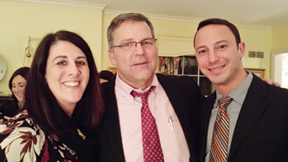

Jewish Federations of North America CEO Jerry Silverman is from Tulsa, Okla. As JFNA’s leader, last week he said he always enjoys returning to the Midwest

“I’m always amazed at the commitment the Jewish communities in the Midwest truly have both for their community, for their future, but also for the Jewish people everywhere. I’m always amazed at the passion and the emotion, how grounded these communities are. It’s really special,” Silverman said.

He was here Jan. 9 at the invitation of the Jewish Federation of Greater Kansas City to meet with a variety of community leaders including members of its board of directors, young leaders and rabbis.

“Kansas City is one of the top 40 Federations in North America. As the CEO of the national system, I feel it is my responsibility to spend as much time as I can in our Federations because I can be more effective in practicing leadership and ensuring that we are supporting and providing value to our Federations if I am spending time understanding what is happening in our communities,” Silverman explained.

The winter weather shortened Silverman’s visit. He was set to begin meetings Wednesday night, Jan. 8, but he didn’t arrive until late in the evening due to two cancelled flights. One important meeting with local Jewish Federation President and CEO Todd Stettner was early Thursday morning between Silverman and members of the Rabbinical Association of Greater Kansas City. The meeting was brought about in part because of a letter signed by a large portion of the RA’s membership asking the Jewish Federation to support a variety of pluralism issues in Israel.

Silverman spoke to the rabbis about different facets of pluralism in areas that Federations have specifically supported in Israel, including civil rights and gender balance.

“I talked to them about their commitment to pluralism and about the strategies that can be employed to really make a difference and shared with them some best practices from another community, which has the same passion and commitment to pluralism, so they can see what another community is doing and how they are framing it,” Silverman said.

Specifically, Silverman told the rabbis about the first experience he had as JFNA’s leader. At the time JFNA lobbied and worked on behalf of the Jewish community and several religious movements against a bill that was going through the Israeli Knesset on conversion.

“That really was a team effort that (JFNA) took the front space in for no other reason than everybody wanted us to take a frontal approach representing the Diaspora Jewish community. We were able as a constituency to get the bill frozen and stopped,” he said.

Silverman said issues of pluralism is something JFNA watches very, very closely and the issue was an important element of its recent General Assembly meeting in Jerusalem.

“We talked about the issues of civil marriage in Israel,” he said. “We talked about the issue of the Kotel, about it really being a place for all Jewish people and how the Federations have been very front and forward on the issue encouraging dialog, encouraging the plan that was evolved by Natan Sharansky,” he continued.

Silverman is very proud that this most recent GA concluded with a major march from Safra Square in Jerusalem (the city hall) down to the Kotel.

“It showed that not only were we verbally supportive of the expansion of the Kotel to allow it to be for all people, but also while we were in Israel we made certain that we had this major commitment to go to the Kotel and there were 1,200 to 1,400 on this walk,” Silverman said.

Silverman said he shared with the rabbis “how impressed and amazed” he is that the Kansas City community as a whole, and the rabbinical group specifically, is talking about these issues as a community.

“I applauded them for thinking about it,” Silverman said. “There was great dialogue, wonderful give and take.”

The meeting ended with a recommendation that a subcommittee of rabbis and Jewish Federation board members “see how they can both strategically meet the needs and the requests of the Rabbinical Association while at the same time look at what best practices are and look at what’s happening on the ground to see how strategies can be employed to have the best effect,” Silverman said.

Rabbi Scott White, president of the Rabbinical Association of Greater Kansas City, said both parties are currently working to put this committee together and “keep the conversation going.”

“It was pretty incredible that someone of Silverman’s stature came to a community like ours. We’re not one of the larger, more influential Jewish communities that has a lot of clout and influence in larger matters to deal with the Jewish people,” Rabbi White said.

“He listened very closely and we learned a lot from him. I think it put a charge in the Rabbinical Association to know that our voice is being heard and that we are being appreciated,” the rabbi continued.

“I give Todd Stettner a lot of credit for that. He brought Jerry in and made him available to sit with the rabbis,” Rabbi White concluded.

Silverman also praised the local Jewish Federation’s leadership, saying it is exceptional.

“They have a fabulous group of leaders, both professional and volunteer, led by Trish Uhlmann who is someone who cares so deeply and passionately about the Jewish people. There’s an energy and a vibrancy within the people that I’ve met from Kansas City and that I’ve had the opportunity to become involved with, which is really something,” Silverman said.

In fact, when he compared Kansas City to other Jewish Federations, Silverman called it a model community.

“Look at their commitment to global Jewry, their commitment to pluralism, their commitment to the vulnerable here and abroad. There’s a lot of real significant positives in what they do and how they do it, which is really amazing. The work and the connections that they’ve made as it pertains to reaching out to two very poor Jewish communities in Bulgaria and Romania are heartwarming.”
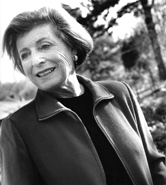
Twenty years ago this month, the Midwest Center for Holocaust Education conducted the first interview for its Witnesses to the Holocaust project. Organized in cooperation with the Fortunoff Archive for Video Testimonies at Yale University and funded by grants from the William T. Kemper Foundation, David Woods Kemper Memorial Foundation and Oppenstein Brothers Foundation, the project resulted in the recording of 48 oral testimonies and two documentaries, produced by what was then Video Post Productions (now Outpost Worldwide).
Two decades later and aided by technological advances few could have imagined, MCHE is making its treasure trove of survivor testimonies available online. Jessica Rockhold, MCHE’s director of school programs and teacher education, is enhancing each narrative with additional resources specific to that individual’s experience.

Testimonies include those originally filmed on video for Witnesses to the Holocaust as well as those recorded on audio for Portrait 2000, a photographic exhibit of local survivors, funded by the Jewish Community Foundation, which led to publication of “From the Heart” by Kansas City Star Books in 2001. Photographers Gloria Baker Feinstein and David Sosland contributed their time and talent to that project, and Trudi Galblum crafted the accompanying profiles.

“This new online project represents the culmination of 20 years of dedicated efforts to collect, edit and reformat interviews by Kansas City-area survivors,” observed MCHE’s Executive Director Jean Zeldin, who served as project director for Witnesses to the Holocaust. “Being part of this process has been a true honor and privilege, and we are extremely grateful to all those who shared their stories with us and to those who volunteered as interviewers and transcribers. Through their participation, MCHE has realized its vision of preserving the legacy of our community’s survivors and teaching about this history by illustrating its impact on one person, one family.”

As the original VHS interview format became outdated, generous financial support from the Claims Conference, Jewish Federation and the Jewish Community Foundation, along with special consideration from Outpost Worldwide, provided MCHE with the means to digitize its collection of videotaped interviews and condense the original interviews for classroom use, Web postings, and for free loan through MCHE’s resource center. The full-length narratives, which run from 45 minutes to three hours in length, may be viewed on site at MCHE.

In addition, through the efforts and expertise of Dr. Fran Sternberg, MCHE’s former director of university programs and adult education, six thematic DVDs were produced and are available for sale. MCHE’s next goal is to raise the funds necessary to transfer approximately 35 audio interviews from cassettes to digital and MP3 files and to add closed captioning to the six thematic programs.

MCHE recently announced the launch of its “Survivor Pages” on Facebook, inviting MCHE’s “friends” to view the profile of Clara Grossman, a Hungarian survivor of Auschwitz who was the first interview of 2014. The next set of profiles, featuring five additional Auschwitz survivors, is scheduled to post on Jan. 27, coinciding with the 69th anniversary of the liberation of Auschwitz and the date designated by the United Nations in 2005 as International Holocaust Remembrance Day. Additional pages will be introduced each month and will be announced through Facebook and through e-blasts to MCHE members.

To view survivor pages as they become available, visit www.mchekc.org or “like” MCHE on Facebook to receive automatic updates as new profiles are posted: https://www.facebook.com/MidwestCenterforHolocaustEducation.

Super Sunday, the Jewish Federation of Greater Kansas City’s annual community outreach and campaign kickoff event, will take place from 9:30 a.m. to 12:30 p.m. Sunday, Feb. 2, at the Jewish Community Campus.
This year’s event — co-chaired by Jeremy Applebaum and Tracy Shafton — features an open house (Note: open house begins at 10 a.m.) at which community members are welcomed for authentic New York bagels plus kosher pastries and smoothies, as well as three service projects aimed at fighting hunger in the community: a canned food sort for Jewish Family Services, baking cookies for JFS pantry clients and packing sack lunches for Harvesters’ Give Lunch program. The cost of ingredients for cookie baking and lunch packing is being underwritten by a generous family in the Kansas City community.

Other new elements include a partnership with the Jewish Community Center’s Sports & Fitness department, whereby anyone working out at the JCC during Super Sunday hours can come upstairs to enjoy refreshments and log their workout minutes, resulting in additional funds being raised to sustain and enhance Jewish life thanks to sponsorship of fitness minutes by additional generous community members.

The traditional phone calls to thank donors for their contributions to the 2014 community campaign and to ask others to make their commitments will occur, as will targeted outreach to those who use social media — this year, for every post on social media involving the hashtag #supersundaykc, a donor will contribute $1 to the fundraising effort, up to $500. Thanks to another donor’s generous match and double match offer, if the goal of 500 posts on social media is reached, the $500 will be matched, and then the total $1,000 will be matched again, resulting in a grand total of $2,000.

The idea behind all of the new components is to focus on community participation — whether via volunteering on the day, stopping by to show support, donating when called, giving “sweat equity” at the JCC’s fitness center, or simply spreading the word via social media, according to Super Sunday co-chairs Applebaum and Shafton.

“We feel these changes will enhance the community-building spirit of the day, which is what Super Sunday is all about,” Shafton says. “People give in a variety of ways, and we encourage that.”

“We look forward to everyone’s enthusiastic participation, and thank the many community members who have already volunteered and made donations to our 2014 campaign,” adds Derek Gale, director of financial resource development for Jewish Federation. “Together we will continue to strengthen the Kansas City Jewish community.”


Be sure to follow hashtag #supersundaykc on sites like Facebook, Twitter and Instagram to get a glimpse of what’s happening in the Jewish community on Feb. 2, Super Sunday.

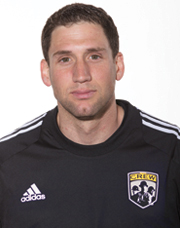
In mid-December Sporting Kansas City acquired goalkeeper Andy Gruenebaum from the Columbus Crew in exchange for Sporting KC’s second round pick in the 2016 MLS SuperDraft. Gruenebaum has been added to Sporting Kansas City’s roster and will occupy a senior roster spot.

“Andy is a very capable goalkeeper, someone who has been successful in Major League Soccer and has had a lot of games in the league,” Sporting KC Manager Peter Vermes said. “He is a great addition to our team and a complement to our goalkeepers. We needed someone with a lot of experience because we’re in multiple major competitions in 2014.”

“I could not be more excited to come back home and play in front of family and friends,” Gruenebaum said. “The ownership, coaching staff, players and fans associated with Sporting KC are first class, and I look forward to working with two amazing goalkeepers to help win another championship. I would like to thank Peter and the rest of the organization for giving me this opportunity. My wife and I are ecstatic to be able to call Kansas City home once again.”

Gruenebaum, 30, made 82 appearances in MLS competition (including playoffs) with 277 saves, 18 shutouts and a 1.27 goals against average in eight seasons with the Crew. He led MLS with 124 saves in 2012 and was a finalist for MLS Goalkeeper of the Year after being named the Crew’s MVP and Defender of the Year. This season, he conceded the second fewest goals (28) among goalkeepers with a minimum of 15 games played.

In 2009, Gruenebaum entered the Columbus lineup and immediately led the team on an eight-game unbeaten run en route to the team’s Supporters’ Shield title. The following season, he helped the Crew reach the Lamar Hunt U.S. Open Cup final and started all six games in the 2010-11 CONCACAF Champions League group stage as Columbus went unbeaten. He also started both of the team’s matches in the 2010 MLS Cup Playoffs.

An Overland Park native, Gruenebaum was an All-American at Blue Valley North High School and was the Player of the Year in Kansas after leading the Mustangs to the state championship. He attended the University of Kentucky, where he recorded 21 shutouts in 66 collegiate games. Gruenebaum earned All-Conference and All-Region honors and picked up the nickname “The Hebrew Hammer.”

Prior to his senior season, Gruenebaum starred for the Des Moines Menace in the Premier Development League and was named MVP of the 2005 PDL championship.

Gruenebaum becomes the seventh Kansas City native on Sporting KC’s roster, along with Matt Besler, Christian Duke, Kevin Ellis, Jon Kempin, Erik Palmer-Brown and Seth Sinovic. He was a finalist for Player of the Year at the Kevin Gray Awards in 2013.

TOP RABBI TO VISIT B’NAI JEHUDAH — We had hoped to have a full-blown feature story in this edition regarding Rabbi Jill Jacobs and her visit to The Temple, Congregation B’nai Jehudah the weekend of Jan. 24. However, the rabbi is in Israel and the timing couldn’t be worked out. We still want to let you know that the rabbi, who has been listed as one of the country’s most influential rabbis by Newsweek, one of the most influential Jews by the Forward and one of the Jerusalem Post’s Women to Watch will be speaking at several different events that are open to the public, including Shabbat services on Friday night, Jan. 24, where she will speak about “The Mysterious History of Tikkun Olam.” On Saturday, Jan. 25, Rabbi Jacobs will teach the week’s parasha. All local high school and college students are invited to attend a lunch with Rabbi Jacobs at noon on Jan. 25 where she will teach “Obligations or Rights-Human Rights & Jewish Response”. The final event of the weekend takes place at 7 p.m. that night where she will speak about “Taking Judaism Public-What Jewish Wisdom Can Teach America.” The event features a dessert reception and a book signing. All events are free and open to the public. However, reservations are requested for some events. For more information contact the synagogue at 913-663-4050.

SUPERMAN (BABY) IS COMING TO KANSAS CITY! — SNOWFLAKE 15: The Cabin Fever Fan Party will celebrate the 75TH anniversary of “The Man of Steel” at a one-day convention on Sunday, Feb. 2,  at the Four Points Sheraton Truman Sports Complex, 4011 Blue Ridge Cutoff in Kansas City, Mo. SNOWFLAKE 15 is a benefit for the American Stroke Foundation (www.americanstroke.org), which was founded by Shirley Rose and Robbie Small, and will feature several events in memory of former StarBase Kansas City member Bill Ostrander, who succumbed to a stroke on May 30, 2013.

Events for the day include: A Superman memorabilia auction benefitting the A.S.F., open table top gaming, a Klingon costume and make-up demonstration, the Bill Ostrander Memorial Dinner, the First Annual Bill Ostrander “Bad Monster Movie” Film Fest featuring “Superman and the Mole People (1951)” and a Skype session with the editor of “The Big Blue Report” a Superman online newsletter. For more information or to register for SNOWFLAKE, visit www.kcsnowflake.com.

MORE IDEAS FOR JFS FOOD PANTRY — One of our readers who wishes to remain anonymous contacted me last week with another great idea for the JFS Food Pantry. She thinks yahrzeit candles is another thing that Jewish people in need may not have the money to purchase when they need them and might really appreciate having them available at the pantry. In fact her family donated several around the High Holidays. Thanks for the tip!

From the outside you can’t tell the building housing the Lawrence Jewish Community Congregation is a synagogue. Its board of directors wants to change that.

But this is just one reason the LJCC has started the Campaign for Community Vitality.

“It does not look very inviting, and that’s an issue because we certainly assume and have reason to believe that people don’t come to us because they don’t realize what it is or are perhaps put off by the esthetics of it,” said Liz Kundin, campaign chair.

“We know the Jewish community in Lawrence is substantially larger than our dues-paying members,” she continued. “There are a lot of Jews that we are not currently serving. If we have a more functioning building, a more accessible building, a more attractive building, both exterior and interior, we’d like to think that would help us in reaching out to the greater Jewish community in Lawrence.”

About the LJCC

The LJCC, located at 917 Highland Drive, was founded in 1954 as the Lawrence Jewish Community Center to create a place of religious, cultural and social functions for the Jewish community. The name was changed to the Lawrence Jewish Community Congregation about four years ago to let people know it is also a synagogue.

LJCC is non-affiliated, so services are an eclectic mix using Reform, Conservative and Reconstructionist prayer books. It has a part-time rabbi, Moti Rieber; a cantorial soloist, Rachel Black, who does some of the services; and a singing group called Shiray Shabbat, which leads one service a month. Services are occasionally led by lay leaders. It also has a religious school. The president of the congregation is Jonathan Paretsky.

“We can’t afford a paid executive director. There is an office manager and paid Sunday school teachers, but the organization is essentially run by volunteers,” Kundin said.

The building is very much the same as when built, except for an expansion that was added sometime in the 1970s or ’80s. Both the original building and the expansion are very utilitarian, Kundin said, so whatever funds were available were used carefully and economically.
As a small congregation, Kundin said the budget has only allowed for necessities. Fewer than 100 families are dues-paying members, although there are substantially more who participate in activities or provide financial support.
“Our budget struggles to just manage what we need to manage and the result is that there hasn’t been any systematic way to create funds available to do the kind of upgrades and maintenance that any physical plant needs, such as redoing carpeting on a regular basis, furnaces break, painting needs to be redone as things start to look old and tired,” Kundin said. “There are things that are just crucial and then there are things like the fact that ceiling tile is old and stained and not very attractive anymore. There’s never been any way to build up funds to keep that kind of thing fresh.”
At the moment, a leaky, unsafe furnace needs to be replaced, as well as lighting and wiring.
While the LJCC has a building fund, Kundin said there has never been an official assessment of dues to go into that fund.
“Sometimes members make contributions into the fund, but the result is that after all these years, we have some very fundamental repairs that need to happen.”
Campaign for Community Vitality
Kundin said the name “Campaign for Community Vitality” came about in hopes that by addressing some of the issues of the LJCC they will be able to move forward in a more encompassing and vital way to the community.
The campaign began under the radar right after High Holidays when the LJCC went to a number of individuals before officially announcing it to the public. This phase raised $86,000.
The campaign was officially launched at the 50th annual Blintz Brunch on Nov. 3, with an ultimate goal of $150,000. The committee sent out mailings to members and “interested” non-members — people on the mailing list who have some connection or had expressed an interest in the congregation at some point in time. Kundin said the committee followed up with phone calls and meetings, and money is coming in.
“We are also accepting pledges over three years because we can’t do all the work right away and it enables people to make larger commitments as opposed to how much of a check they could write out of their checkbook,” she explained.
“The other challenge we face is that this is not a business community; this is an academic and service community. So we don’t have the kinds of members that we enviously assume some of our sister congregations, let’s say in greater Kansas City, have who have substantial wealth, who have a culture of making substantial gifts.”
Although the LJCC’s social hall is not particularly attractive, Kundin said it does have great acoustics. So the congregation sometimes makes extra money by opening up that space to outsiders for a fee. However improvements to the social hall will increase revenue she added.
“We’ve had concerts in our facility where the artists are really, really pleased at how well they sound,” she said. “They’re very displeased by the fact that it’s not very comfortable or attractive to the audience. So to the extent that we can improve this kind of thing, we’re increasing both our ability to bring in the community, which would be a good thing, as well as our ability to increase our rental income, which obviously puts us in better stead moving forward.”
The LJCC board is currently in the process of hiring a project manager to prioritize the various interior and exterior improvements. Of the $86,000 initially raised, Kundin said it’s not all in-hand because some of the pledges are over a two-year period. She anticipates that when the board is satisfied “they’re making smart decisions and using the money just as absolutely carefully as possible,” improvements should begin in early 2014.
To make a contribution or pledge, make your check payable to the Lawrence Jewish Community Congregation or LJCC and send it to them at 917 Highland Drive, Lawrence, KS 66044, along with your name, address, telephone number and email address. Be sure to write Campaign for Community Vitality in the memo line.

Temple Beth Sholom in Topeka has been selected as one of 28 Jewish faith communities to participate in the Institute for Jewish Spirituality’s Tikkun Middot Project. As a participant, Temple Beth Sholom has been awarded a $7,500 grant to implement its plan to infuse mindfulness and character development throughout all aspects of its community. The Institute for Jewish Spirituality will train clergy, lay leaders or both from each of these communities in mindfulness practice as part of this ground-breaking initiative.
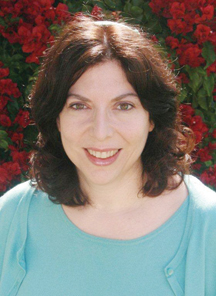
“Being part of this initiative is very exciting,” noted Rabbi Debbie Stiel in the congregation’s monthly newsletter.

“All of us will have an opportunity to help shape this program that will then be used by other congregations. At the same time, we will benefit over the next 18 months from the curriculums for adults and religious school that have already been created by IJS. We will create opportunities to study together, dialogue, reflect and grow. And while all of this is happening, we will be hearing about best practices at the other participating congregations and sharing our successes with them.”

Rabbi Stiel explained that middah (middot is the plural) is the Hebrew word for character trait. While we all possess the same character traits (middot) — for example humility, faithfulness, patience and kindness — we exhibit them in different amounts.

“ ‘Tikkun middot’ is a Jewish practice of focusing on a particular character trait in an effort to become more aware of how one is applying that quality and then working to increase or decrease it in your life as you see fit. Thus, if we were focusing on patience, one person may feel that they need to increase their patience in stressful situations and another may feel they want to work on being patient with themselves,” she explained.

Tikkun middot practice also includes studying Jewish texts that relate to each middah to learn how our Jewish tradition or faith can help us with this quality. Rabbi Stiel said the goal of tikkun middot practice is to become more ethical, kinder and better people.

“We hope to decrease negative behavioral patterns through our introspection and work. When this program gets underway we will focus on learning about one middah a month together as a congregation,” she said.

In late February, Rabbi Stiel and one or two members of Temple Beth Sholom will attend an orientation retreat in New Jersey. As part of the program, approximately 60 leaders from the selected 28 Jewish communities (which includes synagogues, a rabbinical seminary, Hillel and JCC), will then engage personally in an intensive, 10-month program of integrating mindfulness with the cultivation of specific core middot or ethical and spiritual qualities, such as humility, patience, honor, mindful speech and trust.

In a recent phone interview Rabbi Stiel explained that the leaders of these institutions will do their own study in chevruta (pairs or small groups) learning about the middot and the different texts that support them. She explained they could learn about such things as patience, anger management, kindness or faith.

“We’ll learn about those middot from the perspective of Jewish tradition. We will use the thought-provoking questions that IJS is very good at asking to reflect on how those traits are active in our lives and how we want to use them,” the rabbi said.

She said all this is similar to Mussar training, which has also become popular. (Mussar can be defined as a treasury of techniques and understandings that offers guidance for the journey of our lives.)

“I recently attended the URJ Biennial and leaders of congregations that have done Mussar training said it brought their members closer together. It gave people a chance to study together and share openly with each other about aspects of life that were meaningful to them. My hope is that it will do that here as well, that it will help to bring people together on a more personal level.”

After the leaders have done their study, Rabbi Stiel said they will then bring what they have learned back to the congregation. First they will train a core group of 10-12 leaders in the congregation.

“Then it will trickle down from there, and those leaders will add the middot mindfulness into things that they are part of in the congregation,” Rabbi Stiel said.

For example Rabbi Stiel said the idea is for the adult education chair to incorporate tikkun middot into adult education meetings and programs. Social justice leaders, religious school teachers and other congregational committee leaders will do the same thing.

“We will try to get it into the congregation in as many ways as possible,” Rabbi Stiel said.

“Once we start introducing it to the whole congregation there will be a middah of the month and it will be brought to the congregation in a number of other different ways. It will be in the bulletin each month and it will probably be talked about from the pulpit some. There will be some art projects for both adults and kids related to the middah of the month. We will find different ways for all of us to study it and to learn together,” Rabbi Stiel continued.

Several members of the congregation, including Jerry Fireman, Mark Kaufman, Patty Kahn, Lorne Ruby, Susan Zuber-Chall and Laurie McKinnon helped Rabbi Stiel with the grant application.

“I had participated in the IJS clergy program in the past and then when I heard about this grant opportunity I took it to some of the leaders in our congregation and they were very excited about it,” Rabbi Stiel said.

Because the congregation is in Topeka where the Menninger’s Institute was for many years, a number of its members are people who are psychologists, psychiatrists and social workers — people the rabbi explained who “are very interested in the life of the mind.” So different parts of the project excited different people in the congregation but “everybody thought this was a wonderful opportunity.”

“Judaism teaches that life is an opportunity to grow and to do God’s will. The middot are one approach to these goals. And I hope that this initiative will help all of us to deepen our Jewish knowledge, to draw closer as a congregation and to explore a personal, and perhaps long term, middot practice.”

“I find there is an unfortunate disconnect between what people regard as Jewish in their lives, and what is important in their lives,” said Rabbi Debra Orenstein. “For the Jewish part they tell you about Bar Mitzvahs, holidays and speakers. But ask what is important and they will talk about personal family events. There seems to be a need to connect the two lists together. To get the Jewish life cycles to interact with whatever else is going on in life.”
Rabbi Orenstein will indeed try to reconnect these two lists during her presentations Jan. 31 to Feb. 2 as part of the Caviar Family Jewish Scholar in Residence programs. The weekend’s theme will be “Finding and Making Meaning in our Tradition.”

Rabbi Orenstein is the seventh generation of her maternal family to become a rabbi. She received her ordination from the Jewish Theological Seminary of America.

“Rabbi Orenstein brings to our community a female perspective on instilling a love and appreciation of Judaism into our families, ritual observance and participation for men and women while creating an atmosphere of spirituality in our everyday lives,” said Rabbi Jeffrey Shron, K.I.’s senior rabbi.

The programs begin with a Rock Balayla Friday night service at 5:25 p.m., followed by a Shabbat dinner at 6:30 p.m. Reservations are needed for this event. Cost is $10 for adults. During dinner, Rabbi Orenstein will discuss “Raising Spiritually Fulfilled Children.” (While she makes her presentation, children will be participating in a special program.)

“Even people who are not connected with the Jewish community, when they have children they want to know how their tradition is impacting their children,” she said. “They want to raise (each of) their children to be a mensch. They want to know what Judaism has that will help them raise their children. This is when people join a synagogue.”

Rabbi Orenstein, who has written three books so far in a Lifecycles series, said when people have children, it then becomes a time when they revisit their own experiences.

On Saturday, Rabbi Orenstein will make two presentations. During services she will focus on “Rosh Chodesh, Women, Men and Ritual.”

“Rosh Chodesh allows for a lot of creative ritual and changes in contemporary ritual because there is no set routine or liturgy,” she said.

It is a good time to discuss issues of gender.

“Rosh Chodesh is a women’s holiday,” she added. “How do women and men relate to ritual? How are women’s perspectives different?”

The rabbi added that men also have their own perspectives about gender issues.

“These issues do not belong to women alone.”

In the evening, during Mincha, she will do a text study of Genesis chapter 34, the story of Dena.

“This is a problematic and very rich text,” Rabbi Orenstein said. “It is one of the stories of the Bible that feminist critique has helped to unpack. I will present a way of studying Torah that is useful and different.”

Finally on Sunday morning, Rabbi Orenstein will discuss the concept of “Gratitude as a Spiritual Practice.”

“The word Jew means to be grateful,” she said. “It comes from Yehudah which means grateful, giving thanks. We have an abundance of prayers of gratitude, but we also kvetch. This is about finding the right balance.”

Rabbi Orenstein said she is honored to be coming to Kehilath Israel “to discuss issues that are so near and dear to my heart.”

“It is so important to discuss issues that matter the most and to have dialogue. It is important to get to deeper questions about whatever we are talking about. Gender is one way to get to the deep structure of what is happening and the personal and historical meaning.”

To make reservations for the Friday night dinner, call K.I. at 913-642-1880.

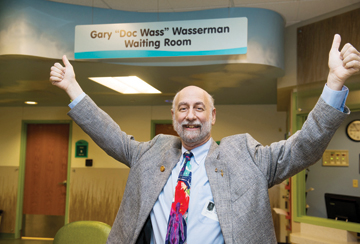
Through the gift of service and philanthropy, Gary Wasserman, D.O., made a mark at Children’s Mercy Hospital.

And to recognize his personal philanthropy and support of the hospital, Children’s Mercy has named the waiting room at the Adele Hall Campus Emergency Department the “Gary ‘Doc Wass’ Wasserman Waiting Room.” The announcement was made Dec. 19 in the auditorium by Gregory Conners, M.D., division director, Emergency and Urgent Care, in a ceremony attended by Dr. Wasserman and his family, friends and former colleagues. More than 1,000 children and families come every week to the waiting room and reception area of the Emergency Department seeking care.

“Wass,” as he is known throughout the hospital, retired earlier this year after a 41-year-career at Children’s Mercy. In addition to his service he has given to the hospital or pledged gifts totaling more than $250,000 to the hospital, and through his stewardship of the Tommy Simone Family (Necco Coffee), the Simone-Fontana Foundation has contributed more than a half-million dollars to the hospital’s Emergency Department. The Tommy Simone Memorial Scholarship Fund was established in honor of the 12-year-old boy whose life came to a tragic end in 1983 when he was struck by a vehicle.

“Wass has been a friend of the Emergency Department for many decades,” Dr. Conners said. “He has contributed to our department through his patient care, his education of our staff and his important work with the Simone-Fontana Family Memorial Foundation.”

Dr. Wasserman is considered one of the founding fathers of pediatric toxicology in the United States and internationally. He was responsible for developing a nationally recognized Section of Medical Toxicology at Children’s Mercy, and served as director of Children’s Mercy’s Poison Control Center for more than 20 years. He is one of the nation’s foremost experts on snake and spider bites, as well as poisonings in children.

“Throughout his 41-year-career at Children’s Mercy, Wass was a distinguished clinician, teacher and researcher,” said Jennifer Lowry, M.D., chief of Medical Toxicology. “With his indomitable spirit and tireless dedication to children, ever-present sense of humor and positive attitude, he is an inspiration to many and friend to all, especially me.”

Jane Knapp, M.D., chair of Graduate Medical Education, called Dr. Wasserman, “The master of the positive attitude.”

Charles Roberts, M.D., executive vice president/executive medical director, said, “You gave your heart and your spirit to this place and to your friends, and that is a gift that we’ll treasure forever.”

When it was his turn to speak, Dr. Wasserman flashed his famous sense of humor.

“Socrates made long speeches, and they poisoned him,” he said. “So I’ll keep this brief.”

Dr. Wasserman, who estimated that he worked nearly 5,000 shifts in the Emergency Room, thanked the gathering by saying, “Words cannot express my feelings and my happiness about being here today to receive this honor, which is super special to me.”

When asked about his philanthropic support of the hospital, Dr. Wasserman said, “Children’s Mercy is really like family, and you’ve got to take care of family.”

FEATURED IN THE WASHINGTON POST — Our own Jerusalem correspondent Sybil Kaplan was featured in an article on Dec. 27 in the Washington Post by William Booth. It’s about the Mahane Yehuda outdoor market, where Kaplan regularly leads shuk walks, and she calls it “a window into Jerusalem’s hungry soul.” Kaplan returned to Israel and her husband Barry made aliyah in 2008. She has been leading her walks, which she calls “Getting to Know the Shuk,” for four years. In an email, she said she couldn’t believe how many people she knows actually saw the article. Booth met her when he took the walk and then decided to write about it. Even though he describes her as pint-sized, she says at 5-feet-5 ½-inches tall she’s not. She’s also not technically a bubbe, since neither of her daughters have children, but she is a step-grandmother to Barry’s grandchildren. Booth did get it right when he described her as a woman with a “journalist’s street-level knowledge of the market. She knows her shuk.” You can read the entire article at http://www.washingtonpost.com/world/middle_east/at-mahane-yehuda-outdoor-market-a-window-into-jerusalems-hungry-soul/2013/12/26/0d772b72-6b38-11e3-b405-7e360f7e9fd2_story.html.
 

NO BABY YET — As of late afternoon Tuesday, Jan. 7, as The Chronicle prepared to go to press, there was no word of the birth of a first Jewish baby. If you think you are the proud parent of the first Jewish baby of 2014, call 913-951-8425 or email . The official rules were published in the Dec. 26, 2013, edition.


BLAKE EPHRAIM UPDATE AND FUNDRAISER — Blake has had an amazing recovery according to her mother Lisa Wilcox. She had the surgery to replace the piece of her skull doctors had to remove following her stoke in mid-December and while the road to recovery following that surgery wasn’t as smooth as the family would have liked, she was able to go home on Dec. 27 and ring in the New Year with her family there. They are counting on 2014 being a healthier year for all!

As life continues to get more normal for the Ephraim-Wilcox family, Blake’s friends are still helping out in any way they can. Next up is “Blake’s Benefit,” hosted by the Olathe South High School cheer team on Saturday, Jan. 11, at the high school. The evening begins at 6 p.m. with a soup/chili dinner followed by performances from area junior and senior cheer and dance teams. Tickets can be purchased at the door. For more information contact Rachel Carroll at .


KC KOSHER MEALS ON WHEELS SEEKS VOLUNTEERS — KC Kosher Meals on Wheels is growing and due to an increase in the number of clients the program is serving, the organization needs more volunteer cooks and drivers/visitors. Cooking takes place during the day at the kitchen at Torah Learning Center and meal deliveries take place on Friday and Sunday mornings between 10 and 11 a.m. No cooking experience is needed, just the desire to help others. Its drivers/visitors must undergo training, but no experience is required for these opportunities either. Being a volunteer with KC Kosher Meals on Wheels is a great way to make new  riends as many volunteers have formed close bonds with other volunteers and clients alike.

To date, KC Kosher Meals on Wheels has provided more than 2,400 kosher meals to elderly or disabled members of the Jewish community. If you are interested in volunteering, email Esther Friedman at . KC Kosher Meals on Wheels is also accepting donations. Tax deductible gifts can be mailed to KC Kosher Meals on Wheels, 8800 W. 103rd St., Overland Park, KS 66212.


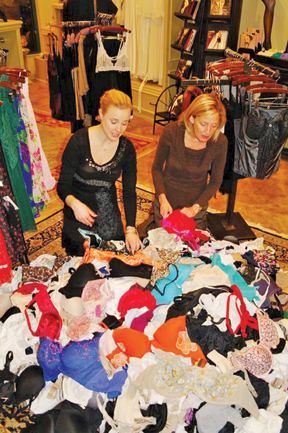
THE GREAT BRA EXCHANGE IS BACK — clair de lune, a lingerie boutique and its customers are demonstrating their support for victims of domestic abuse through The Great Bra Exchange today, Jan. 9, through Jan. 26.

The event, kicking off its 10th year, has a very simple premise: Trade in your gently used bras during the Great Bra Exchange. Each used bra is worth $15 toward the purchase of a new bra at clair de lune. In turn, those gently used bras will be donated to Hope House, a Kansas City metro area shelter for women escaping domestic abuse.

In the 10 years of the Great Bra Exchange, clair de lune owner Terry Levine estimated that more than 15,000 bras have been donated to the shelter.
“Our partnership with clair de lune and their customers these last 10 years has meant so much to us,” said MaryAnne Metheny, Hope House CEO. “Often, women come to us under dire circumstances with no chance to pack a thing. Thanks to clair de lune, Hope House can provide them with not just shelter, but basic needs such as undergarments and other clothing.”
The popularity of The Great Bra Exchange has grown dramatically since 2005.
“Certainly our customers benefit from the Bra Exchange, but they really get behind our partnership with Hope House,” Levine said. “We’ve even had some local businesses organize teams to collect money as well as bras for the cause. Not wanting to be left out, many out-of-town customers get involved by shipping their used bras to us. Our customers have demonstrated a sincere desire to help others. We’re only too happy to reward them for their thoughtfulness.
Located in Hawthorne Plaza at 119th and Roe in Overland Park, Kan., clair de lune lingerie boutique magnifique was opened by Terry Levine in October 2004. The popular boutique specializes in bras, bra fittings and special-order bras and showcases the largest selection of sizes in Kansas City.
Hope House services form a safety net of prevention, education and support for more than 10,000 victims of abuse every year. Residential and outreach services are provided through two secure locations in Independence and Lee’s Summit, Mo. The 24-hour hotline for crisis intervention can be reached at 816-461-HOPE (4673) or 816-HOTLINE (468-5463) or you can visit hopehouse.net for more information.
For more information on The Great Bra Exchange, visit clairdelunekc.com or call 913-491-3232.
SMOKE DETECTORS REALLY WORK — Artist Michelle Lynn, whose home was featured in Jewish Life magazine several years ago and whose art has been featured all over the area including the Jewish Arts Festival, certainly didn’t seek the publicity she got on Fox 4 news last week. But she’ll tell anyone what she told the TV station, smoke alarms save lives. An extension cord caught fire in her basement and fortunately the smoke alarms went off just like they are supposed to and kept her and two others from harm. She told Fox 4, “They make a horribly annoying noise and that’s good, woke us all up because it was about 4:30 (in the) morning,” she said.
“Get your fire alarms, get your smoke detectors checked. I just had mine replaced this summer and I’m so glad I did,” the Jewish artist said.
While she concentrates on refurbishing her home, she will also be preparing for her next show in February at Ward Parkway Shopping Center.
A JEWISH FLAVOR TO ‘INSIDE LLEWYN DAVIS’ — I haven’t seen the movie “INSIDE LLEWYN DAVIS” yet, but Rabbi Andy Bachman from Congregation Beth Elohim in Brooklyn, N.Y., has written about it in his blog, “Water Over Rocks. ” If you’re a Coen brothers fan, or simply like reading Jewish perspectives on movies, check it out at http://www.andybachman.com/2014/01/in-ways-normal-to-his-place.html. The movie opened late last month at the Glenwood Arts theater in Overland Park. Call 913-642-4404 for the schedule and ticket prices.
FROM JNS.ORG — EGYPTIAN ASTROLOGER WARNS JEWS WILL GROW STRONGER IN 2014 — An Egyptian astrologer has predicted on television that the Jewish people will grow stronger in 2014 because Saturn will enter a fire sign in December of this year.
Egyptian astrologer Sayyed Al-Shimi said on Al-Nahar TV that many events in past Jewish and Israeli history happened under similar astrological conditions, according to the Middle East Media Research Institute (MEMRI).
“When Saturn enters any of the fire signs, the Jews grow stronger. Don’t believe in this merely because I say so. It’s been tested. The Balfour Declaration was released when Saturn was in the fire sign of Leo… the 1948 [War of Independence] took place when Saturn was in the fire sign of Leo. The 1956 [Sinai War] took place when Saturn was in the fire sign of Sagittarius. The 1967 [Six Day War] took place when Saturn was in the fire sign of Aries,” he said.