Jewish Community Relations Bureau | American Jewish Committee (JCRB|AJC) is often the first point of community advocacy responding to antisemitism.
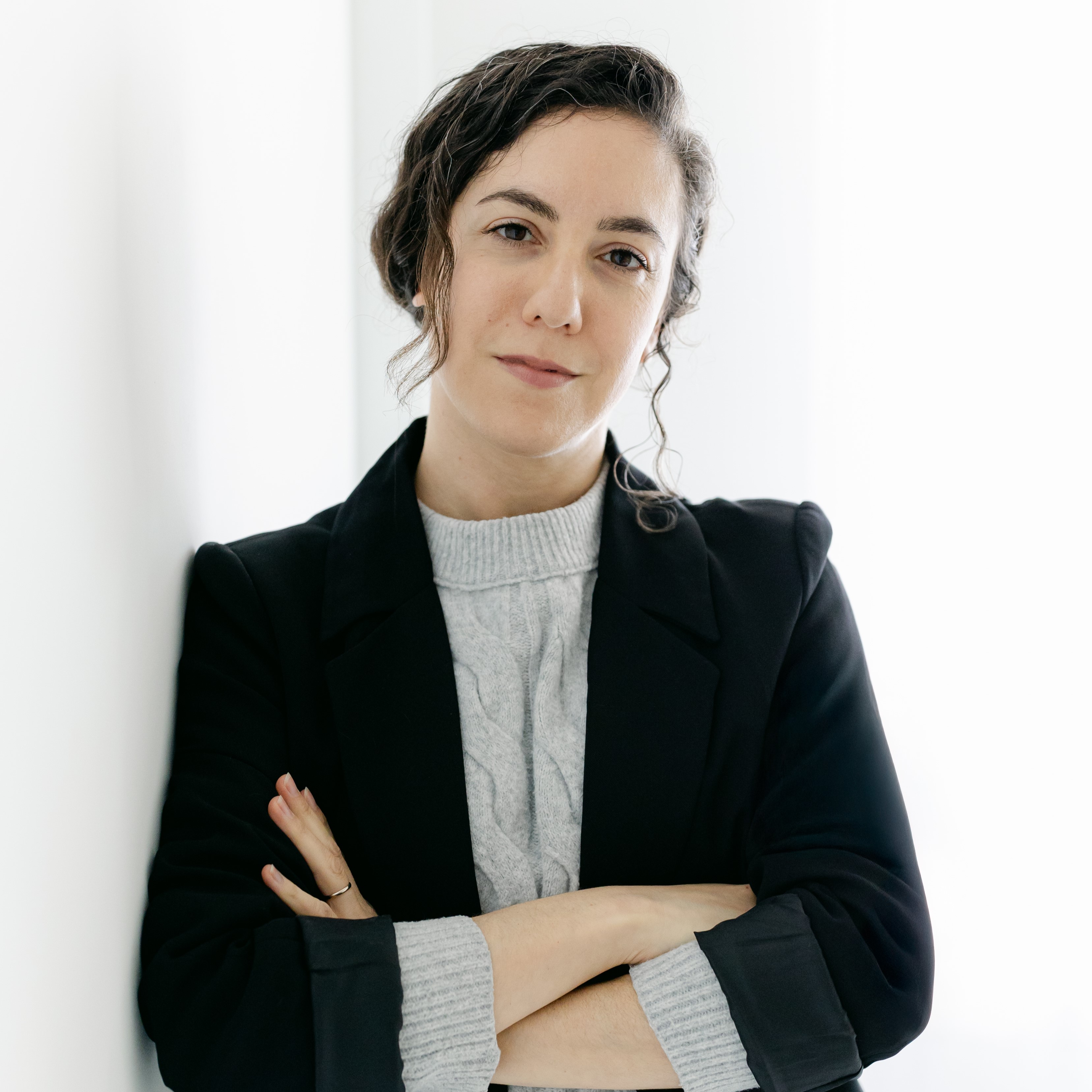
Neta Meltzer, who joined the organization in November of 2023, later became the executive director and has continued leading the organization in the wake of Oct. 7, 2023, and the subsequent Israel-Hamas War.
Shortly after the release of the living hostages, The Chronicle sat down with Meltzer to discuss how Jewish community relations have changed over the past two years and what the future could look like.
For the first few weeks after Oct. 7, 2023, there was seemingly a steady outpouring of support for the Jewish community. Was that true from JCRB|AJC’s point of view?
We did see a lot of support. In fact, we actually tracked all of the messages of support that we received from various community partners and friends that we’d worked with in the past. I know a lot of people have this idea that we were completely isolated. When you look at some segments of the society, certainly there was more or less support depending on where you looked, but… there was support, certainly.
At what point did antisemitism start to flare up again?
Looking back, it was almost immediate. Even before Israel started responding to Oct. 7 with any kind of military operation, people were already reacting to what they knew would be coming.
What we have seen since that day is that Israel is being treated as an idea, as a concept. It’s not being engaged as if it is a real country with real human people in it… Oct. 7 really brought that [viewpoint] above the surface. So we saw the way people were talking about the hostages, the way they were talking about the war, the way they talk about the Israel Defense Forces, as if they are theoretical ideas and entities, not humans, not people, not a real country with its own political environment and its own nuances and complexities. What was so interesting about the response to Oct. 7 was that people were preparing themselves to blame Israel — not necessarily as a real place, but as the anchor of all the things that they wanted to criticize.
One of JCRB’s teachings is that anti-Zionism is the same as antisemitism. Did this lesson have to be prioritized over others?
We did have to spend a lot more time on the idea of anti-Zionism, but really on the idea of Zionism as well. The idea of Zionism absorbed all of these other connotations and definitions that are really quite a stretch from what the actual concept of Zionism is, what the movement of Zionism fought for. What my grandparents fought for when they came to pre-state Israel and built their kibbutz — that’s Zionism.
That’s not what so many people understand to be Zionism today. We had to really go back to basics with a lot of our audiences and say, “What is Zionism? And if I tell you that I am a Zionist, what does that actually tell you about my views regarding a two-state solution, or regarding a Palestinian state or Palestinian self-determination?” Zionism simply means that Israel has a right to exist, and for so many of us, that is not a controversial idea.
A lot of people would argue that there is a distinction between antisemitism and anti-Zionism, and theoretically, perhaps there could be an argument to be made there. But the thing that we had to focus on over the last two years was the practical impacts of these ideas. We could argue perhaps there’s a distinction between these two concepts, but when a synagogue in Topeka, Kansas, has “Save Gaza” written on the sidewalk in front of it, it’s the context of where that phrase is being written that raises the alarm about antisemitism and anti-Zionism. If there is a distinction between antisemitism and anti-Zionism in theory, it’s not translating in practice. Things that are happening on the other side of the world are having a direct impact on the safety and security of Jews right here in this community.
The other thing that I have been really trying to explain, when I work with the external community, is that we are a people. We are a nation. This is a concept that people are very unfamiliar with today. They don’t really know what sort of identity group we are. They say, “Oh, you are a group of people that follows a certain religion.” Well, sure, but it’s also more than that. There’s a connection. There’s a feeling of mutual responsibility that we don’t see in a lot of other cultures and societies today, that remains very, very powerful in the Jewish community.
Have you seen more problems in partnering with organizations outside of the Jewish community?
It’s hard to say from my perspective, because I’ve really only been with this organization since shortly after Oct. 7, but yes, we’ve gotten some pushback.
We have seen — not from everybody — partners out there who either hesitate or want to bring in other elements. It’s their attempt to sort of “equalize the narratives.” I think that when history looks back on this, it will be very obvious that there really isn’t equivalence to be had here. There’s not a way to justify Oct. 7. I’m not sure that’s clear to everyone today, but I think that’s going to be very clear in hindsight, when people start to reflect on everything that we’ve been through.
Has JCRB|AJC experienced any issues with its local or state government contacts?
Actually, one of the places I feel we’ve had the most support and understanding is from our elected leaders, and I’ll be very clear, it’s from both sides of the aisle. We’re very lucky that we have leadership in this community that really understands what happened on Oct. 7, that understands our community, that cares about our community and our feeling of safety. The vast, vast majority of our leadership in this region have been reliable and steadfast partners in our time of need.
Was there any time in the past two years when you’ve been shocked at an instance of antisemitism in our community?
[The murder of] Sarah Milgrim (z”l). You can look at that tragedy and draw a direct line to the war, to the rhetoric, to the environment that we’ve been in. We can’t overstate the impacts that the war has had.
Do you think Israel or the Jewish community’s reputation has been damaged in the past two years?
That certainly depends on who you ask, but I do think some polling will show that we and Israel are less supported by various sections of our society than in the past. I think that the challenge really lies in telling our story. I think that we are in an environment where social media is the primary means of communication and of news for so many people, and that makes it really challenging to break through some of that noise.
I found the most effective way to [tell our stories] is person-to-person conversation. I can scream and shout from social media all I want, but the reality is that people are seeking out content that affirms what they already believe. But if I sit down with you, and you let me tell you a story and we build a relationship, it complicates the narrative that you may have already absorbed just enough to where you are able to question and open up your mind a little bit. That’s why so much of what [JCRB|AJC does] is closed-door, sit-down, face-to-face conversations and relationships, because we really see the needle moving with that sort of activity. That’s community relations. That’s what we do.
Do you think public sentiment will improve over time?
I mean, it has to, and here’s why I know that. Antisemitism, over the course of Jewish history, operates in waves. It escalates, and it gets to a peak, and then it de-escalates. I don’t know when that peak will be hit. I don’t know if we’ve hit it already. I don’t know when it will de-escalate, but I do know that’s been the trend over the course of Jewish history. We do have our challenging moments, and then we have our moments of quiet, and then another challenging moment will arise. That’s the unfortunate reality. So it has to shift, but there’s no telling how much time that will take.
We’ve been in reactive mode just for so much time now, and it’s time to really pause. We spent a lot of time after Oct. 7 asking, “What does community relations look like after Oct. 7?” Now that question has changed for me a little bit — it’s, “What does community relations look like after the war?” They’re not exactly the same question, because after Oct. 7, we were in a war and were feeling the ripple effects of what’s happening in Israel and its impact on all of the Jewish communities worldwide, including ours.
Now when I approach a community partner, it’s a different conversation. Now it’s about what we went through, where they were, how we are all reflecting on this in hindsight, and then what does our partnership and our relationship look like moving forward?
Is there anything else you would like Jewish community members to know?
The reflection I have every time something happens, whether it’s in Israel or in our community, is that we are so good at coming together. I know this is a moment with a lot of division, with a lot of challenges, with a lot of questions, but the thing that has seen us through — and will continue to see us through — is the way we come together every time we need each other. If we can continue to do that and remember that we have each other, we will get through this no matter how long this part of the antisemitism cycle continues.
Don’t forget to stay united.